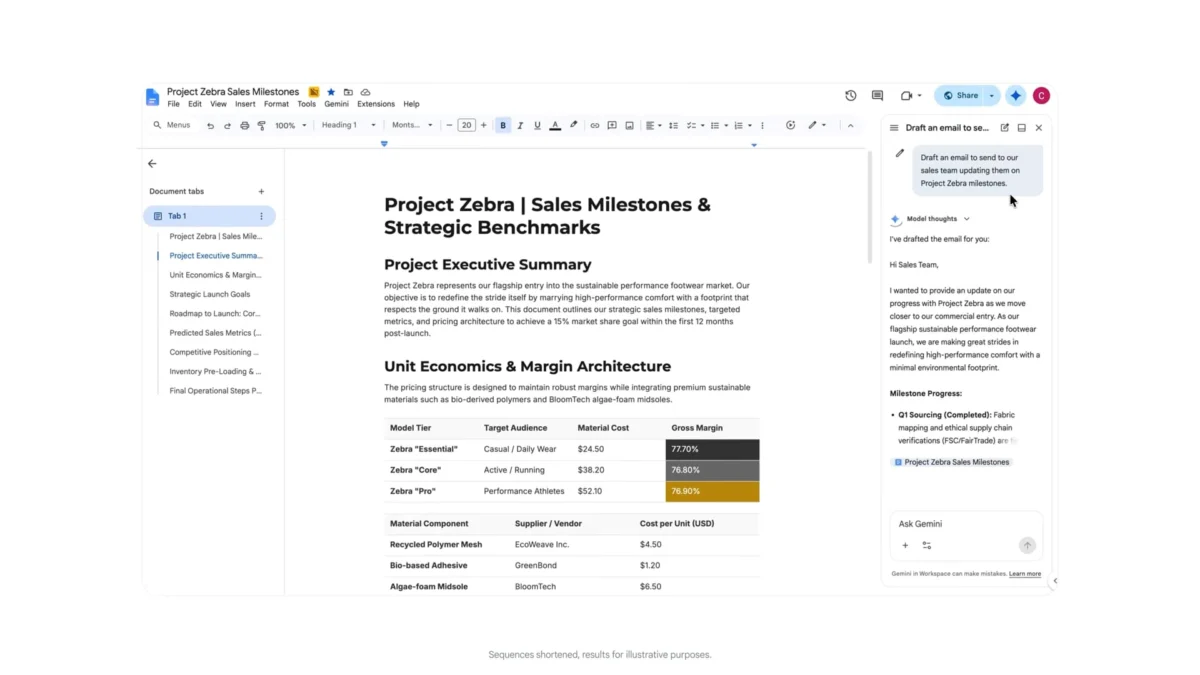
Google has officially announced a significant structural overhaul to the Gemini integration within its Workspace suite, effectively dismantling the silos that previously constrained AI functionality to specific applications. By leveraging a new framework known as Workspace Intelligence, Google is empowering users to execute sophisticated, cross-application workflows directly from the Gemini side panel, regardless of whether they are working within Docs, Sheets, Gmail, Slides, or Chat.
This update represents a fundamental shift in how generative AI is utilized in a professional environment. Previously, the Gemini side panel was contextualized strictly by the application in which it resided. If a user wished to analyze data in a spreadsheet, they were required to be active within Google Sheets; if they needed to draft an email based on project notes, they had to navigate to the Gmail interface. This "app-centric" model, while intuitive for simple tasks, hindered complex productivity flows. The new, unified feature set ensures that the full power of Gemini is available globally across the Workspace environment.
The Evolution of Gemini in Workspace
The integration of Gemini into Google Workspace has followed a rapid, iterative timeline since its inception. Following the initial rollout of Duet AI—which was later rebranded as Gemini for Google Workspace—the company focused on establishing a baseline for AI-assisted writing, image generation, and data synthesis.
In the early stages of 2024, the focus was primarily on single-app utility. Users were introduced to the "Help me write" features in Docs and the "Help me organize" tools in Sheets. However, user feedback indicated a growing demand for a more fluid experience that could mirror the way knowledge workers actually operate: jumping between communication, project management, and content creation tools simultaneously.
By mid-2025, Google began experimenting with deeper API-level integrations between its services. The current update, rolling out throughout September 2026, is the culmination of those efforts. It marks the transition from "AI as a feature within an app" to "AI as a layer across the workspace."
Breaking Down the Unified Feature Set
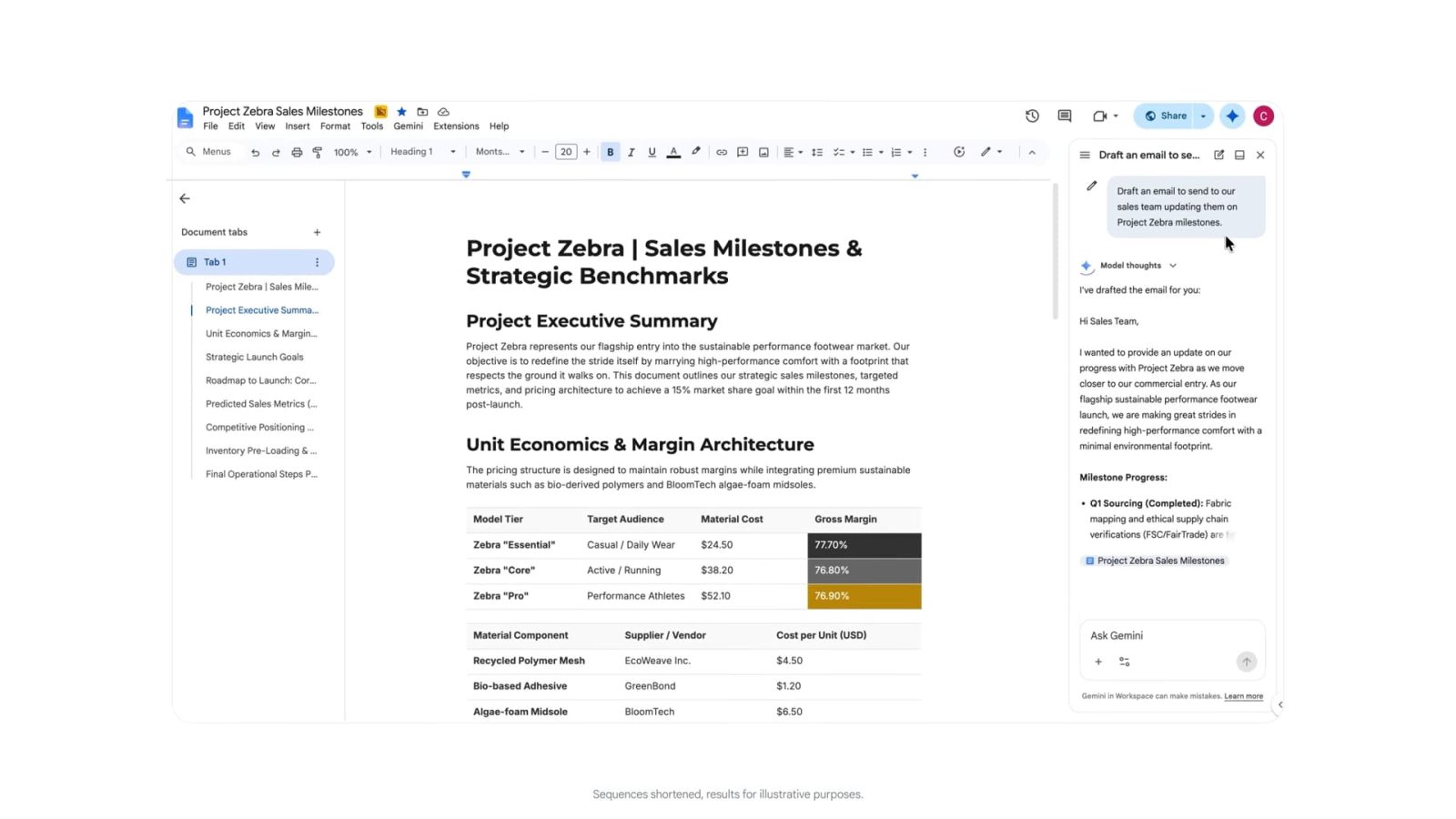
The core of this upgrade is the ability to command Gemini to perform actions that span multiple services. For example, a user drafting a project proposal in Google Docs can now prompt the Gemini side panel to "Send this document draft to the marketing team via Gmail for their review and feedback." Previously, this would have required saving the file, opening Gmail, attaching the document, and manually composing the message.
Similarly, the utility in Google Chat has been significantly bolstered. Users can now leverage Gemini to cross-reference their availability across Google Calendar without leaving the chat window. Commands such as "Find a 30-minute block for a sync with the product team next Tuesday" will trigger the AI to scan calendars, identify conflicts, and propose times, all within the sidebar.
Google Tasks is also receiving a major boost in accessibility. Users can now log reminders or populate to-do lists from any app. If a user is reviewing a project status update in a PDF stored in Google Drive, they can ask Gemini to "Create a task in my ‘Project Alpha’ list to follow up on these action items," and the AI will handle the data entry and synchronization automatically.
Supporting Data and Technical Architecture
The technical backbone of this update is Workspace Intelligence. By utilizing a more robust, low-latency connection between the Gemini large language model (LLM) and the Google Workspace APIs, the system can now maintain "contextual persistence." This means that when a user moves from Docs to Sheets, the Gemini panel retains the context of the previous request, provided the user has granted the necessary data-sharing permissions.
Internal metrics from Google’s beta testing phases suggest that this cross-app functionality reduces the average time spent on administrative "context switching" by approximately 22%. In a professional environment where an employee may toggle between applications dozens of times per hour, the cumulative impact of these time savings is significant.
Official Responses and Strategic Positioning
Google’s positioning of this update centers on the concept of "agentic AI." In recent developer briefings, Google executives have emphasized that the future of enterprise software is not just generative, but action-oriented.
"Our goal is to reduce the friction of the digital workspace," a spokesperson for the Google Workspace team stated during a recent briefing. "We are moving away from the paradigm where the user has to tell the computer which specific tool to use for every sub-task. Instead, the user expresses their intent, and the AI handles the logistics of which apps, data, and workflows are required to get the job done."
Market analysts have noted that this move is a direct response to the "AI Agent" trend currently dominating the enterprise software sector. With competitors like Microsoft accelerating their "Copilot" ecosystem—which similarly seeks to integrate AI across the 365 suite—Google’s move to unify the Gemini experience is a necessary step to maintain parity and retain corporate clients.

Broader Implications for the Enterprise
The shift toward a unified, cross-app AI experience has profound implications for how organizations will manage their digital infrastructure in the coming years.
- Increased Productivity Velocity: The reduction of manual navigation within browser tabs and app interfaces allows for a more "flow-state" oriented workflow. Knowledge workers can remain focused on the primary content they are creating, rather than the secondary task of managing communication and scheduling tools.
- Data Silo Erosion: By allowing AI to "see" across Gmail, Drive, and Sheets, the barrier between stored information and actionable tasks is lowered. This makes institutional knowledge more accessible and easier to synthesize.
- Training and Adoption Curves: For IT departments, this update simplifies the training process. Instead of needing to teach users how to use Gemini in Docs, then separately in Sheets, they can now focus on "prompt engineering" and "workflow logic," as the interface and capabilities are now consistent across the entire platform.
- Security and Governance: With increased cross-app capability comes a heightened need for robust security. Google has stated that these features operate within the existing security and privacy boundaries of Workspace. No third-party training occurs on user data, and the AI’s access to private documents remains strictly governed by the user’s existing permissions.
Implementation and Availability
The rollout, which began in September 2026, is being tiered based on subscription levels. Consumers who subscribe to "Google AI Pro" will have access to most of these features, though the sophisticated scheduling functionality remains reserved for higher-tier plans. Users on the "Google AI Ultra" tier will have full, unrestricted access to the entire suite of cross-app capabilities.
This update is also being pushed to Google Workspace for Education and Enterprise customers. For organizations, this deployment will likely be managed via the Google Admin console, allowing administrators to toggle the availability of cross-app integrations based on company policy.
The Road Ahead
As Google continues to refine its AI offerings, the industry expects to see even tighter integration between the Gemini models and the underlying OS-level data of its users. The current transition to a unified side panel is merely the first phase of this evolution. Future updates are expected to include "proactive" suggestions, where the AI might suggest an action—such as scheduling a meeting or drafting a follow-up email—before the user explicitly requests it, based on the patterns and content of their work.
For now, the integration marks a milestone in the "AI-first" evolution of Google’s flagship productivity suite. By transforming Gemini from a collection of isolated app-helpers into a singular, cohesive assistant, Google is setting a new standard for how software interacts with the people who use it, moving closer to a future where the interface is a background consideration, and the work itself is the primary focus.