




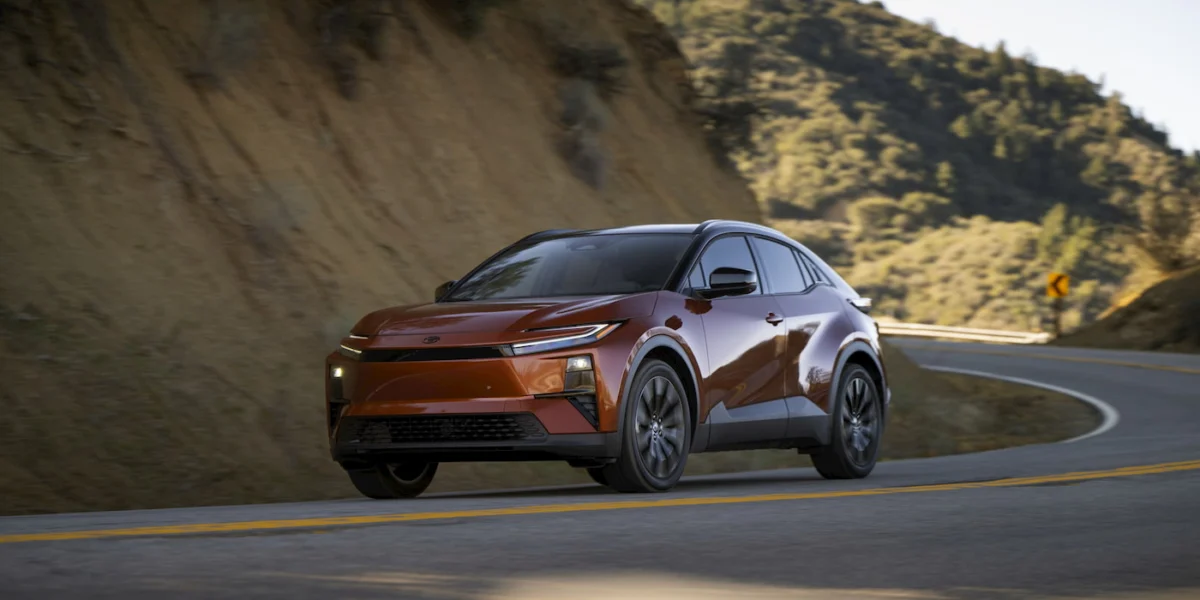
Automotive manufacturing giant Toyota has officially expanded its safety recall for the 2026 model-year C-HR electric SUV, bringing the total number of affected vehicles to approximately 19,000 worldwide. The safety campaign, initially launched in North America during the autumn, addresses a critical software programming defect within the vehicle’s electric vehicle electronic control unit (EV-ECU). Under specific operating conditions, this software glitch can cause the high-voltage battery to overcharge, potentially triggering an unexpected system shutdown and a total loss of motive power while the vehicle is in motion.
While the issue was first identified and reported to domestic regulators in the United States, international oversight bodies—most notably Germany’s Federal Motor Transport Authority, known as the Kraftfahrt-Bundesamt (KBA)—have confirmed that the recall scope is significantly broader. As automotive markets increasingly transition toward electrification, software-related vulnerabilities have emerged as a prominent challenge for legacy automakers and pure-play electric vehicle manufacturers alike. This comprehensive overview examines the chronology of the Toyota C-HR EV recall, the underlying technical mechanics of the defect, the regulatory responses across multiple jurisdictions, and the broader implications for Toyota’s rapidly expanding global electric vehicle portfolio.
Chronology and Evolution of the Recall
The sequence of events leading to the global expansion of the Toyota C-HR EV recall unfolded across several months, beginning with preliminary field reports and escalating through formal regulatory filings.

The timeline of the recall and its associated developments is structured as follows:
- June 17, 2025 – July 9, 2026: The production window during which the affected 2026 model-year Toyota C-HR electric SUVs were manufactured at company facilities.
- September 2026: Toyota officially issues a targeted safety recall in North America, initially estimating that roughly 10,000 vehicles are impacted by the EV-ECU software defect.
- Late September to Early October 2026: Following formal communications with the National Highway Traffic Safety Administration (NHTSA), Toyota refines its domestic figures, confirming that exactly 8,521 vehicles in the United States require corrective software updates.
- October 18, 2026: Toyota commences the formal notification process, mailing out owner advisory letters to affected consumers in North America and providing instructions for remedial dealership service under recall campaign identifier 26TA17.
- Late Autumn 2026: Germany’s Kraftfahrt-Bundesamt (KBA) intervenes as the recall expands internationally, identifying an additional 1,096 vehicles affected within the German market and establishing an aggregate global recall footprint of approximately 19,000 units under reference number 17116R.
- Current Status: Dealerships across North America actively perform complimentary EV-ECU software recalibrations, while regulatory investigations and logistical coordination continue across European and overseas markets where the vehicle is marketed as the C-HR+.
Technical Analysis of the Defect
At the core of the Toyota C-HR EV recall is a complex interaction between the vehicle’s battery management architecture and its regenerative braking system. Modern battery electric vehicles (BEVs) rely extensively on energy recovery during deceleration, converting kinetic energy back into electrical energy to replenish the high-voltage battery pack and maximize overall driving range.
Under normal engineering parameters, the EV-ECU is programmed to monitor the state of charge (SoC) continuously and implement strict operational ceilings to prevent overcharging. However, internal investigations conducted by Toyota engineers revealed that a programming error in the EV-ECU disrupts this fundamental safety protocol.
Specifically, the defect manifests when a driver operates the vehicle while the high-voltage lithium-ion battery is already at or near a maximum state of charge, and subsequently continues to utilize the regenerative braking system. Because the faulty software fails to properly modulate or redirect the incoming energy generated during deceleration, the battery pack is subjected to unauthorized overcharging conditions.

When the vehicle’s diagnostic systems detect this abnormal energy influx, audible chimes and visual dashboard warning lights activate to alert the driver. If the condition persists, the electric drive system is designed to initiate a protective fail-safe shutdown to safeguard the hardware from catastrophic thermal events. Consequently, this protective measure results in a sudden and complete loss of propulsion power while the vehicle is being driven, substantially increasing the risk of a collision, particularly in high-speed traffic environments or on busy multi-lane roadways.
Scope and Geographic Distribution
The geographic footprint of the recall encompasses major automotive markets where the battery-electric variant of the C-HR has been introduced. In North America, the recall strictly targets the 2026 model-year C-HR electric SUV, accounting for the 8,521 vehicles registered with the NHTSA.
In Europe and several other international regions, Toyota markets the battery-electric iteration under the nomenclature C-HR+ to clearly differentiate the zero-emission variant from traditional internal combustion engine (ICE) models and conventional hybrid-electric vehicles (HEVs) that share similar styling cues.
International regulatory scrutiny intensified when Germany’s KBA stepped in to evaluate the risks for European consumers. The KBA confirmed that 1,096 vehicles registered in Germany fall within the affected production parameters. The total global population of impacted vehicles now stands at approximately 19,000 units. Production records indicate that all affected vehicles worldwide were assembled during a precise window spanning from June 17, 2025, through July 9, 2026. Models produced outside this specific timeframe, as well as the newly introduced 2027 Toyota C-HR lineup currently arriving at dealership showrooms, are unaffected by the software anomaly.
Remedial Actions and Consumer Guidance
Toyota has outlined clear remedial pathways for vehicle owners residing within North America, though administrative procedures for international markets continue to evolve.
For owners in the United States and Canada, the corrective action involves a straightforward, complimentary software update. Affected consumers have been advised to schedule service appointments at authorized Toyota dealerships, where technicians will reflash and recalibrate the EV-ECU with updated software designed to correctly manage charging limits during regenerative braking events. Toyota officially initiated its direct-to-consumer notification campaign via mail on October 18, 2026.
Owners seeking immediate verification or assistance can cross-reference their vehicle identification numbers (VIN) and inquire about recall campaign number 26TA17 by contacting Toyota customer service representatives directly at 1-800-331-4331. Alternatively, consumers can utilize the online lookup tools provided by the NHTSA or local transportation authorities.
For international owners—particularly those in European nations overseen by the KBA under reference number 17116R—official dealership remediation protocols are rolling out progressively. While the KBA and national transit authorities continue their respective evaluations, Toyota regional offices are expected to issue localized recall notices and scheduling procedures comparable to the North American campaign once regulatory clearances are finalized.

Industry Implications and Broader Context
The Toyota C-HR EV recall highlights an enduring challenge facing the modern automotive industry: the escalating complexity of software-defined vehicle architectures. As traditional automakers accelerate their transitions toward comprehensive vehicle electrification, electronic control units (ECUs) govern an increasingly vast array of safety-critical functions, transforming mechanical engineering firms into complex software developers.
While mechanical recalls historically centered on hardware fatigue, fluid leaks, or structural components, contemporary automotive recalls frequently stem from subtle coding errors, communication logic flaws, and sensor calibration discrepancies. Software-related recalls, however, often offer distinct operational advantages over mechanical defects; they can frequently be resolved through rapid digital patches, or in many modern connected vehicles, via Over-The-Air (OTA) software updates.
For Toyota—a company historically revered for its rigorous manufacturing methodologies, legendary supply chain reliability, and the foundational principles of the Toyota Production System—managing software-induced safety compliance represents a critical operational priority. The rapid identification, containment, and correction of the EV-ECU flaw demonstrate robust internal tracking mechanisms, yet the necessity of a physical dealership visit for older software configurations underscores the transitional phase many legacy manufacturers are currently navigating.
As the electric vehicle market matures and consumer adoption expands globally, regulatory bodies such as the NHTSA and the KBA are expected to maintain stringent oversight of software validation protocols across all major original equipment manufacturers (OEMs). Ensuring the absolute reliability of energy storage management systems remains paramount, as consumer confidence in alternative-fuel vehicles heavily depends on seamless functional safety, predictable driving dynamics, and transparent manufacturer responsiveness when technical anomalies arise.