










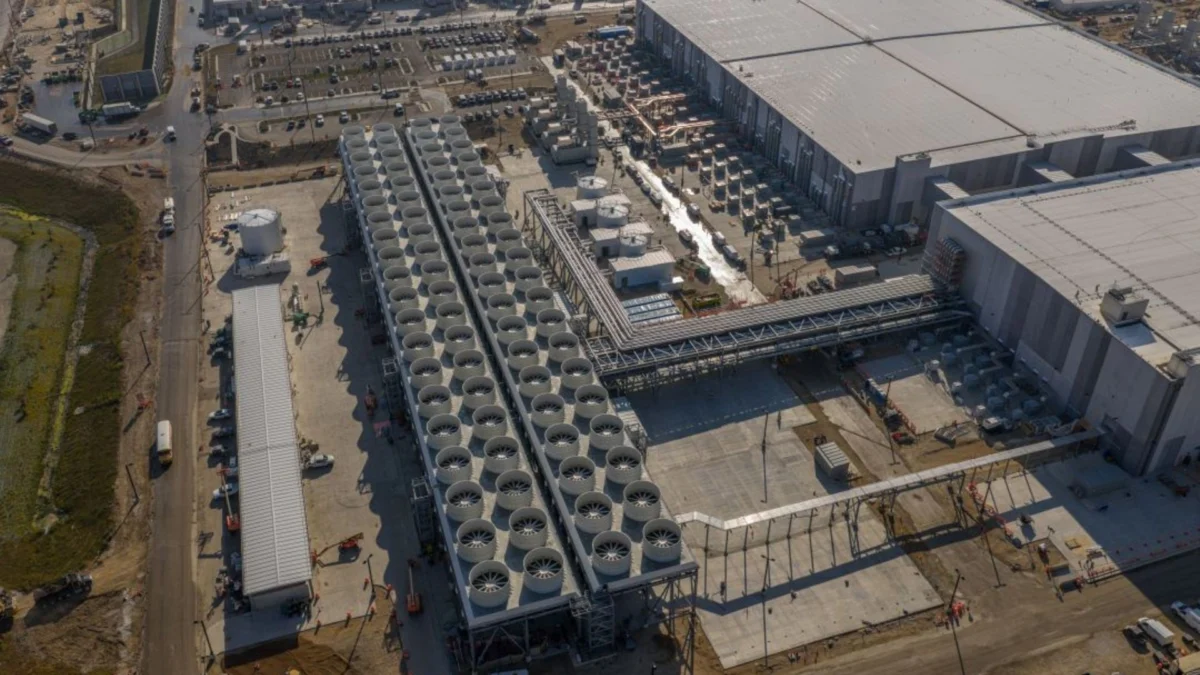
Electricity consumption is one of the biggest concerns that residents bring up whenever a data center is proposed in their community, which is why OpenAI is taking proactive steps to minimize its impact on the local electricity grid. The artificial intelligence research and deployment company has officially introduced the Grid Protectors Program, an initiative designed to dynamically reduce the power consumption of its massive computational facilities during periods of high regional demand. By intelligently shedding or shifting electrical load when local grids face peak stress, the program seeks to ensure that surrounding communities experience uninterrupted service and stable energy prices. Beyond safeguarding local infrastructure and maintaining public grid reliability, this flexible power-management strategy offers a secondary commercial advantage: it allows OpenAI to connect its next-generation AI data centers to existing power grids much faster, bypassing the historically sluggish timelines required to build out dedicated new power generation sources.
The exponential rise of generative artificial intelligence, propelled by large language models, sophisticated multi-modal systems, and autonomous agent architectures, has triggered an unprecedented infrastructural gold rush. Tech giants and specialized cloud providers are racing to construct sprawling server farms packed with tens of thousands of power-hungry graphics processing units (GPUs) and specialized AI accelerators. However, this relentless technological expansion has collided directly with the physical realities of aging power grids, particularly in developed nations like the United States, where transmission lines, substations, and baseline generation capacities are already operating near maximum thresholds.
Public resistance to these facilities has intensified correspondingly. Local communities frequently push back against zoning permits and utility interconnection approvals, fearing brownouts, spiking household electricity bills, and the environmental degradation associated with burning fossil fuels to meet sudden spikes in industrial demand. OpenAI’s Grid Protectors Program represents a direct attempt to address these friction points through technological orchestration, proving that hyperscale AI infrastructure can coexist with community-level electrical stability.
The Chronology of the AI Energy Crisis and Grid Pressures
To understand the genesis of the Grid Protectors Program, one must examine the rapid escalation of power requirements within the technology sector over the past five years. Prior to the breakout success of transformer-based models in late 2022, traditional data centers primarily handled web hosting, enterprise databases, and cloud computing workloads. While substantial, their electricity draw was relatively stable and predictable, allowing regional grid operators to plan capacity upgrades years in advance.
The paradigm shifted dramatically with the generative AI boom. In 2023, as companies vied to train increasingly massive models containing hundreds of billions of parameters, electricity consumption skyrocketed. Industry analysts estimate that a single major AI training run can consume as much electricity as thousands of American households use in an entire year. By 2024, prominent technology firms announced multibillion-dollar data center campuses capable of drawing gigawatts of power—effectively demanding the output of entire nuclear power plants or large hydroelectric dams.
During this period, utility companies across North America and Europe began sounding alarms. Interconnection queues—the backlog of renewable energy projects and large industrial facilities waiting to hook up to transmission networks—ballooned to unprecedented lengths. In some regional transmission organizations (RTOs), developers were told they might have to wait up to seven years simply to receive a grid connection study, let alone physical power delivery.
Recognizing that waiting for traditional infrastructure buildouts would stall their computational roadmaps, AI developers began exploring creative solutions. Some tech firms investigated direct partnerships with nuclear energy providers, while others sought behind-the-meter arrangements with natural gas turbines. However, these solutions still faced regulatory hurdles and lengthy construction timelines. The introduction of demand-response and flexible load-shedding frameworks, culminating in OpenAI’s formal Grid Protectors Program, marks the latest evolutionary phase in this ongoing race to secure sustainable, politically viable power.
Data and Metrics: Quantifying the Power Paradox of Artificial Intelligence
The scale of the energy challenge facing OpenAI and its peers is underscored by empirical data from energy research groups, utility regulators, and economic analysts. According to projections by the Electric Power Research Institute (EPRI), data centers could consume up to 9% of total U.S. electricity generation by the year 2030, more than doubling their consumption levels from the early 2020s. In specific geographic hubs—such as Northern Virginia, parts of Texas, and the Pacific Northwest—data center concentration is already pushing local distribution networks to their absolute physical limits.
Studies focusing on community attitudes toward industrial technology reveal that electricity reliability and cost are primary drivers of public skepticism. Surveys assessing local opposition to data center developments consistently demonstrate that residents are less concerned with abstract technological advancements and far more focused on concrete, localized impacts: will the lights stay on, and will residential utility rates rise to subsidize industrial infrastructure?
OpenAI’s Grid Protectors Program targets these exact anxieties through a quantified operational model. By participating in automated demand-response protocols, the data centers enrolled in the program agree to curtail their non-essential computational tasks—such as exploratory model training or heavy data preprocessing—within minutes of a grid operator issuing a high-demand alert.
Quantitative evaluations of similar demand-response mechanisms in industrial manufacturing suggest that large-scale facilities can temporarily reduce their electrical load by 15% to 30% without suffering catastrophic operational failures. Scaled across a multi-megawatt AI cluster, a 20% reduction can free up tens or even hundreds of megawatts of power—enough to sustain a mid-sized town during a sweltering summer heatwave or a freezing winter storm.
Official Responses and Industry Implications
The announcement of the Grid Protectors Program has drawn measured optimism from utility executives, energy regulators, and environmental advocates, alongside scrutiny from industry competitors.
Utility operators, who have spent the past several years grappling with how to balance net-zero carbon mandates with the sudden, massive load requests of AI companies, have largely welcomed the concept of flexible data center consumption. In official statements accompanying the program’s rollout, energy sector stakeholders noted that modern data centers possess a unique advantage over traditional heavy manufacturing: their computational workloads are inherently mobile and deferrable. Unlike a steel mill or an aluminum smelter, which suffers severe economic and mechanical damage if powered down abruptly, an AI training job can often be paused, checkpointed, and resumed later without permanent loss of data or hardware integrity.
Environmental organizations, while acknowledging that demand-response programs do not eliminate the underlying carbon footprint of fossil-fuel-backed grids, view the initiative as a necessary damage-control measure. By preventing data centers from forcing grid operators to spin up dirty, inefficient peaker power plants during high-stress hours, the program helps avoid short-term spikes in greenhouse gas emissions.
Economic analysts emphasize that the business implications for OpenAI are profound. In the hyper-competitive artificial intelligence sector, time-to-market is everything. Companies that can deploy new clusters of specialized hardware faster than their rivals gain a decisive edge in model capability and commercial product releases. By utilizing software-driven load management to satisfy local utilities that their facilities will not destabilize the grid, OpenAI can significantly accelerate its interconnection timeline. Instead of waiting half a decade for new high-voltage transmission lines to be engineered and built, the company can negotiate faster approvals under the condition that its facilities act as flexible shock absorbers for the local energy network.
Broader Impact and the Future of AI Infrastructure Integration
The launch of the Grid Protectors Program signals a broader maturation in how the artificial intelligence industry interacts with physical infrastructure. The era of unchecked, frictionless expansion, where tech companies could demand unlimited gigawatts of power without public accountability or operational compromise, has definitively closed.
Moving forward, the success of AI deployment will likely depend less on algorithmic breakthroughs alone and more on infrastructural diplomacy—the ability of tech firms to engineer harmonious relationships with municipal governments, regional grid operators, and local utility ratepayers.
As other hyperscalers and AI startups observe the rollout and effectiveness of OpenAI’s initiative, similar flexible-load frameworks are expected to become standard operating procedure across the sector. Regulators may eventually codify these practices into mandatory compliance requirements for any large-scale industrial electricity consumer seeking rapid grid interconnection.
Ultimately, the Grid Protectors Program illustrates that the future of artificial intelligence is inextricably bound to the stability and modernization of electrical grids. By recognizing that community trust and grid reliability are prerequisites for technological progress, OpenAI is attempting to chart a sustainable course through the most severe energy bottleneck in the history of computing. Whether these voluntary and automated load-reduction measures will prove fully sufficient to satisfy skeptical local communities and over-burdened utility providers remains to be seen, but the initiative represents a critical, pragmatic step toward reconciling the boundless ambitions of artificial intelligence with the finite physical capacity of our electrical world.