





Load up a backpack and wander somewhere for an hour, and you will notice a distinct, cascading sequence of physical feedback. First, your shoulders feel the strain. Then, your hips engage to stabilize the shifting mass. Finally, your trunk leans forward and your stride shifts as your muscles, under continuous tension, negotiate with gravity. Yet, for all the physical complaints that accompany a heavy trek, the human body is remarkably well-adapted to this exact mechanical challenge: carrying.
While humans are neither the largest, strongest, nor fastest animals on Earth, evolution has equipped us with a unique combination of bipedal mechanics, metabolic efficiency, and thermoregulation. Given a load, a pair of functioning feet, and adequate time, humans can lug supplies across surprisingly vast distances. Understanding this capability requires examining the human machine itself—our skeleton, gait, muscles, metabolism, and evolutionary history—to determine how we became optimized for transport.
The Evolutionary Shift Toward Bipedalism
Through millions of years of natural selection, humans became unusually committed bipeds. Walking upright on two legs frees the hands for other tasks, fundamentally altering how our bodies interact with the environment. This form of locomotion required a complete reorganization of the human skeleton.
Bipedalism is characterized by long legs, relatively short arms, feet featuring structural arches, aligned lower limbs, a specialized pelvis, distinct spinal curves, and highly elastic tendons. The human foot functions as a biological spring, storing and releasing energy with every step. Meanwhile, the Achilles tendon and other elastic structures recycle kinetic energy, while the pelvis and trunk stabilize the body as each leg swings forward.
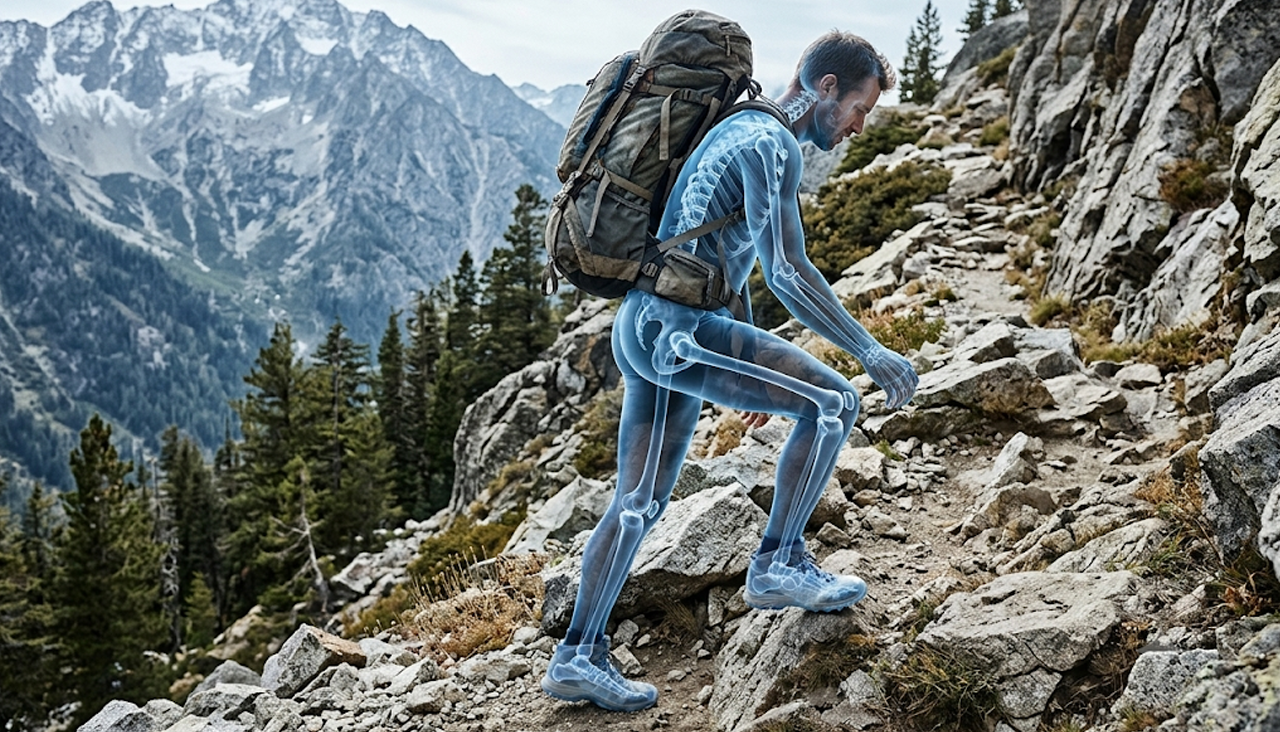
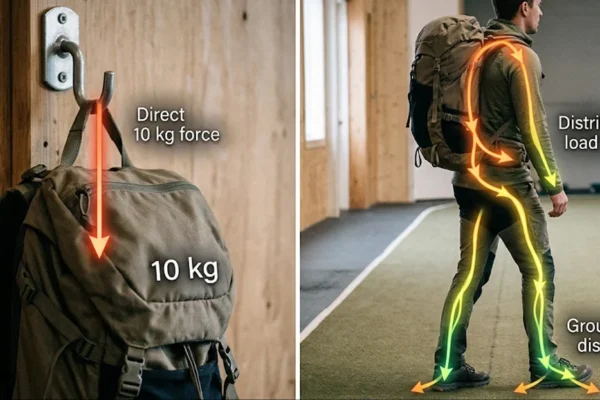
Walking is mechanically economical because humans leverage gravity, momentum, and elastic tissues to perform a significant portion of the work. However, introducing an external load increases the metabolic cost of transport. Every step requires accelerating and decelerating additional mass, while core muscles work overtime to stabilize the trunk and keep the load under control. Distance, duration, terrain, and load distribution all influence this physical expenditure.
Endurance Over Brute Strength
Anthropological and biomechanical studies reveal a fascinating paradox in human physiology: humans are not particularly impressive when it comes to brute strength or raw speed. Numerous animals can carry significantly heavier loads relative to their body size. Humans lack claws, natural fangs, or the short-burst horsepower seen in other mammals.
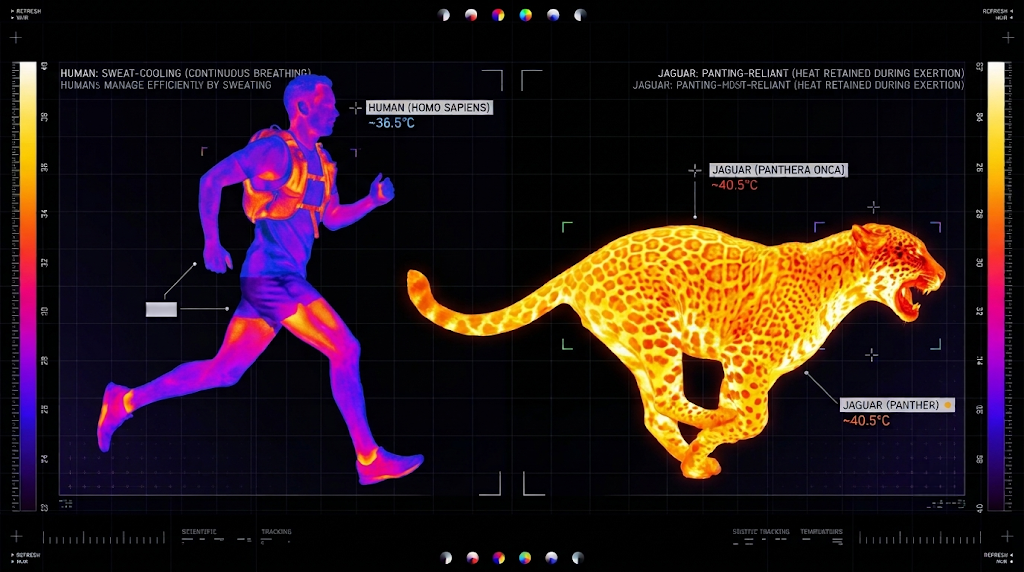
Where humans excel is in endurance and continuous movement over extended periods. This stamina is driven largely by superior thermoregulation. Humans are exceptionally proficient at dissipating heat due to extensive sweat glands distributed across a relatively hairless skin surface, allowing body heat to escape efficiently through evaporation.
In contrast, many mammals rely heavily on panting to manage core temperatures. Panting becomes physiologically difficult when an animal attempts to breathe efficiently while running or moving under a heavy load. Humans, however, can continue breathing normally while sweating profusely, allowing the respiratory system to focus entirely on supplying oxygen rather than functioning as a cooling mechanism.
Combined with elastic tendons, spring-like feet, and a stable trunk, these traits make human locomotion energetically inexpensive. This unique suite of adaptations created a primate capable of moving efficiently across landscapes while carrying vital survival resources, including food, water, tools, firewood, and offspring.
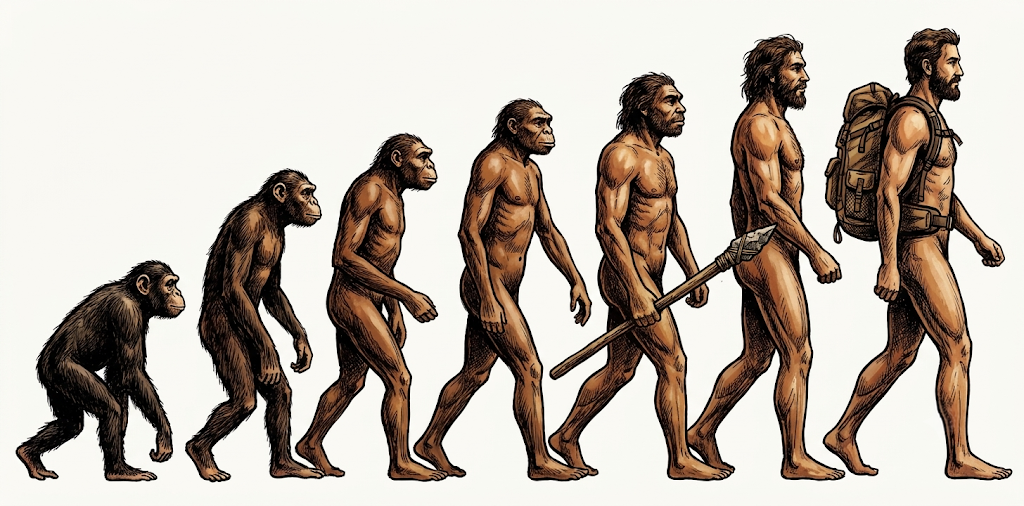
Chronology of Human Transport and Load-Bearing
The evolutionary relationship with carrying did not begin with a single, sudden prehistoric moment. Anthropologists divide the history of human load-bearing into distinct phases of technological and physiological integration:
- Pre-Bipedal Era: Early hominids primarily navigated arboreal environments or walked on four limbs, severely limiting the ability to transport resources over long distances without consuming them immediately.
- The Emergence of Bipedalism: As hominids transitioned to upright walking, hands became liberated from locomotion, setting the biological foundation for tool use and item transport.
- Mobile Provisioning: Early humans began utilizing their free hands to carry gathered food, water containers, and primitive tools back to a central camp, fundamentally changing foraging strategies and social structures.
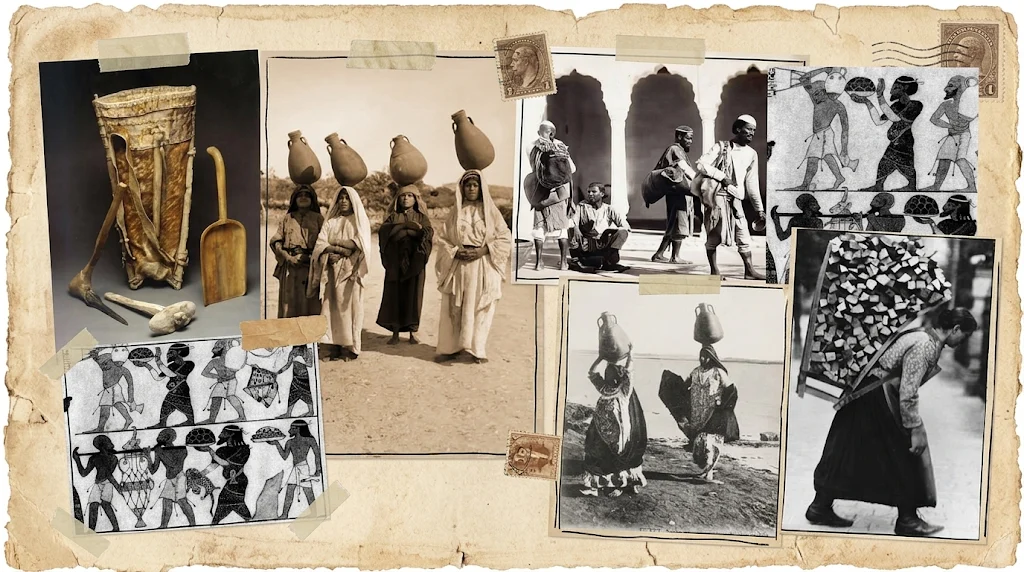
- Development of Carrying Technologies: Millennia before modern nylon backpacks and aluminum frames, ancient cultures engineered sophisticated carrying systems, including woven baskets, tumplines, rigid wooden frame packs, and textiles that distributed weight across the skeletal structure.
- Modern Ergonomics: Today, load-bearing has evolved into a multi-billion-dollar industry focused on ergonomic science, optimizing weight distribution for military personnel, hikers, and daily commuters.
The Logistics of Mobile Provisioning
The ability to carry items to a specific destination represents a major evolutionary turning point. For an organism navigating a landscape on two feet, resource transport alters the ecological possibilities of survival.
Food no longer needs to be consumed immediately at the site of discovery. Water can be transported away from its source to sustain populations in arid regions. Tools and fuel can be gathered and brought back to safe encampments. Furthermore, the ability to carry dependent offspring allowed hominids greater mobility without compromising infant safety.
Anthropologists note that mobile provisioning acted as a logistical superpower in human history. Successful hunts could sustain members of a community who remained at camp. Firewood could be collected preemptively before temperatures dropped. Water and sustenance could be stored for subsequent meals, reducing daily foraging risks.
Biomechanical Analysis and Modern Implications
Modern biomechanical research continues to analyze the implications of human load-bearing on spinal health, gait efficiency, and energy expenditure. Dr. Sarah Jenkins, a leading researcher in evolutionary biomechanics, notes that modern humans frequently experience disconnects between their evolutionary design and contemporary habits.
"Our ancestors evolved to carry loads dynamically, distributing weight close to the body’s center of mass," Jenkins explains. "Modern urban environments often force us into sedentary postures punctuated by poorly fitted backpacks or heavy shoulder bags that disrupt natural spinal curves and gait symmetry."
Data from ergonomic studies indicate that carrying loads exceeding 15% to 20% of a person’s body weight without proper ergonomic support significantly increases metabolic fatigue and the risk of musculoskeletal injury. Conversely, utilizing waist belts, sternum straps, and internal frame packs allows modern humans to harness their natural bipedal efficiency, mitigating the physical toll of transport.
Ultimately, the human body remains a finely tuned instrument for persistent, upright movement. The evolutionary marriage of bipedalism, advanced thermoregulation, and load-bearing capacity allowed humans to conquer diverse geographies, shaping the trajectory of civilization long before the invention of the wheel.