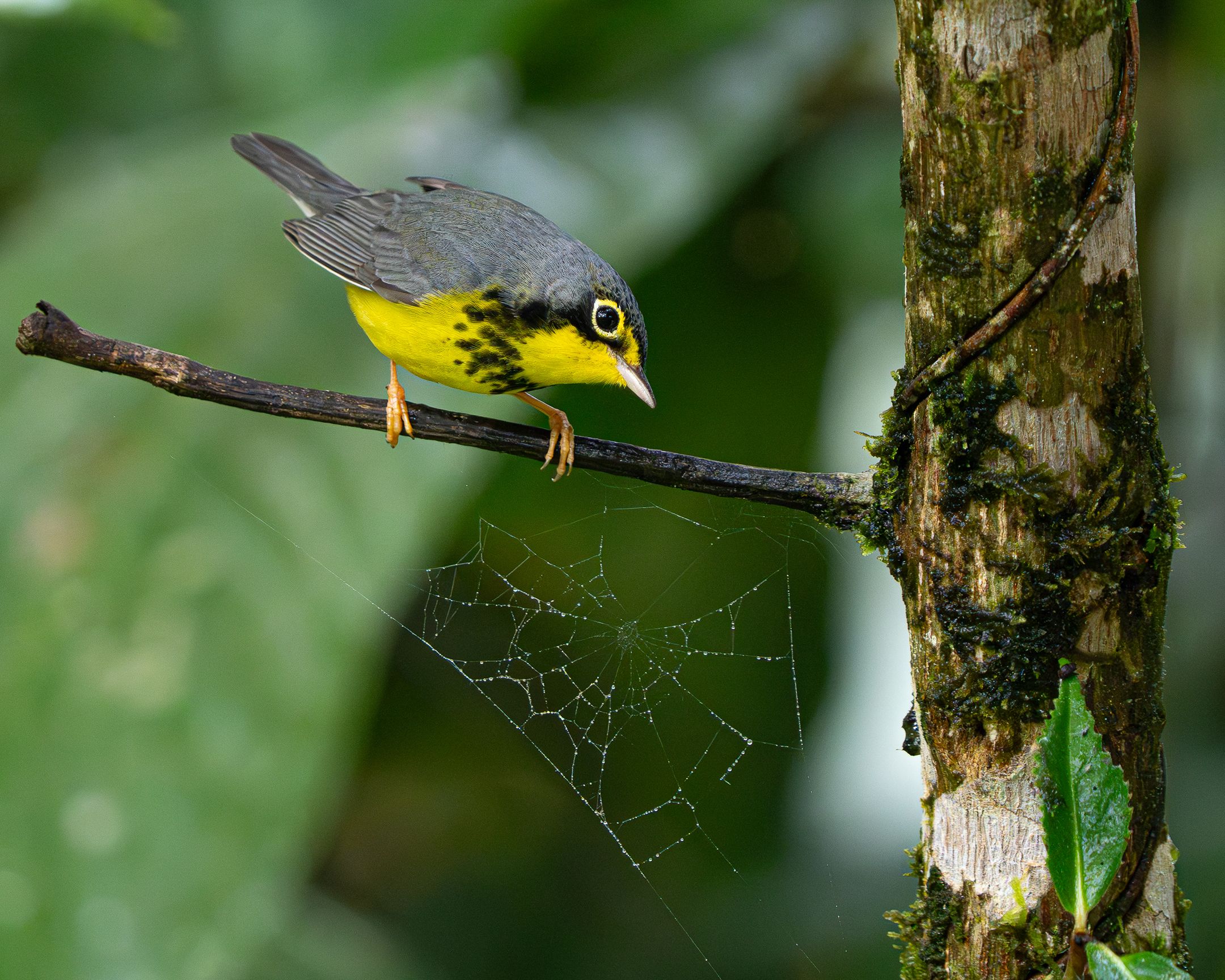
The misty cloud forests of El Queremal in Valle del Cauca, Colombia, have long served as a vibrant sanctuary for avian biodiversity. On a humid, overcast morning, young wildlife photographer Juan David Camacho Márquez traversed this dense understory alongside a cohort of fellow bird enthusiasts, hoping to encounter elusive species native to the Andean region. What began as a routine expedition ultimately culminated in a defining moment for the young photographer’s career: capturing a striking, serendipitous frame of a Canada Warbler perched directly above a dew-drenched spiderweb.
This meticulous composition has officially been named the Youth winner of the prestigious 2026 Audubon Photography Awards. The international competition, which evaluates entries from Chile, Colombia, Canada, and the United States, celebrates visual storytellers who harness their technical skills to spotlight the delicate beauty, ecological significance, and mounting environmental challenges facing migratory and resident bird populations across the Americas.
A Morning of Unexpected Discoveries in the Andean Understory
The journey toward securing this winning image was characterized by patience, persistence, and a measure of good fortune. According to Márquez, the morning started auspiciously when he and his peers crossed paths with a Plain-backed Antpitta—a species considered a "lifer" (a first-time sighting for a birder) and notably one of the earliest documented records of the species within that specific locality.
While that initial encounter alone would have rendered the field trip a success, the expedition yielded an even more profound photographic opportunity shortly thereafter. Márquez spotted an adult male Canada Warbler darting through the complex foliage. Known for their restless foraging habits in the middle elevations of South American rain and cloud forests, these migratory birds rarely remain stationary for more than a fraction of a second.
Márquez raised his equipment, capturing the bird in its natural habitat. However, the true artistic merit of the frame only became apparent later during the image-review process. Upon inspecting the digital capture, Márquez noticed an intricate, dew-covered spiderweb suspended delicately beneath the branch. The positioning of the warbler created an illusion of interaction, with the bird appearing to gaze intently down at the glistening geometry of the spiderweb, establishing a profound sense of natural harmony.
For Márquez, the recognition serves as the culmination of a multi-year endeavor. For three consecutive years, he had attempted to photograph this specific migratory species without achieving a satisfactory result. The perseverance paid off, transforming what was once an elusive photographic ambition into a fully realized dream.
Technical Breakdown and Field Equipment
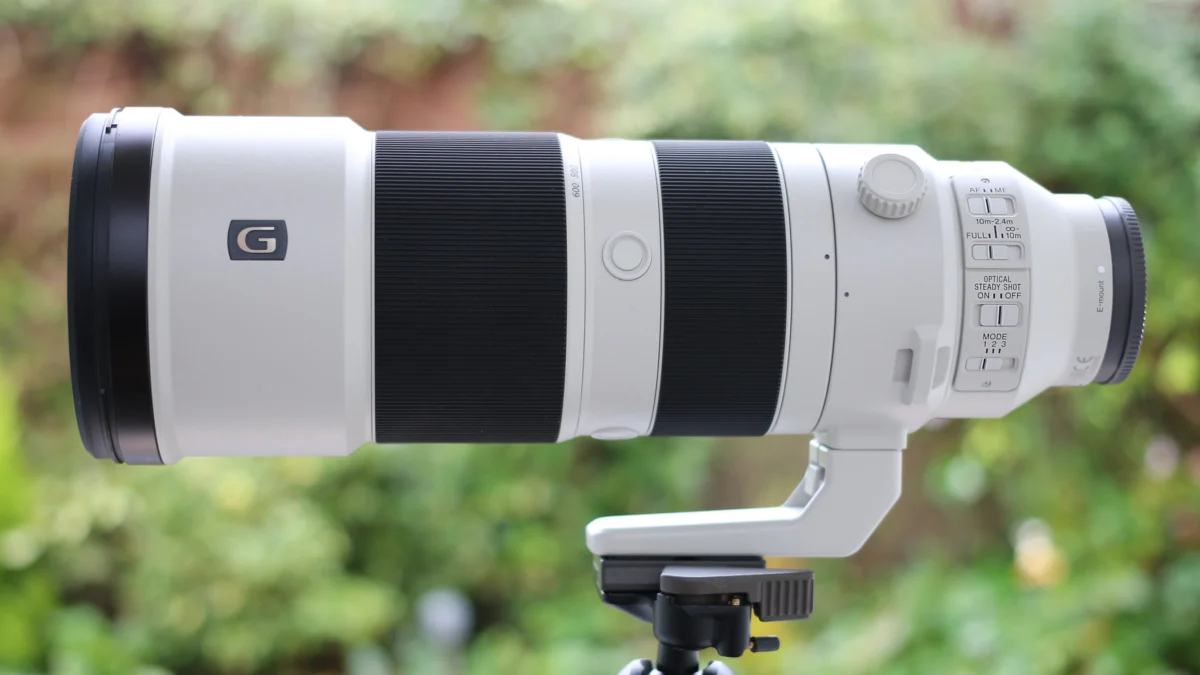
Capturing high-speed wildlife in low-light environments like the dense canopies of Andean cloud forests demands specialized gear and precise technical execution. Márquez utilized a mirrorless setup consisting of a Sony A6700 camera body paired with a Sony FE 200-600mm f/5.6-6.3 G OSS telephoto zoom lens.
The technical parameters of the winning shot reflect the challenging lighting conditions typical of the Andean understory on an overcast morning:
- Shutter Speed: 1/320 sec
- Aperture: f/6.3
- ISO: 6400
This combination allowed Márquez to maintain adequate exposure despite the dim canopy light, while the optical steady shot capabilities of the telephoto lens helped stabilize the frame over considerable distances. Wildlife photography experts frequently cite the Sony 200-600mm configuration as an industry standard for birders and conservation photographers who require substantial reach when physical proximity to wildlife is restricted by dense terrain or conservation boundaries.
Ecological Context: The Life Cycle of the Canada Warbler
The Canada Warbler (Cardellina canadensis) is a species of significant conservation and ecological interest. As a long-distance neotropical migrant, the species spends less than half of the year within its namesake country, Canada. During the breeding season, they inhabit the northern boreal forests, but as autumn approaches, they undertake a remarkable southward migration spanning thousands of miles.
The nonbreeding season is spent predominantly in Central and South America, with a heavy concentration in the middle elevations of the Andes mountain range. Within these regions, Canada Warblers demonstrate a distinct ecological preference for the dense, complex understory of rain forests and cloud forests.
Their foraging behavior is closely tied to the complex food webs of the forest floor. Canada Warblers frequently integrate into mixed-species flocks—associations of both migratory and resident birds that coordinate their movements to maximize foraging efficiency. They hold a particularly symbiotic relationship with army ants, shadowing swarms as the ants march across the forest floor. As the ants flush out hidden invertebrates, the warblers capitalize on the disruption, seizing fleeing insects that would otherwise remain concealed within the leaf litter.
Expert Analysis and Judging Insights
Evaluating entries for the Audubon Photography Awards requires adherence to strict artistic and natural history standards. Sebastian Herzog, one of the competition’s expert judges, provided critical insight into why Márquez’s image stood out among hundreds of international submissions.
"Capturing this intriguing composition of an adult male Canada Warbler—a migratory species that rarely stays still—requires shooting at just the right moment, with a very sharp focus and the ideal depth of field," Herzog stated. He further emphasized the visual interplay captured within the frame: "Here, the bird seems to pause for a second in its constant search for food to gaze at a spiderweb. The raindrops caught on the web shine and show off the web’s unique geometry."
The juxtaposition of the dynamic, high-energy bird against the static, fragile structure of the dewy spiderweb introduces a narrative element that elevates the photograph beyond a standard species identification record, framing it instead as a testament to the interconnectedness of micro-ecosystems within the Andean cloud forest.
The Broader Impact of the Audubon Photography Awards
The Audubon Photography Awards serve a dual purpose within the global conservation and photography communities. Beyond recognizing aesthetic excellence and technical mastery, the competition acts as a vital communications tool for environmental advocacy. By highlighting the species that traverse borders—from the high latitudes of North America down to the tropical ecosystems of South America—the awards draw public attention to the shared responsibility required to protect migratory flyways and fragile habitats.
Habitat loss, climate change, and deforestation continue to exert intense pressure on neotropical migrants like the Canada Warbler, which rely on the health of both their northern breeding grounds and their southern wintering habitats. Youth-focused categories play a critical role in this mission by encouraging the next generation of environmental stewards to engage directly with the natural world through the lens of a camera, fostering a deep-seated appreciation for biodiversity conservation.
As Juan David Camacho Márquez’s achievement demonstrates, the intersection of youthful dedication, technical proficiency, and a touch of wilderness serendipity can yield powerful documentation of our planet’s remaining natural wonders. The complete gallery of winning and honorable mention images for the 2026 competition remains accessible to the public via the official Audubon Society publication channels.