







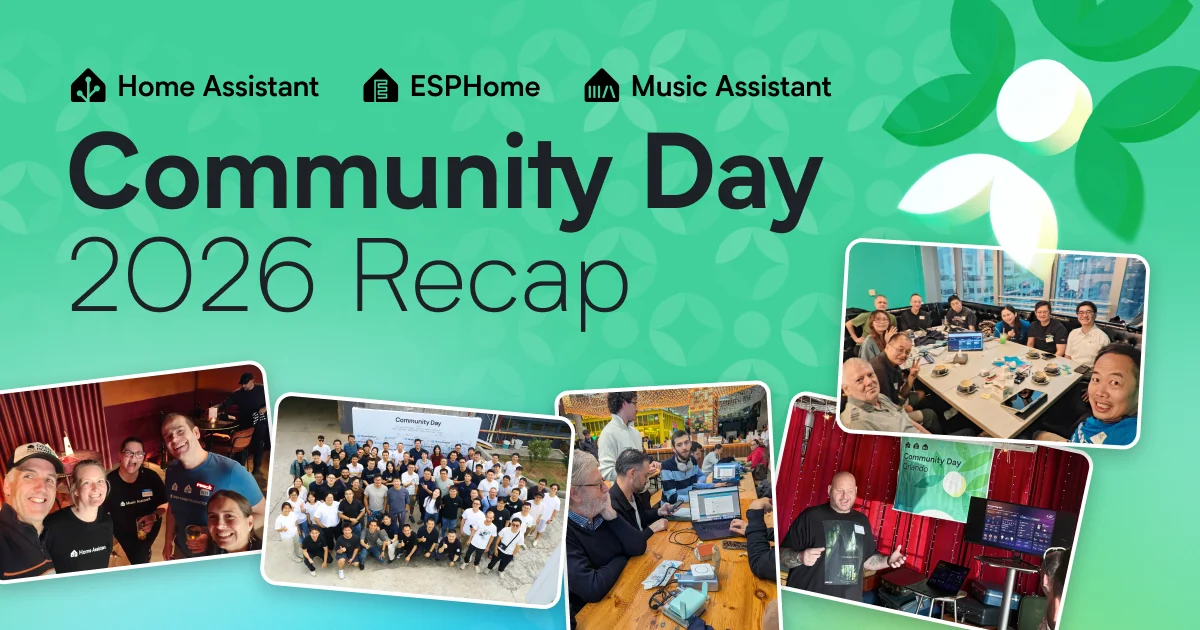
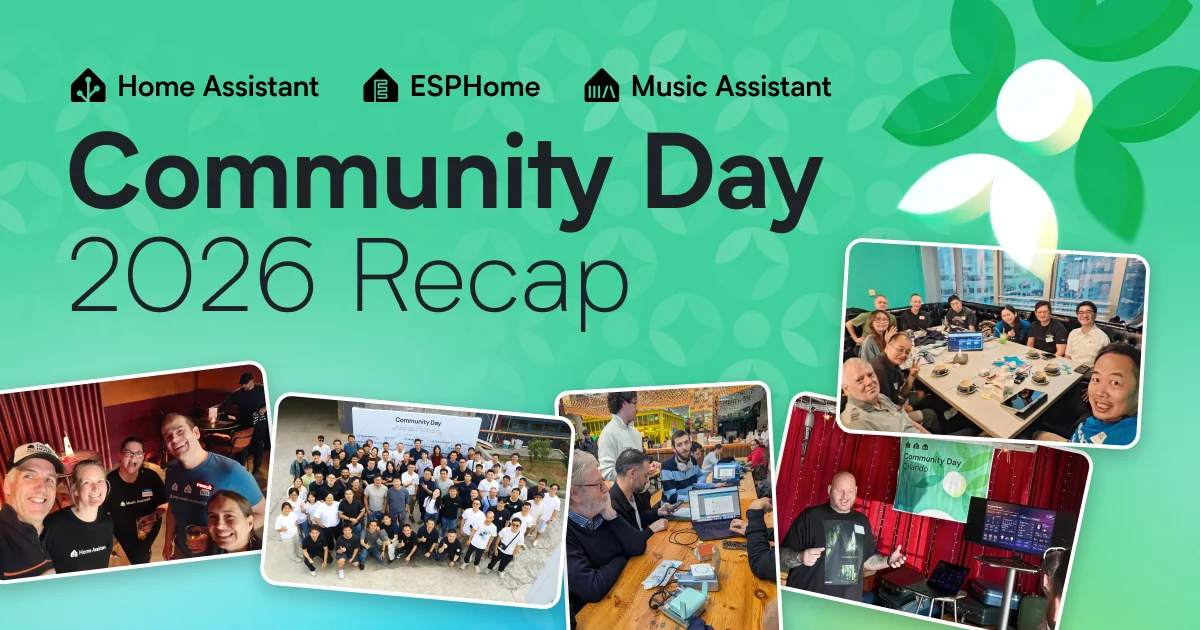
The Open Home Foundation has officially concluded its second annual Community Day, marking a monumental milestone for the global smart home ecosystem. Spanning multiple continents, the 2026 iteration of the event demonstrated substantial year-over-year growth in geographic reach, participant engagement, and cross-platform collaboration. By integrating related open-source ecosystems such as ESPHome and Music Assistant, the foundation solidified Community Day’s status as the largest distributed gathering within the international smart home automation sector.
Comprehensive Chronology and Global Footprint
Community Day 2026 maintained a continuous 34.5-hour operational window, expanding significantly upon the 26-hour timeline established during the inaugural 2025 event. The global wave of meetups commenced at 14:30 UTC on Friday, November 6, in Budapest, Hungary, and concluded at 01:00 UTC on Sunday, November 8, in Seattle, Washington.
Rather than adhering strictly to a single-day schedule, local chapters across various time zones organized events throughout the entire weekend. This decentralized approach allowed communities in disparate regions to tailor their gatherings to local preferences while remaining synchronized with the broader international initiative. The chronological progression moved from Europe and Africa through Asia, Australia, and finally across the Americas, creating an uninterrupted wave of community engagement.
Quantitative Growth and Regional Metrics
Official data released by the Open Home Foundation highlights substantial quantitative expansion across all key performance indicators. The 2026 event recorded a total of 97 independent meetups spanning 35 countries, representing a 20 percent increase in event volume compared to the previous year and approaching the organization’s benchmark target of 100 events.
Participant registration figures experienced an even more dramatic surge, climbing 76 percent to reach a total of 2,712 registered guests worldwide. This increase elevated the average meetup attendance to approximately 28 participants per location, surpassing previous estimations that suggested caps below 20 individuals.
Regional distribution patterns shifted notably during the 2026 event. The Australia and New Zealand chapter demonstrated an eight-fold increase in participation, driven by heightened local interest and proactive coordination. Concurrently, the Africa and Asia-Pacific regions reported steady, measurable growth, reflecting the expanding global footprint of open-source home automation standards.
Integration of Adjacent Ecosystems and Partner Participation
A defining characteristic of the 2026 event was the formal inclusion of the ESPHome and Music Assistant communities alongside the core Home Assistant user base. This expansion broadened the technical scope of local discussions, bridging firmware development, hardware integration, and multi-room audio streaming within a single community framework.
In parallel, hardware manufacturers participating in the Works with Home Assistant partner program engaged directly with local chapters. Several partners supplied physical hardware samples for demonstration purposes, allowing attendees to examine emerging smart home devices firsthand. While logistical hurdles occasionally complicated the distribution of sample hardware, the foundation has identified these operational bottlenecks as key areas for refinement in future planning cycles.
Grassroots Innovation and Local Customization
Beyond standardized materials provided through the Open Home Foundation’s central merchandise catalog, local hosts implemented creative localized engagement strategies. Documentation from the 2026 event highlighted diverse grassroots initiatives, including custom-branded merchandise, locally produced NFC tags, and region-specific commemorative items generated by hosts in cities such as Shenzhen, Gdansk, and Paris.
Activities during the meetups extended beyond standard networking. Many chapters utilized customized presentation templates, conducted technical workshops on home automation architecture, integrated Music Assistant-powered music trivia competitions, and facilitated peer-to-peer hardware exchange programs. The Open Home Foundation continues to capture these grassroots methodologies to update its official Host Playbook, aiming to standardize logistical support and financial reimbursement frameworks for venue rentals, travel, and custom materials.
Administrative Challenges and Foundation Retrospective
Managing a decentralized global event of this scale introduced notable logistical complexities. In post-event evaluations, foundation organizers identified several administrative friction points, particularly regarding merchandise distribution channels, communication tracking, and lead times for partner hardware integration.
To address these challenges, the Open Home Foundation has outlined several structural improvements for subsequent events. Proposed administrative updates include implementing automated ticketing and communication systems to streamline inquiries, establishing direct-order mechanisms or coupon systems for event merchandise, and enabling partner organizations to coordinate directly with local hosts via scheduling platforms like Luma.
Furthermore, the foundation conducts formal retrospective reviews following major organizational initiatives. Feedback collected from participating hosts via standardized evaluation forms is currently being processed to inform policy adjustments, update community guidelines, and optimize resource allocation for upcoming community cycles.
Broader Economic and Industry Implications
The continuous expansion of decentralized smart home communities underscores the maturation of the open-source automation market. As proprietary ecosystems face increasing scrutiny regarding data privacy, vendor lock-in, and cloud dependency, localized peer-to-peer networks provide critical technical support and education for consumers.
Events like Community Day function as vital physical touchpoints in an otherwise digital industry, fostering direct collaboration between end-users, software developers, and hardware manufacturers. The willingness of commercial entities to engage with grassroots organizations indicates a growing recognition of the economic value inherent in highly engaged, open-source user bases.
Outlook for Community Day 2027
Building upon the momentum of the 2026 gatherings, the Open Home Foundation Community department has initiated planning for Community Day 2027. Organizers have confirmed that the next save-the-date announcement will be released during the first quarter of 2027, with the event itself scheduled for the second half of the year to provide an extended lead time for global coordination.
In addition to event planning, the foundation is expanding its internal operations, with plans to open new administrative and community-focused roles throughout 2027. As the organization scales to meet the demands of a growing user base, ongoing investments in infrastructure, documentation, and localized support are expected to reinforce the stability and reach of the global smart home community.