Massachusetts-based battery pioneer Factorial Energy is aggressively shifting the paradigm of electric vehicle (EV) power storage, announcing a strategic coalition of specialized supply chain partners aimed at overcoming the long-standing technical hurdles that have prevented all-solid-state batteries from reaching mass-market production. This week, the company confirmed a joint development agreement with Japanese materials giant Mitsui Kinzoku, marking a significant milestone in its efforts to integrate high-performance solid electrolytes into its next-generation battery architectures.
The collaboration with Mitsui Kinzoku is the latest in a series of strategic maneuvers designed to industrialize a technology that promises to redefine the performance metrics of the automotive sector. While traditional lithium-ion batteries have served as the backbone of the EV revolution, they rely on volatile, flammable liquid electrolytes to transport charge-carrying ions between the anode and cathode. The transition to a solid-state architecture replaces this liquid medium with a solid material, which theoretically eliminates fire hazards, significantly increases energy density, and facilitates ultra-fast charging cycles.
The Technical Crossroads of Modern Energy Storage
For over a decade, the promise of solid-state batteries has been tempered by the reality of engineering constraints. Conventional lithium-ion batteries have enjoyed decades of iterative improvement, resulting in lower costs and enhanced safety profiles that make them difficult to displace. In contrast, solid-state technology has faced persistent issues related to interfacial impedance, manufacturing scalability, and material stability under thermal stress.
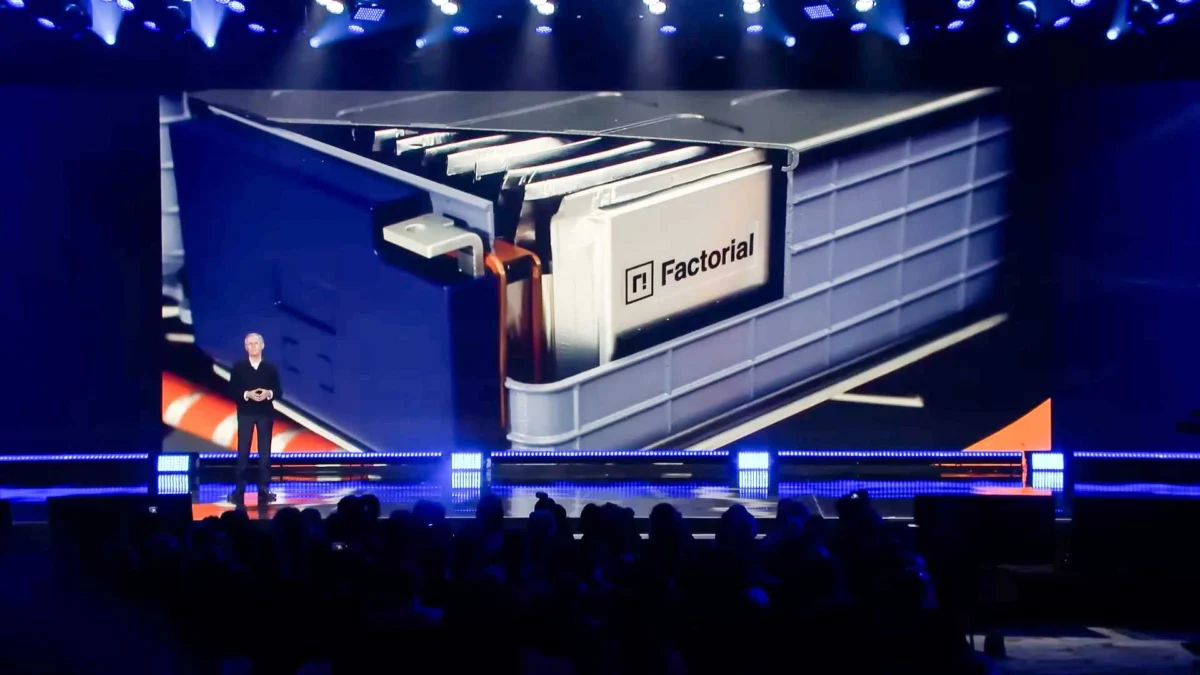
Factorial Energy’s approach diverges from the traditional, vertically integrated development models often favored by major automotive manufacturers. CEO Siyu Huang has emphasized that the complexity of the solid-state chemistry requires a collaborative, specialized approach rather than a singular, in-house effort. By aggregating expertise in anode chemistry, cathode development, electrolyte synthesis, and high-precision manufacturing, Factorial aims to bypass the "siloed" development traps that have stalled competitors.
"We are driving a very strong coalition among all of the supply chain," Huang stated during a recent industry interview. "There are still significant technical challenges to unlock. It is very important for us to go beyond the existing mindset and framework for lithium-ion and focus on a technology that goes beyond."
A Strategic Chronology of Growth
Factorial’s emergence as a key player in the battery sector has been marked by rapid scaling and high-profile partnerships. Since its founding, the company has focused on developing two core product lines: the FEST semi-solid-state battery, which utilizes a gel-like electrolyte, and the Solstice all-solid-state cell.
The company’s path to the current, broader coalition includes several critical touchpoints:
- Early Development Phase: Initial breakthroughs in lithium-metal technology and solid electrolyte synthesis provided the "foundational IP" that now serves as the basis for the Solstice platform.
- Prototype Validation: Factorial successfully integrated its semi-solid-state cells into prototype vehicles, including the Mercedes-Benz EQS and the Dodge Charger Daytona, demonstrating the feasibility of higher energy density in real-world driving scenarios.
- Public Market Entry: In June, Factorial Energy went public on the Nasdaq, signaling a shift from a private research venture to a commercial entity tasked with meeting institutional growth expectations.
- Supply Chain Integration: The company formed partnerships with Korean firms such as Posco Future M for anode and cathode development, and established joint development agreements with heavyweights including the Volkswagen Group’s PowerCo division and the Hyundai Motor Group.
- Manufacturing Expansion: A memorandum of understanding with Phil Energy has secured a roadmap for advanced manufacturing equipment, ensuring that the lab-scale successes can be translated into giga-scale production.
The Role of Material Science in Battery Performance
The Mitsui Kinzoku partnership is central to the efficacy of the Solstice battery. High-performance batteries are only as good as the materials from which they are synthesized; the solid electrolyte is the critical component that dictates both the safety and the longevity of the cell. According to Factorial, access to Mitsui’s proprietary materials allows for higher thermal stability, enabling the battery to operate efficiently under extreme conditions that would typically degrade conventional chemistries.

The Solstice cell aims to reach energy densities of up to 450 watt-hours per kilogram (Wh/kg). To put this in perspective, current high-end electric vehicle batteries typically hover between 200 and 250 Wh/kg. Doubling this density would theoretically allow for significantly lighter battery packs—reducing vehicle weight—or substantially longer ranges for the same mass, potentially pushing standard luxury EVs into the 700-mile-plus range category on a single charge.
Broader Industry Implications
The race for the "holy grail" of battery technology is not confined to Massachusetts. A robust, global competitive landscape has formed, with several prominent players vying for market dominance. California-based QuantumScape, Colorado-based Solid Power, and Illinois-based Pure Lithium represent the core of the U.S.-based innovation front. Simultaneously, global incumbents such as Toyota, Taiwan’s ProLogium, and Chinese giants CATL and BYD are pouring billions into proprietary solid-state architectures.
The fundamental debate in the industry remains whether the future of battery production will favor the "Factorial model"—a coalition of specialized, nimble innovators—or the "vertical integration model," where a single automaker manages the entire process from mineral sourcing to cell packaging.
The implications for the automotive sector are profound. If the coalition model proves successful, it could signal a shift in how EVs are designed and manufactured. By standardizing components and leveraging the specialized knowledge of suppliers, automakers may be able to accelerate the adoption of solid-state technology while reducing the massive capital expenditure typically associated with "from-scratch" battery development.
Commercialization and the Road Ahead
While the technology has yet to reach the production line of a mass-market vehicle, the commercialization timeline is accelerating. Factorial recently secured its first commercial aerospace purchase order, a move that serves as a proof-of-concept for its production readiness. Karma Automotive is currently positioned to be the first manufacturer to integrate Factorial’s semi-solid-state batteries into a production vehicle, with a projected launch in 2028.
For large automotive OEMs, the transition to solid-state is not a question of "if," but "when." The timing of full-scale integration remains dependent on rigorous validation, including long-term cycle testing and the ability to maintain consistent quality at scale. Factorial’s strategy—securing supply chain commitments now—suggests a focus on hedging against the volatility of the global battery supply chain.
As the industry moves toward 2030, the reliance on, and development of, solid-state batteries will likely become the primary differentiator for luxury and long-range electric vehicles. By positioning itself as the central architect of a collaborative ecosystem, Factorial Energy is attempting to de-risk the transition, ensuring that when the market is ready, the materials, the manufacturing processes, and the intellectual property are already in place.
Ultimately, the success of the Factorial-Mitsui coalition will be measured by its ability to transition from these high-level partnerships to reliable, cost-effective, and safe automotive power units. As Huang noted, the future of the industry is no longer in the hands of a lone innovator; it is in the hands of a coordinated industry ecosystem. With the backing of major automotive players and the expertise of specialized chemical firms, the prospect of a solid-state future is becoming increasingly tangible.