The global artificial intelligence landscape has reached a new milestone with the official rollout of OpenAI’s latest model series, GPT-5.6. Following the incremental success of its predecessor, GPT-5.5, the new iteration introduces a sophisticated hierarchy of models and reasoning capabilities designed to address the complex demands of enterprise-level software engineering, browser-based automation, and multimodal reasoning. This release comes at a critical juncture in the "AI Arms Race," as competitors like Anthropic have recently gained significant ground with the release of Opus 4.8 and Fable 5. GPT-5.6 is OpenAI’s strategic response, focusing on refined precision, "inference-time compute" adjustments, and an expanded ecosystem of tool integrations.
The Celestial Hierarchy: Sol, Terra, and Luna
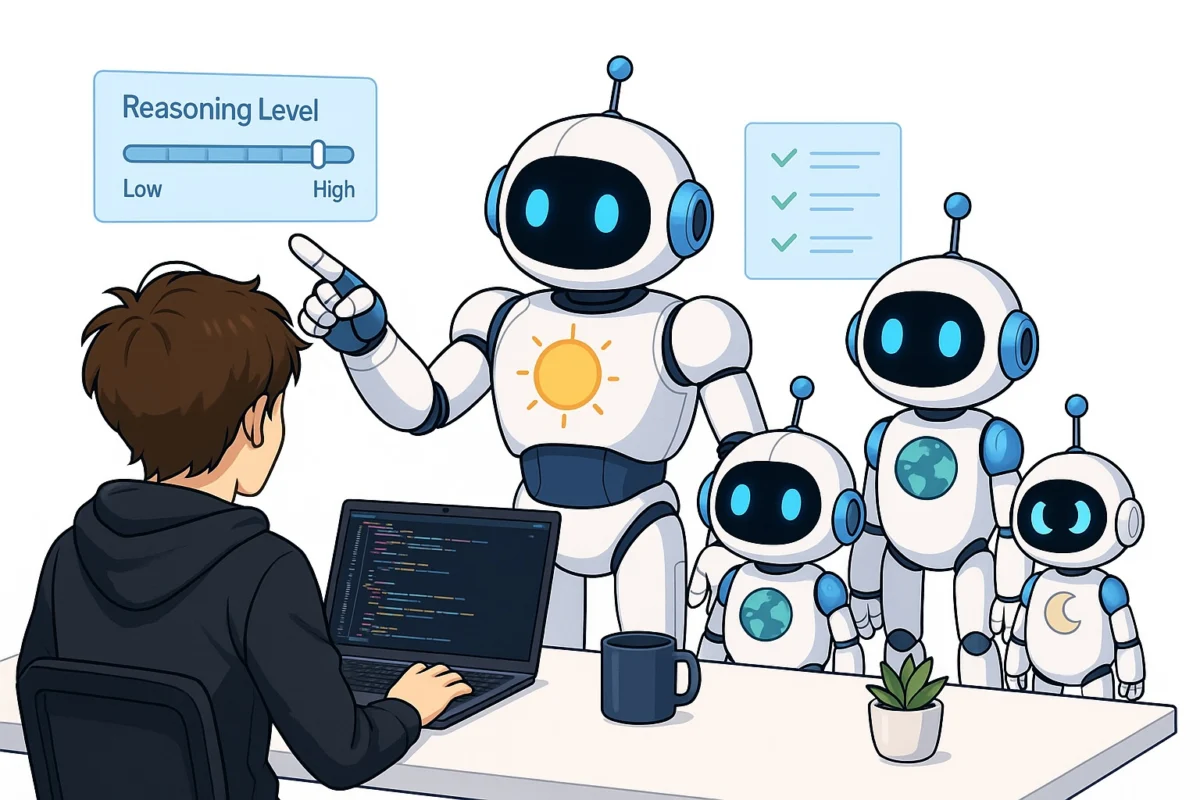
Departing from previous naming conventions, OpenAI has categorized the GPT-5.6 suite into three distinct sizes, metaphorically tied to celestial bodies to represent their relative scale and power. This tiered approach allows users to balance computational cost against the complexity of the task at hand.
The flagship model, Sol, represents the sun and serves as the "frontier" model of the suite. It is designed for the most cognitively demanding tasks, including architectural planning, deep-logic debugging, and complex creative synthesis. Industry analysts estimate that Sol utilizes a significantly larger parameter count than its predecessors, optimized for what OpenAI calls "Ultra-Reasoning."
The mid-tier model, Terra, represents the Earth. It is positioned as a versatile, high-performance model for daily professional use. Terra is optimized for a balance of speed and intelligence, making it suitable for standard coding tasks, content generation, and data analysis. Early benchmarks suggest that Terra, when paired with high reasoning levels, can occasionally match the performance of Sol in specific logic tests, providing a more cost-effective alternative for developers.
The smallest and fastest model, Luna, represents the moon. Luna is built for high-frequency, low-latency applications such as real-time chat, simple automation, and basic classification. While it lacks the deep reasoning depth of Sol, its efficiency makes it an ideal candidate for edge computing and mobile integrations where response time is paramount.
Technical Innovation: Dynamic Reasoning Levels
One of the most significant shifts in the GPT-5.6 architecture is the formalization of "Reasoning Levels." Unlike previous models that delivered a static response time, GPT-5.6 allows users to toggle between Medium, Extra High, and Ultra reasoning modes. This functionality leverages a concept known as "inference-time compute," where the model is allocated more time and computational resources to "think" through a problem before generating a final output.
In "Ultra" mode, the model engages in internal chain-of-thought processing, simulating multiple potential solutions and self-correcting before the user sees the first token of the response. This is particularly effective for complex software implementations and mathematical proofs. However, this increased intelligence comes with a trade-off: significantly higher latency and a faster consumption of API credits or subscription limits.
Preliminary data from early testers indicates that while GPT-5.6 is an incremental improvement over GPT-5.5 in terms of raw knowledge, its true strength lies in its "recall" and "precision" during code reviews. In software engineering contexts, recall refers to the model’s ability to identify all existing bugs within a codebase, while precision refers to the accuracy of the model when it flags a specific line of code as problematic. GPT-5.6 Sol has demonstrated a marked improvement in both metrics, often catching subtle logic flaws that were overlooked by GPT-5.5 and Anthropic’s Opus 4.8.
The Competitive Landscape: OpenAI vs. Anthropic
The release of GPT-5.6 directly challenges the recent dominance of Anthropic’s Opus 4.8 and Fable 5. For several months, the developer community has debated the merits of both ecosystems, with many shifting to Anthropic for implementation planning. GPT-5.6 aims to reclaim that user base.
Comparative analysis shows that while GPT-5.6 is superior in code review and browser-based navigation, many developers still prefer a hybrid approach. Current industry trends suggest a workflow where Anthropic’s Fable 5 is utilized for initial implementation planning due to its unique structural logic, while GPT-5.6 is employed for the final execution and rigorous code auditing.

Furthermore, GPT-5.6’s "Computer Use" and "Browser Use" capabilities have been significantly upgraded. The model can navigate complex web interfaces with high precision, making it a powerful tool for end-to-end testing and automated research. When set to "Medium" reasoning, GPT-5.6 handles browser interactions with a speed that reportedly outpaces Anthropic’s current offerings, providing a smoother experience for users automating repetitive web tasks.
Operational Infrastructure and Usage Economics
OpenAI has also revised its subscription and usage limit policies to coincide with the GPT-5.6 launch. Notably, the company has experimented with removing the traditional five-hour usage limit for certain tiers, replacing it with a more flexible weekly limit. This change is designed to accommodate users who require intensive bursts of productivity followed by periods of lower activity.
A new feature introduced with this model is the "Banked Reset." This mechanism allows subscribers to trigger a manual reset of their usage limits once they have exhausted their tokens. Unlike the previous automated system, these banked resets provide users with more control over their computational resources, though OpenAI has noted that triggering a reset also shifts the date of the next scheduled reset.
The cost of utilizing the "Ultra-Reasoning" levels remains a point of contention. Early reports suggest that a single complex query in Ultra mode can consume the equivalent of dozens of standard queries, making it difficult for users on the standard $200-per-month professional tier to maintain high-volume workflows without hitting caps. This has led to the emergence of "Reasoning Management" strategies, where users utilize "Extra High" thinking for the planning phase of a project and switch to "Medium" reasoning for the actual implementation of code.
Ecosystem Integration and the Model Context Protocol (MCP)
To maximize the utility of GPT-5.6, OpenAI has expanded its support for the Model Context Protocol (MCP). This allows the model to connect seamlessly with third-party tools and data sources, such as Gmail, Google Calendar, Slack, and Playwright. By providing the model with access to a user’s entire digital workspace, GPT-5.6 can perform cross-platform tasks, such as scheduling meetings based on Slack conversations or debugging code based on error reports received via email.
Industry experts emphasize that the effectiveness of GPT-5.6 is heavily dependent on these integrations. Without access to the full context of a repository or a communication suite, the model’s reasoning capabilities are underutilized. OpenAI has encouraged developers to utilize these connectors to bridge the gap between isolated LLM chat interfaces and integrated development environments (IDEs).
Chronology of Development
The path to GPT-5.6 has been defined by a series of rapid iterations:
- Late 2024: The release of GPT-5 established the baseline for "Frontier" reasoning.
- Mid 2025: GPT-5.5 introduced better multimodal support and reduced hallucination rates.
- Early 2026: Anthropic released Opus 4.8, which briefly took the lead in several industry benchmarks for coding and logic.
- July 2026: OpenAI officially launched the GPT-5.6 suite (Sol, Terra, Luna), introducing the "Reasoning Level" slider and the "Banked Reset" system to address user demands for more control over inference-time compute.
Broader Implications and Future Outlook
The launch of GPT-5.6 signals a shift in the AI industry away from simply increasing the size of training datasets and toward optimizing how models use computational power during the response phase. By allowing the model to "think" longer, OpenAI is tackling the limitations of previous LLMs that were prone to "shooting from the hip" and making errors on complex logic puzzles.
For the software engineering industry, the implications are profound. As GPT-5.6 demonstrates a near-human (and in some cases, supra-human) ability to conduct code reviews, the role of the human developer is shifting toward that of an architect and supervisor. The necessity for manual, line-by-line code reviews is diminishing, as automated systems like GPT-5.6 become reliable enough to prevent bugs from reaching production environments.
However, the high energy and computational costs associated with "Ultra" reasoning levels suggest that the industry may face a sustainability challenge. As models become more intelligent through increased compute-at-inference, the demand for high-end GPUs and data center capacity will only intensify.
In conclusion, GPT-5.6 represents a significant, albeit incremental, step forward for OpenAI. By offering a tiered model system and granular control over reasoning efforts, OpenAI is providing a more professional, tool-oriented AI experience. While it may not yet completely replace competitors like Anthropic in every part of the development lifecycle, its superior code review capabilities and browser integration make it an essential tool for the modern digital workforce. As users continue to test the limits of Sol, Terra, and Luna, the data gathered will likely inform the next major leap in the GPT lineage.