









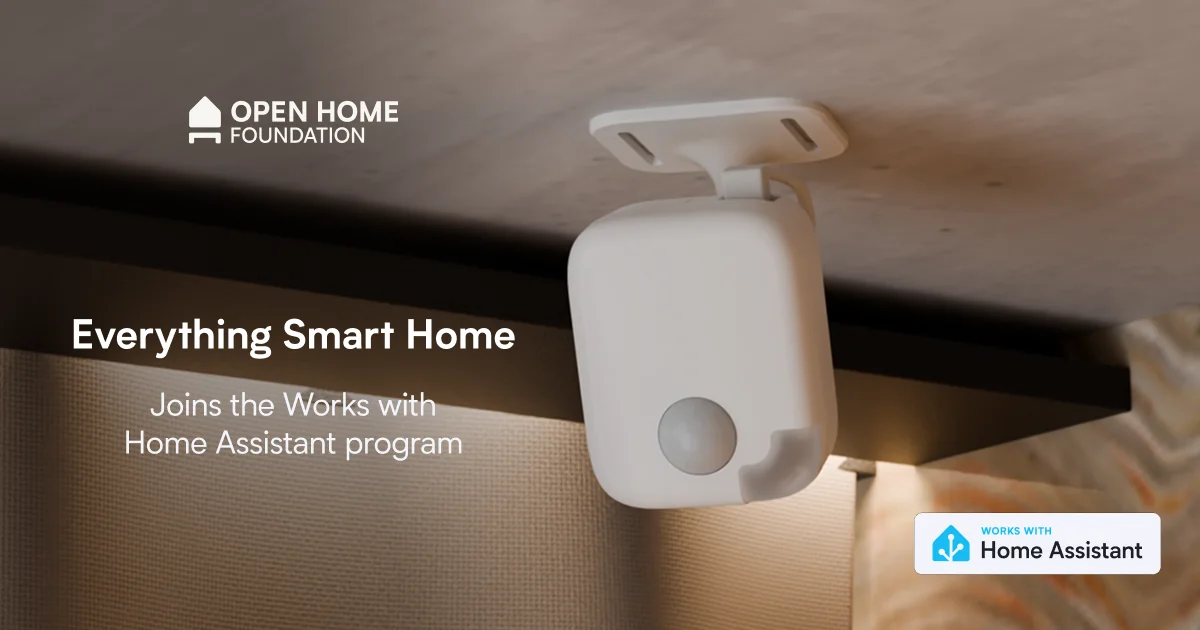
The open-source home automation landscape has achieved a significant milestone as Everything Smart Home officially joins the Works with Home Assistant certification program. Founded by the father-and-son team of Lewis and Dave Barclay, the family-run enterprise brings its popular Everything Presence sensor range—encompassing the Lite, One, and Pro models—into the official fold of verified, locally controlled hardware ecosystems. This inclusion marks a notable intersection where independent community creation matures into standardized, enterprise-grade hardware manufacturing, all while preserving the core ethos of data privacy and offline functionality.
Chronology of an Open-Source Ascent
The trajectory of Everything Smart Home mirrors the rapid maturation of the broader DIY home automation movement over the past decade. In 2020, UK-based content creator Lewis Barclay launched the "Everything Smart Home" YouTube channel. Amid a crowded digital landscape, Barclay carved out a distinct niche by delivering meticulous monthly recaps of Home Assistant software releases, alongside detailed tutorials and architectural guides for home automation enthusiasts.
As the channel gained traction, its influence within the community expanded proportionally. By 2022, Everything Smart Home was inducted as an inaugural member of the Home Assistant Creator Network, cementing its status as an authoritative voice in the sector. Recognizing a gap in the market for hardware specifically tailored to advanced tinkerers, Lewis partnered with his father, Dave Barclay—an experienced electrical engineer—later that same year to establish Everything Smart Technology.
The launch of the commercial hardware arm initially served as a retail distributor for trusted third-party components, including official Nabu Casa hardware. However, the Barclays soon transitioned from curation to original design manufacturing. Frustrated by the limitations of commercial off-the-shelf sensors available on the market, Lewis engineered the Everything Presence sensor line to incorporate high-performance capabilities, such as millimeter-wave (mmWave) radar and open-source ESPHome firmware, directly addressing the sophisticated demands of the Home Assistant user base.
Technological Architecture and Local Control
At the core of the Everything Presence sensor lineup—comprising the Lite, One, and Pro iterations—is a strict adherence to local-first processing. Unlike mainstream consumer smart home devices that rely heavily on proprietary cloud infrastructures, telemetry servers, and constant internet connectivity, these sensors operate entirely within the local area network. Powered by ESPHome, they communicate directly with Home Assistant instances without routing data through third-party servers.
Furthermore, all three devices bear the "Made for ESPHome" certification badge. This designation guarantees out-of-the-box compatibility with the ESPHome ecosystem, grants users full configuration control without requiring physical hardware modifications or soldering, and ensures that the underlying source code remains completely open and auditable via public repositories such as GitHub.
The technological differentiator of the Everything Presence line lies in its occupancy detection methodology. Traditional commercial motion detectors utilize passive infrared (PIR) technology, which registers movement through thermal radiation changes. Consequently, occupants who remain stationary for extended periods—such as reading a book or working at a desk—frequently trigger false-negative readings, resulting in deactivated lighting or climate control systems.
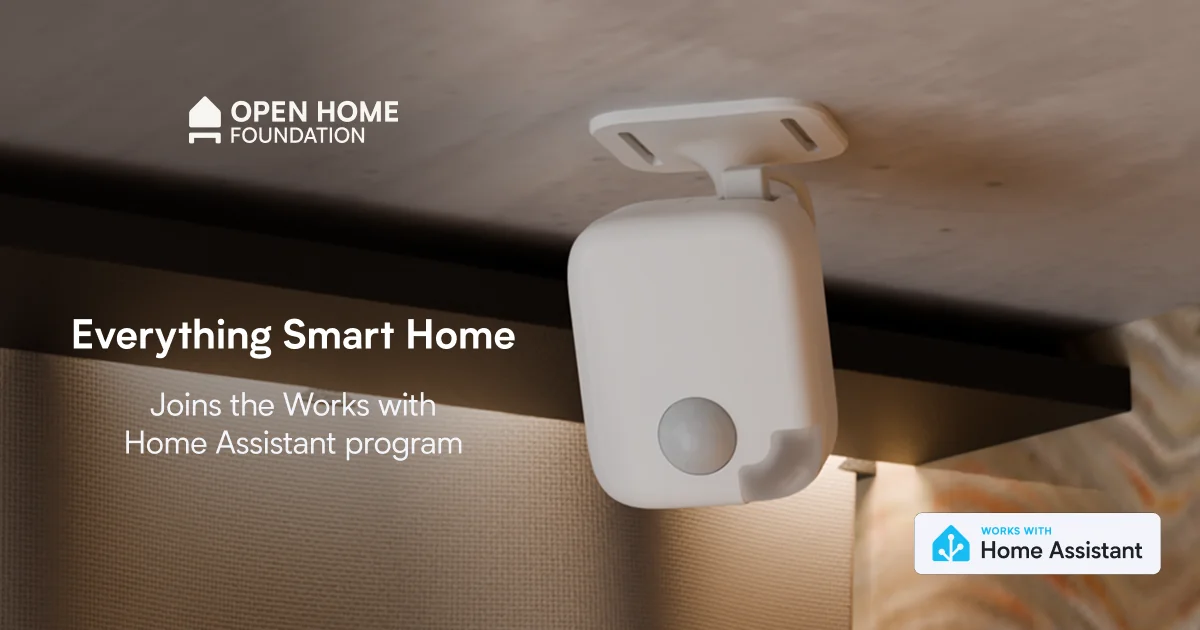
To resolve this limitation, the Everything Presence sensors integrate millimeter-wave (mmWave) radar technology. Capable of detecting microscopic physical movements as subtle as human respiration, mmWave radar ensures continuous occupancy tracking regardless of user motionlessness. While the Lite model relies primarily on mmWave detection, the One and Pro variants combine mmWave radar with traditional PIR sensors to deliver instantaneous initial triggers upon room entry alongside persistent presence verification. Additionally, all three models function as native Bluetooth proxies, effectively extending the physical range of a home’s Bluetooth device network for tracking beacons and smart locks.
The apex of the current lineup, the Everything Presence Pro, introduces professional-grade installation capabilities by incorporating Power over Ethernet (PoE) via an 802.3af standard connection, alongside standard wired Ethernet. This dual-utility cable infrastructure permits ceiling mounting akin to enterprise wireless access points or closed-circuit television cameras, eliminating reliance on intermittent Wi-Fi signals and dedicated AC power outlets.
Rigorous Evaluation and Program Standards
The admission of the Everything Presence line into the Works with Home Assistant program required rigorous validation by the platform’s internal testing engineers. Certification protocols evaluate candidate devices across multiple operational vectors, including local execution reliability, data privacy preservation, firmware longevity, and ecosystem sustainability.
Participating manufacturers must enter into formal compliance agreements committing to sustained long-term firmware updates and uninterrupted local functionality. While the baseline certification testing for the Everything Smart Home catalog was conducted over standard Wi-Fi network configurations, the integration demonstrates seamless performance across diverse topologies.
Lewis Barclay reflected on the milestone, emphasizing the symbiotic relationship between his enterprise and the wider user base. "Home Assistant has been a huge part of our journey from day one, so joining the Works with Home Assistant program with our Everything Presence sensors feels like a natural next step," Barclay stated. "The Home Assistant community has been incredibly supportive of me ever since pressing publish on that very first video, and we’re incredibly proud to be part of a program that shares our commitment to open, local smart home tech that puts control and privacy firmly in the hands of users."
Broader Implications for the Smart Home Industry
The formal integration of Everything Smart Home into the verified hardware ecosystem underscores a broader economic and technical shift within the consumer electronics sector. For years, the smart home market has been dominated by large conglomerates pushing cloud-dependent ecosystems that expose users to privacy vulnerabilities, recurring subscription fees, and sudden obsolescence should corporate servers be decommissioned.
Conversely, the success of community-born hardware companies highlights a growing consumer demand for interoperable, secure, and locally managed infrastructure. By utilizing the Open Home Foundation’s ecosystem—supported financially in part by subscription services such as Home Assistant Link—manufacturers can bypass traditional venture capital bottlenecks and design hardware directly responsive to user specifications gathered via open forums and GitHub repositories.
This collaborative engineering model accelerates product iteration and fosters high levels of brand loyalty. As more independent manufacturers align with formalized certification standards like Works with Home Assistant, consumers gain access to an expanding catalog of reliable hardware that guarantees longevity, transparency, and data sovereignty. The collaboration between the Barclays and the Home Assistant development team establishes a precedent for how independent creators can scale specialized manufacturing into respected, standards-compliant enterprises without compromising the foundational tenets of the open-source movement.