The global photographic equipment market has witnessed a surge in specialized optical accessories designed to give creators unique visual signatures without relying exclusively on post-processing software. Among the latest entrants to this creative space is lens manufacturer Brightin Star, which has officially announced its new manual-focus prime lens: the Brightin Star MF 50mm F2.0 Tri-Sight. While a standard 50mm focal length is a staple in almost every photographer’s bag, this particular optic separates itself from conventional glass by introducing an adjustable multi-mode rendering system, interchangeable aperture inserts, and a robust mechanical build tailored to both still photographers and cinematographers alike.
Priced competitively at $349.99 USD (approximately £263.99), the Tri-Sight lens is now available for purchase across a wide variety of modern mirrorless camera mounts, including Sony E, Canon RF, Nikon Z, and L-mount systems. By offering variable out-of-focus background characteristics—commonly known as bokeh—alongside novel shape-shifting aperture plates, the lens attempts to bridge the gap between vintage artistic character and modern optical engineering.
Main Facts and Core Optical Specifications
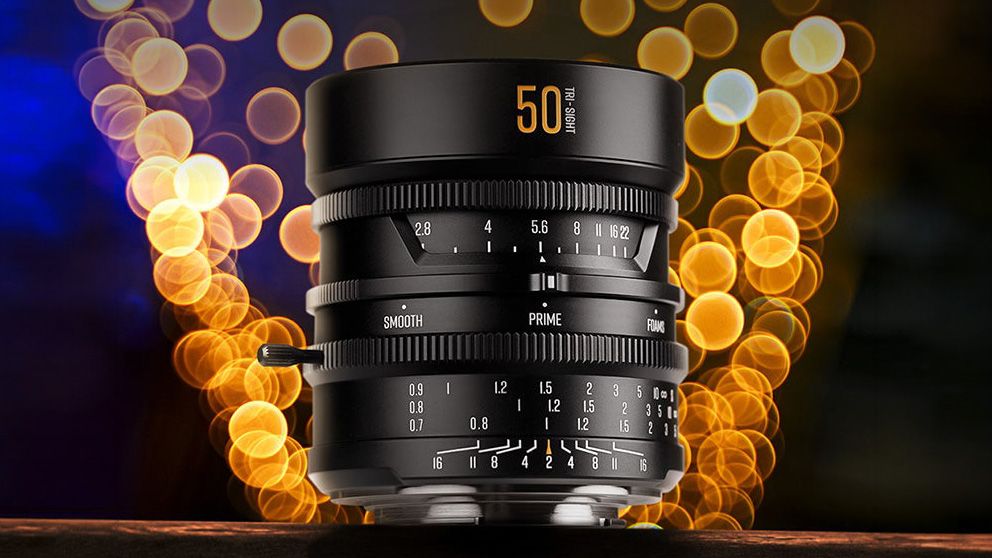
At first glance, the Brightin Star MF 50mm F2.0 Tri-Sight appears to be a standard, moderately fast prime lens. However, its internal architecture is fundamentally different from traditional fifty-millimeter designs. The optical stack is comprised of seven individual elements arranged into six groups. Up front, the lens utilizes a custom-made protective element crafted from precision-ground, ultra-thin glass measuring a mere 0.7 millimeters in thickness.
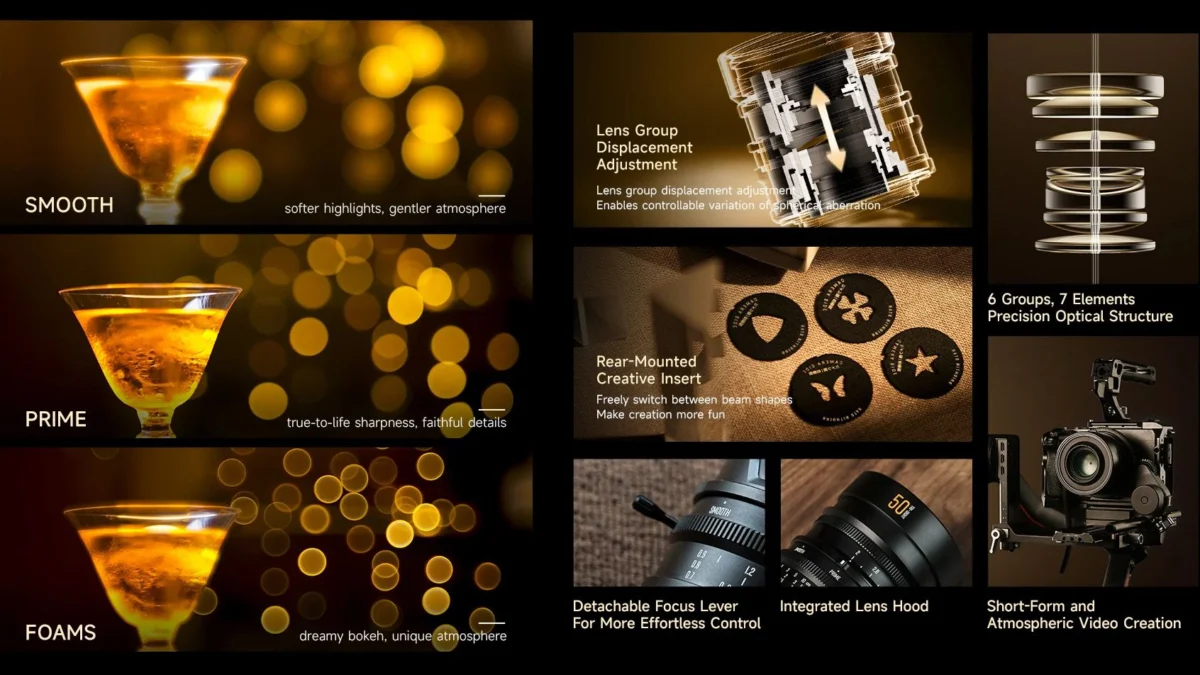
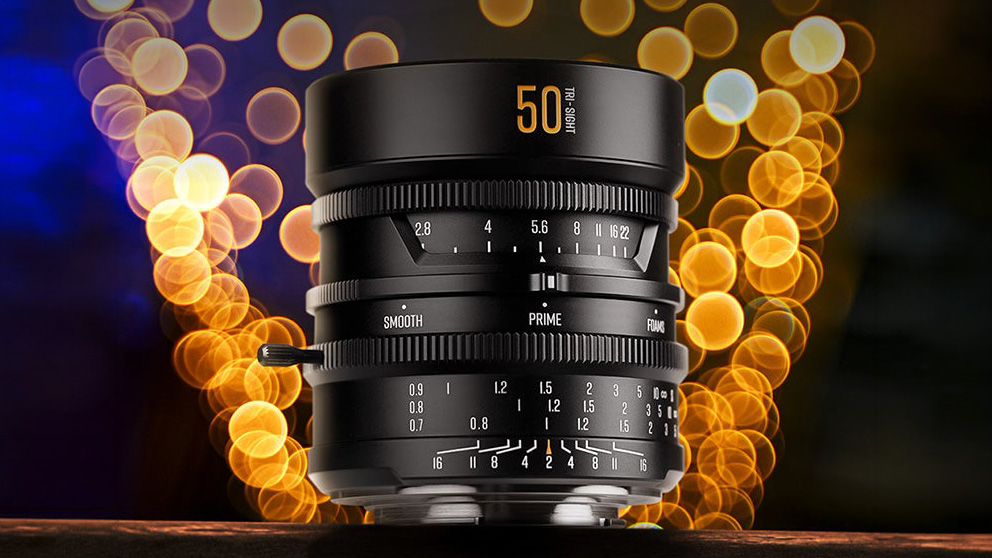
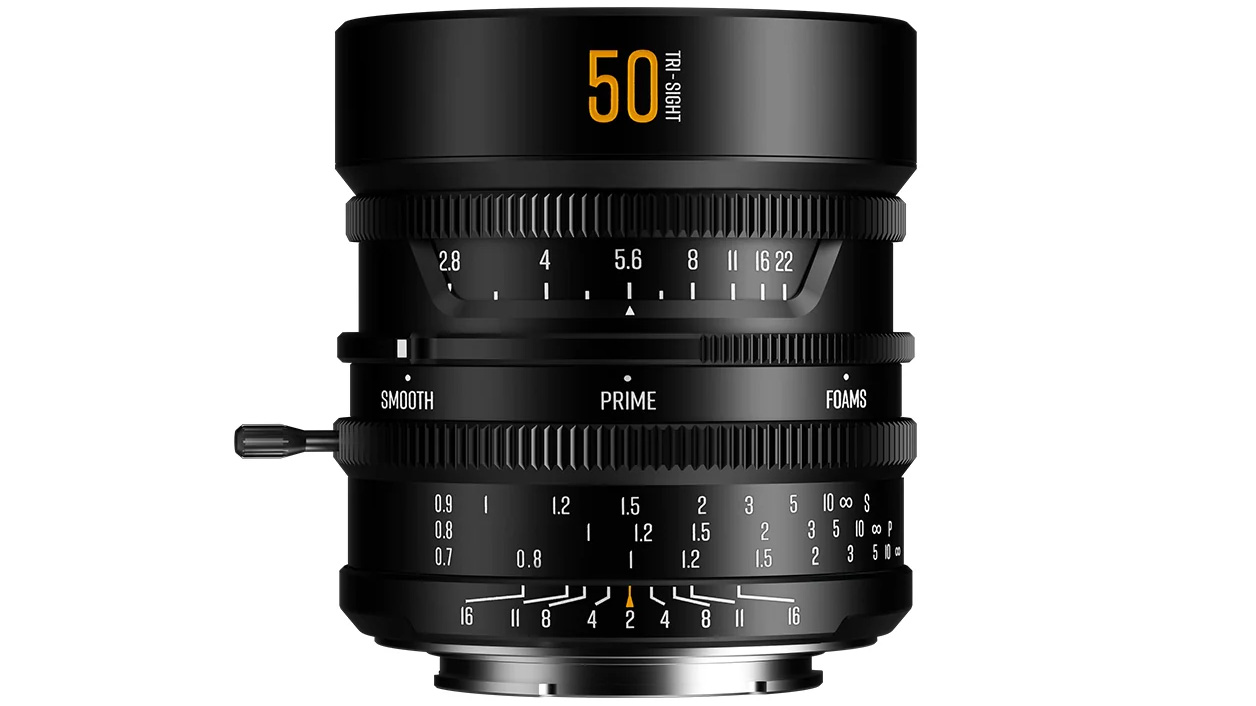
This ultra-thin front element is not merely a design choice; it is a mechanical necessity. The core feature of the Tri-Sight is its user-selectable rendering system, which is operated via a dedicated control ring positioned conveniently between the focusing and aperture rings. Turning this ring physically shifts a floating group of internal lens elements backward or forward within the metal barrel. By altering the distance of these elements relative to the focal plane, the lens changes the convergence characteristics of light rays passing through the optical array.
This mechanical shift produces three distinct bokeh profiles:
- Smooth Mode: Delivers soft, creamy out-of-focus highlights that gently blend into the background, ideal for traditional portraiture where subject separation is paramount.
- Prime Mode: Yields sharper, more defined edges around highlight points, offering a crisp, classic look with heightened micro-contrast.
- Foams Mode: Produces dreamy, bubble-like light flares that mimic vintage specialty lenses, creating a surreal and painterly background aesthetic.
Because the internal floating group extends forward past the main structural housing when the lens is dialed into "Foams" mode, the front element becomes marginally more vulnerable to physical impacts. Consequently, the manufacturer formally recommends that users return the bokeh control ring to "Prime mode"—where the barrel is fully retracted—before storing the lens in a camera bag.
Mechanical Design and Filmmaking Integration
Beyond its creative rendering capabilities, the Brightin Star MF 50mm F2.0 Tri-Sight is constructed entirely from durable metal, giving it a solid, professional hand-feel. Depending on the specific camera mount chosen by the user, the total weight of the lens ranges between 429 grams and 454 grams, while its physical length measures between 70 millimeters and 74 millimeters.
For videographers and cinematographers, the lens incorporates several practical design choices. The aperture diaphragm is constructed using 11 rounded blades, which help maintain circular shapes for point light sources even when the lens is moderately stopped down. Crucially, the aperture ring is de-clicked, allowing for seamless, silent exposure adjustments while recording video.
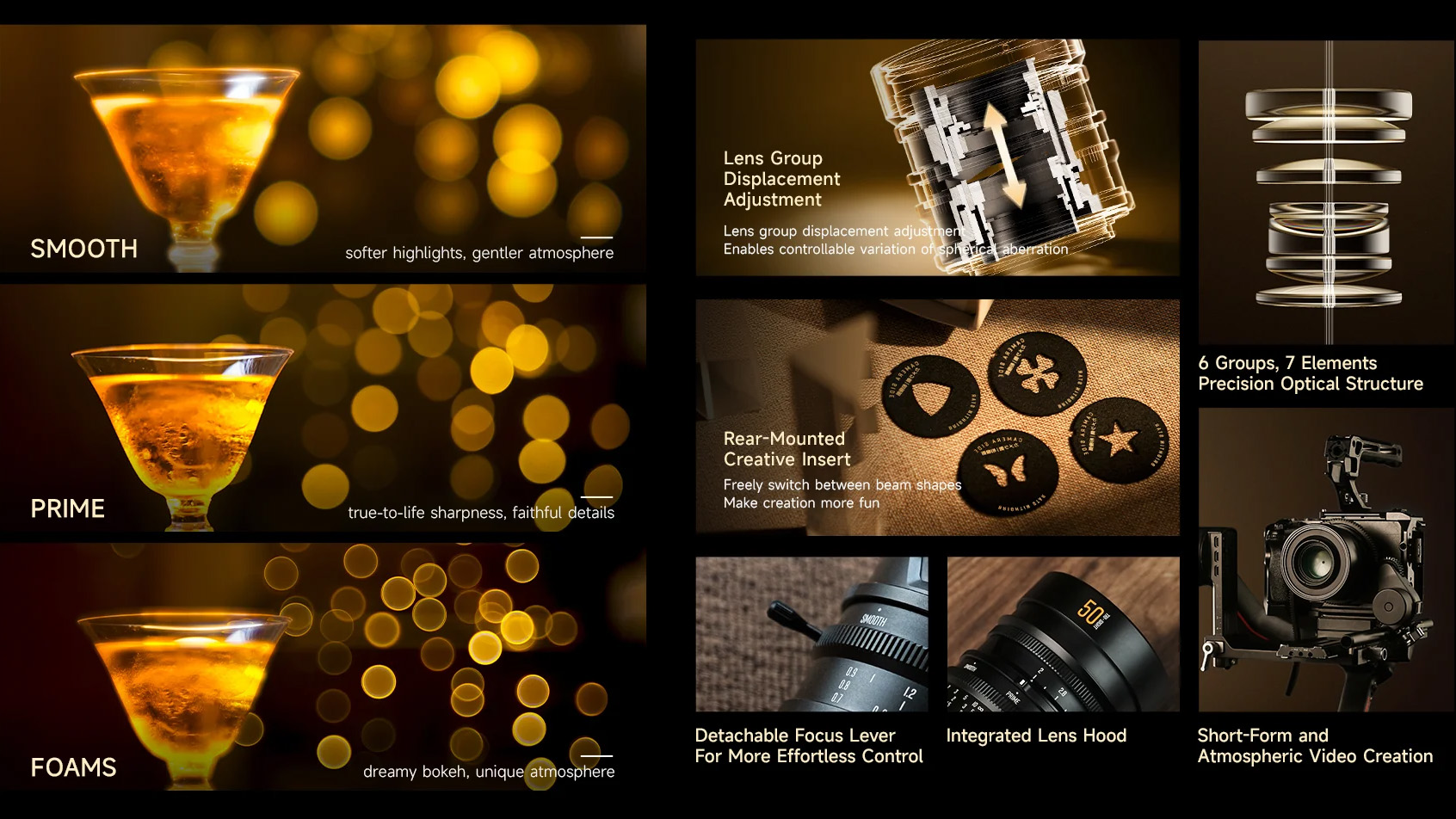
Additionally, the lens features a retractable lens hood to manage stray light and reduce lens flare. Because the Tri-Sight is a strictly manual-focus optic—lacking electronic contacts or autofocus motors—Brightin Star includes a detachable focus lever in the box. This lever can be screwed directly into the focus ring to provide finer tactile control during pull-focus operations, a feature that will likely appeal to indie filmmakers and videographers working on rigs or gimbals.
Novelty Aperture Plates and Creative Customization
In addition to the variable bokeh control ring, the Tri-Sight incorporates an alternative method for shaping background highlights through the use of physical aperture inserts. While similar concepts have historically been explored by niche manufacturers like Lomography with their Petzval and Daguerreotype Achromat product lines, Brightin Star has engineered a distinct mounting procedure for these plates.
Instead of dropping template discs downward directly through the lens barrel, users must unscrew a locking ring located near the lens mount, insert the desired template plate, and then re-secure the locking ring. The package includes four distinct metal plates featuring geometric cut-outs:
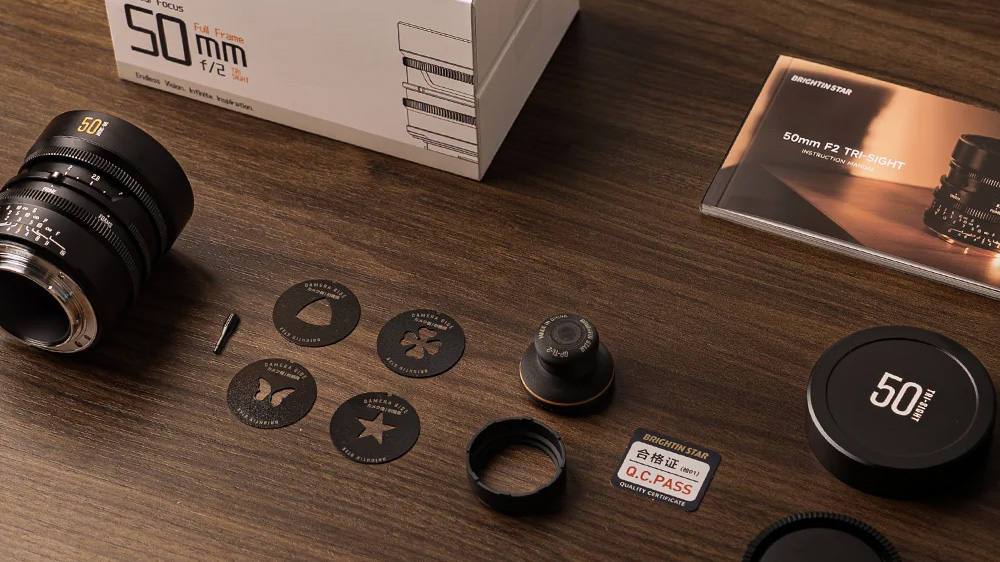
- Butterfly
- Star
- Triangle
- Four-leaf clover
When installed, these plates obstruct incoming light to force out-of-focus background points to mirror the chosen geometric silhouette. For photographers concerned about filtration, the lens barrel also retains a dedicated slot designed to accept standard drop-in 37.5mm filters, ensuring that neutral density or polarizing filters can be used simultaneously with the optical assembly.
Market Positioning and Industry Implications
The introduction of the MF 50mm F2.0 Tri-Sight reflects a broader, ongoing trend within the photography industry. As mainstream mirrorless camera bodies from brands like Sony, Canon, and Nikon become increasingly automated and technologically advanced—featuring ultra-fast autofocus, deep-learning subject detection, and high-resolution sensors—a counter-movement among creators has emerged. Many photographers and videographers actively seek out gear that introduces deliberate optical "flaws" or unique analog characteristics to differentiate their work from the hyper-clean output of modern clinical lenses.
By packing three distinct bokeh styles and shape-shifting inserts into a single, relatively affordable manual-focus package priced under $350, Brightin Star is targeting a specific demographic of hybrid shooters, content creators, and artistic portrait photographers. While lenses with variable field curvature or soft-focus mechanics have traditionally been prohibitively expensive or limited to vintage adaptations, options like the Tri-Sight democratize experimental optics for users of contemporary mirrorless systems.
As competition heats up in the third-party lens sector, manufacturers are realizing that optical perfection is no longer the sole metric by which products are judged. Versatility, creative expression, and tactile shooting experiences are driving consumer demand. Whether the Brightin Star Tri-Sight will establish a lasting foothold among serious creators or remain a popular specialty tool for niche projects will depend on its long-term optical sharpness and mechanical durability in the field. Nonetheless, its arrival signals that innovation in lens design is moving beyond sharpness charts and distortion metrics, returning to the emotional and artistic qualities of light.