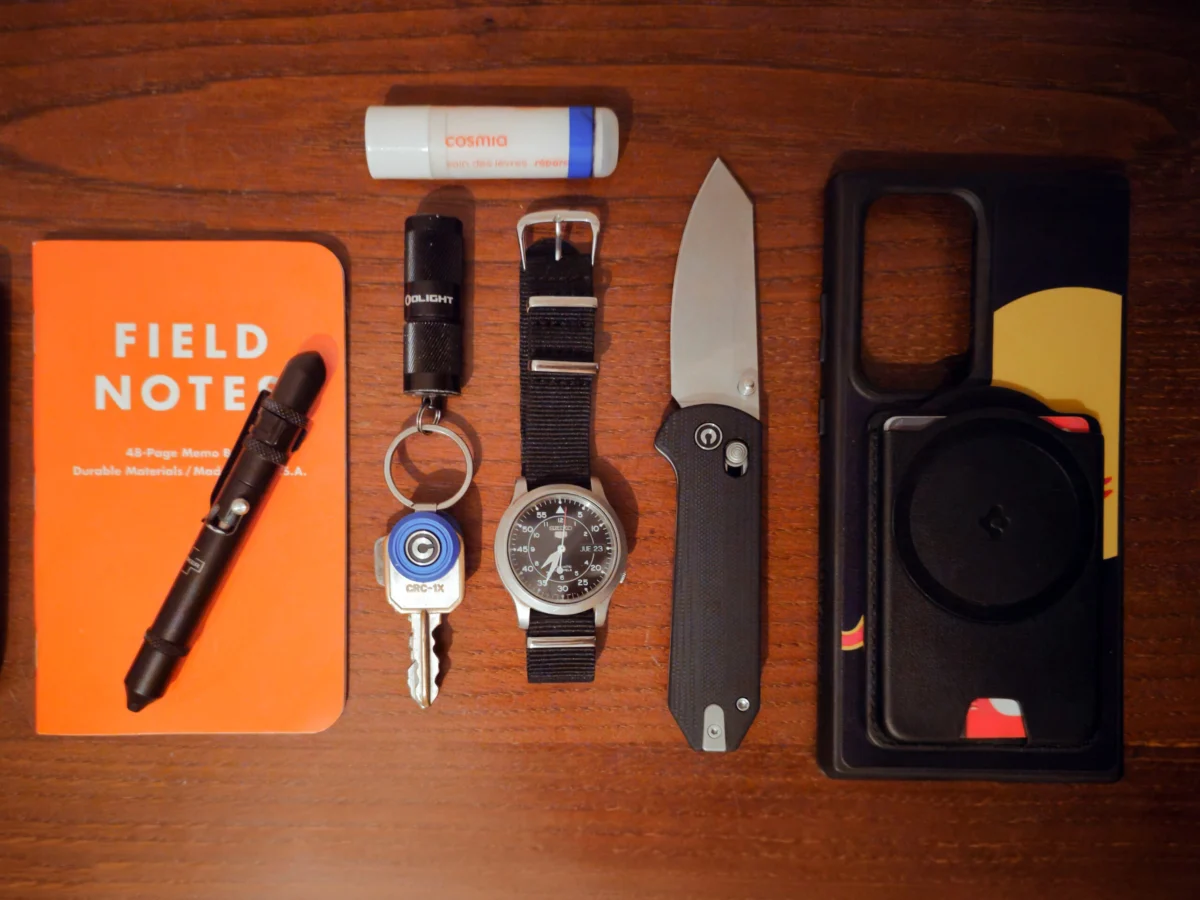
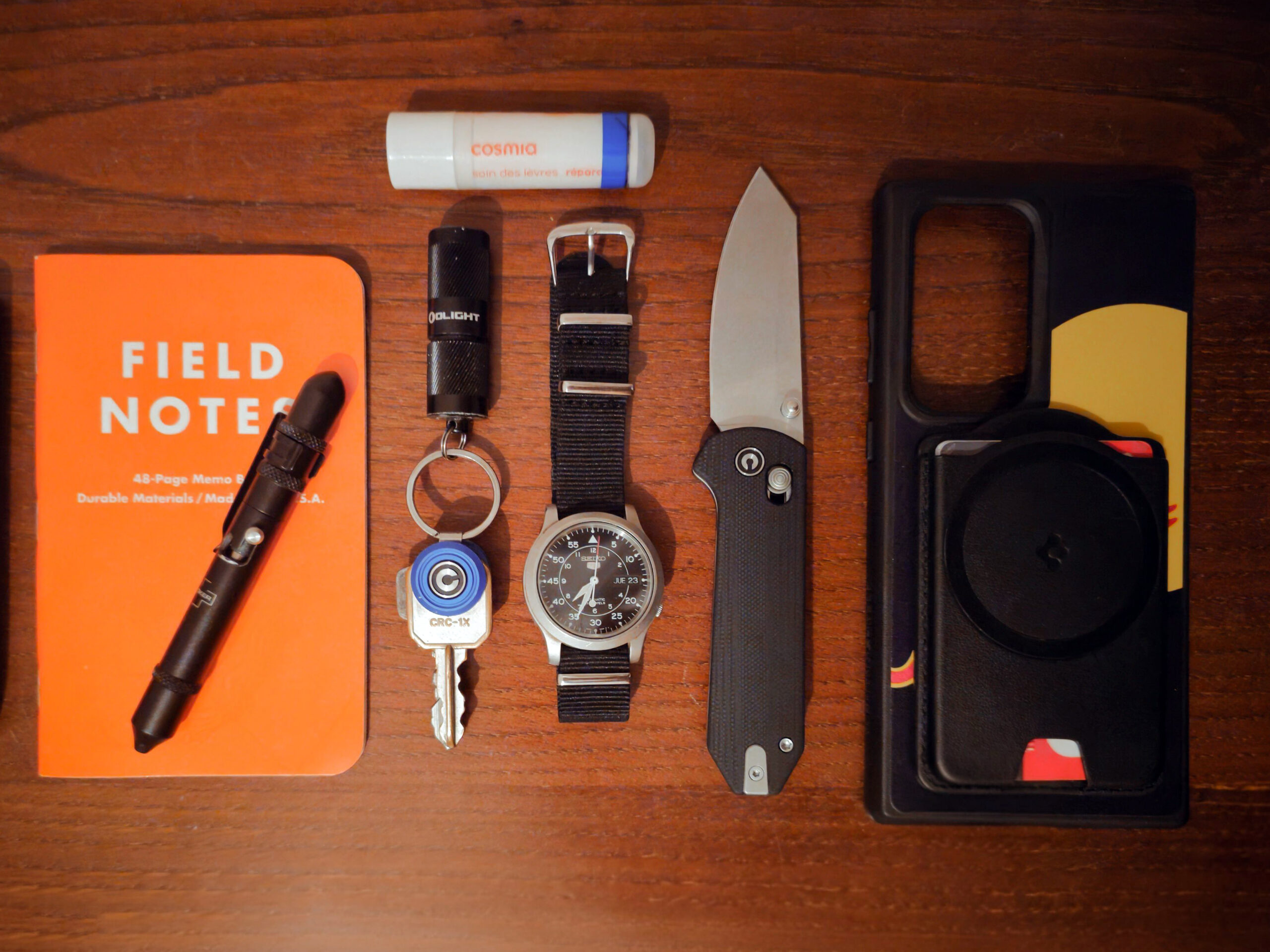
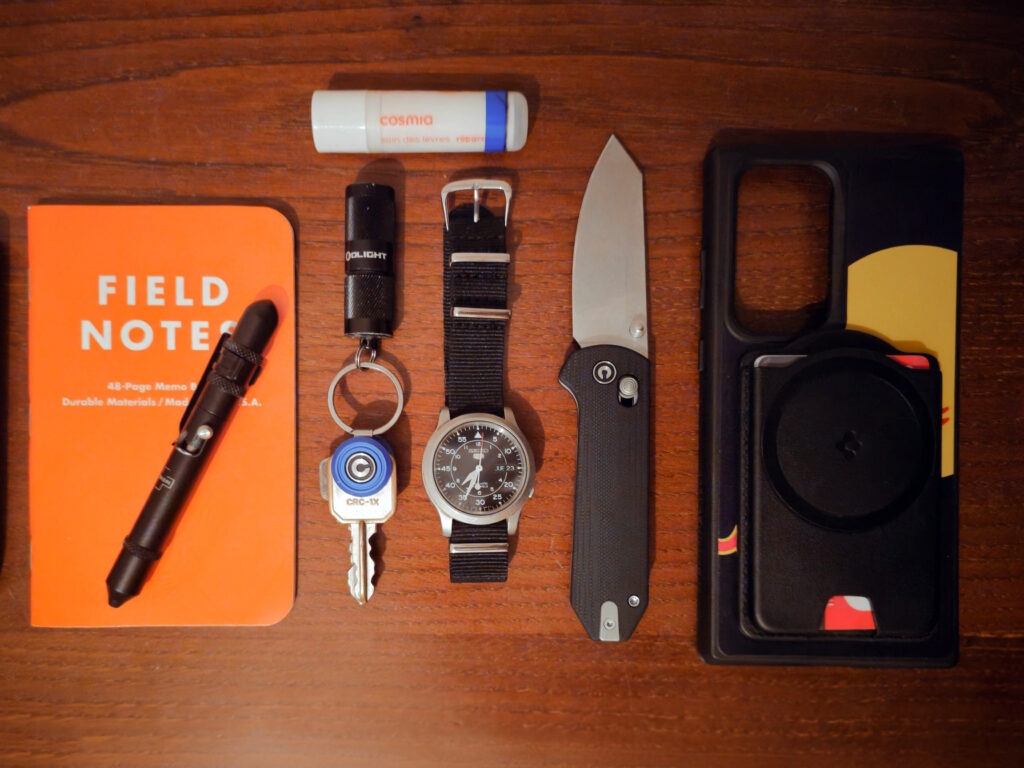
Everyday carry, commonly abbreviated as EDC, has evolved from a niche hobby for survivalists and outdoor enthusiasts into a sophisticated discipline of personal organization and efficiency. At its core, the philosophy of EDC revolves around the curated selection of tools, instruments, and accessories that an individual carries daily to manage common tasks and potential emergencies. A recent submission from Ruben, an aeronautical automation operator based in Portugal, highlights the contemporary shift toward minimalist, high-value, and utilitarian gear. His selection, centered on the CIVIVI Yonder and Field Notes, serves as a case study for how modern professionals are balancing functional necessity with aesthetic restraint.
The Evolution of Personal Toolsets
The history of EDC is deeply rooted in the concept of the "possibles bag" used by 18th-century frontiersmen, which contained the essential items necessary for survival in the wilderness. In the 21st century, this concept has transitioned into an urban context, driven by rapid advancements in materials science and manufacturing technology. The modern EDC movement gained significant momentum in the early 2010s, fueled by the rise of social media platforms and photography-focused communities.
Today, the industry is valued in the billions of dollars, with a robust secondary market for high-end knives, pens, and flashlights. The shift toward "minimalist" carry—a trend characterized by reducing bulk while maintaining utility—reflects a broader societal preference for decluttered, intentional living. Professionals like Ruben represent a demographic that prioritizes lightweight, multifunctional tools that do not impede mobility in professional environments, such as high-stakes aeronautical control rooms.
Anatomy of a Curated Carry: Key Components
The components selected for a daily carry setup are rarely random; they are typically the result of extensive testing and optimization. In this instance, the inclusion of the CIVIVI Yonder is significant. Designed by Zac Whitmore, the Yonder was recognized as the "Best Buy of the Year" at the 2024 Blade Show. This award is a critical metric for the industry, as it balances price point, build quality, and ergonomic innovation.
The Yonder utilizes a crossbar lock mechanism, a feature once exclusive to high-end, premium-priced knives. Its mass-market adoption marks a democratization of engineering. By integrating a locking mechanism that is both ambidextrous and robust, the manufacturer has addressed the primary demand of the modern user: reliability without the prohibitive costs associated with boutique custom makers. When contrasted with alternatives such as the Kizer Feist—a front-flipper design known for its refined, dressier profile—it becomes clear that the modern user is increasingly rotating their gear based on the specific requirements of their environment.
Chronology and Decision-Making in Gear Selection
The decision-making process for an individual’s EDC is rarely static. It often follows a cyclical pattern of acquisition, evaluation, and refinement.
- Phase 1: Baseline Needs: The individual identifies the core requirements of their day-to-day routine, such as note-taking (Field Notes), cutting tasks (pocket knife), and timekeeping (Casio Edifice).
- Phase 2: Acquisition: The user researches current market offerings. In this case, the recent acquisition of the CIVIVI Yonder demonstrates a move toward modern, high-value, crossbar-locked knives.
- Phase 3: Integration: New items are tested against existing infrastructure, such as magnetic phone wallets or compact key organizers.
- Phase 4: Optimization: The user begins to swap items based on context, such as switching to the Kizer Feist for professional or formal settings, illustrating a sophisticated understanding of situational carry.
This iterative approach is indicative of a broader trend where users no longer view their gear as a static "kit," but rather as a dynamic set of tools that must adapt to changing circumstances.
Supporting Data and Industry Trends
Market analysis suggests that the demand for "everyday carry" items has seen a steady annual growth rate of approximately 5–7% over the past five years. Key growth drivers include the integration of high-performance materials like titanium, G10 composites, and S35VN steel into mass-market products. Furthermore, the rise of the "pocket dump"—the practice of displaying one’s gear in a flat-lay photograph—has created a feedback loop where manufacturers are increasingly designing products specifically for their aesthetic appeal as much as their utility.
Data from major retailers indicates that consumers are shifting away from over-engineered, heavy-duty tactical gear toward "urban EDC," which focuses on:
- Slim Profiles: Reducing the physical footprint of gear in pockets.
- Multifunctionality: Prioritizing tools that can perform more than one task (e.g., a pen that also functions as a stylus or window breaker).
- Aesthetic Cohesion: Matching the color and material palettes of items to create a unified visual identity.
The Role of Design in Professional Environments
For professionals working in technical fields, such as aeronautical automation, the equipment chosen must be non-intrusive. The reliance on a magnetic wallet integrated into a smartphone is a prime example of "consolidated carry." By reducing the number of individual items carried, the user minimizes the risk of losing small, vital components.
The choice of a Casio Edifice as a "dressier" alternative is also noteworthy. In the horological world, the Edifice series is often cited as the gold standard for "value-proposition" watches. By offering sapphire crystals, water resistance, and robust quartz movements at a fraction of the cost of luxury mechanical counterparts, it aligns perfectly with the ethos of the high-value EDC community. It provides the necessary performance without the psychological burden of carrying an expensive item in a potentially hazardous workspace.
Official Perspectives and Expert Analysis
Industry analysts argue that the rise of the "value-tier" EDC segment is a direct result of the maturation of the manufacturing sector. "We are seeing a convergence of performance and affordability that was simply not possible a decade ago," notes one industry consultant specializing in consumer hardware. "When a knife that wins a Blade Show award is accessible to the average consumer at a sub-$100 price point, it changes the barrier to entry. It turns EDC from a luxury hobby into a practical lifestyle choice for anyone."
Furthermore, the emphasis on Field Notes and physical writing tools suggests a pushback against the total digitization of the workplace. Even in highly automated fields, the ability to quickly jot down a coordinate, a serial number, or a fleeting idea on paper remains a fundamental human-machine interaction that digital devices have yet to fully replicate.
Broader Impact and Implications for the Future
The implications of these trends are significant for both manufacturers and consumers. For companies, the challenge lies in maintaining high quality control while scaling production to meet global demand. For consumers, the impact is one of increased agency; the ability to curate a personalized toolkit allows for greater efficiency and preparedness in an increasingly complex world.
As we look toward the future, we can expect to see further integration of smart technology into traditional EDC items. We are already observing the emergence of Bluetooth-enabled key trackers, biometric-locked storage, and modular charging solutions. However, the core of the movement remains unchanged: the pursuit of the right tool for the right moment.
The gear shared by individuals like Ruben underscores a mature, balanced approach to the hobby. It moves away from the "survivalist" tropes of the past and toward a model of "urban preparedness"—a state of being ready for the mundane and the unexpected alike, without sacrificing style or comfort. Whether it is the specific choice of a crossbar-locked knife or the deliberate rotation of a wristwatch to match the occasion, these choices reflect a deeper desire for control and competency in an unpredictable environment.
In conclusion, the modern EDC landscape is defined by its inclusivity and its emphasis on high-value, high-utility components. As the market continues to expand and evolve, the focus will likely remain on the intersection of professional necessity and personal style, ensuring that the daily carry remains a vital part of the contemporary professional’s identity. By valuing craftsmanship over brand prestige and utility over excess, the modern EDC practitioner is building a set of tools that are as reliable as they are refined.