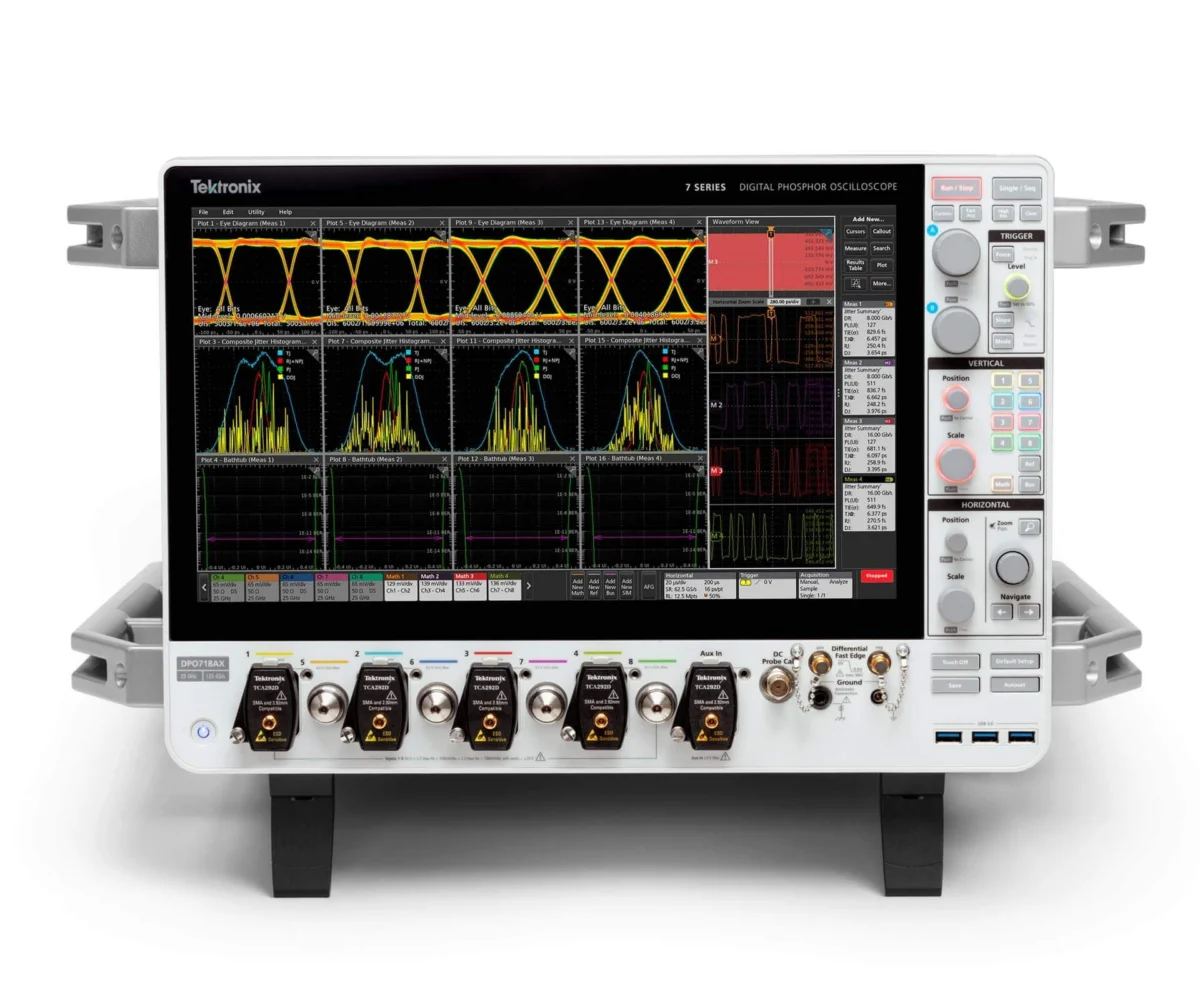
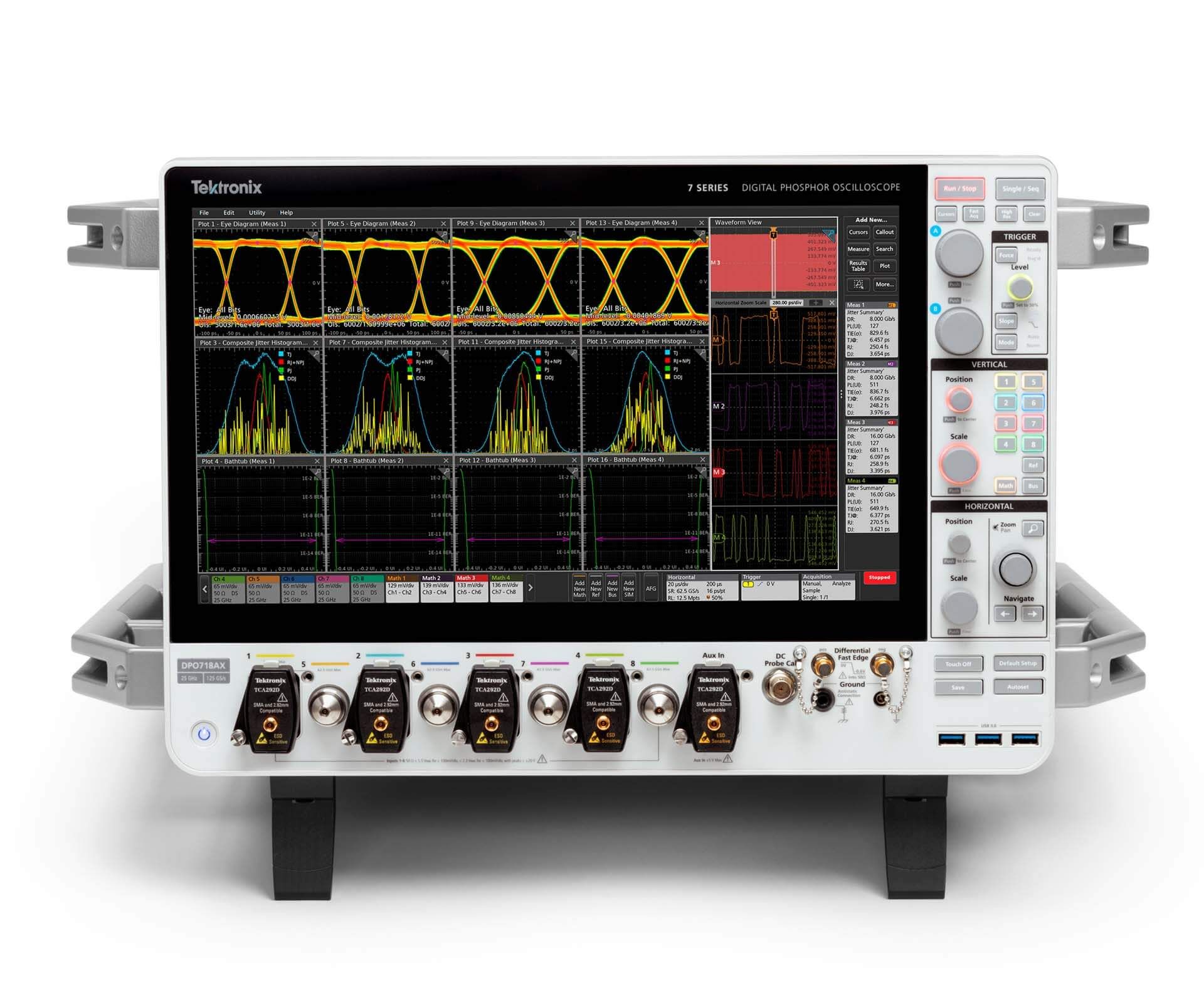
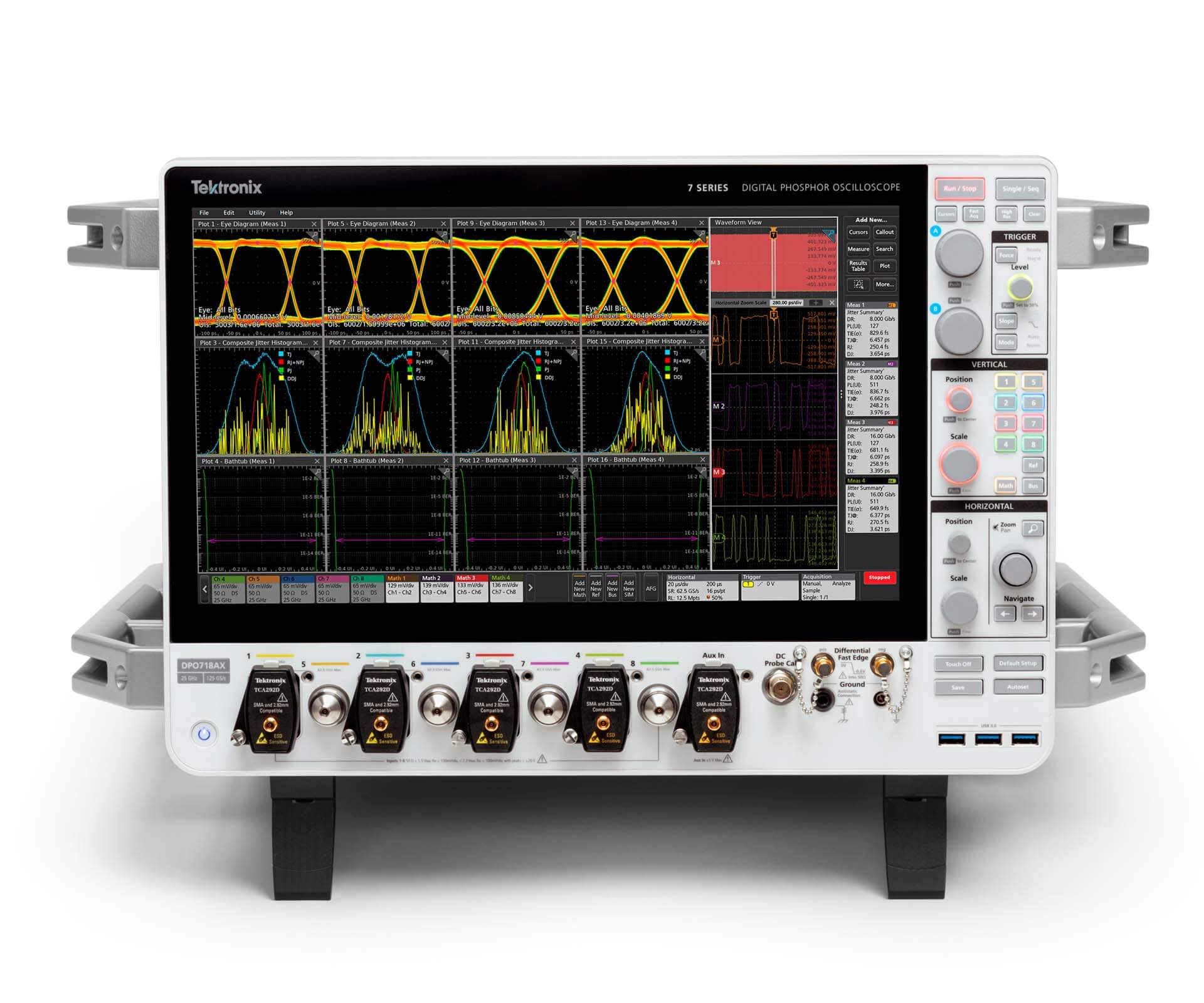
Tektronix, a global leader in test, measurement, and monitoring instrumentation, has officially expanded its flagship 7 Series oscilloscope lineup with the introduction of an advanced, eight-channel model: the DPO718AX. While the instrument’s engineering breakthroughs in high-frequency signal acquisition are central to its design, much of the technical community’s attention has centered on the surprisingly robust embedded computing architecture housed within its chassis. Weighing in at 38.1 kilograms, the heavy-duty measurement device integrates enterprise-grade computing hardware that rivals high-end professional workstations, igniting discussions across engineering forums regarding the intersection of test equipment and modern computing.
Main Facts and Architectural Overview
The newly launched Tektronix DPO718AX is designed to meet the rigorous demands of high-end research, semiconductor testing, and complex RF analysis. At its core, the digital phosphor oscilloscope breaks new ground by providing eight simultaneous acquisition channels at high bandwidth capabilities—a configuration engineered to capture transient events and complex signal interactions with unprecedented clarity.
However, what truly sets the hardware apart is its internal computing stack. Hidden behind the physical measurement interfaces is a powerful subsystem comprising a 12-core AMD EPYC processor, an Nvidia T1000 graphics processing unit, 96GB of system RAM, a removable NVMe solid-state drive offering a minimum of 1.6TB of storage capacity, and a 15.6-inch full-HD (1080p) touchscreen display. The unit also supports an optional Windows 10 environment to drive specialized analytical suites.
This robust configuration has prompted prominent tech analysts and software observers—such as CNX Software—to remark that the internal architecture mirrors a high-end workstation running a professional operating system rather than a traditional embedded microcontroller setup typically found in measurement instruments.
Chronology and Component Evolution
The integration of PC-grade hardware inside oscilloscopes is not an entirely new concept, but the scale of the deployment in the DPO718AX highlights a unique engineering philosophy. For decades, test and measurement equipment relied on dedicated, low-power microprocessors and specialized digital signal processors (DSPs) to handle data acquisition and basic interface rendering. As waveforms grew more complex and data throughput demands skyrocketed, manufacturers began incorporating standard desktop operating systems and motherboard components to handle heavy computational workloads locally.
Despite its impressive specifications, a closer inspection of the DPO718AX’s internal components reveals that the computing hardware is built on mature, older-generation technology rather than bleeding-edge silicon. The AMD EPYC Embedded 3351 processor powering the system utilizes AMD’s foundational Zen architecture, having originally debuted in February 2018. Similarly, the Nvidia T1000 GPU is an entry-level, workstation-class graphics card built on the Turing architecture, released in May 2021.
Due to the native limitations of the AMD EPYC Embedded platform, the system’s storage performance is constrained by PCIe 3.0 speeds, and the 96GB of memory relies on DDR4 configurations supported natively by the processor. Despite these dated specifications, the CPU delivers a 12-core, 24-thread configuration with a rated boost clock of 3 GHz, providing more than enough computational leverage to process massive streams of acquired waveform data without bottlenecking the instrument’s front-end acquisition hardware.
Software Integration and Operational Requirements
The inclusion of a fully capable desktop operating system is not merely a luxury feature for the DPO718AX; it is a functional necessity. Modern compliance testing, serial bus decoding, and advanced radio frequency (RF) analysis require immense computational overhead to run sophisticated post-processing algorithms.
By default, the DPO series units do not ship with a pre-installed consumer operating system. Instead, the Windows 10 LTSC (Long-Term Servicing Channel) 2021 environment is provisioned on a secondary, removable NVMe drive, giving enterprise laboratories the flexibility to implement strict IT security protocols or deploy proprietary measurement suites.
Furthermore, because the integrated AMD EPYC processor features a hardware-based Trusted Platform Module (TPM 2.0) chip, the system possesses the technical prerequisites to run modern operating systems like Windows 11. Industry experts note, however, that utilizing such an expensive, specialized instrument as a conventional personal computer would be financially impractical and technically inefficient. The aging hardware platform, while exceptionally stable and tailored for deterministic industrial workloads, cannot compete with modern consumer desktop architectures designed for general-purpose tasks.
Industry Implications and Market Impact
The introduction of the DPO718AX arrives at a time when global semiconductor supply chains, memory availability, and enterprise hardware pricing are subject to intense market fluctuations. By utilizing stable, enterprise-proven server and workstation components—such as first-generation EPYC processors and Turing-era GPUs—Tektronix ensures long-term component availability, thermal reliability, and platform stability for industrial clients who rely on their measurement tools for years or even decades.
In high-reliability sectors such as aerospace, defense, telecommunications, and high-speed digital design, the longevity of test equipment is paramount. Laboratories invest hundreds of thousands of dollars into single-instrument setups, expecting consistent calibration, robust build quality, and uninterrupted uptime. The architecture of the DPO718AX reflects a calculated trade-off: opting for battle-tested, highly reliable enterprise components over volatile, fast-moving consumer silicon.
As engineers continue to push the boundaries of data rates, signal integrity, and multi-channel synchronization, the boundary between measurement hardware and high-performance computing continues to blur. Devices like the Tektronix DPO718AX demonstrate that the future of diagnostic engineering relies as much on local data processing power as it does on analog frontend sensitivity, setting a new benchmark for what modern oscilloscopes can achieve in the laboratory.