Advanced Micro Devices (AMD) is poised to introduce its next-generation Zen 6 architecture across both its desktop and mobile product lines in the coming year, a move anticipated to significantly reshape the competitive landscape of the processor market. Central to this strategic refresh is the Ryzen AI 500 series for mobile platforms, internally codenamed "Medusa Point." Early indications of this new series have surfaced through repeated appearances of a 10-core engineering sample on the Geekbench benchmarking platform, with its most recent listing showcasing performance figures that place it notably ahead of many contemporary mobile chips from both AMD and its primary rival, Intel, particularly in single-core performance metrics. This consistent leakage, alongside robust benchmark results, underscores the potential impact of AMD’s upcoming mobile processors.
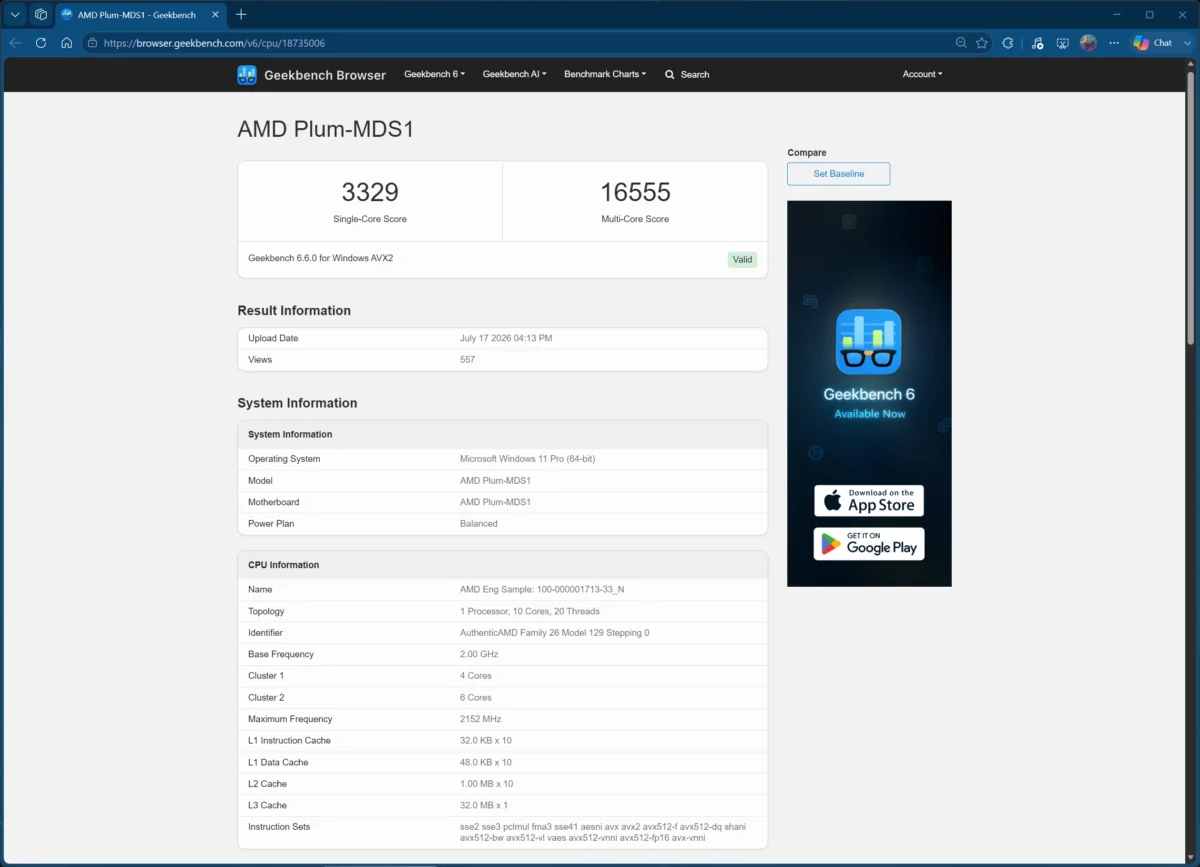
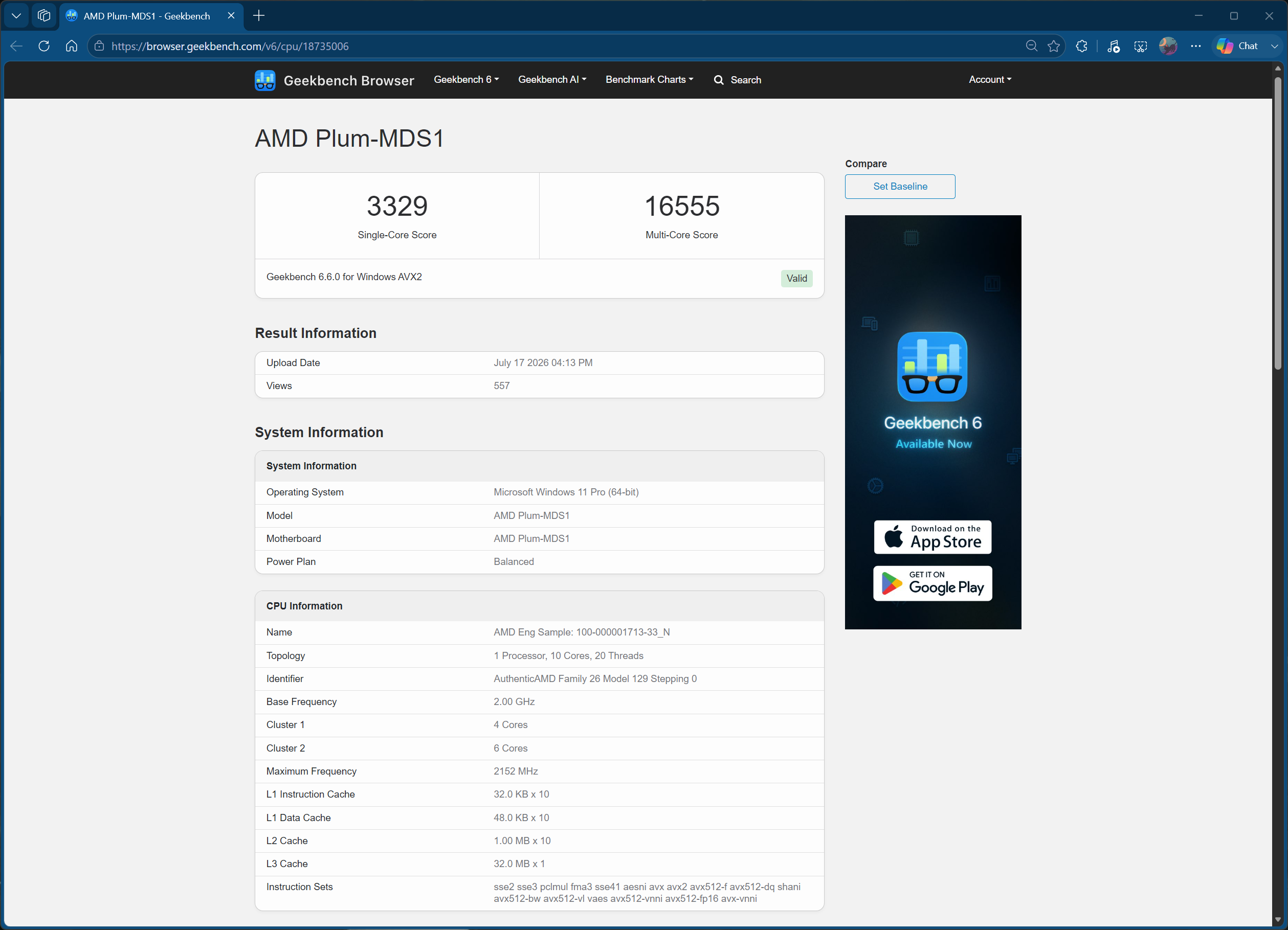
The latest Geekbench entry for the Medusa Point 10-core SKU revealed a single-core score of 3,329 points and a multi-core score of 16,555 points. The platform name, "AMD Plum-MDS1," remains consistent with previous leaks, firmly linking these results to the Medusa Point family. The specific engineering sample is identified as "AMD Eng Sample 100-000001713-33_N," a designation seen in earlier benchmarks, reinforcing that this is the same chip demonstrating improved performance as its development progresses. These updated scores represent a significant uplift from prior showings, with the single-core performance climbing by nearly 5% and the multi-core score improving by approximately 9.7%. Such gains during the engineering sample phase are common as optimization efforts mature, hinting at even greater potential for the final retail products.
Performance Deep Dive: Single-Core Dominance
The single-core score of 3,329 points achieved by the Medusa Point engineering sample is particularly striking. This figure positions the upcoming AMD mobile processor as a formidable contender, surpassing virtually all existing mobile chips from both Intel and AMD currently available on the Geekbench database, with the notable exception of Qualcomm’s Snapdragon X2 Elite lineup. For context, the Snapdragon X2 Elite X2E-90-100, an 18-core mobile chip, recorded a single-core score of 3,573 points, placing it at the very top. However, the Medusa Point’s performance is remarkably close to desktop-class processors, specifically matching the single-core output of AMD’s own Ryzen 9 9900X and Ryzen 7 9800X3D. These are high-performance desktop CPUs, featuring 12 and 8 cores respectively, known for their raw processing power. To have a 10-core mobile chip achieve comparable single-core results signifies a substantial architectural leap for AMD in the mobile space.
The implications of such strong single-core performance for a mobile processor are profound. Many common computing tasks, including web browsing, office applications, light gaming, and general system responsiveness, heavily rely on the performance of individual CPU cores. A high single-core score translates directly into a snappier user experience, faster application launch times, and smoother execution of single-threaded workloads. This competitive edge will be crucial for AMD in attracting consumers and manufacturers seeking laptops that offer exceptional everyday performance and responsiveness, without necessarily requiring the full multi-core might of top-tier workstation or gaming machines. Furthermore, it sets a new benchmark for what users can expect from mainstream mobile computing in 2025.
Multi-Core Prowess and Generational Leaps
Beyond its impressive single-core showing, the Medusa Point SKU also delivered a robust multi-core score of 16,555 points. This places the 10-core engineering sample in direct competition with some of AMD’s more powerful current-generation mobile offerings, such as the Ryzen AI Max+ 390. This chip, part of the Strix Halo series, is just a tier below the flagship AI Max+ 395 and represents AMD’s current high-performance mobile APUs. The fact that a 10-core Medusa Point part can achieve similar multi-core performance suggests significant efficiency gains and improved core design within the Zen 6 architecture.
When compared to its direct predecessor in the same core configuration, such as the Ryzen AI 9 365 from the Strix Point series (which typically averages around 12,410 points in multi-core benchmarks), the Medusa Point offering demonstrates an impressive generational uplift of approximately 33%. This substantial improvement highlights the effectiveness of the Zen 6 architecture in scaling performance across multiple cores. The 10-core configuration for this specific SKU, which is likely to be branded as a Ryzen AI 9 565 based on AMD’s established naming conventions (where Ryzen AI 9 365 and Ryzen AI 9 465 from Strix Point and Gorgon Point, respectively, share similar configurations), strikes a balance between performance and power efficiency crucial for mobile devices. Higher multi-core performance is vital for demanding applications such as video editing, 3D rendering, complex software compilation, and advanced AI workloads, which are increasingly becoming standard requirements for professional and creative users on the go.
Architectural Foundations: The Zen 6 Advantage
The exceptional performance demonstrated by Medusa Point is rooted in the anticipated advancements of AMD’s Zen 6 architecture. While detailed specifics about Zen 6 are still emerging, AMD’s roadmap has previously hinted at significant architectural enhancements. Notably, AMD has already published a preliminary Zen 6 document for developers, confirming a "brand new 8-wide CPU core with strong vector capabilities." This indicates a fundamental redesign of the core, likely leading to higher instructions per cycle (IPC) and improved handling of vector operations, which are critical for scientific computing, multimedia processing, and increasingly, AI acceleration.
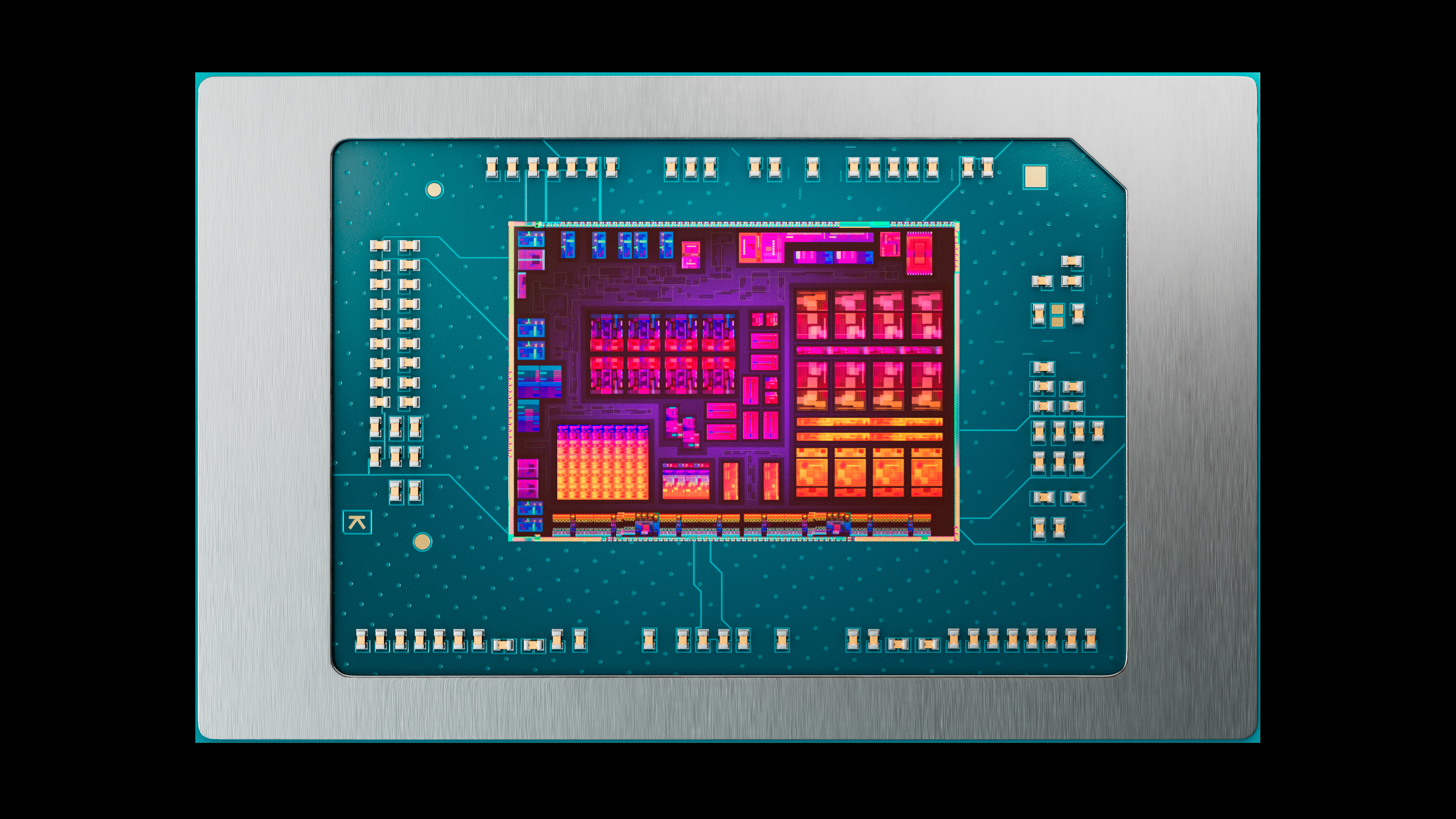
The leaked Geekbench listing also provides crucial insights into the chip’s physical specifications. The reported clock speeds are now more realistic and compelling: a base frequency of 2.0 GHz, coupled with a boost frequency reaching 5.37 GHz. Such high boost clocks are instrumental in achieving the impressive single-core performance observed. Furthermore, the cache hierarchy reveals 10MB of L2 cache and 32MB of L3 cache, totaling 42MB. This represents a substantial increase over previous generations; for instance, the Ryzen AI 9 465 (Gorgon Point) had a combined cache tally of 34MB. Larger and faster caches are vital for reducing memory latency and improving overall CPU performance, especially for data-intensive applications.
AMD’s roadmap also explicitly mentions "expanded AI features" for Zen 6, aligning with the "Ryzen AI" branding. This signifies a more robust integrated Neural Processing Unit (NPU) capable of delivering higher TOPS (Trillions of Operations Per Second) for AI workloads directly on the device. As the industry moves towards AI PCs, these integrated accelerators will be crucial for enabling features like real-time language translation, advanced image and video processing, and generative AI applications directly on laptops, reducing reliance on cloud computing and enhancing privacy and responsiveness.
Competitive Landscape and Market Implications
The emergence of Medusa Point benchmarks offers a tantalizing glimpse into the fiercely competitive mobile CPU market of 2025. AMD’s strategy positions Medusa Point as its mainstream mobile offering, designed to directly contend with Intel’s forthcoming Panther Lake processors. Intel’s Panther Lake, built on its 18A process node, is expected to combine the best elements of its Lunar Lake and Arrow Lake architectures, focusing on efficiency and AI acceleration. The strong showing from Medusa Point suggests that AMD will be a formidable challenger, potentially pushing both companies to innovate further in performance, efficiency, and AI capabilities.
Beyond the mainstream segment, both companies are developing even higher-end solutions. Intel’s Nova Lake mobile lineup and AMD’s own Gator Range (expected to be branded as Ryzen 10000 series) are slated to target the premium and enthusiast segments, likely offering even greater core counts, higher power envelopes, and maximum performance. However, the mainstream segment, where Medusa Point will compete, represents the largest volume of laptop sales, making its performance critical for AMD’s overall market share and profitability.
The ongoing "AI PC" race is a pivotal backdrop for these developments. Both AMD and Intel are heavily investing in integrating powerful NPUs into their processors to meet Microsoft’s Copilot+ PC requirements and to enable a new generation of AI-powered applications. Medusa Point’s architectural enhancements and expanded AI features are a direct response to this trend, positioning AMD to capture a significant share of this emerging market. This competition is expected to benefit consumers by driving innovation, offering more powerful and efficient laptops, and accelerating the adoption of AI capabilities in everyday computing.
Timeline and Future Outlook
While specific launch dates are yet to be officially confirmed, AMD’s roadmap indicates a 2025 release for Zen 6. The appearance of engineering samples on public benchmarks like Geekbench is a standard part of the CPU development cycle, typically occurring several months to a year before retail availability. These early benchmarks serve as crucial validation points for AMD’s internal teams and provide preliminary insights into real-world performance potential.
Industry events such as CES (Consumer Electronics Show) in January or Computex in May/June of 2025 are likely venues for AMD to make official announcements regarding the Ryzen AI 500 series and provide more comprehensive details about the Zen 6 architecture. As development progresses, further leaks and official disclosures will undoubtedly shed more light on clock speeds, NPU performance (in TOPS), core configurations for other SKUs in the Medusa Point family, and the specific laptops that will feature these groundbreaking processors.
The consistently strong benchmark results from the Medusa Point engineering sample signal a highly promising future for AMD’s mobile computing ambitions. With a significant generational leap in both single-core and multi-core performance, coupled with anticipated advancements in AI acceleration and power efficiency, AMD is strategically positioned to offer compelling alternatives in the rapidly evolving laptop market. This competitive push will undoubtedly lead to a more dynamic and innovative landscape for personal computing in the years to come, benefiting consumers with more powerful, intelligent, and efficient devices.