





For over half a century, the name Alpina has been synonymous with the pinnacle of BMW refinement. Based in Buchloe, Germany, the company built a storied reputation by transforming standard-issue Bavarian sedans and coupes into high-performance, ultra-luxurious grand tourers. From the legendary B10 Bi-Turbo of the 1990s to the elegant and potent Roadster V8, Alpina vehicles were defined by their distinctive multi-spoke alloy wheels, signature blue paint, and a sophisticated approach to power delivery that distinguished them from the more aggressive, track-focused M-badged models. However, the landscape of German automotive engineering underwent a seismic shift in 2022 when the BMW Group announced the acquisition of the Alpina brand. This transition marks the end of an era for the independent tuner, as the Buchloe facility begins its integration into the broader BMW corporate structure. As the industry looks toward this new chapter, one digital artist has sparked a provocative conversation about brand identity by applying the iconic Alpina aesthetic to a vehicle far removed from the BMW ecosystem: the Volkswagen New Beetle.
The Genesis of a Digital Paradox
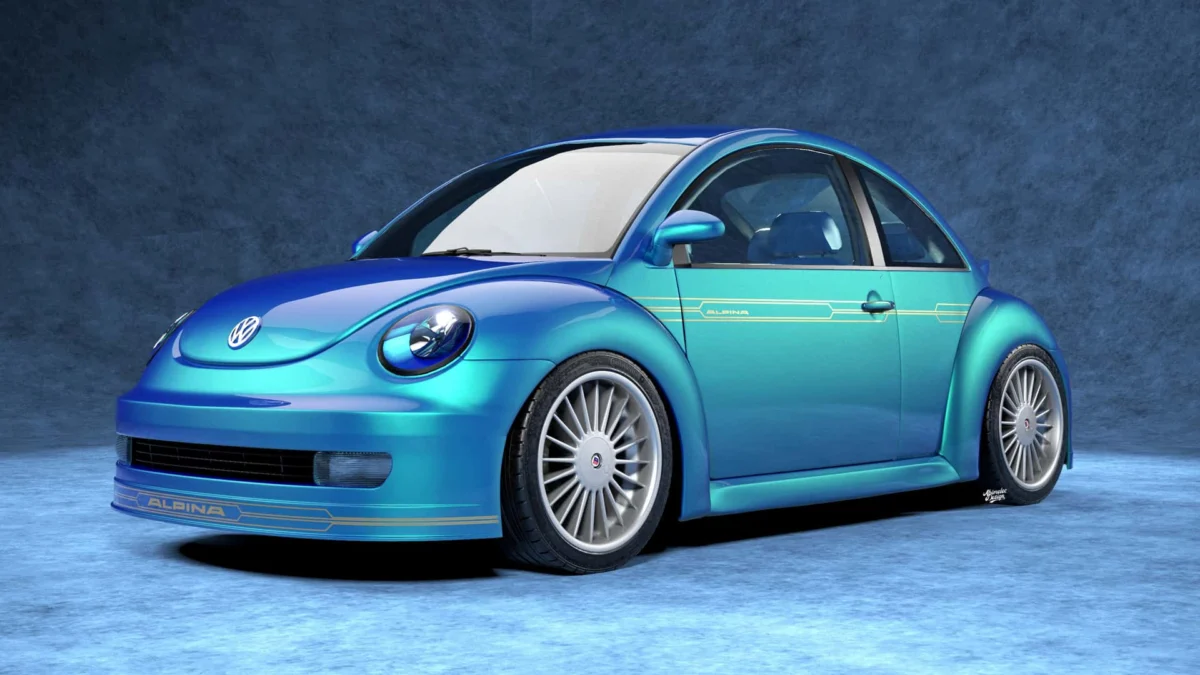
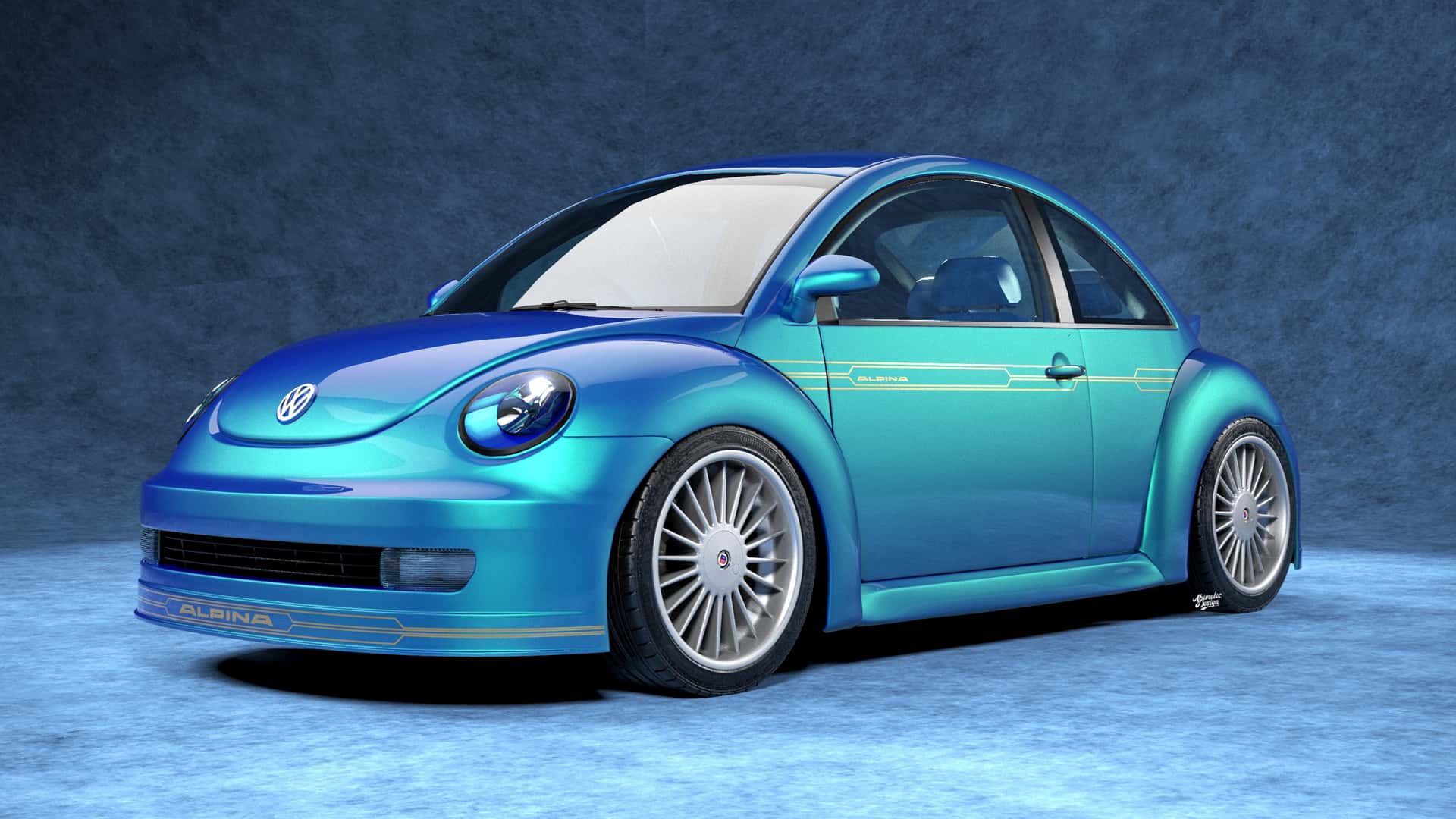
The project, dubbed the "B1 Turbo" by designer Abimelec Arellano of Abimelec Design, serves as a thought experiment on what might happen if the meticulous craftsmanship of Alpina were applied to a mass-market compact car. The rendering features the unmistakable visual hallmarks that have defined Alpina since the 1970s: the deep, lustrous blue metallic finish, the intricate, multi-spoke wheels that have become a global design icon, and the subtle, elegant pinstriping that traces the body lines of the vehicle.
While the marriage of a German performance tuner and a compact hatchback like the New Beetle may seem incongruous, the inspiration is rooted in automotive history. Arellano’s vision was heavily influenced by the Volkswagen Beetle RSi, a limited-edition performance variant produced in the early 2000s. With only 250 units ever manufactured, the RSi was a radical departure from the standard Beetle, featuring a wide-body kit, a 3.2-liter VR6 engine producing 221 horsepower, and a six-speed manual transmission coupled with 4MOTION all-wheel drive.
During a visit to Mexico City, Arellano had the opportunity to experience an RSi firsthand. He noted that the experience shifted his perspective on the vehicle’s potential. According to the designer, the interior of the RSi possessed a level of material quality and attention to detail that felt closer to a boutique luxury manufacturer than a mass-market Volkswagen product. This observation served as the catalyst for the "B1 Turbo" concept, prompting the question: if the Beetle was already a platform with an upscale interior, what would happen if a firm like Alpina were tasked with refining it further?
A Chronology of Brand Identity
The history of Alpina began in 1965, when Burkard Bovensiepen founded the company to develop high-performance carburetors for BMW vehicles. By 1970, Alpina had transitioned into an automobile manufacturer in its own right, working in close collaboration with BMW to produce vehicles that were eventually sold and serviced through the official BMW dealership network. This symbiotic relationship lasted for decades, creating a unique position for Alpina as both an independent entity and a primary development partner for BMW.
The acquisition of the Alpina brand by the BMW Group, finalized in 2022, effectively puts a definitive timeline on the "independent" era of the firm. By 2026, the current business model—which involves the shipping of vehicles between the BMW production line and the Alpina facility—will be discontinued. This shift signifies that future Alpina models will be developed entirely within the BMW corporate infrastructure. Consequently, the "B1 Turbo" rendering represents a nostalgic exploration of the "what-if" scenarios that enthusiasts often ponder regarding the brand’s past independence.
Engineering Aspirations for the B1 Turbo
Beyond the aesthetic transformation, the B1 Turbo rendering proposes a specific powertrain configuration that aligns with the performance ethos of both the original RSi and the classic Alpina philosophy. Arellano suggests the inclusion of a turbocharged VR6 engine mated to an automatic transmission. This hypothetical setup would deviate from the RSi’s manual-only configuration, reflecting the historical trend of Alpina favoring the ZF-developed automatic transmissions that have long been a staple of their high-speed, long-distance touring vehicles.
From a technical standpoint, the choice of a turbocharged VR6 is particularly interesting. The VR6 engine, characterized by its compact "V" angle, allowed Volkswagen to fit a six-cylinder engine into a chassis designed for four-cylinder units. Adding forced induction to this platform would theoretically result in a power density that mirrors the performance targets of classic Alpina models, which were renowned for their ability to maintain high cruising speeds on the Autobahn with effortless torque.
Broader Implications of Digital Art in the Automotive Industry
The popularity of the B1 Turbo project highlights the growing influence of digital rendering artists in shaping automotive culture. As the industry moves toward electrification and standardized design languages, there is a visible yearning among enthusiasts for the bespoke, hand-finished aesthetic that defined the analog era of performance tuning.
Designers like Abimelec Arellano have previously experimented with similar "crossover" projects, applying the design languages of various tuners to platforms they would never touch in reality. Previous works have included a Range Rover, a Toyota Supra, and a Porsche 911 (964) reimagined through the lens of other luxury houses. These projects serve as a form of visual journalism, testing the elasticity of brand identity and exploring how specific design cues—like a set of multi-spoke wheels or a specific shade of metallic blue—can change the consumer’s perception of a vehicle’s segment.
The Industry Context: Luxury and Compact Cars
The concept of a "luxury compact" is not new, but the execution of such a vehicle remains a challenge for manufacturers. Audi’s A3 and Mercedes-Benz’s A-Class have long occupied this space, but the "Alpina-fied" Beetle represents a more extreme interpretation: the idea of a vehicle that is compact in size but "boutique" in construction.
The fact that the Volkswagen Beetle was discontinued in 2019 creates a sense of finality that adds weight to this digital exercise. Without a current production model to reference, the rendering serves as an archival piece, celebrating the design of a vehicle that was arguably the most iconic shape in automotive history. By stripping away the "people’s car" image and replacing it with the understated, high-status cues of a German performance tuner, the project highlights how much of a car’s perceived value is derived from its exterior styling and material appointments.
The Enduring Legacy of Alpina
While the B1 Turbo remains a purely fictional concept, it underscores the profound influence Alpina has had on the perception of what a performance vehicle should be. Alpina’s legacy is not found in aggressive wings or loud, boisterous exhausts, but rather in the subtle recalibration of a vehicle’s chassis, the refinement of its engine response, and the elevation of its interior materials.
As the BMW Group moves to fully integrate the Alpina name, the industry remains curious about how the brand’s identity will be maintained. The challenge for BMW will be to preserve the "Buchloe spirit" within a corporate structure that is increasingly focused on electrification and automated manufacturing.
The digital rendering of a Volkswagen Beetle wearing the Alpina badge serves as a reminder that brand identities are powerful, flexible, and deeply resonant with enthusiasts. Even if the collaboration between these two specific entities is impossible—due to both the end of the Beetle’s production run and the new ownership structure of Alpina—the exercise itself remains a compelling study in design, history, and the enduring appeal of the performance-tuned automobile. Whether in the form of a real-world vehicle or a pixelated masterpiece, the aspiration to take an ordinary machine and elevate it to something extraordinary remains a cornerstone of automotive passion.