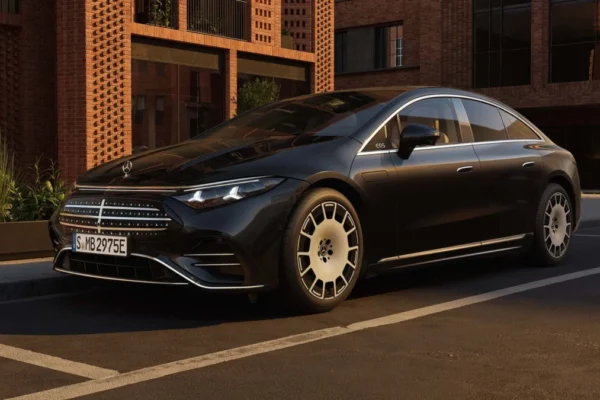










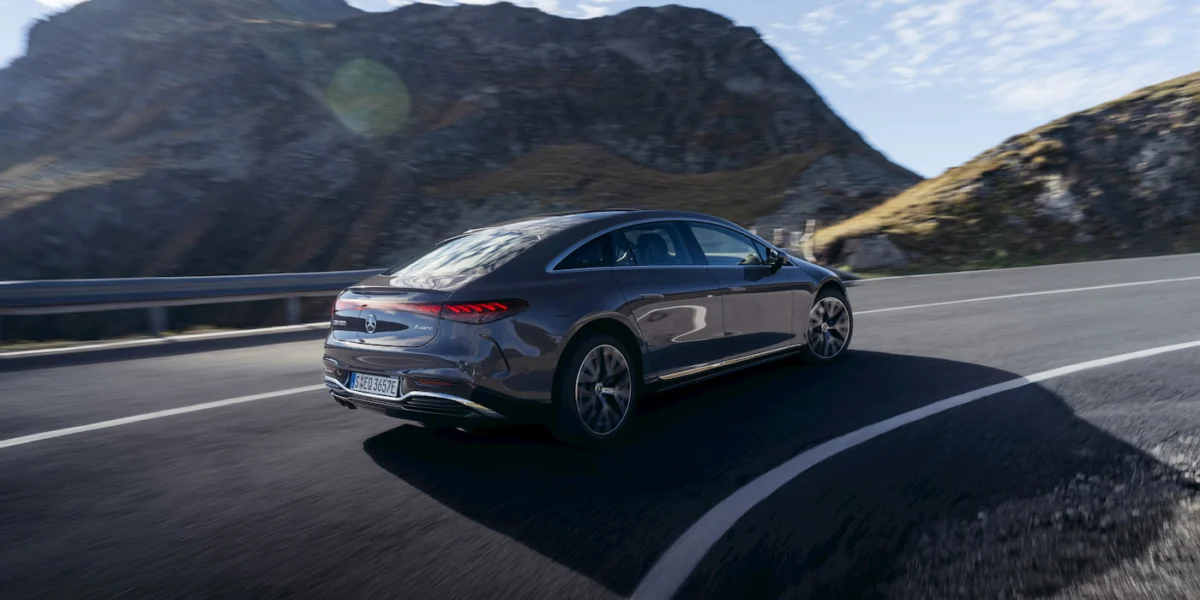
The automotive landscape is undergoing a profound structural evolution, and range anxiety—long considered the primary psychological barrier to mainstream electric vehicle (EV) adoption—is rapidly becoming a relic of the past. In a rigorous benchmark evaluation conducted by automotive testing authority Edmunds, the redesigned 2027 Mercedes-Benz EQS 450+ decisively shattered expectations by traveling an astonishing 539 miles on a single charge. This remarkable feat not only obliterates the vehicle’s official Environmental Protection Agency (EPA) estimate by 72 miles but also sets a new benchmark for battery-electric sedans evaluated under standardized real-world conditions.
As legacy automakers and pure-play EV manufacturers alike race to optimize energy density, aerodynamic efficiency, and high-voltage electrical architectures, the latest data emerging from rigorous track and road trials signals a watershed moment for consumer confidence. The overhauls implemented by Mercedes-Benz across its flagship electric lineup demonstrate that the engineering hurdles limiting long-distance travel are systematically being dismantled.
The Engineering Behind the Breakthrough
The performance delivered by the 2027 Mercedes-Benz EQS 450+ is not merely a statistical anomaly; it is the direct result of a comprehensive engineering overhaul. Mercedes-Benz recently restructured the EQS electric sedan platform, transitioning to a cutting-edge 800-volt electrical architecture while outfitting the vehicle with a substantially larger, high-density 122 kWh battery pack.

Under standard EPA testing methodologies, the 2027 EQS 450+ is rated for an impressive 467 miles of range. However, standard laboratory tests often fail to capture the nuanced efficiencies achieved during dynamic everyday driving cycles. During the recent Edmunds EV Range Test—a standardized evaluation protocol consisting of 60 percent city driving and 40 percent highway driving at an average speed of 40 mph, with climate control universally set to an auto mode at 72 degrees Fahrenheit—the sedan outperformed its certification metrics across almost every category.
The vehicle recorded an energy consumption rate of just 29.6 kWh per 100 miles, easily eclipsing its official EPA estimate of 28 kWh per 100 miles in terms of real-world operational efficiency. To contextualize this leap forward, the predecessor 2025 model year EQS 450+ managed 464 miles during the same test while consuming a heavier 34 kWh per 100 miles. The compounding gains in thermal management, inverter efficiency, and rolling resistance highlight a rapid trajectory of refinement within Mercedes-Benz’s electric vehicle division.
Comparative Context in the Long-Range EV Ecosystem
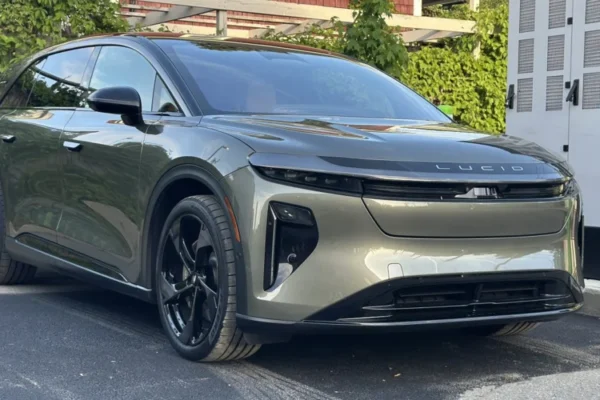
With its verified 539-mile journey, the 2027 EQS 450+ now holds the title of the longest-range electric sedan ever tested by Edmunds. It successfully leapfrogs the Lucid Air, which historically pioneered the 500-mile threshold for passenger cars. Within the broader spectrum of all electric vehicles evaluated by the testing publication, the EQS 450+ now sits just behind the Cadillac Escalade IQ, which registered a massive 558-mile range powered by an extraordinarily large 205 kWh battery pack.
The achievement also aligns with a broader trend of outperformance observed among vehicles adopting next-generation platforms. In the same testing window, the 2027 BMW iX3 50 xDrive cruised for 436 miles on a single charge—surpassing its 392-mile EPA rating by 44 miles—while maintaining an efficiency of 28.3 kWh per 100 miles. Additional vehicles evaluated during the cycle, such as the 2027 Volvo EX60 (352 miles) and the 2027 Mercedes-Benz GLC Electric (392 miles), further illustrate that efficiency gains are rippling across multiple vehicle segments and price points.

Revolutionary Charging Speeds and Thermal Performance
Beyond raw distance capacity, long-distance touring viability hinges fundamentally on replenishment velocity. The transition to an 800V electrical architecture in the updated EQS platform has yielded dramatic improvements in public DC fast-charging performance, effectively altering the calculus of road-tripping in an electric luxury sedan.
During evaluation sessions, Edmunds observed a peak charging rate of 350 kW, perfectly matching the parameters projected by Mercedes-Benz engineers. More importantly, the vehicle sustained an impressive average charging rate of 222 kW throughout the power delivery curve. For comparison, the preceding generation EQS model maxed out at a peak charging rate of 208 kW and sustained a lower average of 175 kW.
Translated into practical metrics, the updated system allows the 2027 EQS 450+ to recover approximately 825 miles of range in a single hour of charging. Crucially, the vehicle can replenish 100 miles of driving range in just over seven minutes—nearly doubling the replenishment speed of the 2025 model year iterations. This performance dramatically narrows the operational gap between refueling an internal combustion engine vehicle and recharging a high-capacity battery electric vehicle.
Consumer Psychology and the Infrastructure Paradox
Despite these technological triumphs, a persistent disconnect remains between consumer perception and actual daily driving requirements. Industry surveys consistently reveal that consumer anxiety surrounding range frequently outstrips empirical data regarding how vehicles are utilized day-to-day.

A nationally representative consumer survey conducted by BMW Group in the United States found that approximately 73 percent of respondents consider a daily range of 25, 50, or 75 miles to be entirely sufficient for their routine commuting and errands. Nevertheless, the same study underscored that 42 percent of prospective buyers still demand a total vehicle range of at least 300 miles before they would seriously contemplate purchasing an electric vehicle. Furthermore, 53 percent of surveyed motorists indicated they would be significantly more inclined to adopt an EV if the vehicle possessed the capability to add 150 miles of range in approximately 10 minutes.
Industry analysts note that these psychological thresholds are gradually being neutralized by the dual convergence of extended real-world battery ranges and rapidly maturing charging infrastructure. For owners equipped with home Level 2 charging capability, the necessity of public refueling stations is largely negated for daily operations, allowing motorists to begin every morning with a fully replenished battery. Concurrently, the ongoing expansion and reliability enhancements of public high-speed charging networks are providing crucial reassurance for long-distance corridor travel.
Market Implications and Future Outlook
The commercial implications of these developments extend well beyond the prestige of setting test track records. For premium and luxury automakers, demonstrating class-leading efficiency and range is paramount to capturing market share among discerning buyers who demand uncompromising utility alongside sustainable luxury.
As battery chemistry continues to evolve—with solid-state developments, silicon-anode integrations, and advanced cathode compositions on the horizon—the physical weight and volume required to store massive amounts of electrical energy are steadily decreasing. This virtuous cycle enables manufacturers to deliver superior range without incurring insurmountable weight penalties, thereby preserving handling dynamics, braking performance, and structural integrity.

The performance of the 2027 Mercedes-Benz EQS 450+ serves as empirical proof that the automotive industry has entered a mature phase of electrification. By successfully bridging the divide between laboratory efficiency metrics and rigorous real-world execution, manufacturers are systematically eroding the historical caveats associated with electric mobility. As these technologies migrate downward into more accessible market segments, the paradigm of the modern automobile continues its irreversible shift toward total electrification, underpinned by infrastructure capable of supporting seamless, long-distance travel.