










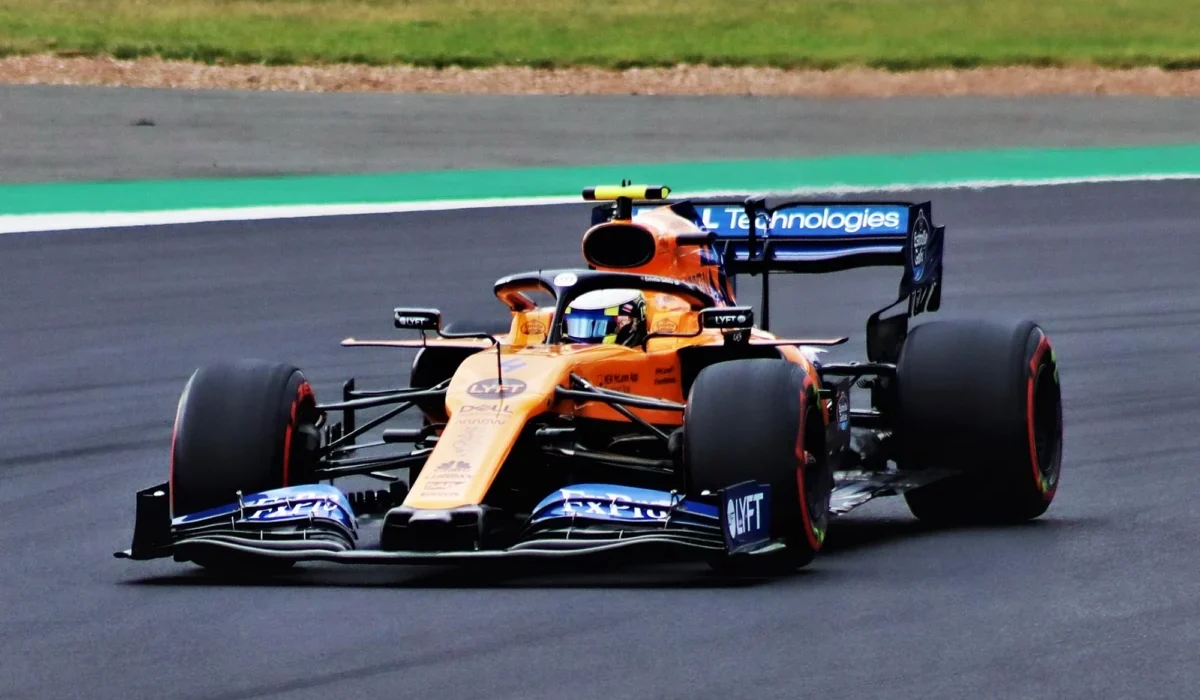
Formula 1 represents the absolute zenith of automotive engineering, a high-stakes laboratory where hundreds of millions of dollars are funneled into the pursuit of millisecond gains. While the average consumer vehicle on the road produces between 100 and 250 horsepower, the machines gracing the grid at a Grand Prix operate in a completely different dimension of physics. Understanding the power output of a modern Formula 1 car requires a deep dive into the complex hybrid power units that define the current era of the sport. As of the 2026 regulations, these vehicles are masterworks of thermal efficiency and kinetic energy management, capable of delivering upwards of 1,000 horsepower under specific race conditions.
The Anatomy of a 1,000-Horsepower Power Unit
The heart of every modern F1 car is a 1.6-liter V6 turbocharged internal combustion engine (ICE). While the displacement may seem modest compared to the massive engines of the mid-20th century, the output is anything but. The ICE provides the bulk of the car’s propulsion, contributing roughly 830 to 850 horsepower. However, the true technical brilliance lies in the hybrid componentry: the Energy Recovery System (ERS).

The ERS is comprised of two primary motor generator units. The MGU-K (Motor Generator Unit – Kinetic) captures energy under braking, while the MGU-H (Motor Generator Unit – Heat) harvests energy from the turbocharger’s exhaust gases. This energy is stored in a high-density battery pack and deployed via the rear axle. This electrical supplement adds approximately 160 horsepower to the mix. Crucially, this power is not always available at full capacity; drivers utilize an "Overtake Mode" to deploy this electrical boost, which is typically capped at 33 seconds per lap. Consequently, while the car effectively runs on 850 horsepower for the majority of a race, it reaches the 1,000-horsepower threshold during critical maneuvers such as straight-line passing.
A Chronology of Hybrid Dominance
The transition to high-output hybrid power units began in 2014, marking a departure from the naturally aspirated V8 era. This shift was motivated by a desire to align the sport with global automotive trends emphasizing efficiency and electrification.
- 2014–2021: The introduction of the 1.6-liter V6 turbo hybrid era, with Mercedes-AMG dominating the early stages through superior thermal efficiency.
- 2022: A major aerodynamic overhaul accompanied a freeze on power unit development, shifting the focus toward "ground effect" downforce to improve wheel-to-wheel racing.
- 2026: The current regulatory landscape, characterized by increased reliance on sustainable fuels and refined ERS deployment to maintain the 1,000-hp ceiling while curbing excessive fuel consumption.
- 2027–2028: Planned adjustments to the power distribution ratio, moving toward a 60/40 split between the ICE and the electric motor, reflecting an even greater reliance on hybrid power.
Technical Regulations and the Competitive Balance
The Fédération Internationale de l’Automobile (FIA) enforces a rigid set of technical regulations designed to ensure that no single manufacturer dominates through financial attrition. With a cost cap in place for car development—excluding driver salaries and marketing costs—teams are forced to innovate within a narrow box.

This parity is essential for the spectacle of the sport. If the engines were vastly different, the fastest car would win by default, rendering the driver’s role secondary. By keeping the power outputs roughly equal, the FIA ensures that the "human factor"—a driver’s ability to manage tire degradation, optimize corner entry, and execute overtakes—remains the primary determinant of victory. This is a delicate balance; if the power-to-weight ratio were too low, the cars would feel sluggish; too high, and they would become unmanageable on tight, technical street circuits.
Comparative Performance: F1 vs. Other Series
When placed in context with other major racing series, the superiority of the F1 power unit becomes clear. IndyCar, for instance, utilizes a hybrid setup that delivers approximately 800 horsepower. NASCAR’s Cup Series cars typically produce 670 horsepower, though they can push higher on specific high-speed ovals.
However, raw horsepower is only one variable in the equation. A Bugatti Chiron, with its 1,500-horsepower W16 engine, would easily out-accelerate an F1 car in a straight line. Yet, the Bugatti lacks the sophisticated aerodynamics—the wings, diffusers, and floor geometry—that generate thousands of pounds of downforce in an F1 car. This downforce allows F1 drivers to maintain speeds in corners that would cause a road car to lose traction and slide off the track. The F1 car is designed for cornering speed, braking efficiency, and rapid energy harvesting, not just top-end velocity.

The Future of Power: 2027 and Beyond
The FIA has already mapped out a strategic evolution for the power units to prevent "lift-and-coast" driving, a technique where drivers must ease off the throttle to manage fuel and electrical energy. To combat this, the 2027 and 2028 regulations mandate a shift in the power ratio. By 2028, the ICE will be required to contribute 450kW, while the ERS will see structural adjustments to ensure consistent, sustainable power delivery.
These changes are not merely about speed; they are about relevance. Manufacturers including Mercedes, Ferrari, Honda, Audi, and Red Bull-Ford are invested in F1 because the research performed at the track filters down to consumer road cars. The ability to manage energy recovery in a 200-mph race car provides invaluable data for battery longevity and thermal management in electric vehicles.
Implications of Current Regulations
The current constraints on energy harvesting, which allow for up to 9.0 MJ per lap, have forced teams to become experts in software development. The "brain" of the car—the Electronic Control Unit (ECU)—constantly monitors tire temperature, brake wear, and battery state-of-charge.

From an industry perspective, the commitment to these hybrid power units has successfully attracted new entrants. Audi’s entry into the sport is a direct result of the focus on electrified, high-efficiency performance. For the fans, the result is a product that remains the fastest circuit racing series on Earth while acknowledging the global shift toward sustainable energy.
The Role of Tires and Aerodynamics
While the power unit provides the force, the interface between that power and the track is the tire. Pirelli, the sole tire supplier for F1, provides a range of compounds that dictate race strategy. A team’s choice between soft, medium, or hard tires can be the difference between a podium finish and a mid-field result. The interplay between engine power and tire grip is constant; if a driver utilizes full 1,000-hp deployment too early coming out of a corner, the rear tires will spin, destroying the rubber and wasting precious energy.
The aerodynamic package is the final piece of the puzzle. At high speeds, the wings create massive drag. If the cars did not have the power-boost capabilities of the hybrid system, they would struggle to overcome this air resistance on long straights. The regulations are therefore designed to allow just enough power to offset the drag, ensuring that cars can close the gap to one another, facilitating the high-speed duels that define the sport.

Conclusion
The power of a Formula 1 car is a testament to the synergy between mechanical engineering and electrical innovation. While the 1,000-horsepower figure is the headline-grabbing statistic, the true achievement is the reliability and efficiency with which that power is delivered over the course of a 90-minute Grand Prix. As the sport moves toward 2027, the focus will continue to be on maximizing performance within an increasingly sustainable framework, ensuring that Formula 1 remains the ultimate proving ground for the automotive world. Through careful regulation, high-tech engineering, and the sheer talent of the drivers, the sport continues to push the boundaries of what is possible on four wheels.