










The transition to battery-electric vehicles (BEVs) remains a polarizing topic in the automotive landscape, with consumer hesitation frequently pinned to concerns over long-term battery reliability and the potential for astronomical replacement costs. While charging infrastructure and initial purchase prices are well-documented barriers to entry, the persistent fear of premature battery failure appears increasingly disconnected from modern engineering realities. New data provided by Ford regarding its 2021 Mustang Mach-E fleet offers a compelling look at how these high-voltage systems perform under real-world conditions, suggesting that fears of "disposable" vehicles may be vastly overstated.
Analyzing the 2021 Mustang Mach-E Cohort
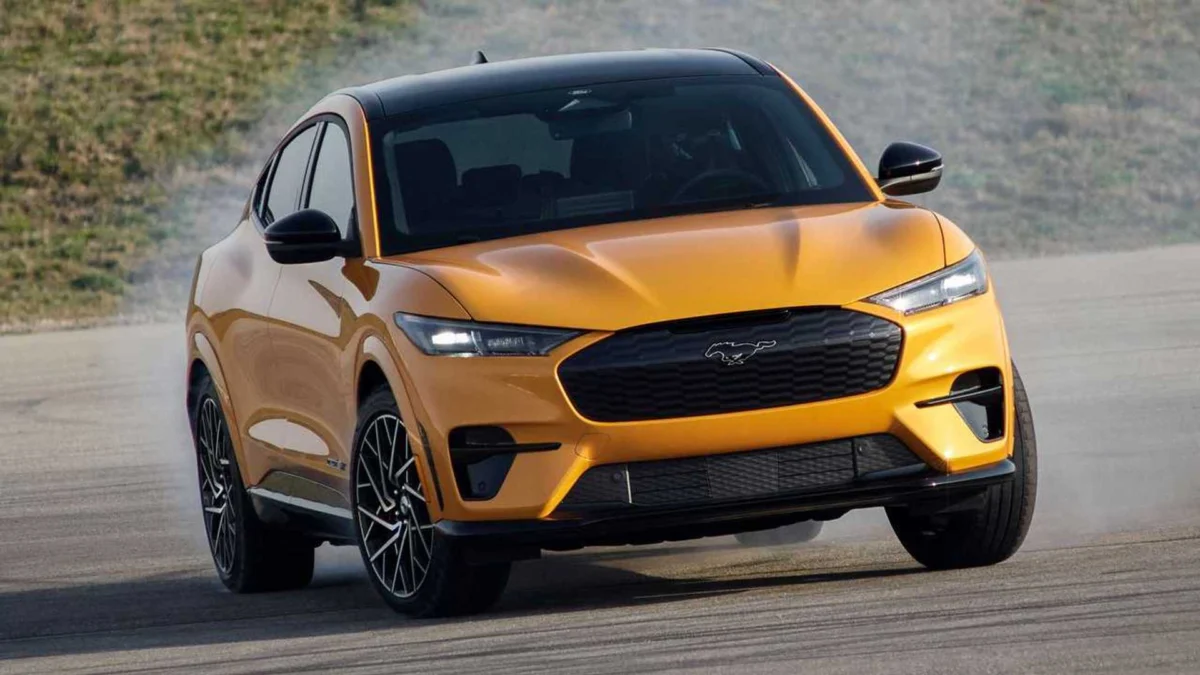
Ford’s recent investigation into the health of its early-production electric SUVs provides a significant sample size for researchers and potential buyers alike. By examining approximately 36,000 units of the 2021 model year Mustang Mach-E, the manufacturer established a baseline for how lithium-ion battery technology performs after several years on the road. The findings were overwhelmingly positive: 95 percent of the SUVs analyzed retained between 87 and 97 percent of their original battery capacity. Across the entire cohort, the average state-of-health (SoH) was calculated at 92 percent.
This data point serves as a critical benchmark for the industry. For most consumers, a loss of 8 to 13 percent of capacity after several years of operation is well within the acceptable margin of performance degradation. It suggests that the sophisticated thermal management systems, battery chemistry optimizations, and software-based charge limiters integrated into the Mach-E are effectively shielding the cells from the accelerated aging typically associated with early lithium-ion applications.
Chronology of Battery Performance and High-Mileage Benchmarks
To understand the trajectory of these batteries, it is necessary to look at the vehicles that have logged the most significant mileage. Ford’s data includes a subset of more than 2,000 Mustang Mach-E units that have surpassed the 100,000-mile mark. Remarkably, these high-usage vehicles maintained an average battery health of better than 91 percent.
The "hyper-milers"—a group of over 30 vehicles from the 2021 model year that have already exceeded 200,000 miles—also provided encouraging results. Even at this extreme level of usage, these vehicles averaged 88 percent battery health. This indicates that the degradation curve of the nickel-cobalt-manganese (NCM) batteries used in these specific models is not linear; rather, it slows significantly after the initial "break-in" period of the first few thousand miles.
This performance profile aligns with the manufacturer’s internal design targets. Ford has stated that its battery systems are engineered to provide at least 10 years of service, with a goal of retaining 90 percent capacity at the 100,000-mile mark. The real-world data not only meets these projections but, in many instances, exceeds them, providing a strong argument for the long-term viability of the current generation of electric powertrains.
The Role of Battery Chemistry: NCM vs. LFP
The longevity of an EV battery is not solely determined by software or thermal management; the underlying chemical composition plays a decisive role. The Ford data primarily reflects the performance of NCM (nickel-cobalt-manganese) battery packs. These are prized for their high energy density, allowing for longer driving ranges in a smaller, lighter package.
However, the industry is increasingly moving toward Lithium Iron Phosphate (LFP) chemistry for entry-level and standard-range models. LFP batteries are inherently more stable and robust, often capable of handling a higher number of charge cycles without significant degradation compared to NCM variants. While LFP packs are generally less energy-dense—meaning they require more mass to achieve the same range—their durability makes them an ideal solution for daily commuters. Ford’s strategy of incorporating both chemistries across its product lineup reflects a nuanced approach to balancing performance with long-term durability.

Best Practices for Battery Longevity
While the engineering is robust, owner behavior remains the primary variable in the lifespan of an EV battery. Ford has published guidelines aimed at maximizing the health of its electric fleet, emphasizing that temperature control is the most critical factor in mitigating chemical aging.
- Thermal Preconditioning: Ford recommends that owners precondition their vehicles while they are still plugged into a charging source. By drawing power from the grid to heat or cool the battery pack to an optimal operating temperature before the vehicle is driven, the battery avoids the stress of managing extreme temperatures while under load.
- Strategic Charging: While DC fast charging is convenient for long-distance travel, it generates significant heat, which can accelerate degradation if used exclusively. Owners are encouraged to utilize Level 2 charging for their daily requirements.
- Environmental Awareness: For those living in climates with extreme temperatures, parking in a garage or in the shade during the summer can prevent the battery from reaching excessive temperatures while the vehicle is idle, thereby reducing the workload on the vehicle’s active cooling system.
- Software Monitoring: Utilizing the Ford mobile application allows owners to monitor their charge levels and receive manufacturer-recommended charging parameters. These software tools are designed to prevent the battery from sitting at 100 percent state-of-charge for extended periods, which is known to increase chemical stress.
Broader Industry Implications and Data Analysis
The Ford study is not an isolated incident; it aligns with a growing body of research regarding EV battery degradation. Various independent studies have consistently shown that modern electric vehicles are proving to be remarkably resilient. Research focusing on vehicles with over 150,000 miles has frequently reported capacity retention in the 81 to 91 percent range, regardless of the brand.
The consensus among battery experts is that mileage itself is a secondary factor compared to charging habits and thermal management. A vehicle that is driven 200,000 miles in a moderate climate using primarily Level 2 charging will almost certainly have a healthier battery than a vehicle driven 50,000 miles in a high-heat environment that has been subjected to frequent, rapid DC charging without proper conditioning.
For the automotive industry, these findings have profound implications for the secondary market. A primary reason for the rapid depreciation of used EVs has been the "unknown" factor of battery health. As manufacturers like Ford begin to provide more transparent, aggregated data on battery longevity, the uncertainty surrounding the residual value of used electric vehicles is likely to diminish. If a used vehicle can be certified as having 90 percent battery health at 100,000 miles, the psychological barrier to purchasing a pre-owned EV is significantly lowered.
Addressing the "Replacement Cost" Anxiety
One of the most persistent myths in the EV market is the idea that when a battery fails, the car is effectively "totaled" due to the cost of a replacement pack. While the cost of a full battery replacement remains high—often ranging from $10,000 to $20,000 depending on the model—the data suggests that for the vast majority of owners, a full replacement will never be necessary during the functional life of the vehicle.
Furthermore, the industry is moving toward modular battery pack designs. Instead of replacing an entire pack, service centers are increasingly able to replace individual modules or perform repairs on the battery management system (BMS) and cooling circuits. This shift toward serviceability will further drive down the long-term cost of ownership and reduce the impact of any singular cell failure.
Conclusion: The Path Forward
The narrative surrounding electric vehicles is slowly shifting from one of skepticism to one of data-driven confidence. By providing transparency into the 2021 Mustang Mach-E fleet, Ford has offered a practical look at how early-production EVs handle the rigors of real-world use. The findings suggest that the industry has moved past the experimental phase of battery design and into a period of predictable, reliable performance.
As more manufacturers follow suit and release long-term data on their own fleets, the stigma attached to high-mileage electric vehicles is expected to dissipate. The combination of improved chemistry, intelligent thermal management, and consumer education regarding charging habits is creating a landscape where the electric vehicle is not just a sustainable choice, but a durable and reliable one. For the prospective buyer, the message is clear: the modern EV battery is designed to go the distance, and with minor adjustments to charging behavior, it is capable of outlasting many of the mechanical components found in traditional internal combustion vehicles.
Looking ahead, the focus will likely shift from basic battery survival to advanced diagnostics, where owners will have real-time access to their vehicle’s "health report" through digital dashboards. This level of transparency will be the final piece of the puzzle in normalizing electric vehicles, moving them from a niche technological interest to the standard for the global automotive market. The data confirms what engineers have long maintained: the technology is ready, the systems are robust, and the era of the high-mileage, reliable electric vehicle is already here.