






The Philosophy of the Analog EV
The Slate truck is positioned as an "unburdensome" alternative to the current generation of electric vehicles. While major manufacturers—including Tesla, Rivian, and Lucid—compete to integrate augmented reality displays, AI-driven voice assistants, and subscription-based software services, Slate has taken the opposite approach. The vehicle features unpainted composite body panels, manual window cranks, and a stripped-back interior that intentionally lacks a central infotainment screen.
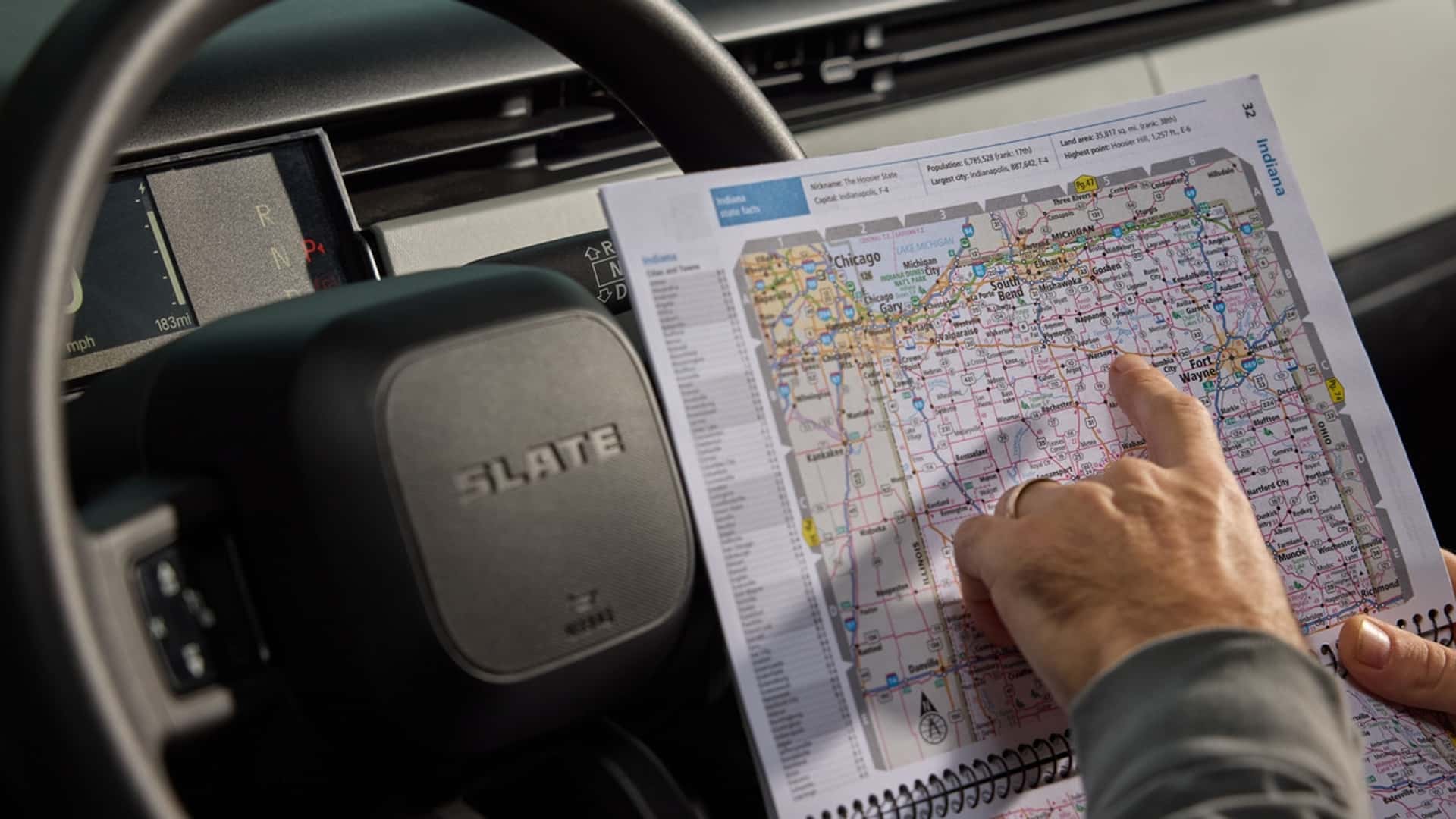
By removing the screen, Slate claims it is not only reducing the bill of materials for its $25,000 electric pickup but also eliminating the planned obsolescence that often plagues modern vehicle software. The company’s decision to market a paper road atlas as its "official navigation system" is a tongue-in-cheek critique of the "digital-first" mindset. It emphasizes a core company belief: that vehicle owners already possess superior, familiar, and more reliable technology in their pockets, specifically their smartphones.
Chronology of the Slate Project
The trajectory of the Slate truck project has been characterized by a rapid development cycle and a focus on transparency regarding its target demographic.
- Late 2024: Slate garnered significant industry attention for its "bare-bones" prototype, which appeared in various media reviews highlighting its ease of use compared to more complex premium EVs.
- Early 2025: The company began establishing physical infrastructure, including the opening of its first "Experience Center" in Chicago, allowing potential customers to test drive the vehicle and understand its manual-heavy, analog-focused cabin.
- Mid-2025: Official pricing and technical specifications were finalized, cementing the $24,950 base price point and highlighting the use of Lithium Iron Phosphate (LFP) battery technology, which is favored for its longevity and thermal stability compared to traditional nickel-based chemistries.
- Late 2025: The introduction of the "Screenless GPS" coincides with the final preparation phase for the first customer deliveries, which are scheduled to commence before the end of the calendar year.
Technical Specifications and Market Positioning
The Slate truck enters a highly competitive space, yet it occupies a unique niche. Most electric pickups on the market, such as the Ford F-150 Lightning or the Chevrolet Silverado EV, are marketed as high-tech, multi-purpose family vehicles with significant software overhead. Slate, by contrast, targets the utility-focused buyer—individuals or small businesses that prioritize payload capacity, battery durability, and ease of repair.
The use of LFP batteries is a strategic choice. While they offer slightly lower energy density than NMC (Nickel Manganese Cobalt) batteries, they provide a higher cycle life, meaning the vehicle can be charged to 100% daily without the same degree of degradation. This aligns with the "utility-first" ethos of the truck. By keeping the vehicle "analog," the startup reduces the risk of software bugs, security vulnerabilities, and expensive digital hardware failures that have become a hallmark of modern automotive recalls.
The "Bring Your Own Device" (BYOD) Strategy
The integration of a phone mount as the primary navigation interface is a distinct business model. Rather than investing millions in proprietary navigation software that may become outdated within three years, Slate effectively outsources the digital experience to the user’s mobile device. This approach offers several advantages:
- Zero Subscription Fees: Users rely on their existing mobile data plans and preferred mapping applications (Google Maps, Waze, Apple Maps).
- Continuous Updates: The mapping software is updated automatically by the phone’s operating system, ensuring the latest traffic data and road closures without requiring a vehicle-side software update.
- User Preference: Drivers are not forced to learn a proprietary UI; they use an interface they are already proficient with.
The Rand McNally Atlas serves as a physical backup, ensuring that the driver is never truly "lost," regardless of signal strength or battery health—a nod to the rugged, utilitarian roots the brand hopes to evoke.
Industry Implications and Market Analysis
The success of the Slate model will provide a crucial data point for the automotive industry. For years, the prevailing wisdom has been that the "customer experience" in a vehicle is defined by the quality of the infotainment system. Slate is testing the theory that this is a false assumption, particularly among consumers who view the vehicle as a tool rather than a computer on wheels.
Industry analysts note that if Slate can maintain its price point below the $25,000 threshold, it could capture a significant share of the "fleet" market—municipalities, landscaping companies, and contractors who need reliable transportation without the distraction or maintenance cost of advanced driver-assistance systems (ADAS) and large touchscreens.
Furthermore, the "Screenless GPS" stunt highlights a growing trend of "digital fatigue." As cars become increasingly invasive—collecting vast amounts of driver data and forcing software updates—there is a burgeoning demand for vehicles that return control to the driver. By leaning into this, Slate is successfully generating viral marketing value for a product that is, by design, incredibly simple.
Official Stance and Future Outlook
"When it comes to tech, we believe you should use the devices and solutions you already know and love," the company stated in a recent press release. "Not because we don’t like tech, but because we believe you already have everything you need to get where you’re going."
This philosophy extends beyond just navigation. The company has teased various modular accessories, including an SUV conversion kit and simple mechanical add-ons, reinforcing the idea that the truck is a "blank canvas."
As the industry approaches the end of 2025, the automotive world is watching closely to see if this "back-to-basics" approach can survive the rigors of mass-market production. With the first units rolling off the line, the question remains whether the modern consumer is truly ready to trade the comfort of a 15-inch touchscreen for the reliability of a $30 road map. However, for those who value the mechanical simplicity of a vehicle that just works, the Slate truck represents a significant, if unconventional, step forward in the transition to electric mobility.
The Broader Context of Utility EVs
The Slate truck is not merely a novelty; it represents a correction in the trajectory of EV design. As prices for high-end EVs have stalled due to market saturation and consumer sticker shock, the sub-$30,000 segment has remained largely unserved by legacy automakers. The cost of complex electronics and massive, high-capacity batteries has kept prices elevated. By stripping away non-essential luxury features, Slate has managed to keep the barrier to entry low.
This strategy is reminiscent of early automotive history, where vehicles were sold as chassis and engines, with the expectation that owners would modify or accessorize them based on their specific needs. By providing a rugged, reliable, and affordable electric platform, Slate is essentially betting that the future of the EV market lies in accessibility and customization rather than forced integration.
As the company moves toward the delivery phase, the real test will be the reliability of the hardware. In the absence of complex software, the mechanical build quality will define the brand’s reputation. If the truck proves as durable as the physical map it now sells, it may well prove that in an era of infinite digital noise, silence and simplicity are the most effective features a manufacturer can offer. Whether or not this gamble pays off, Slate has already succeeded in starting a conversation about what we actually need from our vehicles, and how much we are willing to pay for things we might not use.