






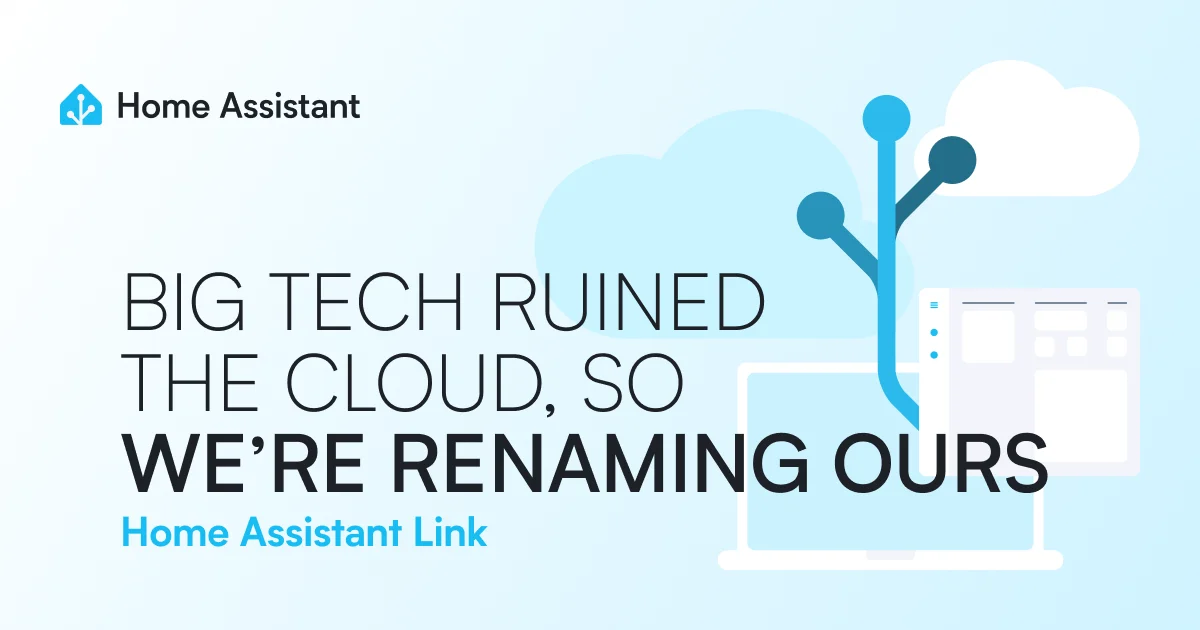
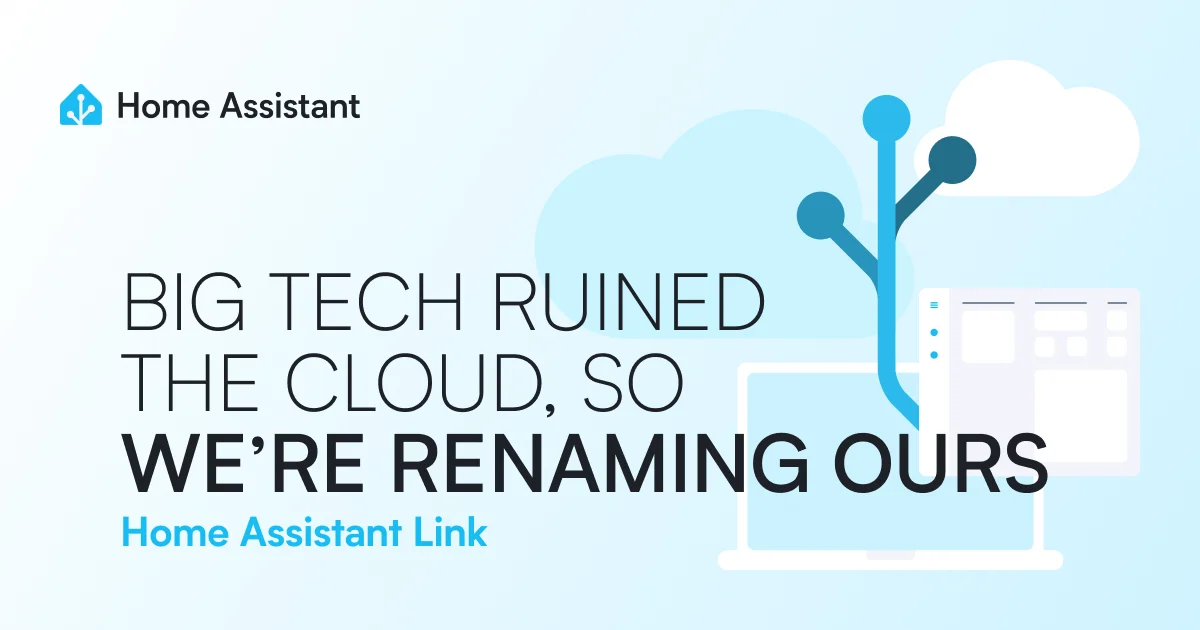
The commercial entity behind the popular open-source smart home platform Home Assistant, Nabu Casa, has officially announced that it is dropping the term "cloud" from its optional remote connectivity and enhancement service. Moving forward, Home Assistant Cloud will be known as Home Assistant Link. The rebranding effort, spearheaded by Vice President of Commercial Carl in a public statement released in October 2026, aims to distance the platform’s auxiliary services from the negative connotations currently associated with Big Tech infrastructure—namely, mandatory subscription tiers, aggressive data harvesting, sudden service terminations, and restrictive walled gardens.
The name change is scheduled to take full effect globally with the release of Home Assistant version 2026.12 in December. Until then, Nabu Casa is actively soliciting feedback from the global user community regarding the transition. While the nomenclature is shifting to better reflect the product’s architecture, the underlying operational philosophy, pricing structures, and privacy guarantees of the service will remain unchanged. Subscribers will continue to fund core development efforts for the wider Open Home Foundation ecosystem while retaining absolute local control over their residential automation hardware.
Origins and Sustainability: The Genesis of Nabu Casa
To understand the motivations behind the rebrand, industry observers must look back at the trajectory of Home Assistant itself. Founded as an open-source passion project, the platform originally relied entirely on the nocturnal and weekend labor of its core developers. Facing the perennial threat of burnout that has historically crippled numerous open-source initiatives, the project’s leadership established Nabu Casa in 2018.
The commercial enterprise was created not to introduce venture capital-backed monetization models, but to establish a sustainable economic engine that could fund full-time staff and continuous development. Central to this strategy was Home Assistant Cloud—subsequently renamed Home Assistant Link—which was launched to solve a primary friction point for everyday users: establishing secure, encrypted external access to their local smart homes without requiring advanced networking expertise.
Rather than relying on venture capital or ad-based revenue models, Nabu Casa structured its operations so that the majority of profits generated from subscriptions are funneled directly back into the Open Home Foundation. This financial pipeline supports both salaried engineers and community contributors, ensuring the long-term viability of an ecosystem that fiercely defends local-first computing principles.
The Problem with "The Cloud" in Modern Consumer Tech
The decision to discard the word "cloud" stems from a broader industry backlash against how major technology conglomerates manage consumer data and IoT hardware. Over the past decade, the term has become synonymous with forced remote dependencies, mandatory telemetry, cloud-dependent hardware obsolescence, and sudden price surges.
In many commercial smart home deployments managed by multinational tech firms, hardware devices are rendered entirely useless—effectively turning into expensive electronic waste—if a company decides to sunset a service, alter its API terms, or discontinue product support. Thermostats lose scheduling capabilities, security cameras stop detecting motion, and consumers are forced into a continuous cycle of replacement driven entirely by corporate profit motives rather than hardware failure.
Furthermore, public figures within the open-source community, including Home Assistant founder and Open Home Foundation President Paulus Schoutsen, frequently encounter ideological friction when discussing their own services. A recurring paradox involved advocates standing on stage warning consumers against purchasing hardware reliant on proprietary corporate infrastructure, only to immediately have to defend an internal service bearing the word "cloud" in its title. This naming convention consistently misled newcomers into believing that Home Assistant operated as a hosted cloud service, contradicting the platform’s foundational ethos that all automation logic, device states, and user data must reside locally within the user’s physical home.
Comparative Architectural Analysis: Link Versus Big Tech Ecosystems
To clarify the operational differences between traditional commercial cloud platforms and the newly rebranded Home Assistant Link, technology analysts frequently point to several fundamental distinctions regarding autonomy, data privacy, and financial governance.
| Feature / Metric | Home Assistant Link | Big Tech Cloud Infrastructure |
|---|---|---|
| System Dependency | Optional: Core smart home automations, local devices, and lighting logic function seamlessly without an active subscription. | Mandatory: Essential functionality, device discovery, and automation routines fail entirely during internet outages or server deprecation. |
| Ecosystem Lock-in | None: Users retain full system sovereignty and can utilize alternative remote access methods without losing local control. | Walled Garden: Proprietary protocols bind the consumer to a single vendor, exposing them to arbitrary price hikes and sudden service shutdowns. |
| Data Privacy | Zero-Knowledge Encryption: User data remains strictly private; telemetry is minimized, and keys are held exclusively by the end user. | Monetized Telemetry: User behavior and home data are mined for advertising profiles, third-party licensing, and machine learning model training. |
| Financial Allocation | Nonprofit Support: Subscription profits primarily fund the Open Home Foundation, supporting privacy advocacy and open-source software. | Investor Returns: Capital flows directly to corporate shareholders, debt service, and executive compensation, with developer funding treated as an expense. |
Technical Upgrades and Enhanced Service Offerings
Alongside the cosmetic rebranding, Nabu Casa has rolled out significant backend infrastructure updates designed to improve the performance, reliability, and security of Home Assistant Link. The company recently migrated its remote access architecture to a modernized bare-metal server deployment. This transition dynamically routes user traffic to the geographically closest server node, yielding measurable improvements in latency and connection responsiveness.
Additional technical enhancements accompanying the transition include:

- Streamlined Account Management: A redesigned user account dashboard allowing centralized subscription and credential oversight.
- Advanced Voice Processing Labs: Continued testing and refinement of online speech-to-text engines, which provide faster processing speeds and broader multilingual support compared to entirely self-hosted voice models.
- Enhanced Setup Wizards: Integrated configuration guides within the core Home Assistant settings menu to simplify the process of linking external services such as virtual assistants.
- Secure Online Backups: Encrypted off-site storage options ensuring disaster recovery capabilities without sacrificing data privacy.
- Human-Centric Support: Access to dedicated technical support personnel to assist subscribers with complex integration troubleshooting.
Crucially, leadership at Nabu Casa emphasizes that while these features enhance the user experience, none of them compromise the local-first nature of the platform. Subscribers retain the freedom to cancel their subscription at any time without experiencing hardware bricking or loss of core local automation capabilities.
Industry Implications and Community Response
The preemptive rebranding by Nabu Casa highlights a growing market preference for digital sovereignty and transparent corporate governance. As regulatory scrutiny intensifies regarding data harvesting and consumer lock-in practices by major technology firms, alternative models that prioritize user privacy and open-source sustainability are gaining traction.
By intentionally shedding terminology associated with corporate surveillance and forced cloud dependency, Home Assistant Link aims to set a new benchmark for ethical commercialization within the Internet of Things (IoT) sector. The strategy demonstrates that commercial entities can successfully fund open-source public goods through voluntary, value-added services rather than through the monetization of private consumer data.
As the December 2026 release approaches, community feedback remains the final arbiter of the transition. Open-source advocates and long-term contributors are largely supportive of the semantic shift, viewing it as a necessary alignment between the project’s marketing vocabulary and its uncompromising technical principles. Through this initiative, Nabu Casa continues to reinforce the principle that modern connected technology should serve the autonomy of the individual rather than the profit margins of corporate shareholders.