










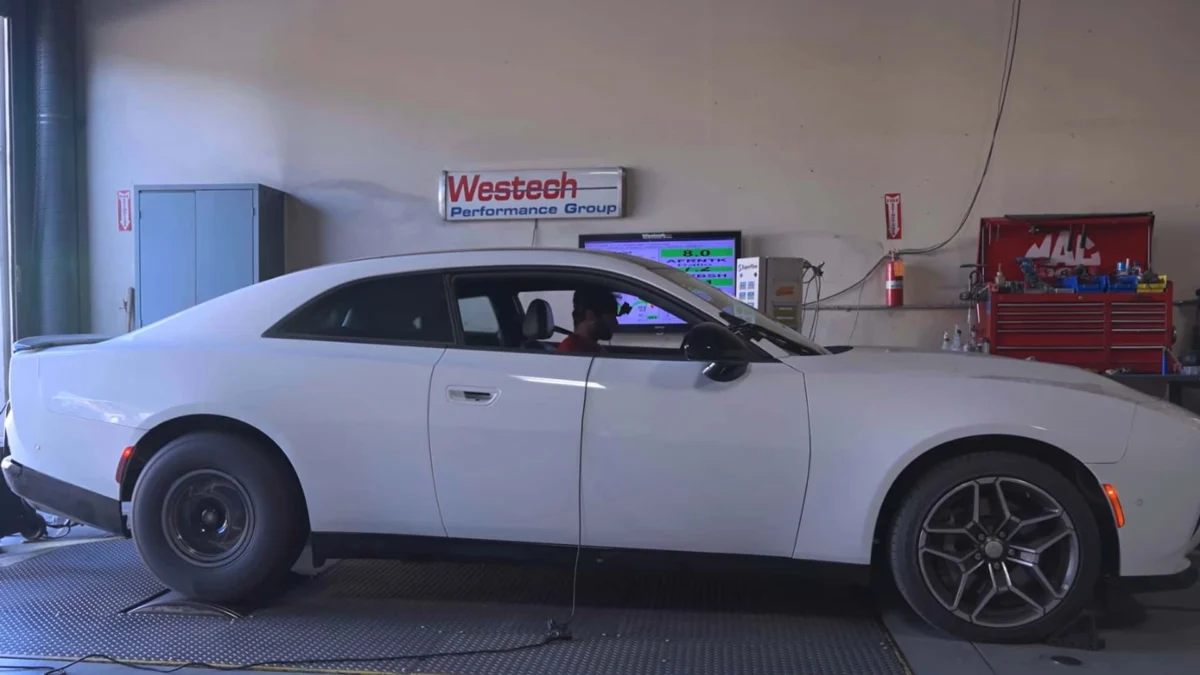
The automotive landscape is currently undergoing a seismic shift as Dodge pivots from the legendary HEMI V8 platform toward a new era defined by both electrification and high-performance, forced-induction inline-six engines. While the debut of the 2026 Dodge Charger lineup has elicited a spectrum of reactions from enthusiasts and critics alike, empirical evidence is beginning to emerge that suggests the new "Sixpack" powertrain is a remarkably robust foundation for high-performance modifications. Recent testing conducted by noted automotive builder and content creator Rob Dahm has demonstrated that the 3.0-liter twin-turbocharged Hurricane inline-six engine is capable of producing nearly 1,000 horsepower at the wheels while retaining its original factory-installed internal components.
A New Chapter for the Dodge Charger
The 2026 Dodge Charger represents a departure from the previous generation’s naturally aspirated, high-displacement V8 architecture. Dodge has introduced the Hurricane twin-turbocharged 3.0-liter inline-six as the primary internal combustion option for the new Charger platform. In its standard high-output factory configuration, this engine is rated by the manufacturer to produce 550 horsepower and 531 lb-ft of torque. These figures already position the vehicle as a formidable contender in the performance sedan segment, yet the aftermarket community has been eager to determine the latent potential residing within the engine block.
The project undertaken by Rob Dahm sought to push these engineering limits by bypassing the conservative factory tuning and forced-induction constraints. By focusing on airflow and fuel density rather than mechanical overhaul, the team aimed to establish a baseline for how the Hurricane engine handles significant power density increases.
Technical Chronology of the Build
The modification process followed a methodical, staged approach, focusing on maximizing the engine’s volumetric efficiency. The initial phase involved replacing the stock twin-turbocharger setup with a single, larger-capacity turbocharger designed to handle significantly higher boost pressures. To facilitate this, the stock intake manifold was swapped for a billet aluminum unit, providing superior flow characteristics and structural integrity under high-pressure conditions.
A critical component of the build’s success was the conversion to E85 ethanol fuel. The higher octane rating and cooling properties of E85 allowed for aggressive ignition timing and significantly higher boost levels, which were eventually pushed to 46 psi. The exhaust system was also modified to reduce backpressure, allowing the turbocharger to spool more efficiently.
In its initial test iteration, without the inclusion of nitrous oxide injection, the vehicle achieved a dyno-verified output of approximately 850 horsepower. Following the refinement of the engine management software and the integration of a nitrous oxide system—which provides a supplemental oxygen source and cooling effect—the Charger reached a peak output of 968 horsepower at the wheels. Throughout this process, the engine block, pistons, connecting rods, and crankshaft remained entirely original, underscoring the high degree of engineering margin Dodge built into the Hurricane platform.
Limitations of the Drivetrain
While the engine proved resilient under extreme stress, the testing highlighted the limitations of the surrounding drivetrain components. As the output approached the 1,000-horsepower threshold, the factory-installed eight-speed automatic transmission began to exhibit erratic behavior.
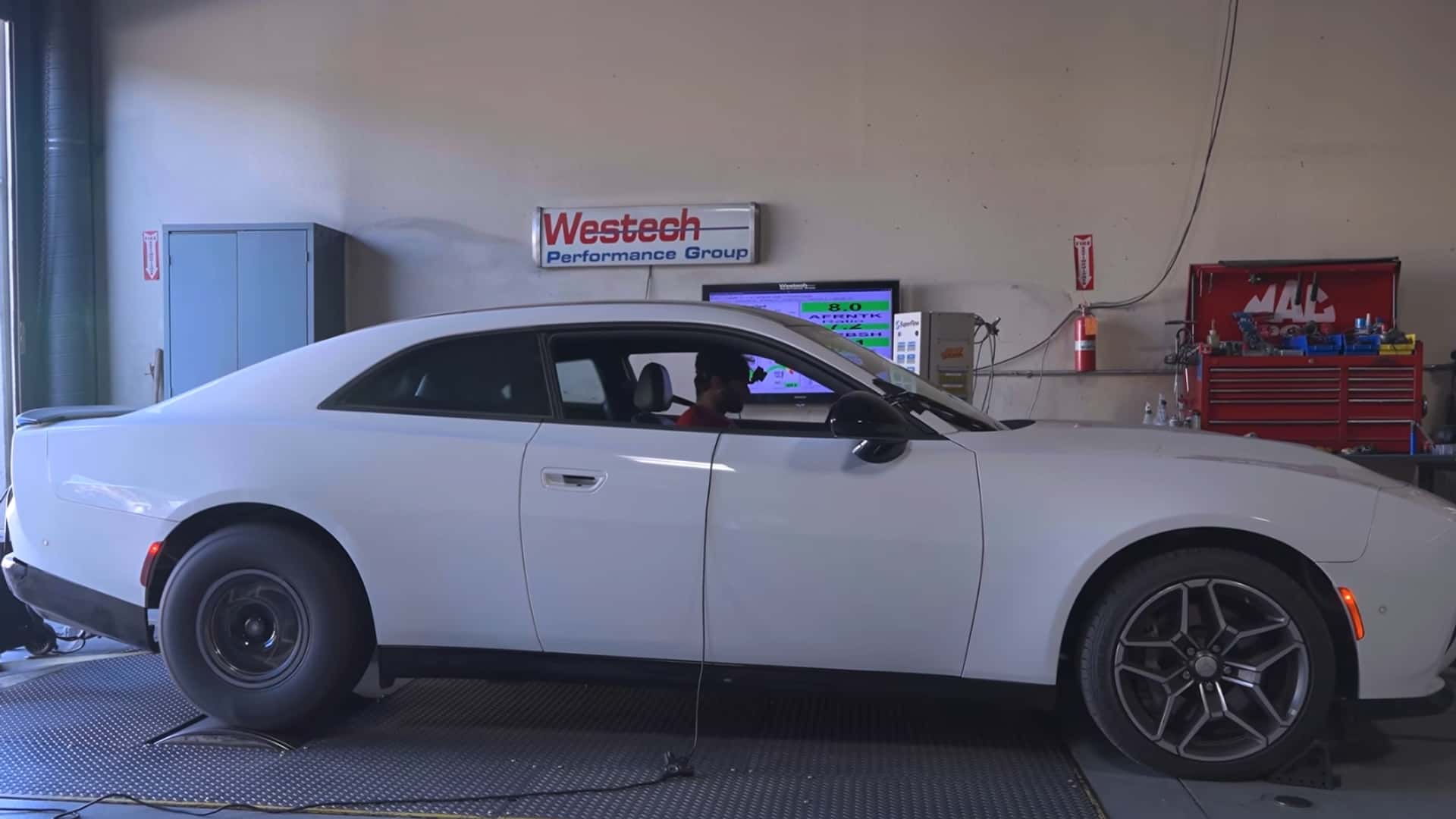
In automotive engineering, such occurrences are often attributed to the transmission control unit (TCU) detecting torque values that exceed the programmed safety thresholds. The transmission’s "limp mode" or inconsistent shifting patterns observed during the dyno sessions serve as a self-preservation mechanism, intended to prevent mechanical failure of the clutch packs or planetary gear sets. Despite these electronic intervention measures, the transmission remained fully operational following the tests, suggesting that the hardware itself is durable, even if it requires recalibration or reinforcement to manage such massive power increases long-term.
Broader Implications for the Performance Market
The success of this build carries significant weight for the future of the Dodge brand and the broader tuning industry. By demonstrating that a factory-stock internal combustion engine can nearly double its output without requiring forged pistons or upgraded rods, Dodge has inadvertently signaled to the enthusiast community that the Hurricane engine is a worthy successor to the long-standing HEMI lineage.
For decades, the Chrysler "Gen III" HEMI engine was the gold standard for enthusiasts seeking high-horsepower builds. The ability of the Hurricane to match or exceed these historical performance benchmarks suggests that the transition away from V8 engines does not necessarily signal an end to high-performance potential. Instead, it represents a shift toward more compact, high-efficiency, forced-induction power plants that are arguably more tunable due to modern advancements in material science and engine management systems.
Context and Market Position
The 2026 Charger’s performance must be viewed within the context of Stellantis’ broader electrification strategy. As the company faces tightening emissions regulations and a consumer base that remains attached to traditional combustion performance, the Hurricane engine serves as a bridge technology. It offers the power density required to maintain the brand’s reputation for muscle cars while meeting modern efficiency standards.
From a market perspective, this development likely bolsters the resale and interest value of the Sixpack Charger. Performance enthusiasts often prioritize "headroom"—the amount of additional power an engine can safely produce—when selecting a vehicle for modification. The findings from this test provide a clear data point that the 2026 Charger is not merely a replacement for the outgoing model but a platform with substantial growth potential.
Future Perspectives
As more examples of the 2026 Dodge Charger reach the hands of tuners and performance shops, it is highly probable that we will see further refinements. The primary focus for future iterations will likely be the development of transmission-specific upgrades, such as upgraded torque converters, valve bodies, and TCU software flashes, to effectively transfer the engine’s power to the pavement.
Moreover, the fact that this engine can handle such output on stock internals invites questions regarding the long-term durability of these components under repeated high-load cycles. While the engine survived the dyno, track environments impose different stresses, including sustained heat soak and cooling system demands. Future tests will need to address whether the factory cooling and oiling systems can keep pace with the power levels demonstrated in this controlled environment.
Conclusion
Rob Dahm’s experiment with the 2026 Dodge Charger Sixpack serves as a definitive case study in modern engine capability. By achieving nearly 1,000 horsepower on factory-sealed internals, the vehicle has set a high bar for the new generation of Dodge performance. Whether or not these modifications will become common practice, the demonstration has successfully addressed some of the skepticism surrounding the shift to the Hurricane platform. It confirms that while the architecture of the muscle car is evolving, the pursuit of extreme power remains a central tenet of the Dodge brand identity. The data gathered here provides a foundational roadmap for what is possible when modern engineering is pushed to its absolute limits, proving that the Charger remains a formidable machine, regardless of the displacement under its hood.