The landscape of the mobile computing market is undergoing a significant transformation as competition intensifies between industry titans Intel and Advanced Micro Devices (AMD). For several product cycles, AMD has enjoyed a commanding lead in the high-performance laptop sector, particularly within the gaming and content creation segments. AMD’s Ryzen Mobile 4000 and 5000 series processors consistently outperformed Intel’s aging 10th-generation Comet Lake lineup in efficiency, multi-threaded workloads, and overall thermal performance. However, persistent supply chain constraints and manufacturing limitations have hindered AMD’s ability to fully satisfy surging global demand, creating a critical window of opportunity for competitors.
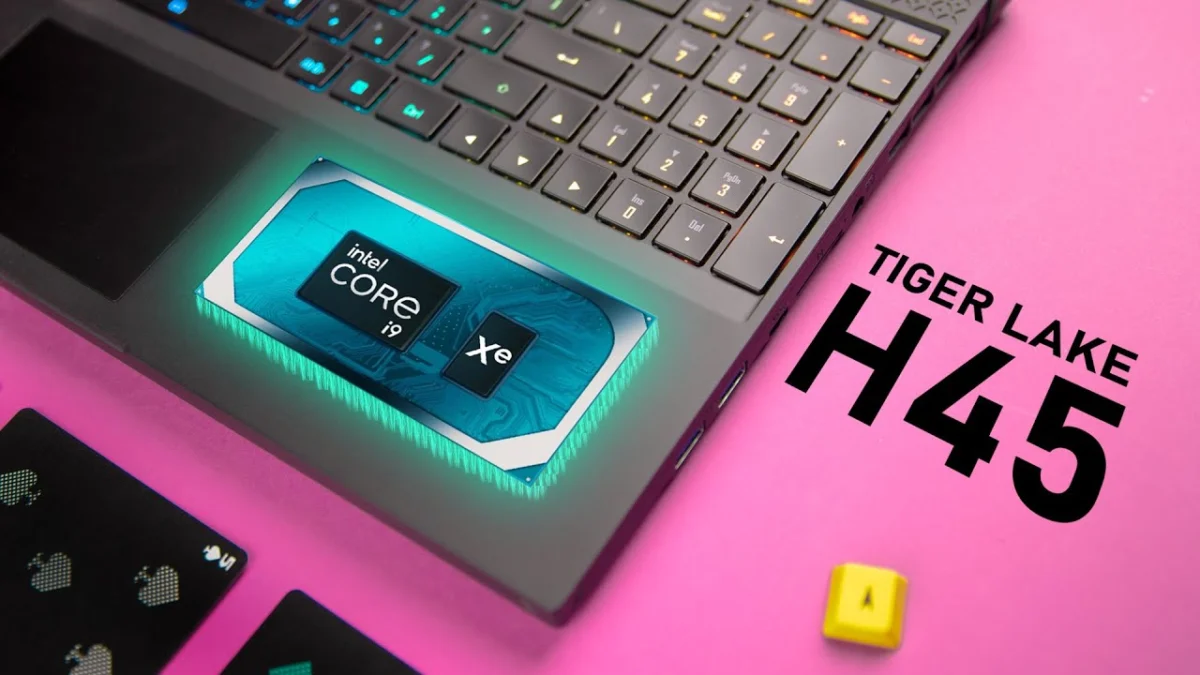
Intel is now mounting a robust counteroffensive with the official launch of its 11th-generation Core H-series processors, codenamed Tiger Lake-H45. Representing a radical departure from the iterative 14-nanometer architecture updates of previous years, the new mobile lineup seeks to reestablish Intel’s competitiveness across ultra-thin gaming laptops and high-performance workstations. Industry observers note that while AMD’s architectural prowess remains formidable, Intel’s latest silicon introduces crucial platform-level advancements that could decisively shift consumer preference.
Chronology and Market Context
The journey toward Intel’s 11th-generation H-series mobile rollout began with incremental releases that tested the waters for the new architecture. Initially, Intel introduced its low-power Tiger Lake silicon for ultrabooks, followed by the introduction of the H35 series at Consumer Electronics Show (CES) earlier in the year. The H35 processors targeted thin-and-light gaming chassis but lacked the core counts necessary to counter AMD’s top-tier Ryzen 9 mobile parts. During those early previews, Intel executives teased three defining metrics for their forthcoming flagship architecture: sustained clock speeds reaching 5.0 GHz, up to 8 processing cores, and native support for PCIe Gen 4 lanes.
The culmination of this roadmap arrives with the H45 lineup, bridging the gap between ultra-efficient portable computing and uncompromising desktop-class performance. For the semiconductor industry, this release marks a crucial milestone in Intel’s ongoing efforts to stabilize its market share erosion in the high-end mobile sector.
Technical Specifications and Architecture
At the core of the Tiger Lake-H45 platform is Intel’s 10nm SuperFin manufacturing process, paired with the entirely redesigned Willow Cove microarchitecture. This represents a foundational shift away from the legacy 14nm process nodes that defined Intel’s architecture for half a decade.
The flagship processor of the new lineup is the unlocked Intel Core i9-11980HK, featuring 8 cores and 16 threads, capable of achieving thermal design power (TDP) configurations up to 65 watts. The processor boasts a maximum single-core and dual-core turbo frequency of 5.0 GHz, alongside a 4.5 GHz all-core boost. Fully unlocked for manual tuning, the i9-11980HK supports Intel Extreme Tuning Utility (XTU) and the automated Speed Optimizer feature, giving enthusiasts granular control over performance metrics.

Positioned immediately below the flagship are the Core i9-11900H and the Core i7-11800H. Both models retain an 8-core, 16-thread configuration with a standard 45W TDP. Notably, performance benchmarks indicate that the Core i7-11800H delivers compute capability within 7 to 9 percent of the flagship model, making it a highly attractive option for mainstream gaming notebooks. All three 8-core variants feature 24MB of L3 cache, surpassing the cache capacity found in many comparable desktop processors and directly benefiting memory-intensive computational tasks.
For more cost-sensitive configurations, Intel has introduced 6-core, 12-thread Core i5 variants (such as the i5-11400H), albeit with the L3 cache reduced to 12MB. Native memory support across the entire Tiger Lake-H series has been elevated to DDR4-3200, offering improved bandwidth compared to previous-generation platforms.
Platform Connectivity and Peripheral Support
Beyond raw processing power, the Tiger Lake-H architecture introduces substantial advancements in platform-level connectivity, distinguishing it from competing silicon. Intel has incorporated 20 lanes of PCIe Gen 4 directly into the CPU. This configuration allows eight lanes to be dedicated to discrete graphics, while the remaining 12 lanes can be utilized for ultra-high-speed NVMe storage arrays—including advanced RAID configurations.
This hardware foundation is optimized to support Microsoft DirectStorage, an upcoming Windows API designed to accelerate asset streaming in modern video games by offloading input/output decompression tasks from the CPU to the graphics subsystem. Furthermore, the platform provides an additional 24 PCIe Gen 3 lanes through the Platform Controller Hub (PCH), resulting in a total of 44 platform-level PCIe lanes for expansive peripheral connectivity.
In addition to storage performance, the 11th-gen mobile platform features native integration of Thunderbolt 4 technology, offering bi-directional bandwidth up to 40 Gbps, multi-display support, and universal power delivery. Wireless connectivity is similarly modernized through native support for Killer Wi-Fi 6E (Gig+), which utilizes the newly accessible 6 GHz frequency spectrum to mitigate signal congestion and reduce network latency in dense environments.
Integrated Graphics and Discrete GPU Pairing
The integrated graphics processing unit (IGPU) embedded within the Tiger Lake-H processors utilizes the Xe-LP graphics architecture. However, to accommodate the physical constraints of an 8-core die, the execution units (EUs) have been restricted to 32 EUs, a reduction compared to the 96 EUs found in lower-core-count Tiger Lake variants.
Industry analysts indicate that this design choice was deliberate. OEM partners confirmed that high-end Tiger Lake-H processors are predominantly paired with high-performance discrete graphics cards, such as NVIDIA’s GeForce RTX 30-series mobile GPUs. Consequently, allocating additional die space for a larger integrated graphics processor was deemed unnecessary, prioritizing thermal headroom and CPU core density instead.

Performance Metrics and Comparative Analysis
Internal benchmarking data released by Intel suggest competitive performance advantages over previous-generation Comet Lake hardware and AMD’s Ryzen 5000 Mobile series. In gaming workloads, the Intel Core i9-11980HK paired with an NVIDIA GeForce RTX 3080 mobile GPU demonstrates competitive frame rates when benchmarked against systems powered by AMD’s Ryzen 9 5900HX processor.
Of particular note to market analysts is the performance of the mid-tier Core i5-11400H. Despite featuring fewer cores than competing AMD offerings, the processor trades blows with higher-tier Ryzen Mobile configurations in gaming scenarios, suggesting strong value positioning for mainstream gaming laptops. Content creation benchmarks provided by Intel indicate generational performance uplifts, though independent verification by hardware testing laboratories remains necessary to quantify exact productivity gains across varied software suites.
Broader Industry Impact and Market Implications
The commercial success of Intel’s 11th-generation H-series will depend on factors extending beyond raw silicon performance. Market analysts emphasize three critical variables: pricing competitiveness, thermal and physical laptop design execution, and supply chain availability.
Because AMD’s Ryzen Mobile processors have established a strong reputation for power efficiency and performance, laptop manufacturers cannot command a significant price premium for Intel-based systems without alienating cost-conscious consumers. Furthermore, OEMs must design chassis that effectively manage thermal dissipation to prevent thermal throttling, a historical challenge for high-TDP mobile processors.
Finally, supply chain logistics and manufacturing volume will dictate market adoption. If Intel can leverage its fabrication capacity to ensure widespread availability of Tiger Lake-H laptops ahead of the peak purchasing seasons, the company stands to recapture significant market share in the high-performance mobile segment. Ultimately, intensified competition between Intel and AMD drives technological innovation, resulting in superior price-to-performance ratios and expanded choices for consumers worldwide.