











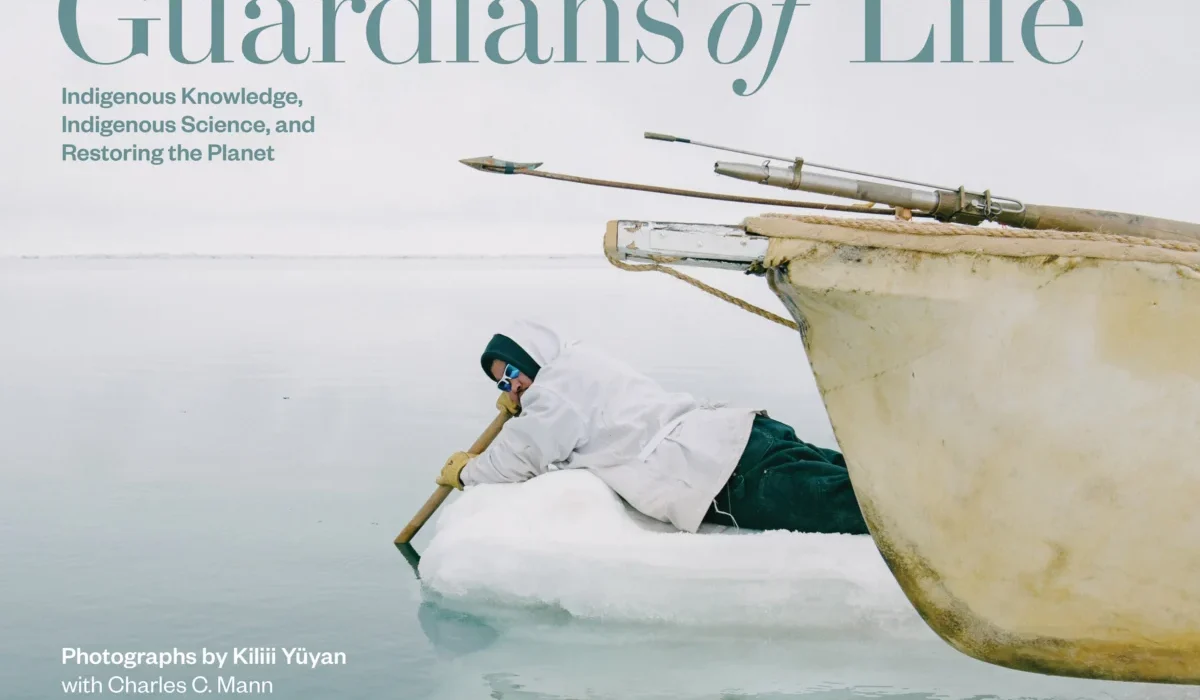
The intersection of indigenous knowledge systems, historical environmental conflicts, and modern conservation science takes center stage in the latest literary curation from Adventure Journal (AJ 42). Highlighting six distinct literary works, the collection places particular emphasis on environmental resilience, the historical governance of natural spaces, and the profound interconnectedness of human societies and non-human ecologies. Among the featured titles is Kiliii Yüyan’s photographic and analytical study, Guardians of Life, which examines the contemporary efficacy of indigenous land management through the lens of Arctic marine mammal conservation and global biodiversity metrics.
As mainstream conservation models increasingly reevaluate colonial paradigms of wilderness preservation—which historically prioritized the exclusion of native populations—literature examining indigenous stewardship has gained considerable critical and public interest. The featured works in AJ 42 collectively challenge traditional conservation orthodoxies, offering case studies that range from high-latitude marine management and sub-arctic pastoralism to the overlooked ecological importance of peatlands and the deep-time history of North American mountain ranges.
The Case for Indigenous Stewardship and Marine Conservation
At the core of Kiliii Yüyan’s Guardians of Life, published by Braided River in 2026, is a detailed examination of the Iñupiat people of the Arctic and their historic legal and ecological battle to preserve traditional bowhead whale hunting rights. The narrative establishes a foundation in 1977, a pivotal year when the International Whaling Commission (IWC) instituted a ban on the subsistence hunting of bowhead whales by the Iñupiat—a practice with millennia-old cultural and nutritional roots.
Rather than accepting the external restriction, which was imposed by regulators lacking localized ecological data, the Iñupiat mounted a sophisticated legal and scientific defense. Through rigorous documentation of marine mammal populations and traditional ecological knowledge (TEK), the community successfully petitioned the courts to secure the right to self-manage the bowhead whale populations in their traditional waters.
The empirical results of this self-determination form one of the book’s central empirical arguments: over the subsequent thirty years, under Iñupiat management and monitoring, the bowhead whale population tripled. This success story serves as a microcosm for a broader global reality underscored in the text. According to data cited within the volume, indigenous territories currently comprise approximately 37 percent of all remaining natural, unfragmented lands on Earth. Furthermore, these same lands harbor an estimated 80 percent of the planet’s terrestrial biodiversity.
Yüyan, an acclaimed National Geographic photographer, spent years documenting nine distinct Native communities across various biomes. His book features nearly two hundred photographs illustrating the intimate, reciprocal relationship between indigenous peoples and their ancestral lands. The visual and textual evidence converges on a single thesis: that human societies integrated into local ecosystems through sustainable, generational practices act as superior stewards of biodiversity compared to centralized, bureaucratic state conservation models.
Historical Chronology of Indigenous Land Rights and Conservation Policy
To understand the broader implications of the arguments presented in Guardians of Life, it is necessary to examine the historical trajectory of indigenous land management and environmental regulation over the past century:
- 1900–1970s: The rise of fortress conservation in Western nations, wherein millions of acres of indigenous lands are expropriated by governments to create national parks and reserves, frequently resulting in the forced displacement of native populations.
- 1977: The International Whaling Commission bans Iñupiat bowhead whale hunting, triggering a landmark legal battle that establishes the viability of indigenous-led resource management in federal and international courts.
- 1980s–1990s: Growing recognition within academic and environmental circles that traditional ecological knowledge (TEK) offers valuable insights that complement Western scientific methodologies.
- 2000s–2010s: International bodies, including the United Nations, begin formally acknowledging the role of indigenous peoples in climate change mitigation and biodiversity preservation through frameworks such as the UN Declaration on the Rights of Indigenous Peoples (UNDRIP).
- 2020s: A paradigm shift occurs across North America and international arenas, marked by the co-management of public lands, the return of title deeds to tribal nations (land back movements), and increased funding for indigenous-led conservation initiatives.
Broader Literary Context of AJ 42 Recommended Reading
While Yüyan’s work anchors the discussion on human-animal and human-land relationships, the remaining five books featured in the AJ 42 reading list expand the thematic scope to encompass diverse ecosystems, historical epics, and philosophical explorations of the natural world.
The curated list includes a detailed defense of bogs and peatlands, ecosystems historically disparaged as wasteland but now recognized as critical global carbon sinks. By examining the ecological functions of bogs, the featured literature contributes to the ongoing scientific re-evaluation of wetlands in the era of rapid climate change.
Another prominent title reckons with the complex, multi-layered history of Yosemite National Park. This work moves beyond the romanticized, uninhabited wilderness narrative popularized by early American conservationists like John Muir, confronting the displacement of the Ahwahneechee people and examining how indigenous fire management practices historically shaped the iconic valley’s landscape long before the advent of modern forestry.
Further broadening the geographical and cultural scope, the collection features a poignant elegy to reindeer-herding communities, capturing the socio-ecological pressures facing sub-arctic pastoralists in a warming climate. This is complemented by a historical account of a sixteenth-century castaway, offering a narrative perspective on early cross-cultural encounters and survival within unfamiliar wilderness environments. Finally, the curation includes a philosophical work exploring the world visualized as a tree—a metaphor that resonates deeply with both indigenous cosmology and modern arboricultural science concerning fungal networks, resource sharing, and inter-species communication in forest ecosystems.
Official Responses and Perspectives from the Conservation Community
The growing emphasis on indigenous-led conservation has prompted notable shifts in policy and rhetoric among international environmental organizations and governmental bodies. Historically, conservation groups operated independently of—and sometimes in direct opposition to—indigenous communities, driven by the belief that human presence inherently degraded pristine nature.
In recent years, however, leading conservation scientists and international agencies have issued formal reassessments. Representatives from environmental policy institutes note that empirical data increasingly validates the inclusion of indigenous peoples as primary decision-makers in conservation areas. Studies published in ecological journals over the past decade consistently demonstrate that deforestation rates are significantly lower within recognized indigenous territories than in adjacent state-managed parks or unprotected lands.
"The historical separation of conservation from indigenous rights was not only a human rights failure but an ecological miscalculation," notes a policy analyst specializing in environmental governance. "When communities have a generational stake in the health of local flora and fauna, their enforcement of sustainable practices is inherently more vigilant and adaptive than top-down regulatory enforcement."
Despite these empirical successes, challenges remain. Indigenous communities worldwide frequently face pressures from extractive industries, including mining, logging, and fossil fuel extraction, often operating with government concessions on or near native lands. Advocates argue that shifting toward true indigenous stewardship requires not only rhetorical acknowledgment but also the legal codification of land tenure rights and the provision of adequate financial resources for community-led monitoring and enforcement.
Implications for the Future of Global Conservation
The inclusion of these six titles in the AJ 42 reading list reflects a broader cultural and scientific pivot. As global policymakers grapple with the dual crises of biodiversity loss and climate change, the limits of traditional, fenced-in conservation models have become apparent.
Works like Guardians of Life and its companion volumes in the AJ 42 curation provide a necessary bridge between historical accountability and future policy design. By demonstrating that indigenous communities have successfully managed complex marine and terrestrial ecosystems for centuries—often outperforming state-level interventions—these books offer a viable blueprint for the future of global environmental stewardship.
The implications for land managers, policymakers, and conservationists are direct: empowering indigenous nations with land tenure and management authority is not merely an act of restitution, but an indispensable strategy for safeguarding the remaining 37 percent of the planet’s natural lands and the vast majority of its biodiversity. As the literary landscape continues to reflect these paradigm shifts, the integration of traditional ecological knowledge with contemporary science is poised to remain a defining pillar of twenty-first-century environmentalism.