









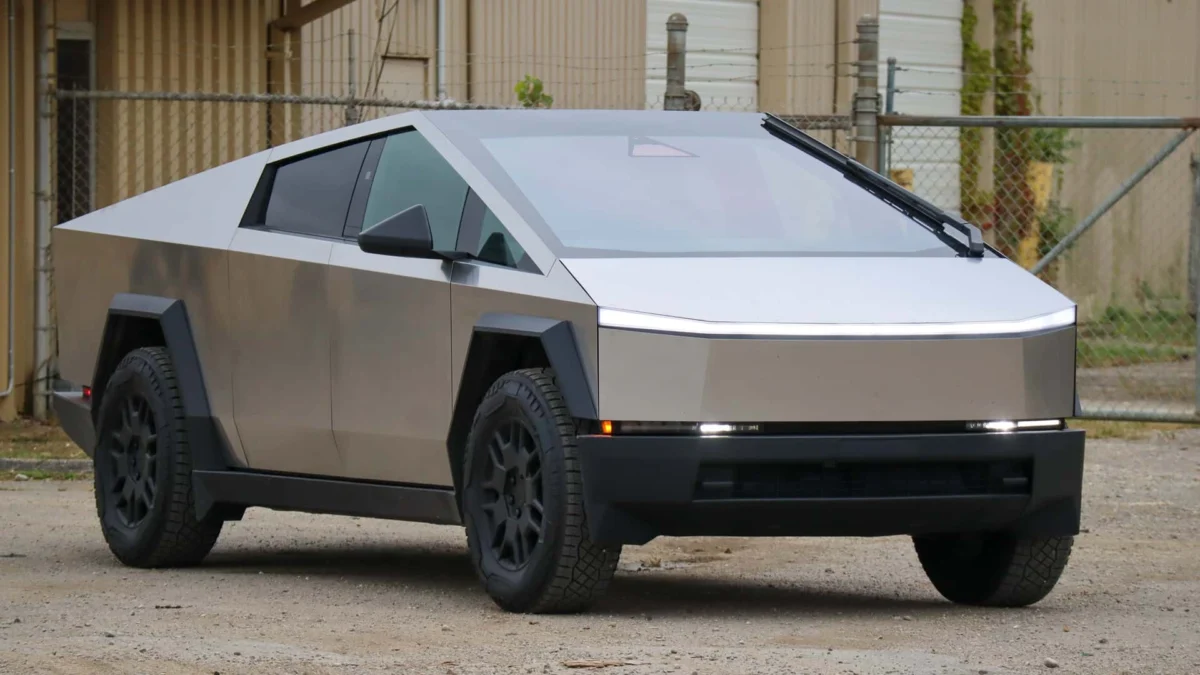
The Tesla Cybertruck, an electric pickup truck that redefined automotive aesthetics through its polarizing, angular design and stainless-steel exoskeleton, is nearing the end of its production cycle. CEO Elon Musk confirmed via social media platform X that the company intends to wind down production of the vehicle by the middle of 2027. This decision marks a significant pivot for the Austin-based manufacturer, as Tesla looks to reallocate critical manufacturing floor space at its Texas Gigafactory to accommodate the scaling of its dedicated autonomous vehicle, the Cybercab.
The transition signals an end to a brief but tumultuous chapter for Tesla’s foray into the pickup segment. Since its initial unveiling as a futuristic concept in 2019, the Cybertruck has served as a lightning rod for debate, polarizing industry analysts, consumers, and design critics alike. While it successfully pushed the boundaries of vehicle manufacturing—introducing steer-by-wire technology and a 48-volt electrical architecture to the mass market—it ultimately struggled to achieve the widespread commercial adoption enjoyed by Tesla’s flagship Model 3 and Model Y.
A Chronology of the Cybertruck Era
The journey of the Cybertruck began in November 2019, when Elon Musk took the stage at a design studio in Hawthorne, California, to reveal a vehicle that looked less like a traditional truck and more like a prop from a science-fiction film. The event was marked by a now-infamous moment involving the shattering of the vehicle’s "Armor Glass" windows, a spectacle that generated massive global media coverage.
Following years of production delays and manufacturing hurdles related to the vehicle’s unique stainless-steel construction, initial deliveries finally commenced in late 2023. The truck’s first year on the market was characterized by a high-profile "hype phase," where it became a prominent status symbol. However, as the novelty wore off and the reality of the vehicle’s high price point and niche utility set in, momentum began to wane. By 2025, the vehicle experienced one of the most notable sales declines of any electric vehicle (EV) in the current market cycle, prompting a strategic reassessment from Tesla’s executive leadership.
Sales Performance and Market Data
The financial reality of the Cybertruck stands in stark contrast to the high-volume production models that sustain Tesla’s market dominance. According to data from Cox Automotive, the Cybertruck recorded 4,323 sales in the third quarter of this year. Aggregated data from the first nine months of 2025 indicates total sales of approximately 11,586 units. While Tesla does not provide an itemized breakdown of sales by specific model in its quarterly earnings reports, industry analysts estimate the total cumulative deliveries since the launch to be roughly 70,000 units.
When compared to the hundreds of thousands of units the Model 3 and Model Y move every quarter, these figures represent a marginal contribution to Tesla’s total volume. The difficulty in scaling the Cybertruck is reflective of broader industry challenges regarding the electric pickup segment. The market has proven increasingly resistant to high-cost, specialized electric trucks. The recent decision by Ford to discontinue the F-150 Lightning—a vehicle that faced similar pressures from ballooning production costs and lukewarm consumer demand—highlights a growing trend of automakers retreating from the premium electric truck market to focus on more accessible or high-growth segments.
Strategic Realignment and Production Shifts
The decision to phase out the Cybertruck is intrinsically linked to the "Cybercab," Tesla’s vision for a fully autonomous, ride-hailing vehicle. As the company moves toward full-scale production of its robotaxi platform, the logistical requirements of the Texas Gigafactory have necessitated a reallocation of resources. The floor space currently dedicated to the complex manufacturing processes required for the Cybertruck’s cold-rolled stainless-steel panels is viewed as vital for the assembly of the more streamlined, cost-effective Cybercab.
In conjunction with the announcement of the production wind-down, Tesla has begun narrowing its offerings for the remaining Cybertruck inventory. The company has officially stopped accepting new orders for the entry-level Dual-Motor All-Wheel Drive configuration. Consequently, only the Premium AWD and the top-tier Cyberbeast trims remain available for purchase.
Simultaneously, pricing for these remaining configurations has seen an upward adjustment. The Premium AWD model has received a price increase to $92,490, up from its previous $89,990, while the Cyberbeast now commands a price of $102,490, reflecting a $2,500 increase. These adjustments follow a series of price hikes implemented in August, suggesting a strategy to maximize margins on remaining inventory as the vehicle approaches its end-of-life status.
Technological Legacy and Industry Impact
While the Cybertruck’s commercial performance fell short of the lofty projections set in 2019, its technological contributions to the automotive industry remain significant. The vehicle served as a testing ground for several high-stakes engineering innovations. The implementation of steer-by-wire—a system that replaces the mechanical connection between the steering wheel and the wheels with electronic signals—is perhaps the most notable. This technology, while controversial in its feel for traditionalists, is considered a foundational requirement for the future of autonomous driving.
Furthermore, the vehicle’s 48-volt low-voltage architecture represents a major step forward in automotive electrical design. By shifting away from the industry-standard 12-volt systems, Tesla was able to significantly reduce the amount of copper wiring required throughout the vehicle, leading to weight savings and increased manufacturing efficiency. Whether these innovations will be widely adopted by legacy automakers remains a subject of debate, as the high cost of implementation currently presents a barrier for manufacturers focused on lower-margin, mass-market vehicles.
Broader Implications for the EV Sector
The retirement of the Cybertruck is a sobering reminder of the volatility inherent in the transition to electric mobility. It illustrates that even for a company with the resources and market influence of Tesla, the "if you build it, they will come" mentality does not apply to all vehicle segments. The market for trucks in North America is deeply entrenched in brand loyalty and utility, and the Cybertruck’s unconventional design—often described by critics as an "unpolished fridge"—may have ultimately alienated the traditional pickup buyer demographic.
Furthermore, the failure of both the Cybertruck and the F-150 Lightning to dominate the market suggests that the "electric truck revolution" may be slower than originally forecast. Automakers are now pivoting toward the segments where they see the highest potential for growth, specifically autonomous ride-sharing and affordable, long-range passenger sedans and SUVs.
For Tesla, the move is calculated. By shedding a low-volume, high-complexity project, the company is positioning itself to compete more effectively in the emerging autonomous mobility sector. The Gigafactory, once a site of intense effort to master the complexities of the Cybertruck’s exoskeleton, will soon become the staging ground for the next phase of Tesla’s corporate mission.
As the calendar moves toward 2027, the Cybertruck will likely transition from a controversial daily driver to a collector’s item, representing a unique, daring, and perhaps overly ambitious experiment in automotive engineering. Whether it is remembered as a visionary failure or a pioneer of necessary technology, its departure marks the conclusion of one of the most distinctive periods in Tesla’s history. The company now looks ahead, leaving the angular, steel-clad truck behind in favor of a future defined by software-driven mobility and autonomous transit.