The Strategic Foundation of Sportwagenschmiede 35
The Sportwagenschmiede 35 initiative—roughly translated as "Sports Car Forge 35"—is Porsche’s comprehensive roadmap for the next decade. At its core, the strategy seeks to decouple Porsche from the broader automotive industry’s obsession with mass-market saturation. Instead, the company is prioritizing the creation of a specialized portfolio of super sports cars that occupy a tier above the standard 911 series.
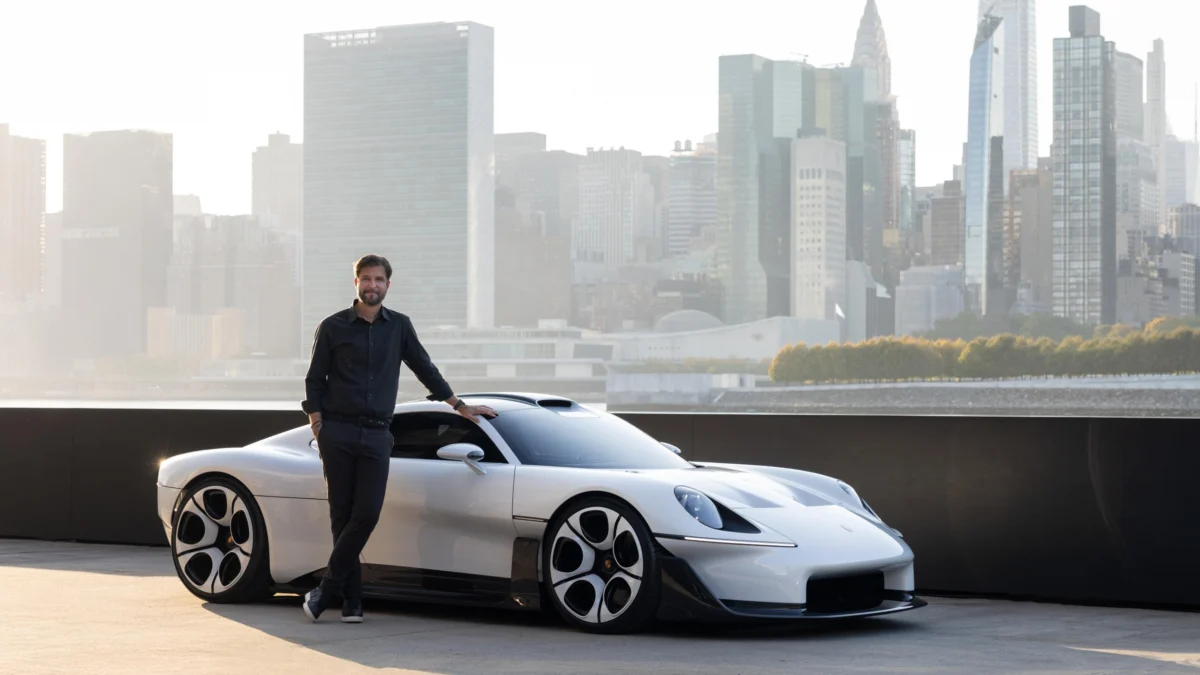
For decades, the 911 has served as the anchor of the Porsche identity. However, under the guidance of Dr. Michael Leiters, Chairman of the Executive Board, the company has recognized that the market landscape has shifted. Modern consumers are increasingly eschewing traditional status symbols in favor of experiences and products that evoke a sense of "authenticity." The Mission S is designed to capture this sentiment, positioning itself not merely as a high-performance machine, but as a cultural artifact that bridges the gap between historical design cues and the necessity for modern digital integration.

Evolution of the Mission S Design Language
The design language of the Mission S is a study in restrained evolution. In an era where many manufacturers are leaning toward maximalist, screen-heavy interiors, Porsche is doubling down on "analog-digital" symbiosis. The interior architecture is intentionally sparse, focusing on driver-centric ergonomics that minimize distraction.
Tobias Sühlmann, Head of Style Porsche, describes the vehicle as a "holistic design strategy" rather than a singular experiment. The exterior lines of the Mission S draw heavy inspiration from historic Porsche icons, utilizing a mid-engine platform that suggests a lower center of gravity and optimized weight distribution. This platform is not intended to remain a one-off prototype; rather, it is slated to become a permanent fixture in the Porsche lineup, offering a versatile chassis that could support various powertrain iterations, including high-performance internal combustion engines and hybrid configurations.
Chronology and Development Timeline
The path to the Mission S reflects a multi-year effort to reorient Porsche’s engineering priorities:

- 2022–2023: Initial conceptualization of the Sportwagenschmiede 35 strategy, focusing on high-margin, low-volume production vehicles.
- 2024: Development of the "Mission" platform, aimed at testing new materials and human-machine interface (HMI) concepts.
- 2025: Finalization of the Mission S design language, emphasizing the retention of traditional Porsche silhouettes while incorporating aerodynamic advancements.
- Late 2026: Official unveiling of the vision model, marking the beginning of the brand’s design transition phase.
- 2027 and Beyond: Integration of the Mission S platform into the broader commercial product portfolio.
Market Implications and Competitive Positioning
The shift toward an exclusive model strategy is a calculated response to changing global economic conditions. Following the industry-wide recessions of the early 21st century, Porsche observed a sustained trend where buyers prioritized "substance" over "status." By moving away from volume-focus, Porsche aims to insulate itself from the volatility of the entry-level luxury market, where competition from electric-only startups and high-end Asian manufacturers has become increasingly aggressive.
By positioning the Mission S above the 911, Porsche is creating a new hierarchy. The 911 will continue to serve as the brand’s accessible icon, while the new mid-engine platform will compete directly with limited-production hypercars from manufacturers like Ferrari, McLaren, and Pagani. This strategy allows Porsche to maintain its high-profit margins while simultaneously reinforcing the "Porsche DNA"—a commitment to mechanical feedback, driver engagement, and timeless aesthetic appeal.
Official Perspectives on the Brand’s Future
Dr. Michael Leiters has been instrumental in articulating the necessity of this shift. During the unveiling, he emphasized that "a Porsche must be recognizable as a Porsche at first glance." This directive serves as a guardrail against the common industry pitfall of "design drift," where brands lose their identity in the pursuit of futuristic aesthetics.

The inclusion of analog controls alongside digital interfaces is perhaps the most significant reaction to current customer feedback. As digital dashboards become ubiquitous, the "tactile experience"—the click of a button, the feel of a mechanical shifter, the feedback from a steering rack—has become a premium commodity. By focusing on direct interaction, Porsche is positioning itself as the "purist’s choice" in a market increasingly dominated by autonomous and software-defined vehicles.
Data-Driven Analysis of the High-Margin Strategy
The financial logic behind Sportwagenschmiede 35 is robust. Analysis of the luxury automotive sector shows that lower-volume, high-margin vehicles are historically more resilient to supply chain shocks and interest rate fluctuations than mass-produced luxury models.
By diversifying the platform, Porsche is also optimizing its research and development costs. A versatile mid-engine platform allows for economies of scale across different trim levels and special editions without requiring a full redesign for every iteration. This approach, similar to the modular platforms used by the wider Volkswagen Group but applied with more exclusivity, allows for rapid customization for high-net-worth clients while keeping the core engineering consistent.

The Role of Driver Experience in the Modern Era
Porsche’s commitment to driving is further evidenced by its expanding "Track Experience" programs. The brand understands that to sell a machine of this caliber, it must cultivate a community of enthusiasts who actually know how to utilize the vehicle’s performance. The expansion of these training programs alongside the launch of the Mission S is no coincidence; it is a vital part of the brand’s retention strategy.
In the eyes of the consumer, the car is no longer just a transport device; it is a participant in a lifestyle. Whether it is the legacy of the 911, the utility of the Cayenne, or the future-facing performance of the Mission S, Porsche is leveraging its history to validate its future.
Conclusion: A New Era for Stuttgart
The Mission S is more than just a car; it is a statement of intent. As the automotive world races toward electrification and automation, Porsche is carving out a niche that celebrates the act of driving. By focusing on the "Sportwagenschmiede 35" framework, the company is ensuring that its future vehicles remain as relevant to the driver of 2035 as they were to the driver of 1965.

As Porsche continues to integrate the design elements of the Mission S into its upcoming product launches, the market will be watching closely to see if this shift toward pure, visceral performance can maintain the brand’s dominance. If the initial reception is any indicator, the "authentic" Porsche experience—the marriage of history, precision engineering, and the thrill of the road—remains a highly sought-after commodity in a rapidly changing world. Through this vision model, Porsche is not merely predicting the future of the sports car; it is actively shaping it to reflect its own enduring legacy.