







The internet-driven phenomenon known as "Every Day Carry" (EDC)—traditionally characterized by curated flat-lay photographs of tactical pocket knives, luxury watches, minimalist leather wallets, and urban self-defense tools—has crossed over definitively into the outdoor recreation sector. Originating largely within digital subcultures, prepper communities, and tactical forums, the EDC trend has spent the past decade evolving from a niche display of urban utility items into a broader cultural examination of preparedness, self-reliance, and personal minimalism. While urban and tactical EDC collections frequently emphasize hardware designed for city survival or high-stress security scenarios, a distinct sub-genre has quietly gained traction: the wilderness EDC.
To understand how this trend manifests away from concrete and asphalt, the editorial staff at Backpacker magazine turned the analytical lens inward. By examining the personal trail kits of veteran outdoor journalists—Associate Editor Will Brendza, Editor-in-Chief Adam Roy, and Senior Editor Zoe Gates—the publication sought to answer a fundamental question: What tangible items do professional backpackers refuse to leave behind when heading into the backcountry? The resulting inventory reveals a fascinating study in contrast, highlighting how outdoor professionals balance lightweight efficiency, emergency preparedness, and personal comfort across vastly different operational philosophies.
The Rise of the Hiker EDC: Background and Cultural Context
The modern EDC movement can trace its roots to early online communities like EverydayCarry.com and specialized subreddits, where enthusiasts shared photographs documenting the specific tools they carried on their persons daily. Over time, these displays shifted from utilitarian work gear into status symbols and aesthetic exercises, frequently dominated by high-end EDC knives, imported titanium flashlights, and designer key organizers.
However, translating the EDC concept to the hiking and backpacking community requires a fundamental shift in priorities. While an office worker or urban commuter builds an EDC around convenience, office tasks, and low-level urban preparedness, a hiker’s pocket or hip-pack inventory must account for sudden weather shifts, navigational failures, minor injuries, and unexpected overnights in remote terrain. Industry data from outdoor recreation organizations indicate a steady rise in day-hiking participation over the past decade, accompanied by an increasing consumer interest in modular, multi-use gear.
Recognizing this shift, Backpacker editors decided to document their own trail-ready kits, launching an open invitation for the broader outdoor community to share their setups using the hashtag #hikerEDC on Instagram. The initiative highlights a growing desire among backpackers to strip away the consumerist weight of modern gear culture and focus entirely on functional, field-tested essentials.
Anatomy of a Wilderness Pocket Kit: Editor Breakdowns
The personal inventories submitted by the Backpacker editorial team underscore the diversity of thought within outdoor journalism. No two kits are identical, reflecting individual philosophies on technology, minimalism, and environmental adaptation.
Will Brendza: The Multi-Role Minimalist
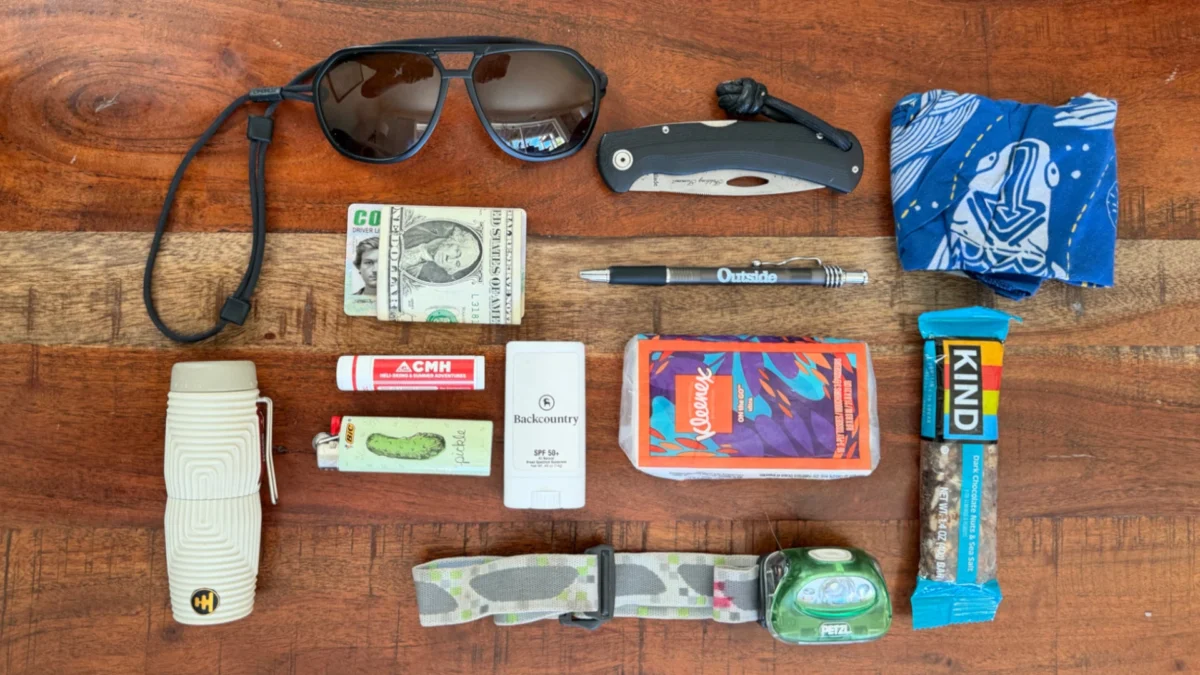
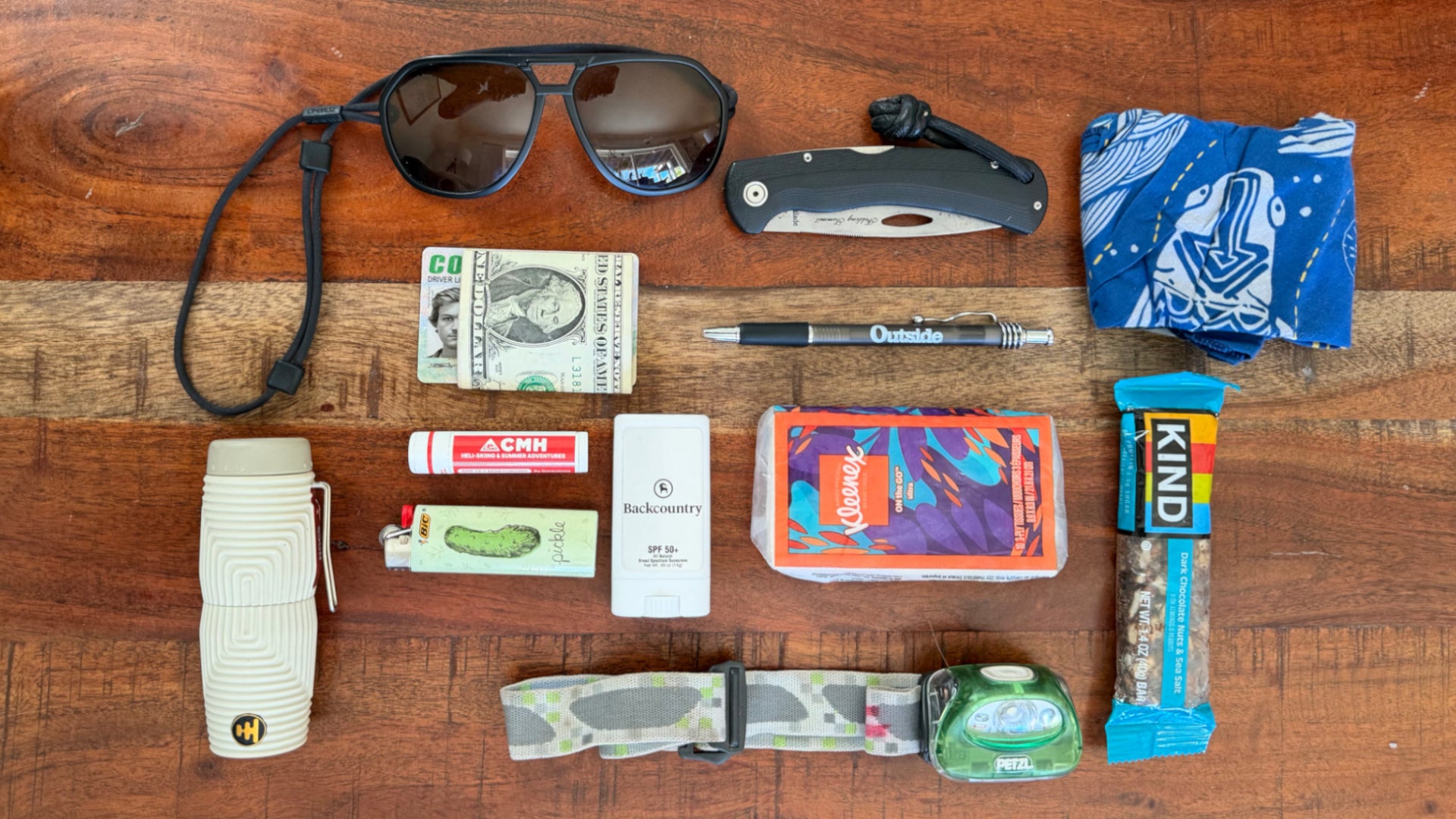
For Associate Editor Will Brendza, an effective trail EDC must balance sensory protection with multi-functional utility, all while fitting securely within three to four pockets. Central to Brendza’s kit are Ombraz Armless Sunglasses, a piece of gear chosen specifically to combat severe eye sensitivity while eliminating the common hiker hazard of lost or broken traditional frames. By utilizing a built-in cord system that secures the lenses tightly to the face or neck, the design survives rigorous movement, including water crossings and scrambling.
Brendza’s pocket inventory prioritizes versatility over volume. A folding knife from Knives of Alaska handles fundamental camp cutting duties, while a traditional cotton bandana serves as an exceptionally adaptable piece of survival equipment—functioning as a makeshift hot mitt, head sweatband, first-aid bandage, and pre-filter for particulate matter. For route-finding and wildlife observation, Brendza carries a compact Nocs Zero Tube Monocular, paired with a reliable Petzl headlamp for unexpected delays after dark. His kit is rounded out by analog writing implements, tissue paper, sunscreen, and a distinctively marked cigarette lighter designed to prevent trailside appropriation by fellow hikers. Notably, Brendza also relies on a Coros Pace 4 Pro watch and a companion trail dog, maintaining navigation and pacing awareness without encumbering his main pack.
Adam Roy: The Analog Integration and Weight Conscious Editor
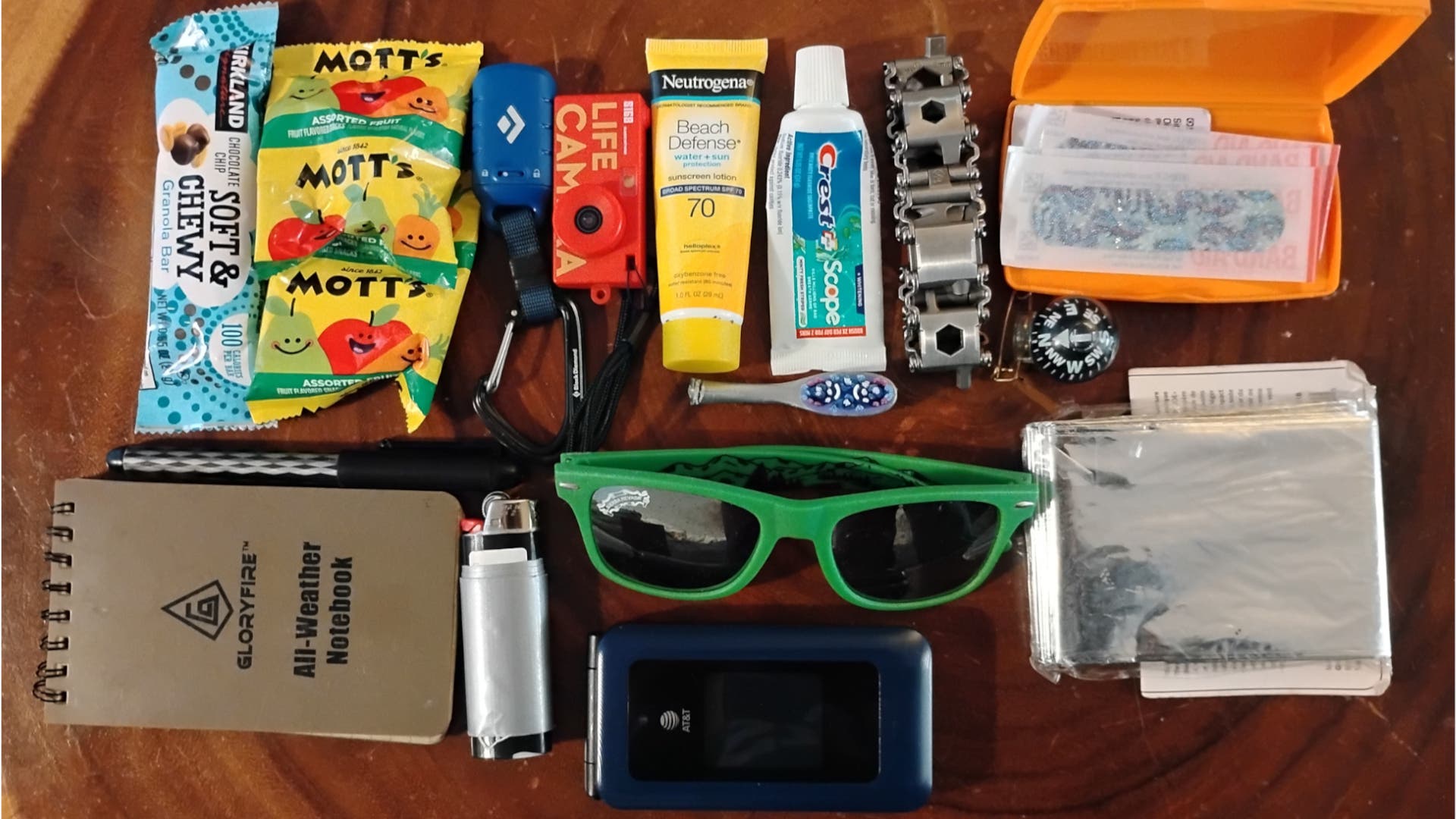
Editor-in-Chief Adam Roy approaches the EDC concept through a lens of digital detox and extreme space efficiency, housing his entire trail inventory within a compact waist pack. In an era where modern smartphones dominate outdoor navigation, Roy actively chooses to leave high-end communication devices at home during personal recreation, opting instead for a $15 AT&T Cingular Flex 2 flip phone equipped with rudimentary mapping software via the O.map application.
Roy’s kit reads like a masterclass in resourceful backcountry frugality. To capture trail imagery, he utilizes a lightweight Life Camera S168 digital camera rather than relying on phone hardware. His navigational redundancy relies on a simple button compass and a waterproof field notepad paired with a Pilot Precise Varsity disposable fountain pen. Emergency preparedness is handled by a space blanket, a lighter wrapped in structural duct tape, a pocket-sized first-aid kit stocked with pediatric bandages, and a discontinued Black Diamond Ion keychain light. Uniquely, Roy includes travel-sized toiletries, including sunscreen and a toothbrush, asserting that basic hygiene significantly enhances overall morale during extended day trips.
Zoe Gates: Canine Care and Minimalist Efficiency
Senior Editor Zoe Gates represents the ultra-lightweight ethos of the team, keeping her immediate pocket inventory streamlined to digital tracking, canine logistics, and strategic caloric intake. Walking out the door with minimal encumbrance, Gates anchors her setup around a Garmin Instinct Solar smartwatch to monitor elevation gain and distance metrics, supplemented by a Garmin inReach satellite communicator for emergency distress signaling during remote excursions.
Recognizing the realities of hiking with domestic animals, Gates maintains an ample supply of unscented, heavy-duty dog waste bags as a non-negotiable EDC item. For rapid caloric replenishment on demanding ascents, she favors high-sugar, high-convenience items such as Nerds Gummy Clusters and Honey Stinger Organic Energy Chews, carried alongside a standard 32-ounce Nalgene ultralight water bottle. While not physically carried in her pockets at all times, Gates’s extended ecosystem includes specialized gear such as a Kula cloth for sustainable backcountry hygiene, an avalanche transceiver for winter mountaineering safety, a collapsible dog bowl, and Leukotape wrapped strategically around a sunscreen stick for blister prevention.
Industry Implications and the Future of Gear Design
The documentation of these editorial EDC kits highlights a broader trend within the outdoor manufacturing sector: the demand for hyper-functional, micro-sized gear. As consumers increasingly reject bulky, single-purpose items in favor of modular solutions, brands are responding by engineering tools that cross traditional boundaries between urban utility and alpine survival.
Market analysts note that the popularity of the EDC trend online provides brands with valuable consumer insights regarding weight reduction, durability, and aesthetic appeal. By observing what items outdoor professionals permanently keep on their persons—independent of large multi-day backpacks—manufacturers can better target the day-hiking and fast-packing demographics.
Furthermore, the emphasis on analog tools—such as mechanical compasses, physical notebooks, and manual lighters—points to a counter-movement against digital fatigue among outdoor enthusiasts. As technology becomes more integrated into daily life, the backcountry increasingly serves as a sanctuary for intentional disconnection, a sentiment clearly echoed in the editorial choices of the Backpacker team.
Ultimately, the #hikerEDC movement serves as a reminder that preparedness is deeply personal. Whether driven by Brendza’s focus on sensory protection, Roy’s commitment to analog minimalism, or Gates’s streamlined approach to canine logistics, the core philosophy remains uniform: the best gear is the gear that is carried reliably, utilized efficiently, and forgotten comfortably until the moment it is truly needed.