










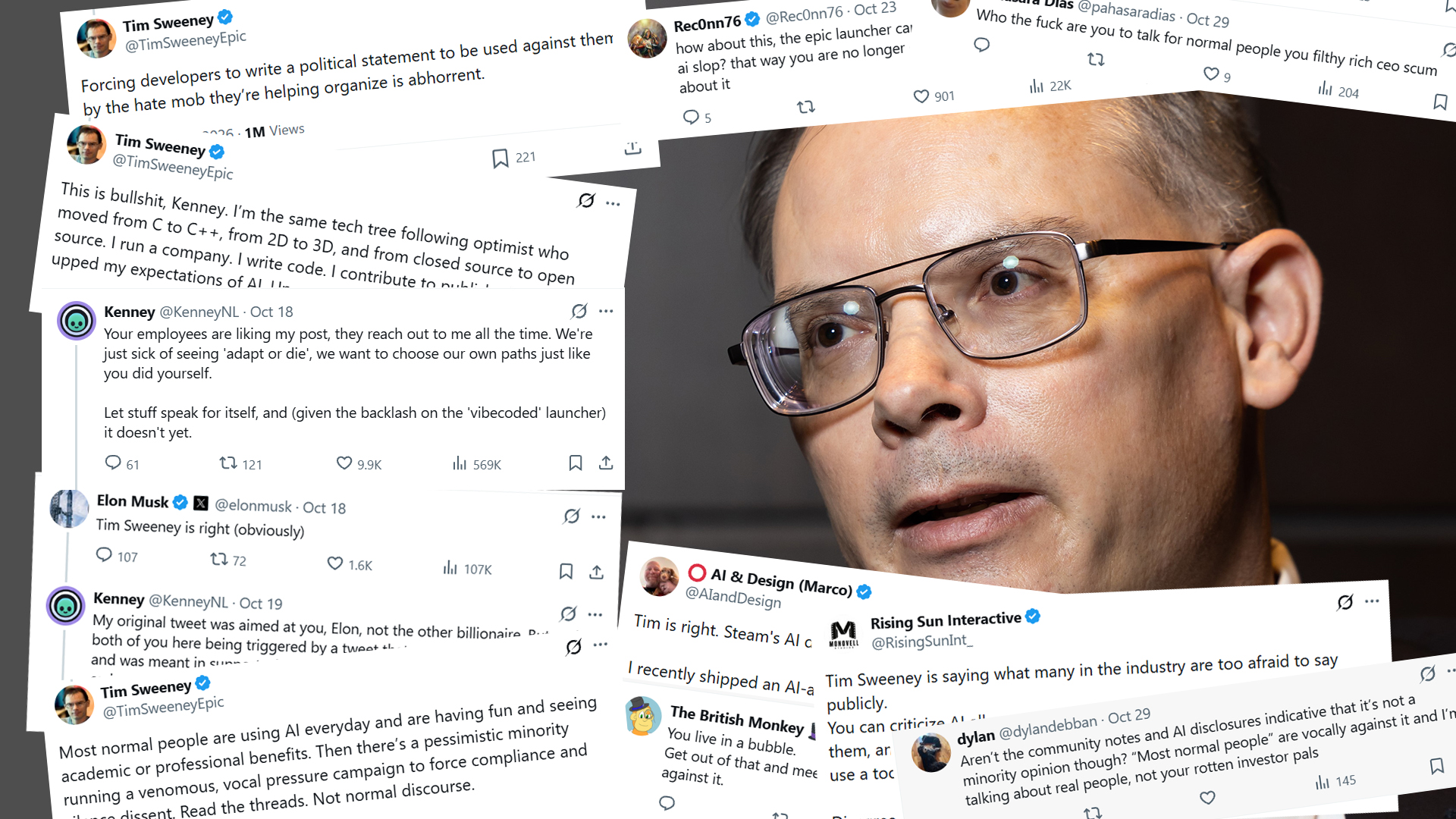
The tension surrounding the integration of generative artificial intelligence in the video game industry has moved beyond abstract debates in developer forums, manifesting into a high-profile public dispute between Epic Games CEO Tim Sweeney and independent game developer and artist Kenney. This confrontation, which unfolded on the social media platform X, highlights a growing ideological chasm within the gaming sector. At the center of the debate is the tension between the push for technological efficiency in game production and the concerns of creators who fear that generative AI threatens the artistic integrity, sustainability, and moral foundations of the medium.
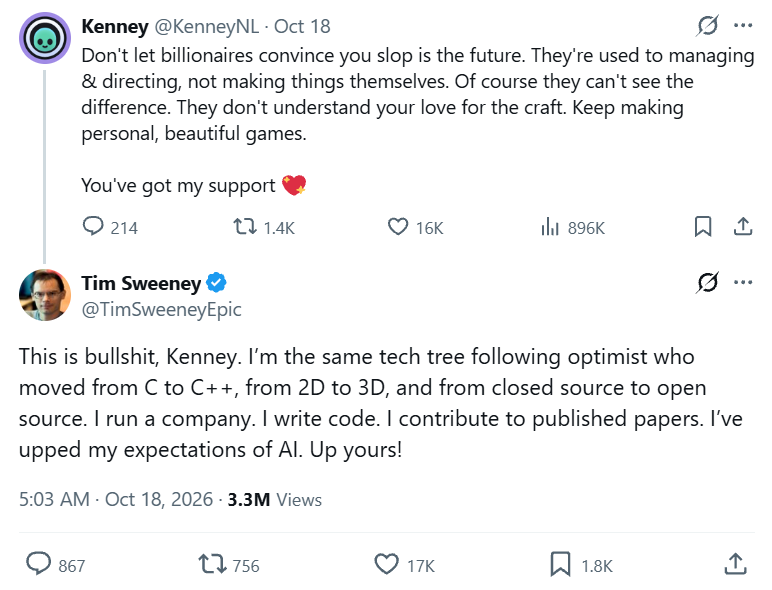
The conflict began when Kenney, a prominent developer known for distributing thousands of free game assets to the creative community, posted a message warning artists not to yield to pressure from billionaires to adopt generative AI tools. Kenney’s post suggested that the enthusiasm for AI-driven development among tech executives stems from a lack of appreciation for the craft, arguing that those who manage capital rather than create art are fundamentally unable to distinguish between "slop" and meaningful, hand-crafted work.

Within hours of the post, Tim Sweeney, the billionaire head of Epic Games, responded directly, labeling the sentiment "bullshit" and offering a retort: "I’ve upped my expectations of AI. Up yours!" The exchange quickly drew the attention of Elon Musk, who echoed Sweeney’s dismissive stance, fueling a massive, polarized response from the platform’s user base.
A Timeline of Escalating Tensions
The dispute did not occur in a vacuum; it is the latest development in a long-standing series of arguments regarding the role of AI in game development. The broader timeline of this tension traces back to the early 2020s, as large language models and generative image tools transitioned from niche research projects to commercially viable products.
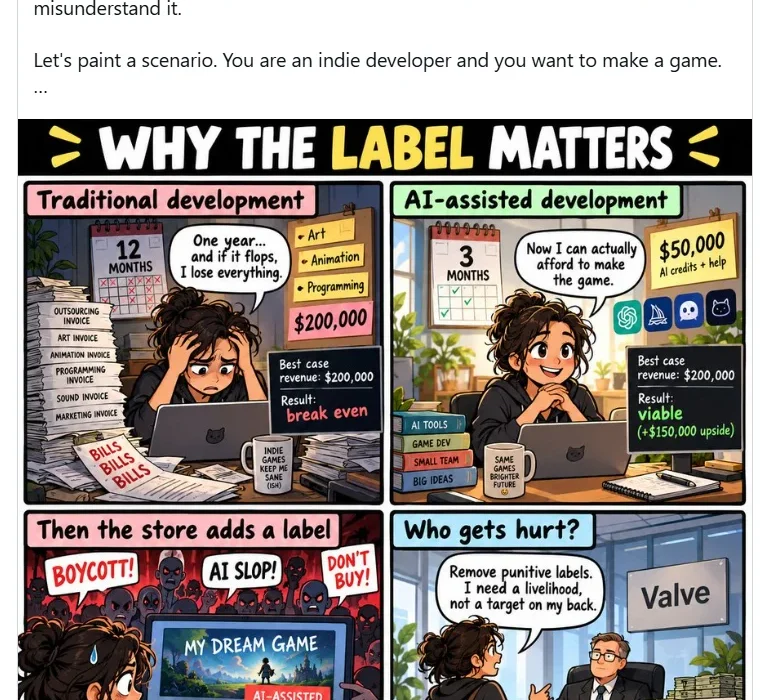
In 2023, the discourse became particularly heated as developers like Larian Studios faced scrutiny over the limited use of AI in their workflows. By early 2024, the conflict deepened as platforms like Steam implemented new disclosure requirements for AI-generated content. These requirements mandated that developers specify how they use AI, a move that Sweeney has frequently denounced as "abhorrent," claiming that it forces developers to participate in "political struggle sessions" and creates an environment where developers are unfairly targeted by anti-AI activists.
The recent exchange between Sweeney and Kenney is merely the most visible instance of this ongoing friction. For many independent developers, the emergence of AI in creative workflows represents an existential threat to the "human-first" philosophy of game design. Conversely, for industry leaders like Sweeney, the refusal to embrace these tools is seen as a strategic error that could render studios obsolete in an increasingly competitive global market.
Economic and Productivity Arguments
The core of Sweeney’s defense for generative AI lies in economic necessity. In his view, the cost of high-end game development has ballooned to a point where traditional, entirely manual production methods may soon become unsustainable. Epic Games, the developer of the ubiquitous Unreal Engine, has positioned itself at the forefront of this shift, integrating AI-assisted features into its software and encouraging its use through events like AI-focused game jams.
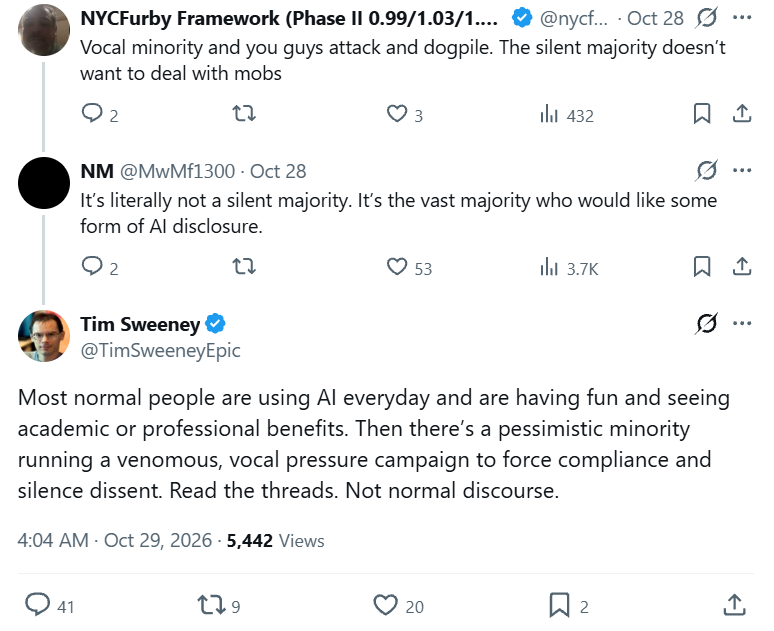
Sweeney argues that AI tools can yield productivity gains ranging from two to four times the output of traditional methods. He contends that ignoring these advancements will lead to a decline in competitiveness. In several social media interactions, Sweeney has characterized the vocal opposition to AI as a "pessimistic minority" that utilizes "astroturfed" influence campaigns to silence professionals who want to utilize the latest technological advancements to improve their efficiency.
However, industry data provides a more nuanced picture. While some high-profile titles that utilize AI have achieved commercial success—such as the extraction shooter Arc Raiders, which sold millions of copies despite criticism—there is significant internal resistance. A recent survey conducted at the Game Developers Conference (GDC) indicated that over 50% of game developers now view generative AI as detrimental to the industry, a sharp increase from sentiment expressed just two years prior.
The Consumer Perspective
While the debate is often framed as a battle between executives and developers, the stance of the gaming audience is equally complex. A survey by GameDiscoverCo recently revealed that approximately 69% of Steam users are either neutral or fine with purchasing games that disclose the use of AI. Despite this, the survey also found that the disclosure requirements themselves are highly valued, with the majority of respondents actively checking these disclosures before making a purchase. Furthermore, more than 55% of those surveyed believe that digital storefronts should implement even stricter regulations on how AI is integrated into games.
This data suggests that while the "anti-AI" movement may not constitute a majority of the buying public, there is a clear demand for transparency. The "AI slop" accusation—a term used by critics to describe low-effort, AI-generated content—has not led to a mass boycott of the industry, but it has created a significant reputational risk for developers who are perceived to be prioritizing cost-cutting over creative quality.
The Broader Implications for the Industry
The dispute between Sweeney and Kenney serves as a microcosm for the larger battle over the future of labor in the creative industries. Kenney, who has spent over a decade providing free, open-access assets, represents the cooperative, communal spirit of game development. His motivation for opposing AI is rooted in a desire to preserve the "soul" of the craft, which he believes is being sacrificed for the sake of profit-maximizing "grift."
The implications of this divide are far-reaching:
- Labor Shifts: As studios move toward AI-integrated workflows, the nature of entry-level jobs in the gaming industry is expected to change. Tasks traditionally performed by junior artists or writers are the most susceptible to automation, potentially creating a bottleneck for new talent entering the industry.
- Platform Politics: The ongoing disagreement over disclosure requirements places companies like Valve (Steam) and Epic Games in direct opposition. Valve’s requirement for transparency is viewed by some as a necessary consumer protection, while Epic’s opposition suggests a desire to lower the barriers to entry for AI-driven titles.
- Studio Independence: The trend of developers actively distancing themselves from platforms that embrace AI, such as the studio Dead Teapot canceling their release on the Epic Games Store, indicates that brand association is becoming a factor in distribution strategy. Studios are increasingly aligning their distribution platforms with their values regarding AI usage.
- Environmental and Ethical Concerns: The debate is also fueled by concerns beyond the artistic. The massive energy requirements for the data centers that train and run these AI models, combined with the contentious legal questions regarding the use of copyrighted data for training, remain significant hurdles to widespread, uncontroversial adoption.
Conclusion
The confrontation between Tim Sweeney and Kenney highlights a fundamental impasse. Sweeney views the integration of AI as an inevitable technological evolution, one that is necessary to prevent the stagnation of the game development industry. Kenney and his supporters see it as a commodification of art that threatens the very people who make the medium what it is today.
As of now, there is no consensus. While the gaming industry continues to produce titles that reach millions of players, the vocal, organized, and deeply principled opposition within the developer community ensures that the integration of AI will remain a contentious and high-stakes battleground for the foreseeable future. Whether AI becomes a tool that empowers human creators or a force that diminishes the human element of game design remains the defining question for the industry’s next decade. For figures like Kenney, the prospect of being "left behind" by these technological trends is not a threat, but a choice—a testament to a philosophy that prioritizes the longevity and integrity of the craft over the rapid expansion of industrial output.