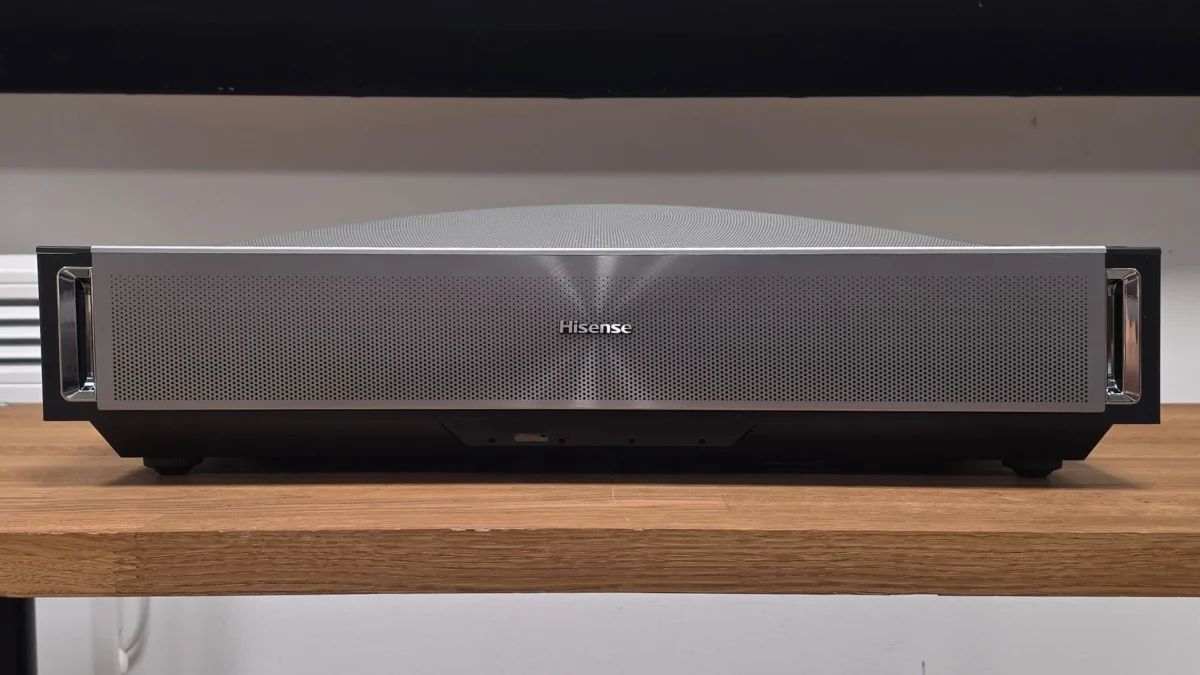
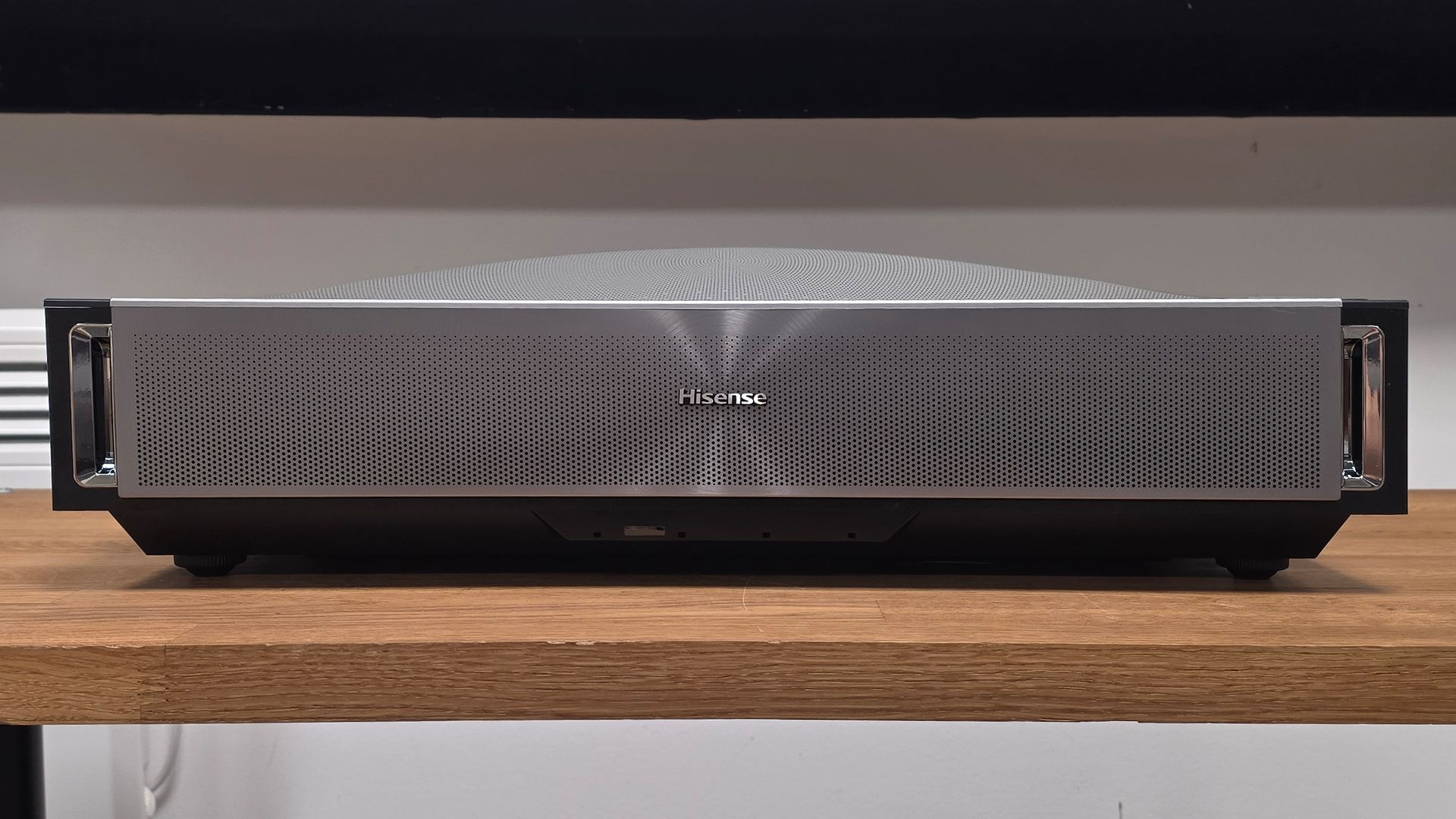
The home cinema market has entered a period of heightened competition as manufacturers race to deliver large-screen experiences without the footprint of traditional flat-panel displays. Central to this segment is the Hisense PX4 Pro, a high-performance ultra-short-throw (UST) laser projector that has recently undergone rigorous performance assessment as part of the evaluation process for the 2026 What Hi-Fi? Awards. As industry analysts monitor the shifting landscape of high-end home entertainment, this device has secured a five-star rating from testers, positioning it as a significant contender in the premium projector space.
To bolster its market position, Hisense has introduced a promotional campaign alongside retail partners, offering a £100 cashback incentive, a complimentary Xbox Design Lab controller, and a one-month subscription to Xbox Game Pass. These additions bring the net price of the unit down to £2,399 at select retailers, including AV.com, with the official cashback claim period beginning on November 27.
Evolution of the Hisense UST Lineup
The PX4 Pro serves as the latest iteration in Hisense’s effort to dominate the living room projector market. The company’s success in this category is well-documented, with the previous model, the PX3 Pro, having secured industry accolades for its ability to deliver a cinematic experience in diverse lighting conditions. The transition from the PX3 to the PX4 represents a deliberate refinement of core technologies, specifically regarding contrast ratios, color volume, and image processing.
Technological improvements in the PX4 Pro are largely attributed to advancements in the company’s proprietary laser light engine. Observations from initial performance testing indicate a measurable improvement in black levels and shadow detail, elements that have historically been the Achilles’ heel of projection technology compared to OLED or Mini-LED television panels. By achieving higher peak brightness, the device demonstrates an improved ability to render HDR content with greater dynamic range, allowing for more vivid highlights in high-contrast sequences.
Technical Specifications and Performance Metrics
The Hisense PX4 Pro is built upon a TriChroma laser engine, a technology designed to cover a significant portion of the BT.2020 color space. This color accuracy is critical for high-end home cinema, where color reproduction must adhere closely to the creative intent of directors and cinematographers.
The projector supports all major high-dynamic-range formats, including Dolby Vision, HDR10+, HDR10, and Hybrid Log-Gamma (HLG). This comprehensive support ensures compatibility with the vast majority of streaming services and physical media, such as 4K Ultra HD Blu-rays. Furthermore, the inclusion of Filmmaker Mode—a setting that bypasses aggressive post-processing to display content at the intended frame rate and aspect ratio—aligns with the expectations of cinephiles and enthusiasts.
In terms of audio, while the integrated speaker system is not a substitute for a dedicated multi-channel surround sound setup, it has been engineered to provide verticality, simulating height effects that are often missing in smaller, compact projector units. The system’s sound profile is characterized by clarity and spatial distribution that exceeds the standard expectations for integrated projector audio.
The Gaming Integration Strategy
A notable pivot in the PX4 Pro’s marketing strategy is the explicit appeal to the gaming demographic. By bundling the unit with Microsoft’s Xbox-related hardware and subscription services, Hisense is signaling an attempt to capture the interest of console gamers who require high-refresh-rate capabilities on a massive scale.
The device supports a 1080p output at 240Hz, which caters to competitive gamers prioritizing low latency and smooth motion. It also features Auto Low Latency Mode (ALLM) and Variable Refresh Rate (VRR) support, both of which are essential for minimizing screen tearing and input lag. However, there are technical limitations: the HDMI 2.1 ports are capped at 4K/60Hz. While this is sufficient for most narrative-driven titles, it represents a departure from the 4K/120Hz standard expected by users of the latest generation of gaming consoles like the PlayStation 5 and Xbox Series X.
Software Ecosystem and Connectivity
The projector utilizes the Vidaa OS, a proprietary interface that has been optimized for speed and ease of navigation. The platform provides native access to major streaming applications including Netflix, Disney+, Amazon Prime Video, and Apple TV+. The inclusion of the Freely platform—a hybrid broadcast service—further expands the device’s utility as a central hub for home entertainment.
Connectivity remains a primary concern for high-end users. The PX4 Pro’s physical interface allows for integration with modern home cinema setups, though the reliance on internal apps via Vidaa OS suggests that the manufacturer intends for the projector to function as a standalone unit rather than requiring external streaming sticks or players for standard media consumption.
Broader Market Implications
The pricing strategy for the PX4 Pro reflects a wider trend in the electronics industry: the democratization of high-end home cinema. By positioning the projector in the price gap between entry-level devices and high-end flagship units, Hisense is targeting the "prosumer" segment—users who demand professional-grade color accuracy and brightness but are constrained by the premium costs associated with top-tier laser projectors.
The ongoing "battle royale" of the 2026 awards cycle serves as a litmus test for these manufacturers. As the industry moves toward larger displays, the challenge remains to ensure that projection technology can maintain parity with the contrast and motion handling of flat-panel TVs. The success of the PX4 Pro in independent testing suggests that the gap is narrowing.
Industry analysts note that promotional efforts, such as the cashback offers and bundled gaming accessories, are indicative of a competitive Q4 retail environment. With consumers becoming increasingly price-sensitive, manufacturers are moving away from purely specification-based marketing to value-added bundles that incentivize early adoption.
Conclusion and Future Outlook
The Hisense PX4 Pro arrives at a critical juncture for home cinema technology. With its five-star performance rating and a feature set that balances the demands of film enthusiasts and gamers, it represents a sophisticated evolution of the UST category. While it faces stiff competition from established players in the projector market, the combination of improved image processing, comprehensive HDR support, and aggressive promotional pricing suggests that Hisense remains a formidable force in the industry.
As the 2026 Awards process concludes, the results will provide further insight into how the PX4 Pro ranks against its peers in terms of longevity, reliability, and total value. For now, the device stands as a testament to the rapid advancements being made in laser projection, offering a viable, high-quality alternative to traditional televisions for those seeking a true cinema-sized experience in their own homes.
The inclusion of the Xbox bundle underscores a broader shift in consumer technology: the convergence of home cinema and interactive gaming. As devices become more multifunctional, the pressure on manufacturers to deliver hardware that serves both purposes effectively—without compromising on image quality or refresh rates—will only continue to grow. Whether the PX4 Pro becomes the definitive choice for the 2026 season will depend on how it fares against the evolving standards of the next generation of home entertainment equipment.