











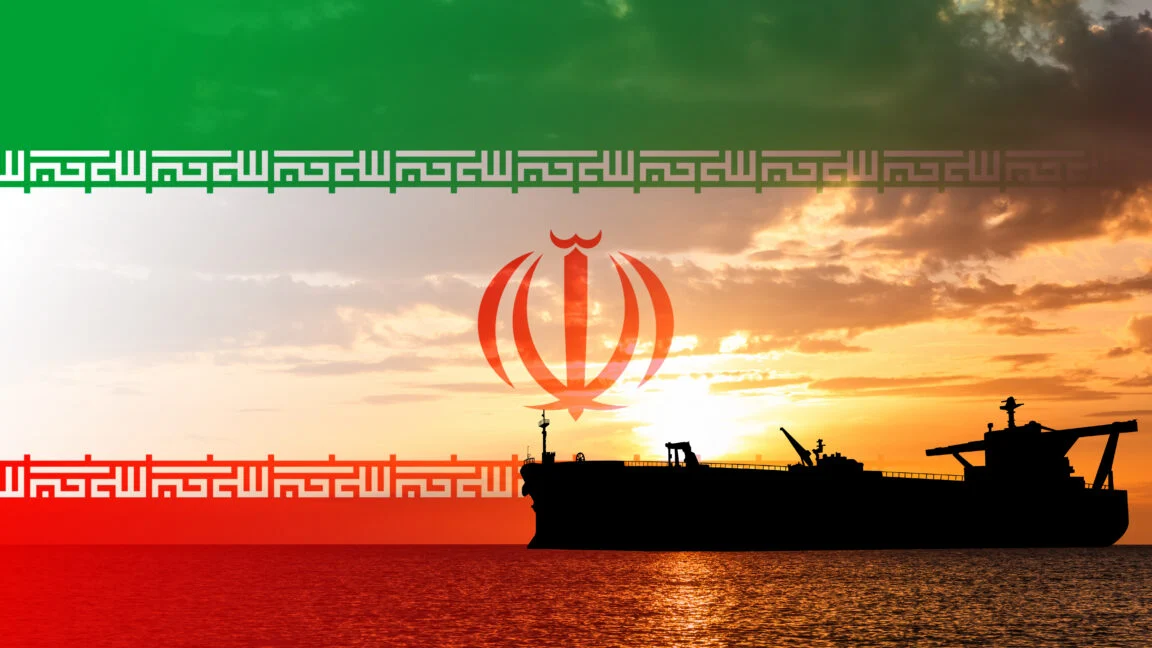
The stability of the global digital economy is facing a new and precarious threat as intelligence reports suggest that tanker ships linked to Iran have been conducting suspicious, lingering maneuvers directly over vital subsea telecommunications cables in the Gulf of Oman. As geopolitical tensions simmer in the Middle East, the deliberate positioning of these vessels near the Strait of Hormuz—a narrow, critical chokepoint for international trade and data—has prompted security analysts to warn that Iran may be mapping or preparing to sabotage the backbone of global internet connectivity.
According to data compiled by the maritime intelligence firm Windward, the movements of three sanctioned tankers and an Iranian fishing vessel were observed throughout October, showing patterns that defy standard commercial navigation. These vessels were tracked slowing their speed and looping repeatedly over the precise coordinates where major undersea cables are laid. In several instances, the ships engaged in the practice of "going dark," switching off their Automatic Identification System (AIS) transponders to evade tracking and surveillance, an act that has historically preceded clandestine operations at sea.
The Strategic Importance of the Strait of Hormuz
The Strait of Hormuz serves as one of the world’s most significant maritime arteries, not only for the transport of fossil fuels but increasingly for the flow of digital information. Six active subsea cables currently traverse this contested waterway, acting as a bridge between the Middle East, Europe, Africa, and Asia. Two additional cable segments are currently under construction, further cementing the region’s status as a critical node in the global information architecture.
For several nations, these cables are not merely an utility; they are a lifeline. Iraq, Kuwait, Bahrain, and Qatar depend entirely on these subsea connections to link their economies, governments, and citizens to the outside world. Any disruption to these lines would result in immediate and catastrophic economic consequences. The impact extends far beyond the immediate region: approximately one-third of India’s westbound internet traffic is routed through the Persian Gulf and the Strait of Hormuz. A targeted attack on these corridors could destabilize financial markets, cripple remote work capabilities, and silence telecommunications across several continents.
Chronology of Suspicious Maritime Activity
The intelligence gathered by Windward in October paints a concerning picture of deliberate, methodical behavior. The pattern began with ships entering the area, ostensibly for commercial reasons, but then deviating from standard shipping lanes.
- Early October: Windward’s satellite imagery and AIS tracking identified three tankers—all under international sanctions—and an Iranian fishing vessel congregating in the vicinity of known cable corridors.
- Mid-October: The vessels were observed performing irregular maneuvers, including prolonged drifting and circular patterns, directly atop the undersea cable routes. These ships were verified to be carrying no commercial cargo, removing any economic justification for their presence in these specific zones.
- October 26: Windward published an official analysis highlighting these specific movements. The firm noted that two sanctioned tankers spent multiple days drifting over regional cable corridors, explicitly stating there was "no commercial reason to stop."
- Late October: Investigations continued as reports emerged that these ships had intentionally disabled their tracking devices during their loitering periods, a move often associated with the placement of hardware or the mapping of seafloor terrain for sabotage.
The 2Africa Project and Global Tech Interests
The potential threat is not limited to state-owned infrastructure. Among the cable corridors frequented by these vessels is the 2Africa cable, a massive subsea project owned by a consortium of international tech companies, including Meta. As the world’s largest subsea cable project, it is designed to provide high-speed internet to Africa and the Middle East. The proximity of the Iranian-linked ships to this specific, high-value asset underscores the breadth of the potential risk. Should an attack occur, it would represent a direct strike against international private-sector interests, likely drawing a broader coalition of nations into the resulting crisis.
Strategic Implications and Security Analysis
The behavior exhibited by these vessels is consistent with reconnaissance or preparatory sabotage. Maritime security experts suggest that to successfully disable a subsea cable, a vessel must first precisely locate the cable—often buried under layers of silt—and then deploy specialized equipment, such as remotely operated vehicles (ROVs) or deep-sea divers, to attach mines or cutting charges.
The act of "going dark" is particularly alarming. By disabling AIS, these vessels attempt to mask their activities from the international community and regional naval forces. However, in the era of high-resolution satellite imagery, this concealment is rarely total. The ability to track these ships even while they are "dark" has allowed intelligence firms to build a compelling case that these actions are not merely coincidental but part of a calculated contingency plan.
The broader implications are severe. If Iran views the subsea cable network as a "soft target" to be leveraged in response to US or Israeli military strikes, the global community faces a significant deterrent dilemma. Protecting thousands of miles of undersea cables is an impossible task for any navy; thus, the security of these lines relies largely on deterrence and international norms. If those norms are violated, the global digital infrastructure could become the next front in hybrid warfare.
Official Responses and Regional Security Concerns
While no government has issued a formal declaration of war over these movements, the intelligence has been shared among regional stakeholders and international maritime security authorities. The US Fifth Fleet, based in Bahrain, maintains a constant presence in the region and is tasked with monitoring Iranian naval activity. While the Department of Defense has not commented on the specific Windward report, the US has consistently warned that threats to maritime and information security in the Strait of Hormuz will be met with "appropriate measures."
From the Iranian perspective, the country has frequently utilized its naval capabilities as a strategic lever in regional conflicts. By demonstrating the capacity to disrupt both oil flow and information flow, Tehran aims to signal its reach to regional rivals and Western powers. However, the destruction of civilian internet infrastructure is widely considered a "red line" in international law, potentially triggering a unified response from the affected nations and their allies.
Future Outlook: Protecting the Digital Commons
The situation in the Strait of Hormuz serves as a stark reminder of the vulnerability of the world’s digital architecture. As the reliance on subsea cables grows, so does the imperative for better monitoring and protection. Analysts are now calling for increased surveillance of "undersea infrastructure corridors," improved subsea sensor networks to detect unauthorized activity near cables, and stronger international diplomatic protocols to classify the targeting of such infrastructure as an act of aggression.
For now, the vessels identified by Windward remain a focal point of surveillance. The international shipping community, telecommunications consortiums, and naval forces in the region are operating under a state of heightened alert. As geopolitical volatility in the Middle East continues, the "loitering" of these tankers remains a persistent, silent threat to the global internet—a reminder that the digital world is inextricably tethered to the physical geography of our oceans, and that geography remains as contested today as it has ever been. The potential for a sudden, widespread digital blackout remains a low-probability, high-impact scenario that is currently dominating the risk assessments of global security planners.