










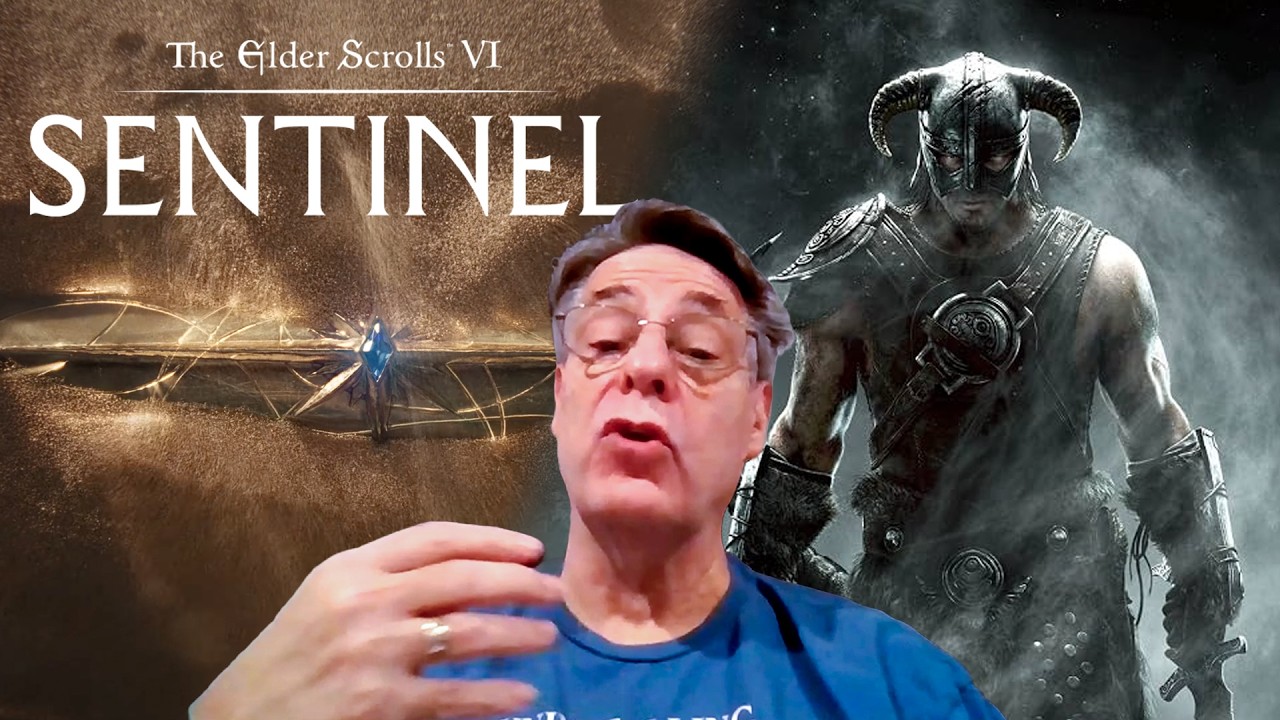
In a recent appearance on the gaming podcast The Examined Game, Bruce Nesmith, the lead designer behind the monumental success of The Elder Scrolls V: Skyrim, offered a candid reflection on the evolution of role-playing game (RPG) design. During the discussion, Nesmith contrasted Bethesda Game Studios’ long-standing philosophy of "total player freedom" with the structured, consequential narrative model championed by Larian Studios in their 2023 blockbuster, Baldur’s Gate 3. His insights provide a rare look into the internal design evolution of one of the industry’s most influential developers as they look toward the future of the Elder Scrolls franchise.
The Philosophy of Absolute Freedom
For over two decades, Bethesda Game Studios has been defined by a specific design ethos: the "everything-for-everyone" approach. Since the release of Morrowind, and refined through Oblivion and Skyrim, the studio has consistently built expansive, open-world environments where players are rarely forced to choose one path at the permanent expense of another. In the world of Skyrim, a single character can rise to the rank of Arch-Mage of the College of Winterhold, lead the Thieves’ Guild, command the Dark Brotherhood, and serve as the Harbinger of the Companions simultaneously.
Nesmith notes that this philosophy is not an oversight, but a deliberate design choice intended to maximize player agency. By removing artificial barriers, Bethesda allows players to experience the breadth of their content without fear of missing out on major questlines or gameplay mechanics. This approach has been a cornerstone of the studio’s massive commercial success, contributing to Skyrim’s status as one of the best-selling video games of all time, with over 60 million copies sold since its 2011 release.
Larian Studios and the Power of Consequence
The conversation shifted when Nesmith analyzed the critical and commercial reception of Baldur’s Gate 3. Larian Studios’ approach to the Dungeons & Dragons license diverged sharply from the Bethesda model by emphasizing meaningful, branching narratives where choices often permanently lock players out of specific outcomes.

"I was pleasantly surprised to see how positive it felt to me to make consequential decisions that closed off gameplay," Nesmith explained. He highlighted that in Baldur’s Gate 3, the gravity of a decision—such as siding with the Druids over the Goblins—creates a sense of narrative weight that the "do-everything" model often lacks. According to Nesmith, this design choice encourages replayability, as players are motivated to start a new character to see the paths they were previously denied.
This realization marks a subtle but significant pivot for a veteran designer who spent years perfecting the open-ended sandbox. Nesmith admitted that he previously believed these two design philosophies were mutually exclusive, but his experience with Larian’s work suggests that modern audiences have an appetite for both.
Historical Context: The Bethesda Sandbox vs. The CRPG
To understand the significance of this discourse, one must look at the historical divide in the RPG genre. Bethesda’s style stems from the "immersive sim" tradition, where the environment is the primary storyteller. In contrast, traditional computer role-playing games (CRPGs) like the original Baldur’s Gate titles or modern successors like Divinity: Original Sin and Pillars of Eternity rely on the "consequence-driven" model.
Historically, Bethesda has experimented with these restrictive elements. In the 2002 title The Elder Scrolls III: Morrowind, the studio implemented mutually exclusive factions. Players who joined the Fighters’ Guild were eventually tasked with sabotaging the Thieves’ Guild, creating a natural tension that forced players to commit to an identity. However, as the studio moved toward the mass-market accessibility of Oblivion and Skyrim, these hard barriers were softened.
The current discussion suggests that Bethesda may be re-evaluating the merits of these earlier design constraints. While Skyrim did include limited examples of this—such as the choice to either join or destroy the Dark Brotherhood, or the binary choice between the Dawnguard and the Volkihar Vampire Clan—these were the exception rather than the rule.
Implications for The Elder Scrolls VI
The industry is currently looking toward the development of The Elder Scrolls VI: Sentinel, the highly anticipated successor to Skyrim. While Bethesda has remained tight-lipped regarding specific mechanics, Nesmith’s comments provide a window into the potential evolution of the studio’s design language.
If Bethesda chooses to incorporate more "meaningful consequences," it would represent a departure from the "all-encompassing" protagonist model that has defined their recent history. Analysts suggest that such a move could revitalize the franchise by deepening the role-playing elements, which some critics have argued were diluted in the transition from the deep systems of Morrowind to the streamlined experience of Skyrim.
However, there is a risk inherent in this shift. Bethesda’s core audience has grown accustomed to the ability to explore everything in a single playthrough. Restricting content could be met with resistance from players who prioritize exploration and "completionist" playstyles over narrative reactivity. The challenge for Bethesda will be to find a balance where consequences feel like a rewarding expansion of the world, rather than an arbitrary limit on the player’s fun.
Industry Reaction and Comparative Analysis
The debate surrounding player agency versus narrative consequence is not unique to these two studios. Other prominent RPG developers, such as CD Projekt Red, have navigated this landscape with varying results. The Witcher 2: Assassins of Kings is frequently cited in design circles as an example of an "extreme" branching path model, where an entire act of the game changes based on a single choice. While critically acclaimed, the design was also criticized for being opaque, as players could miss nearly half of the game’s content without clear indication of the trade-off.
In contrast, Cyberpunk 2077: Phantom Liberty was lauded for its more nuanced approach, where choices led to vastly different endings and emotional resolutions without necessarily hiding massive swaths of gameplay behind binary gates.

Nesmith’s assessment that Larian’s approach was successful specifically "because it was done well" underscores a fundamental truth in game design: players are generally willing to accept restrictions if the narrative payoff justifies the sacrifice. When a game makes a player feel that their choice was "real" and that the world reacted to them in a tangible way, the feeling of loss is replaced by a sense of immersion.
The Future of the Genre
As the gaming landscape moves forward, the dichotomy between the open-ended sandbox and the reactive narrative-driven RPG continues to blur. Modern titles are increasingly attempting to bridge this gap. Bethesda stands at a crossroads: they can continue to refine the successful formula of the "infinite sandbox" that has sustained them for over a decade, or they can leverage their immense resources to incorporate deeper, more meaningful role-playing systems that challenge the player.
Bruce Nesmith’s reflections suggest that the industry is in a state of healthy cross-pollination. Designers are no longer viewing these philosophies as warring factions but as tools in a broader toolkit. For the players, this evolution suggests a promising future where the next generation of massive open-world RPGs may offer not just the freedom to go anywhere, but the weight of having to live with the consequences of one’s actions.
As the industry observes the long-term impact of titles like Baldur’s Gate 3, the consensus among developers appears to be shifting toward a greater emphasis on player agency—not just in where they go, but in who they become and what they give up along the way. Whether this manifests in the arid landscapes of the next Elder Scrolls entry remains to be seen, but the conversation started by Nesmith signals that the next evolution of the genre may be its most consequential yet.