








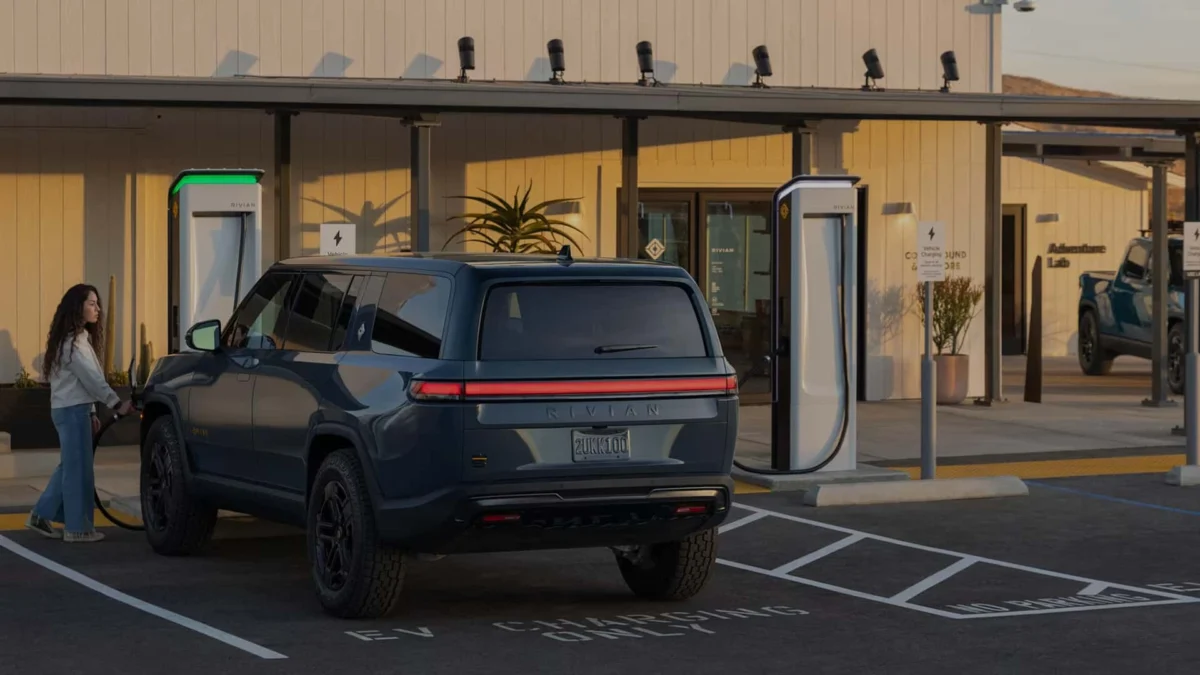
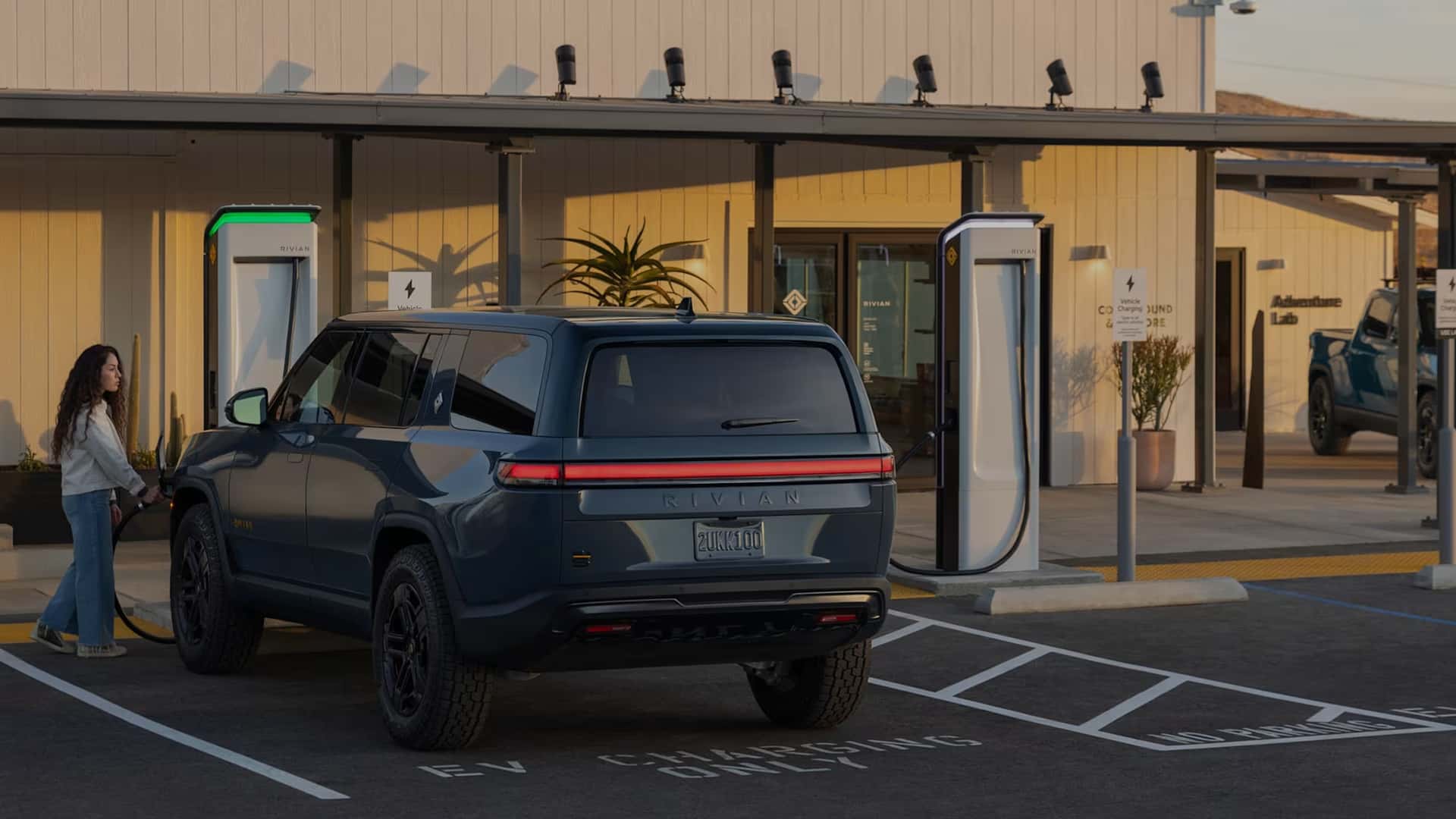
The landscape of electric vehicle charging in the United States is undergoing a significant transformation, with Rivian Automotive emerging as a key player in the development of proprietary high-speed infrastructure. According to the company’s third-quarter earnings report, the Rivian Adventure Network (RAN) has seen a robust expansion of nearly 40% over the past 12 months. This growth trajectory brings the network to a milestone of 1,185 individual DC fast-charging ports distributed across 165 locations, reflecting a strategic commitment to supporting its growing fleet of R1T and R1S models with purpose-built, high-power hardware.
This rapid build-out occurs at a critical juncture for the electric vehicle industry, as manufacturers move beyond mere vehicle production to assume responsibility for the charging ecosystems that sustain their customers. While Rivian continues to invest heavily in its own dedicated hardware—which is capable of delivering up to 300 kilowatts of power—it does so within a broader market context where the standard for charging is shifting toward the North American Charging Standard (NACS).
A Chronology of Infrastructure Development
Rivian first unveiled its ambitious plan for the Adventure Network alongside the launch of its initial vehicle lineup, positioning the infrastructure as an essential component of the "Rivian lifestyle." The company envisioned a network that would connect remote adventure destinations and national parks, rather than focusing solely on urban corridors.
In the last year alone, the pace of deployment has accelerated. Data released in the Q3 report indicates that the number of charging ports has risen by 39% compared to the same period in the previous year. Similarly, the physical footprint of the network—the number of stations—has expanded by 26% since the end of the third quarter of 2025. This incremental growth underscores a shift from the initial "proof of concept" phase to a more aggressive, large-scale deployment strategy aimed at increasing station density in high-traffic regions.
Conversely, the "Waypoints" network, which consists of Level 2 chargers typically found at shopping centers, hotels, and tourist sites, has seen a significantly more modest growth rate. According to the Department of Energy’s Alternative Fuels Data Center (AFDC), the company added only ten 11-kilowatt chargers throughout the current year, bringing the total to 540 chargers across 208 locations. The notable lack of mention of the Waypoints network in recent corporate filings suggests that Rivian is prioritizing high-speed, long-distance travel capabilities over the slower, destination-based charging solutions that were emphasized in the company’s early years.
The Sustainability Factor and Grid Integration
A core tenet of the Rivian Adventure Network is its emphasis on environmental sustainability. The company explicitly states that its fast chargers are powered by 100% renewable energy. However, the mechanism for this claim warrants technical clarification. As is standard practice in the modern energy market, this does not necessarily mean that the electricity flowing directly into a vehicle at a specific stall is sourced instantaneously from a dedicated solar array or wind farm connected to that site.
Instead, Rivian utilizes a system of Renewable Energy Certificates (RECs). For every kilowatt-hour consumed at a RAN charger, the company matches that usage with an equivalent amount of renewable energy sourced from the grid elsewhere. This approach allows the company to support the growth of renewable energy generation across the United States, even in regions where the local utility mix remains heavily reliant on fossil fuels. This strategy is a common, albeit debated, method for corporations to claim a net-zero footprint for their operational energy use.
Comparative Analysis: The Scale of the Challenge
While the growth of the Rivian Adventure Network is objectively impressive, it is essential to view these figures within the context of the wider charging infrastructure market. Rivian remains a niche participant when compared to the industry leader, Tesla.
Tesla’s Supercharger network currently commands a massive lead, boasting over 40,000 fast-charging ports across nearly 3,300 locations in the United States. Furthermore, Tesla’s "Destination Charging" network—its equivalent to Level 2 chargers—includes an additional 14,000 units across 4,000 sites. This discrepancy highlights the scale of the challenge faced by newer manufacturers. While Rivian is building a high-quality, branded experience, it is operating within an ecosystem where the total number of chargers required to support mass-market adoption is orders of magnitude higher than what a single startup can realistically deploy on its own.
The broader market impact is further complicated by the fact that Rivian vehicles are increasingly gaining access to third-party networks. As the industry transitions to NACS, the "walled garden" approach to charging is softening. Rivian owners already have access to an extensive array of public DC chargers, including the expansive Tesla Supercharger network. This leads to an important strategic question: Why continue to invest heavily in proprietary infrastructure when public charging networks are becoming more interoperable?
Strategic Implications and Industry Outlook
The decision to maintain and expand the Rivian Adventure Network suggests that the company views its charging infrastructure as a key brand differentiator rather than a mere utility. By owning the hardware, the software, and the location strategy, Rivian maintains a level of control over the user experience that is difficult to achieve through public partnerships. A seamless, "plug-and-charge" experience is often cited as one of the primary hurdles to widespread EV adoption, and by controlling the end-to-end process, Rivian mitigates the reliability issues often associated with third-party, multi-vendor charging stalls.
Furthermore, the location of these chargers serves as a form of marketing. By placing high-speed, branded chargers in prime outdoor locations, Rivian reinforces its identity as an adventure-focused brand. These stations are not merely fuel stops; they are outposts that reinforce the company’s value proposition to its customers.
However, the capital intensity of this strategy cannot be overlooked. Building and maintaining DC fast-charging infrastructure is expensive, involving complex site acquisition, utility negotiations, and significant electrical grid upgrades. As Rivian continues to navigate the complexities of scaling its vehicle production, balancing the R&D costs of its vehicles with the capital expenditure required for infrastructure will remain a major focus for investors and analysts.
The Road Ahead
Looking forward, the evolution of the Rivian Adventure Network will likely focus on density and reliability. As more electric vehicles hit the road, the demand for high-speed charging will grow exponentially. The industry is currently in a "build-out" phase, where the primary objective is to alleviate range anxiety by creating a redundant and ubiquitous network.
For Rivian, the challenge will be to determine how its proprietary network fits into a future where universal charging standards are the norm. If the public charging network becomes sufficiently reliable and widespread, the strategic necessity of a proprietary network may diminish, potentially leading to a pivot in how the company allocates its infrastructure budget.
For now, the steady expansion of the RAN confirms that Rivian remains committed to its original vision: providing a premium, vertically integrated experience for its customers. Whether this strategy will prove to be a long-term competitive advantage or a costly legacy burden remains one of the most compelling narratives in the electric vehicle sector. As the company moves into the next phase of its growth, the performance, uptime, and geographical coverage of these stations will serve as a crucial barometer for the company’s overall health and its ability to deliver on the promises made to its growing customer base.
In summary, the 40% growth of the Rivian Adventure Network is a testament to the company’s focus on the user experience. While it represents only a small fraction of the total charging infrastructure in the United States, it provides a crucial, branded backbone for the company’s operations. As the industry matures, the intersection of proprietary networks and universal public infrastructure will continue to define the success of individual manufacturers in the transition to an electrified transport future.