Narrative Framework and Literary Deconstruction
The game functions as a radical reimagining of the 1936 Lovecraft novella At the Mountains of Madness. However, rather than adopting the perspective of the original protagonist, William Dyer, players assume the role of an unnamed avian observer while experiencing the prose through Howard Blakely, a character voiced by Lenval Brown. Brown’s performance serves as a central anchor for the experience, utilizing a verbose, neurotic delivery style that mirrors the classic Lovecraftian archetype while grounding the player in a familiar, albeit unsettling, atmosphere.
The narrative structure diverges from the original text by incorporating a secondary perspective: a group of Māori warriors who possess a long-standing ancestral tradition of containing ancient, extra-dimensional threats. This duality provides a critical contrast. Blakely represents the solipsistic, scientifically arrogant explorer who is comfortable aligning with Nazi expedition members, while the Māori party functions as a proactive, collaborative force dedicated to the suppression of eldritch evils. By juxtaposing these two factions, Origame Digital highlights the limitations of the "Great Man" theory of history often found in early 20th-century weird fiction.

Mechanical Design and Traversal
Penguin Colony utilizes a movement system that intentionally sacrifices traditional platforming fluidity to emphasize the player’s status as a flightless, sub-arctic creature. The gameplay loop relies on possession mechanics, allowing players to inhabit different penguin species to overcome specific environmental obstacles. For instance, younger penguins are used for tight-space traversal, while Rockhopper penguins are utilized for their superior vertical mobility.
This design choice has been categorized by some critics as "Foddian," referring to the genre of punishing, physics-based movement games like Getting Over It with Bennett Foddy. The sluggish, heavy movement serves as a thematic barrier, reinforcing the player’s insignificance within the cosmic scale of the game’s events. The title features a minimalist user interface, with the notable exception of a circular stamina meter that appears during intense physical exertion. While this meter provides necessary feedback, its integration has been noted for occasional mechanical inconsistency, particularly regarding the game’s "mantling" or ledge-climbing mechanics.
Chronology of the Antarctic Expedition
The game’s progression is paced through a series of escalating discoveries, beginning with the initial arrival of the human expedition party and culminating in the exploration of a sprawling, alien megastructure buried beneath the ice.

- The Arrival: The game establishes the setting through the eyes of the wildlife, documenting the initial survey of the Antarctic shelf by the human expedition.
- The Discovery: The narrative shifts as the expedition uncovers evidence of an ancient, non-human civilization. This phase is characterized by a transition from standard exploration to psychological deterioration.
- The Incursion: The Nazi expeditionaries, motivated by their occult-adjacent search for legendary artifacts, inadvertently trigger an awakening within the subterranean city.
- The Resolution: Through the alternating perspective of the Māori warriors, the player engages in a series of containment-focused encounters designed to prevent the catastrophic spread of the awakened entities.
Technical Specifications and Accessibility
Penguin Colony is verified for use on the Steam Deck, ensuring that its specific aesthetic—which favors high-contrast, atmospheric environments and stylized, cursive hieroglyphics—is optimized for portable hardware. The game’s technical requirements are relatively modest, with review systems utilizing an RX 9070 XT and Core i5 12600K providing more than sufficient overhead for the title’s rendering needs.
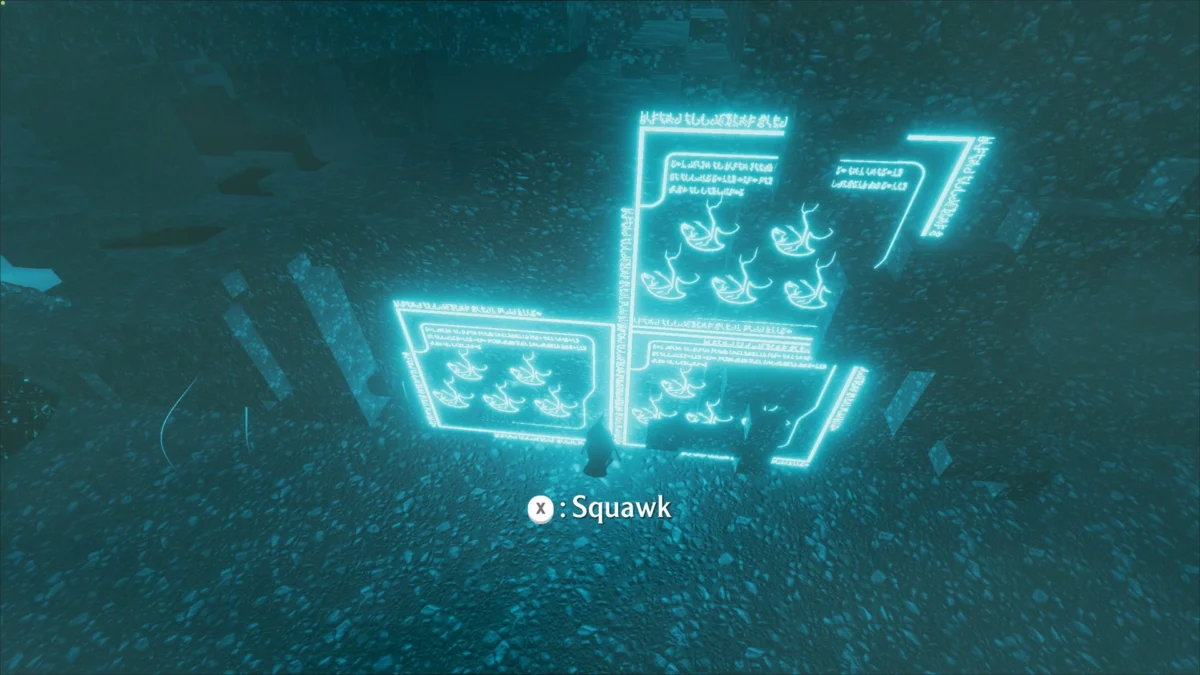
The game also incorporates a decryption element; the aforementioned hieroglyphs act as a replacement cipher for the alphabet. This encourages a level of meta-engagement, requiring players to track information outside of the game’s direct UI, thereby deepening the sense of mystery surrounding the ancient, subterranean city.
Addressing the Legacy of H.P. Lovecraft
A significant portion of the game’s critical reception has focused on its explicit rejection of Lovecraft’s well-documented racial prejudices. Rather than ignoring the author’s xenophobic worldview—a common practice in modern adaptations of his work—Penguin Colony integrates these themes into the narrative. The character of Howard Blakely is framed not as a hero, but as a deeply flawed individual whose "scientific" curiosity is inextricably linked to his prejudices.

By portraying Blakely’s ease of collaboration with the Nazi party alongside his dehumanizing internal monologue, the game provides a critique of the intellectual arrogance of the era. This thematic confrontation is further underscored by the game’s post-credits content, which includes a direct, written condemnation of current global geopolitical crises, specifically the ongoing humanitarian situation in Palestine. This choice reflects a growing trend in indie game development to use abstract horror as a conduit for contemporary political discourse.
Comparative Analysis: The Aesthetics of Scale
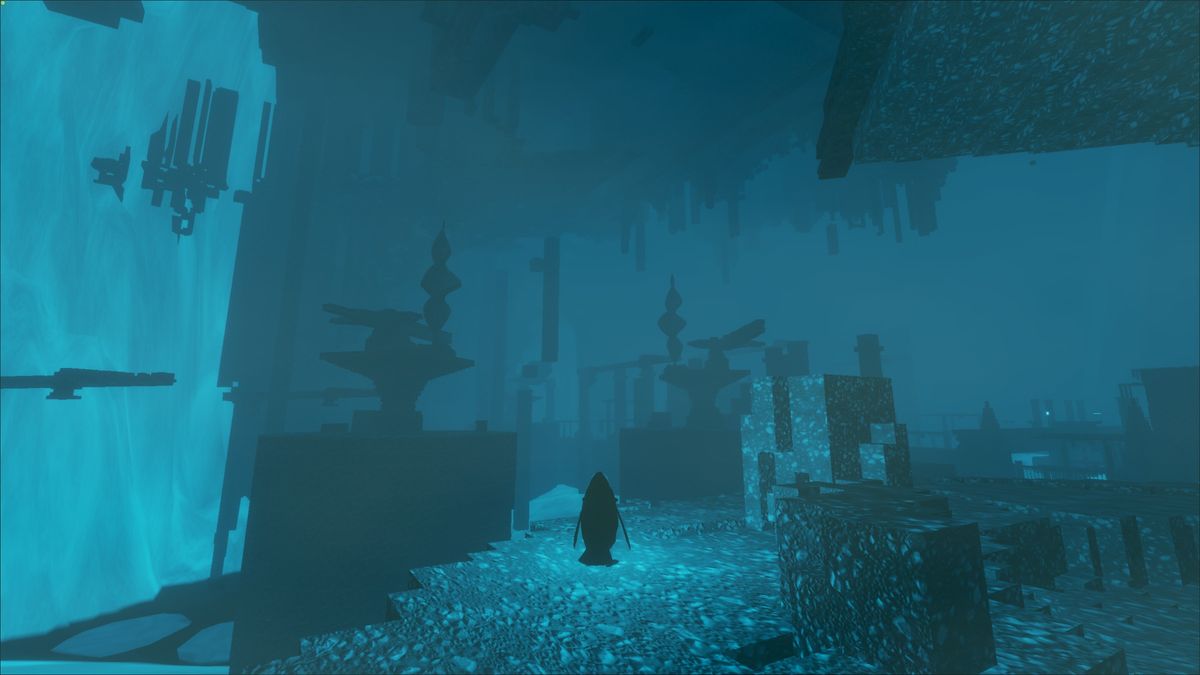
The game’s environment design has drawn comparisons to titles such as Scorn (2022) and the Ash Lake sequence in Dark Souls. The use of vast, incomprehensible architecture under the ice creates a sense of "cosmic dread"—the feeling that humanity is merely a fleeting, insignificant part of a much larger, darker timeline. By restricting the player’s perspective to a penguin, the developers emphasize the disparity between human hubris and the indifferent, massive nature of the universe.
Broader Implications for the Genre
Penguin Colony occupies a unique space within the horror genre, acting as both a love letter to the atmospheric foundations of cosmic horror and a biting rebuke of its origins. Its success suggests that audiences are increasingly receptive to works that challenge the traditional "canon" of horror fiction. By utilizing a "keyhole" narrative style—where the player only sees a fraction of the full picture—the game avoids the trap of over-explanation, a common flaw in many Lovecraftian adaptations.
The inclusion of indigenous perspectives as a counterbalance to colonial-era tropes represents a significant shift in how historical and mythological horror can be handled in interactive media. As the industry continues to grapple with the legacy of its foundational texts, Penguin Colony stands as a model for how developers can honor the creative aspects of a genre while actively dismantling the toxic ideologies that once underpinned it. Whether viewed as an experimental platformer or a piece of interactive political art, the title remains a distinct entry in the 2026 gaming calendar, offering a challenging, if occasionally uneven, experience that rewards patient, observant players.