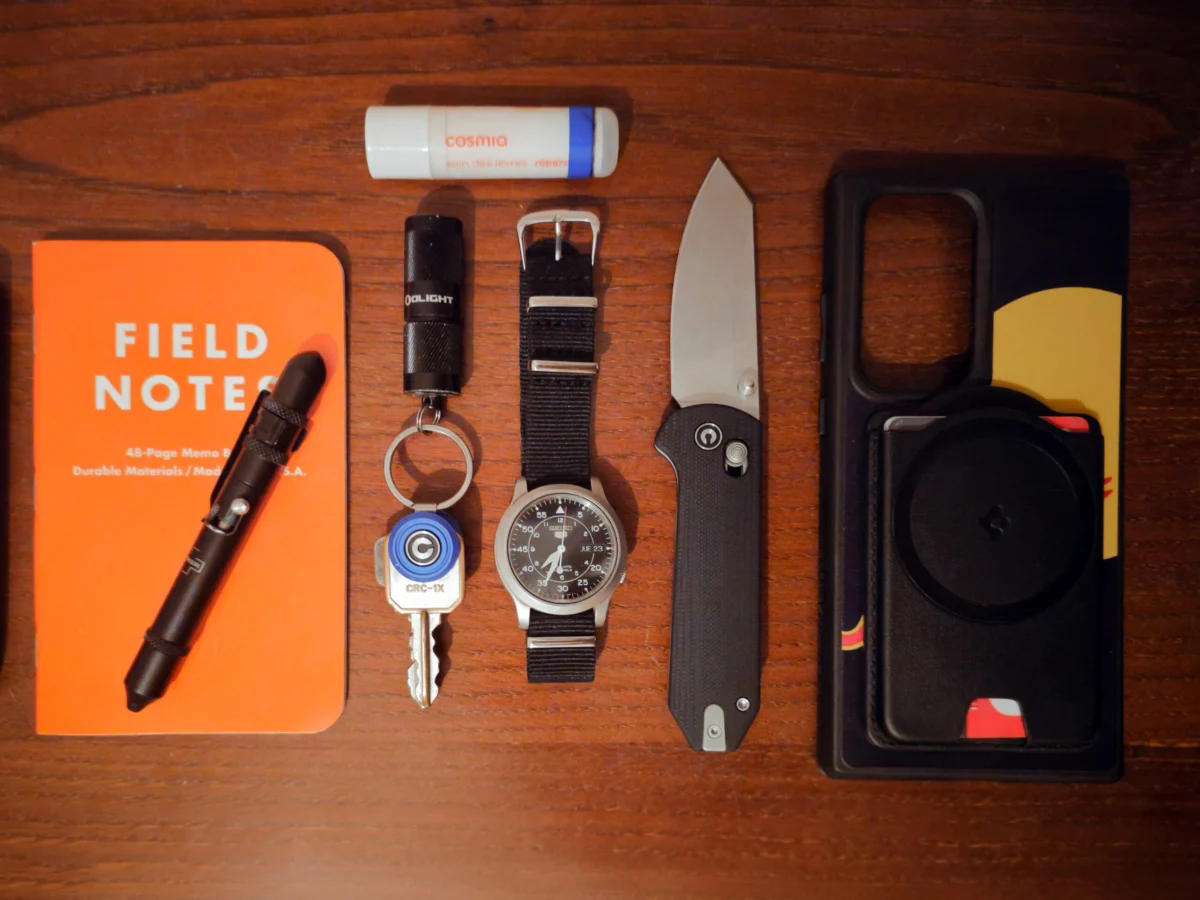
The intersection of high-stakes technical environments and personal preparedness is often reflected in the tools a professional chooses to carry. For Ruben, an Aeronautical Automation Operator based in Portugal, the selection of everyday carry (EDC) gear is not merely a matter of aesthetic preference but a requirement for operational efficiency and reliability. His current loadout represents a sophisticated balance of modern minimalism and high-value utility, designed to meet the rigors of a career dedicated to the maintenance and oversight of complex aviation systems. By integrating newly acquired tools like the CIVIVI Yonder and a Field Notes notebook with established staples such as magnetic wallets and compact illumination, Ruben demonstrates a strategic approach to personal equipment that prioritizes functionality without sacrificing pocket space.
The Role of Aeronautical Automation and the Need for Precision Tools
To understand the logic behind this specific EDC configuration, one must first consider the professional demands placed upon an Aeronautical Automation Operator. In the aviation sector, automation operators are responsible for the critical infrastructure that keeps the skies safe. This includes the maintenance, monitoring, and troubleshooting of Air Traffic Management (ATM) systems, ground-to-air communication arrays, radar technologies, and Instrument Landing Systems (ILS).
In such a high-precision field, where the margin for error is non-existent, the mindset of the professional often spills over into their choice of personal gear. Tools must be dependable, easy to deploy, and capable of performing in diverse environments—from sterile control centers to more rugged technical maintenance sites. The move toward a "minimalist yet capable" carry reflects a broader trend in the aerospace industry, where efficiency and the reduction of unnecessary bulk are paramount.
Detailed Analysis of the Primary Gear: The CIVIVI Yonder
A centerpiece of Ruben’s current kit is the CIVIVI Yonder, a tool that has recently garnered significant acclaim within the global knife community. Designed by Zac Whitmore, a recognized figure from the Blade HQ team, the Yonder was awarded the "Best Buy of the Year" at the prestigious Blade Show 2024. This accolade is significant, as it marks the knife as a leader in price-to-performance ratio—a key metric for professionals who require high-quality steel and reliable mechanics without the prohibitive costs of boutique customs.
The Yonder features a crossbar lock mechanism, which is highly valued for its ambidextrous nature and the safety it provides by allowing the user to close the blade without placing their fingers in the path of the edge. For an operator in Portugal, where knife laws and social perceptions of tools can be stringent, the Yonder’s no-nonsense, utilitarian design serves as an ideal choice. It is a tool first and foremost, lacking the aggressive styling that might be deemed inappropriate in a professional aviation environment. Its lightweight construction ensures that it remains unobtrusive during long shifts, yet its blade geometry is optimized for the varied cutting tasks encountered in a technical workspace, from opening heavy-duty packaging to stripping wires in emergency scenarios.
The Resurgence of Analog Documentation: Field Notes in a Digital Field
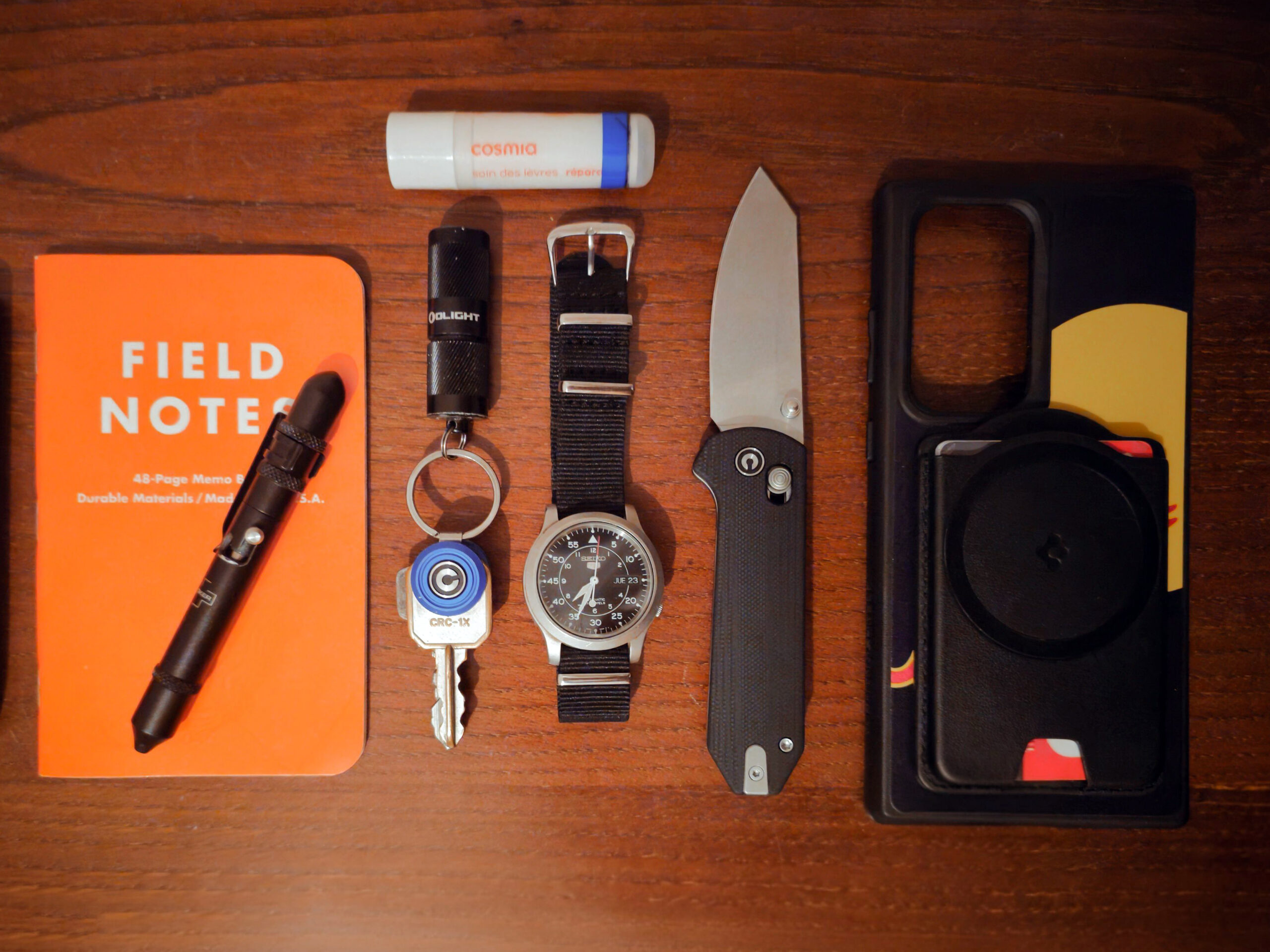
Despite working in a field defined by cutting-edge automation and digital interfaces, Ruben has recently integrated a Field Notes notebook into his daily routine. This decision highlights a recurring theme among engineers and technicians: the irreplaceable value of analog documentation. In the fast-paced environment of aeronautical automation, the ability to quickly jot down a coordinate, a frequency, or a system error code is often more efficient than navigating a digital device.
Field Notes, a brand born from the Draplin Design Co., has become a staple in the EDC community due to its pocket-friendly dimensions and rugged durability. For an operator in Portugal, having a physical record that does not rely on battery life or signal strength is a critical redundancy. Furthermore, the act of writing by hand has been shown to improve cognitive retention—a vital asset when managing complex automation sequences. The inclusion of a mini bolt-action pen complements this setup, providing a robust writing instrument that is unlikely to leak or fail under pressure, unlike standard plastic ballpoints.
Consolidation and Pocket Management
A defining characteristic of Ruben’s EDC is the focus on "pocket real estate." As modern life requires more devices, the challenge of carrying them comfortably increases. Ruben addresses this through several consolidation strategies:
- Magnetic Wallet Integration: By utilizing a magnetic wallet that attaches directly to his smartphone, Ruben eliminates the need for a traditional bulky billfold. This consolidation is particularly useful for professionals who must frequently move through security checkpoints or wear specialized work uniforms where pocket space is limited.
- Ultra-Compact Key Organization: The use of a dedicated key organizer prevents the "jingle" and bulk associated with traditional keyrings. In a technical environment, minimizing noise and snag hazards is both a matter of professionalism and safety.
- Keychain Illumination: The inclusion of a small keychain flashlight ensures that he is never without a light source. In the dark recesses of server racks or during late-night maintenance on an airfield, a reliable beam is an essential safety tool.
Chronology of an Evolving Carry
Ruben’s kit is not static; it is a reflection of ongoing refinement. He notes that the Field Notes and the CIVIVI Yonder are recent additions, suggesting a move toward more specialized tools. His mention of "swapping" gear based on his environment—switching to a Kizer Feist and a Casio Edifice for off-duty hours—reveals a sophisticated understanding of "contextual EDC."
The Kizer Feist, a front-flipper designed by Justin Lundquist, represents a more "gentlemanly" approach to cutlery. Its sleek, streamlined profile makes it a "dressier" alternative to the more robust Yonder. Similarly, the Casio Edifice with a "Tiffany" (turquoise) dial reflects current trends in horology. While the Edifice line is known for its motorsport-inspired chronographs and sapphire crystals, the specific choice of the Tiffany dial aligns Ruben with a global fashion trend that has seen high demand for that specific colorway across brands from Patek Philippe to Casio.
Market Context and Professional Implications in Portugal
The EDC movement in Portugal has seen steady growth, mirrored by an increase in the availability of high-quality brands like CIVIVI and Kizer through European distributors. For professionals in the Portuguese aerospace sector—which includes major entities like NAV Portugal and OGMA—the adoption of standardized, high-quality gear is part of a broader culture of excellence.
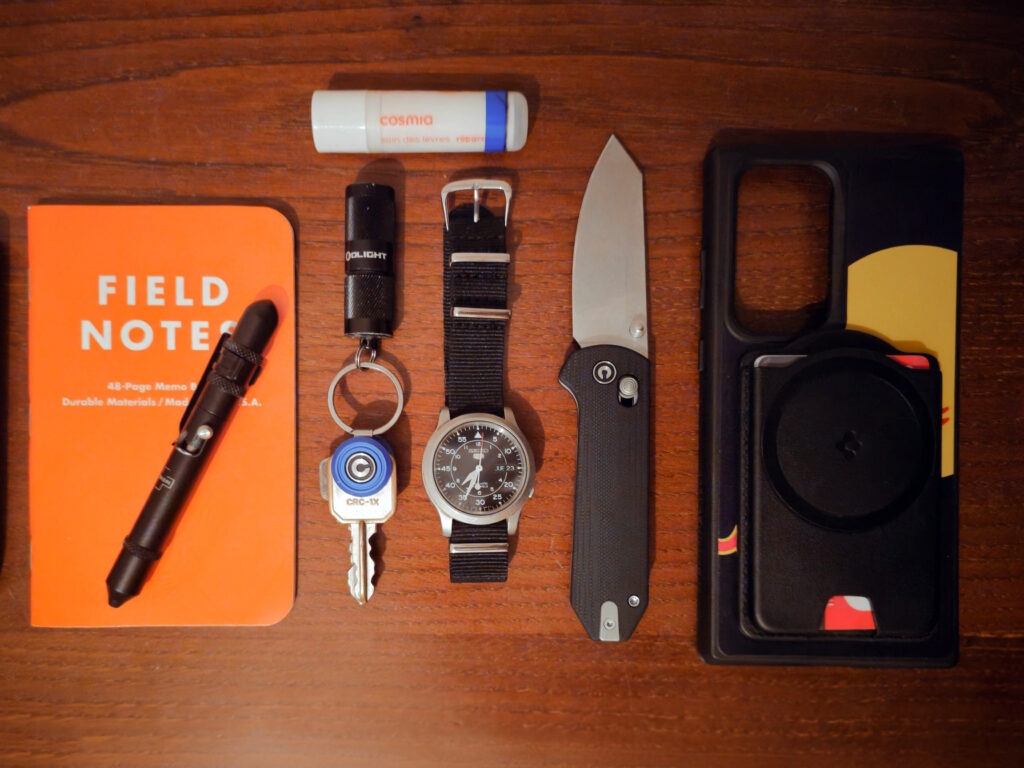
The Portuguese aerospace industry is a vital component of the national economy, involving high-tech manufacturing and complex service provision. For an operator within this system, the tools carried are a micro-reflection of the macro-standards of the industry. The preference for "high-value" items—gear that provides professional-grade performance at a reasonable price—is a pragmatic response to the economic realities of the professional class in Southern Europe, where there is a strong appreciation for quality craftsmanship that lasts for years.
Broader Impact: The Value-Driven Minimalist Trend
Ruben’s setup is a prime example of the "Value-Driven Minimalist" trend currently dominating the EDC landscape. This philosophy moves away from the "tactical" excess of the early 2010s, which often featured oversized knives and heavy-duty pouches. Instead, it focuses on:
- Multifunctionality: Items must serve a clear purpose or multiple purposes.
- Aesthetic Cohesion: The gear looks professional and clean, fitting into an office or a technical lab without drawing negative attention.
- Accessibility: Using items like crossbar locks and bolt-action pens that can be operated with one hand.
- Sustainability of Investment: Choosing brands known for their warranty and build quality, ensuring the tools do not need frequent replacement.
As the Editor’s Note in the original source suggests, the balance struck in this carry is exemplary. It demonstrates that one does not need to spend thousands of dollars to have a world-class kit. By selecting the "Best Buy" of the year and pairing it with time-tested accessories, Ruben has created a toolkit that is perfectly suited for the complexities of aeronautical automation.
Conclusion
The everyday carry of an Aeronautical Automation Operator in Portugal serves as a case study in functional preparedness. Through the strategic selection of the CIVIVI Yonder for its mechanical reliability, the Field Notes for its analog dependability, and a suite of minimalist accessories for space efficiency, Ruben has optimized his daily loadout for the specific demands of his profession. His kit reflects a global shift toward high-value, low-profile tools that support the modern worker in both technical and social environments. As Ruben continues to refine his carry, his choices provide a roadmap for other professionals seeking to balance the requirements of their trade with the constraints of modern daily life.