The release of GPT-5.6 marks a significant milestone in the rapid evolution of large language models (LLMs), introducing a refined architecture designed to optimize both reasoning capabilities and operational versatility. Following the success of the GPT-5.5 iteration, OpenAI has deployed this latest version to address specific demands in high-stakes environments, particularly in software development, automated code auditing, and complex system planning. This launch occurs amid a period of intense competition in the artificial intelligence sector, as organizations seek to balance the high computational costs of advanced reasoning with the need for precise, actionable outputs.
The Evolution of the GPT Series: From GPT-5.5 to the 5.6 Iteration
The trajectory of OpenAI’s development has shifted from purely generative capabilities toward specialized reasoning and "inference-time compute." While previous generations focused on expanding the breadth of training data, the GPT-5.x lineage has prioritized the depth of thought. GPT-5.5 established a baseline for high-level performance that rivaled Anthropic’s Opus 4.8, particularly in the realm of technical analysis. GPT-5.6 represents an incremental yet critical upgrade, focusing on "precision and recall"—the model’s ability to correctly identify issues (precision) while ensuring no critical errors are overlooked (recall).
Historical data indicates that the transition from version 5.5 to 5.6 was driven by user feedback regarding the consistency of code reviews and the efficiency of browser-based agentic tasks. Industry analysts note that while the jump from GPT-4 to GPT-5 was a leap in foundational intelligence, the 5.6 update is a surgical refinement aimed at professional workflows where error margins must be minimized.
Celestial Scaling: Understanding Sol, Terra, and Luna Model Sizes
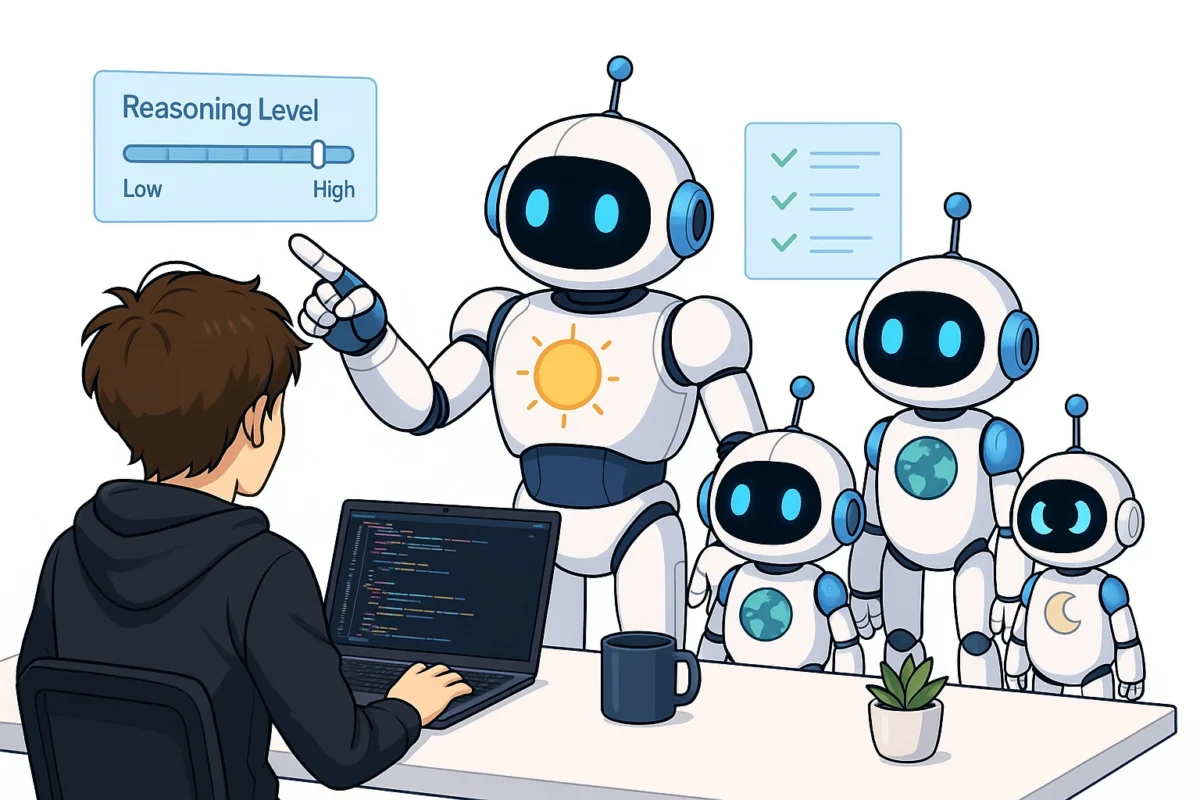
In a departure from previous naming conventions, OpenAI has introduced a "celestial" hierarchy to categorize the different sizes of the GPT-5.6 model. This tiered approach allows users to select a model based on the complexity of the task and the available computational budget:
- Sol: The flagship "frontier" model, Sol is the largest in the 5.6 family. It is engineered for the most demanding tasks, such as architectural planning and deep-tier code auditing. It possesses the highest parameter count and the most robust reasoning capabilities.
- Terra: Positioned as the mid-tier model, Terra is designed to balance speed and intelligence. Early benchmarks suggest that when paired with higher reasoning levels, Terra can occasionally match the performance of Sol on specific logic-based tasks while maintaining a smaller footprint.
- Luna: The smallest and fastest variant, Luna is optimized for high-volume, low-latency applications where basic reasoning is sufficient, such as simple text transformations or initial data sorting.
This categorization reflects a broader industry trend toward "right-sizing" AI deployments, ensuring that enterprise resources are not wasted on overpowered models for trivial tasks.
The Mechanics of Inference-Time Reasoning: Accuracy vs. Latency
One of the defining features of GPT-5.6 is the introduction of selectable reasoning levels. Unlike standard models that provide near-instantaneous responses, GPT-5.6 allows users to toggle between levels ranging from "Medium" to "Ultra." This "thinking" phase allows the model to simulate various solutions and self-correct before presenting a final answer.
The trade-off for this enhanced accuracy is a significant increase in latency and token consumption. Technical evaluations demonstrate that "Ultra" reasoning levels are exceptionally slow, making them unsuitable for real-time chat but highly effective for asynchronous tasks like complex debugging. Analysts have observed that the "Extra High" and "Ultra" settings are designed for strategic planning, whereas "Medium" reasoning is more efficient for the actual execution of pre-defined plans.
Benchmarking Performance: GPT-5.6 in Code Review and Implementation
In the domain of software engineering, GPT-5.6 has demonstrated superior performance in identifying subtle bugs that previous versions might have missed. In comparative tests against GPT-5.5 and Anthropic’s Fable 5, GPT-5.6 showed a measurable improvement in both precision and recall.
Specifically, in code review tasks, the model is increasingly being viewed as a viable alternative to human peer reviews for non-critical infrastructure. By analyzing the entire repository context, GPT-5.6 can identify logical inconsistencies across multiple files. However, experts note that for actual implementation—the writing of the code itself—the improvement over GPT-5.5 is incremental rather than transformative. The model is more thorough and can maintain focus over longer tasks, but it does not yet represent a total departure from the capabilities of its predecessor.

Workflow Optimization: Integrating GPT-5.6 with Model Context Protocols
A critical component of GPT-5.6’s utility is its integration with the Model Context Protocol (MCP). This allows the model to interface directly with external tools such as Gmail, Google Calendar, Slack, and Playwright. This "computer use" or "browser use" capability is a cornerstone of OpenAI’s strategy to move beyond text boxes and into agentic automation.
When given access to a full suite of tools, GPT-5.6 can navigate browsers to verify code end-to-end or perform multi-step administrative actions. Reviewers have noted that the model’s navigation skills are notably improved, showing a higher success rate in completing complex web-based workflows compared to earlier iterations. To maximize effectiveness, users are encouraged to ensure that GPT-5.6 is granted the same level of tool access as competing agents like Claude Code, as the model’s performance is heavily dependent on the quality and breadth of its external integrations.
Operational Constraints and the Banked Reset Usage System
Despite its technical prowess, GPT-5.6 presents challenges regarding usage limits and subscription management. The high computational cost of advanced reasoning modes means that users can quickly exhaust their weekly or monthly token quotas. OpenAI has recently adjusted its subscription model to address this, notably removing the strict five-hour usage limit in favor of a more flexible weekly cap.
A unique feature introduced alongside GPT-5.6 is the "Banked Reset" system. This allows high-tier subscribers (including those on the $200-per-month professional plans) to trigger a manual reset of their usage limits. This is particularly valuable for developers facing tight deadlines or periods of intense experimentation. However, these resets are not without consequence; triggering a banked reset also resets the countdown for the next scheduled limit refresh, meaning users must strategically time their usage to avoid long periods of downtime.
The Competitive Landscape: OpenAI GPT-5.6 vs. Anthropic Opus 4.8
The release of GPT-5.6 has intensified the rivalry between OpenAI and Anthropic. While GPT-5.6 is widely considered the superior choice for code review and browser-based tasks, Anthropic’s Claude Opus 4.8 and Fable 5 maintain a strong foothold in the planning and creative implementation phases.
Current industry best practices often involve a hybrid approach. Many engineering teams utilize Claude Fable for the initial high-level planning of a project, then switch to Opus 4.8 for the bulk of the implementation, and finally use GPT-5.6 (Sol variant) for the final rigorous code review. This "multi-model pipeline" leverages the specific strengths of each AI provider, ensuring a more robust final product than any single model could produce in isolation.
Chronology of Development and Market Impact
The development cycle leading to GPT-5.6 reflects a maturing AI market:
- Late 2025: The launch of GPT-5.0 sets a new frontier for general intelligence.
- Early 2026: GPT-5.5 is released, focusing on reliability and professional tool integration.
- Mid-2026: GPT-5.6 is deployed, introducing the Sol/Terra/Luna tiers and advanced reasoning levels to compete with Anthropic’s mid-year updates.
The market response to GPT-5.6 has been cautiously optimistic. While the incremental nature of the update suggests that LLM development may be hitting a period of diminishing returns in terms of raw "intelligence," the improvements in reliability and tool use are significant for enterprise adoption. The shift toward inference-time reasoning indicates that the future of AI lies not just in knowing more, but in "thinking" more effectively.
Future Implications for Autonomous Agents and Computer Use
The success of GPT-5.6 in browser navigation and tool integration suggests a future where AI models act more as autonomous agents than as simple assistants. As these models become faster and more cost-effective, the need for human intervention in routine digital tasks is expected to decrease.
Furthermore, the "Sol, Terra, Luna" naming convention hints at a future where OpenAI may release even more specialized models tailored for specific hardware or edge-computing environments. For now, GPT-5.6 stands as a powerful, if expensive, tool for the modern engineer, offering a glimpse into a world where AI-led code auditing and browser-based automation are the standard rather than the exception. Organizations are advised to stay abreast of these developments, as the ability to effectively prompt and manage these high-reasoning models is rapidly becoming a core competency in the global tech workforce.