





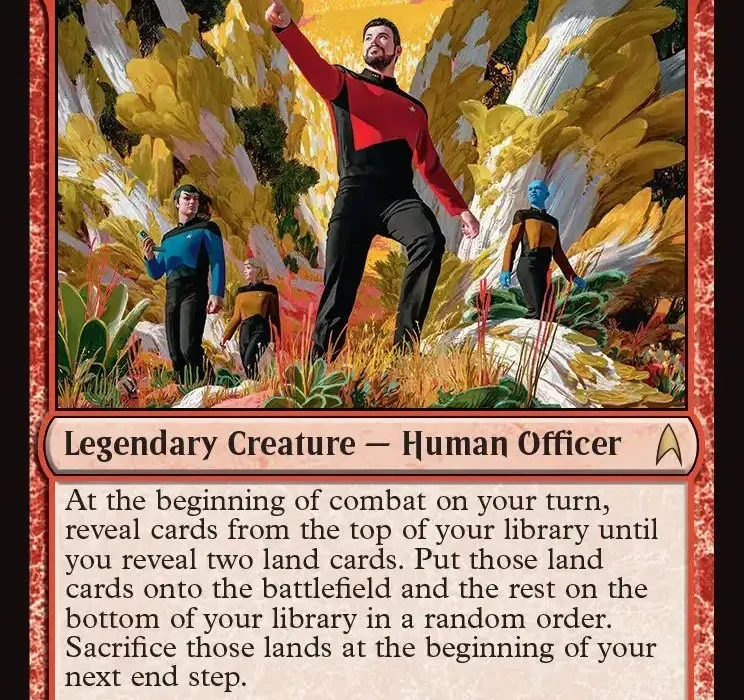
The convergence of two of pop culture’s most enduring pillars has officially arrived as Wizards of the Coast launches its latest expansion for Magic: The Gathering (MTG) under the Universes Beyond label: Star Trek. This collaboration marks a significant milestone in the tabletop gaming industry, merging the complex tactical systems of the world’s most popular trading card game with the vast, decades-spanning lore of the Star Trek franchise. Unlike previous intellectual property crossovers that primarily focused on aesthetic overlays, this release utilizes mechanical design to mirror the core tenets of Gene Roddenberry’s vision: exploration, technological ingenuity, and the cooperative spirit of the United Federation of Planets.
A Chronology of Collaboration
The partnership between Wizards of the Coast and Paramount Consumer Products was formally announced as part of the broader Universes Beyond initiative, a program designed to integrate third-party intellectual properties into the Magic: The Gathering ecosystem. While previous sets have featured collaborations with franchises such as The Lord of the Rings, Fallout, and Warhammer 40,000, the Star Trek set represents a unique challenge due to the sheer volume of material available.
Development began in earnest following the success of the Fallout set, with designers aiming to bridge the gap between the 1966 original series and modern interpretations, including Star Trek: Prodigy and the J.J. Abrams-era films. The design team sought to avoid the common pitfalls of "content fatigue" by focusing on mechanics that reflect the source material’s ethos. By emphasizing crew synergy and scientific discovery, the set avoids the criticism often leveled at previous crossovers, which were sometimes accused of prioritizing branding over gameplay depth.
Mechanical Innovation: From Warp Speed to Assimilation
Central to the set’s success is the implementation of new and revised mechanics that prioritize thematic consistency. The "Strange New Worlds" mechanic serves as a primary example, rewarding players for land diversity. In a standard game of Commander or Standard, players often optimize decks by stacking identical land types to ensure consistency. However, this mechanic incentivizes the exploration of varied environments, effectively forcing players to simulate the Starfleet mission of discovering diverse planetary biomes.
The "Federation" mechanic further distinguishes the set by rewarding deck-building variety. By providing bonuses for assembling a crew composed of different species—such as Vulcans, Klingons, and Romulans—the game mechanically enforces the show’s emphasis on interstellar diplomacy and collaboration. This design choice has been lauded by early adopters for its ability to encourage more diverse deck compositions rather than the singular-focus strategies often seen in competitive play.
Spacecraft management represents another major technical shift. Building upon the mechanics established in the previous "Edge of Eternities" release, ships are not merely static artifacts. They require a "stationing" phase, where players must tap creatures to generate charge counters. This mirrors the process of managing a starship’s systems, such as life support or weapons, through a crew’s active participation. Iconic characters like Lieutenant Commander Geordi La Forge are designed to interact with these systems, reducing the effort required to bring a ship to its full combat potential.
Thematic Integrity and Historical References
The set’s deep-cut references, ranging from the U.S.S. Enterprise-A to nuanced nods toward Star Trek Beyond, demonstrate a commitment to fan service that avoids being purely superficial. The inclusion of the "Redshirt" trope—modeled through the release of disposable officer tokens—provides both a tactical advantage and a nod to the franchise’s production history.
Furthermore, the "Beam Me Up" mechanic offers a sophisticated way to manage the discard pile, representing the logistical capabilities of transporter technology. Perhaps most notably, the "Assimilate" mechanic, designed specifically for Borg-themed decks, introduces a disruption mechanic that can strip creatures of their original identities, effectively turning opponents’ assets into assimilated artifacts. This provides a high-stakes, aggressive playstyle that contrasts sharply with the cooperative, "Common Goal" focused mechanics of the Federation decks.
Broader Implications for the Collectible Card Game Market
The entry of Star Trek into the Universes Beyond lineup is part of a broader strategy by Wizards of the Coast to expand the demographic reach of Magic: The Gathering. Market data suggests that these cross-platform collaborations have significantly boosted player acquisition rates, particularly among demographics that were previously unfamiliar with the complex rulesets of TCGs but held a deep affinity for the adapted properties.
According to industry analysts, the success of these sets relies on the balance between "flavor" and "function." If a card is merely a visual reskin of an existing card, the player base often rejects it as a cash grab. However, when mechanics are developed to reflect the behavior of the characters—such as Worf’s power-doubling ability during collective attacks—the cards become highly desirable collectors’ items that also serve as functional, innovative tools for gameplay.
Official Stance and Reception
Representatives from Wizards of the Coast have emphasized that this collaboration was intended to celebrate the 60-year legacy of Star Trek while maintaining the competitive integrity of Magic. Early playtests conducted at major conventions indicate a positive reception, particularly among the Commander format community, which thrives on the social and narrative-driven aspects of gameplay.
"The goal was never just to put characters on cards," said one lead designer during the product reveal. "It was about asking, ‘How does a Starfleet crew function?’ and then translating that function into a turn-based, strategic interaction."
This approach has effectively shielded the set from the criticism that often follows large-scale media crossovers. By anchoring the mechanics in the show’s utopian philosophy—the idea that a team is stronger than the sum of its parts—Wizards of the Coast has managed to align the high-octane nature of a competitive card game with the optimistic, exploratory tone of science fiction.
Future Outlook
The Star Trek set is currently available for both tabletop play and on the Magic: The Gathering Arena digital platform. As the game continues to evolve, the industry will be watching to see if this model of "thematic mechanics" continues to be the standard for future Universes Beyond releases.
With the current landscape of digital and tabletop gaming becoming increasingly crowded, the ability to leverage established intellectual properties through high-fidelity mechanical design is likely to become a key differentiator for Wizards of the Coast. For now, the integration of the final frontier into the multiverse of Magic serves as a case study for how legacy brands can be revitalized through thoughtful, system-oriented adaptation. Whether the player is a lifelong Trekkie or a seasoned Planeswalker, the set offers a compelling argument for the continued convergence of these two distinct, yet complementary, worlds.