Apple Music has implemented a notable price hike for its subscription tiers in the United States, United Kingdom, and other European countries. This adjustment affects individual, family, and student plans, marking the latest in a series of subscription cost increases across the digital music streaming landscape. The revised pricing, effective immediately for new subscribers and at the end of the current billing cycle for existing users, reflects a broader trend within the industry driven by escalating operational expenses.
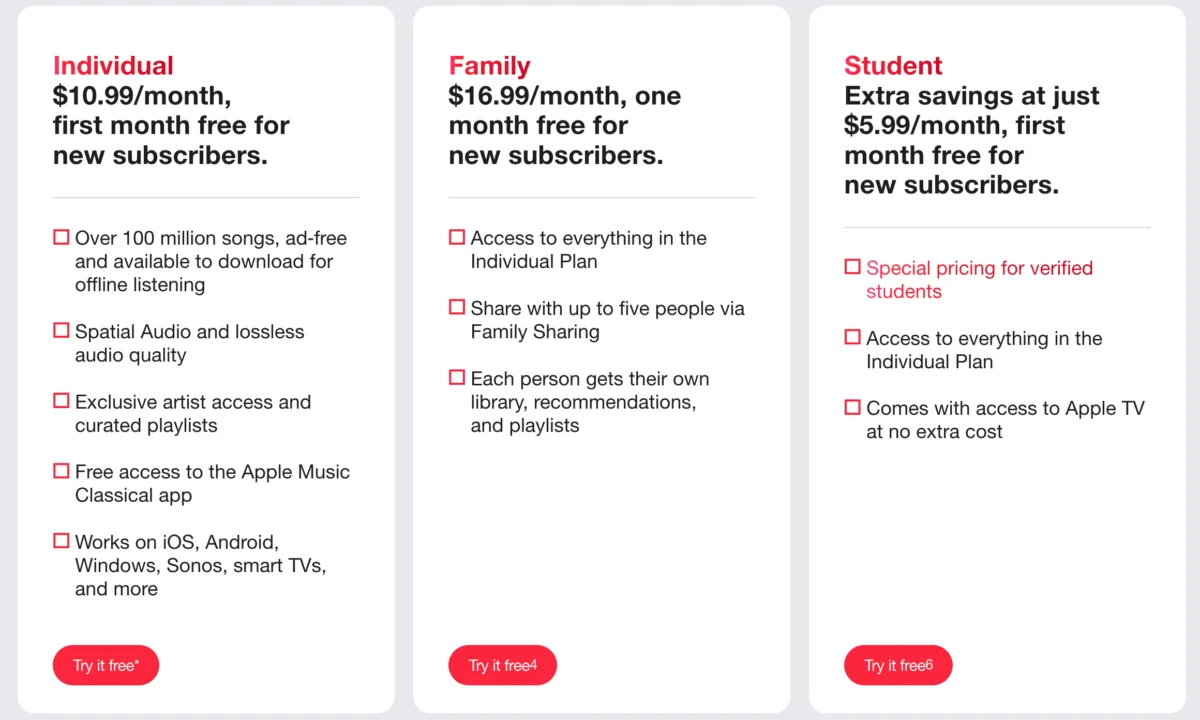
The most significant change impacts the family plan in the U.S., which has seen a $3 increase, bringing its monthly cost to $19.99. Individual subscriptions have risen by $1, now priced at $11.99 per month, while the student tier has also experienced a $1 increment, reaching $6.99 per month. These changes, while seemingly incremental for some plans, represent a tangible shift in the cost of accessing Apple’s extensive music library and curated content. The core benefits and features associated with each subscription level, including access to the full catalog, offline listening, and spatial audio, remain consistent.
A Timeline of Shifting Subscription Costs

The current price adjustments by Apple Music are not an isolated event but rather a continuation of a pattern observed across major music streaming platforms over the past few years. This trend suggests a recalibration of the streaming business model as companies grapple with evolving market dynamics and financial pressures.
- Early 2020s Onward: A general upward trend in subscription costs begins to emerge across various digital services, including music streaming.
- 2022-2023: Spotify, a primary competitor to Apple Music, enacts multiple price increases for its Premium plans. By early 2023, Spotify’s individual plan starts at $12.99 per month in the U.S.
- 2023-2024: Amazon Music also adjusts its pricing. Prime members see their monthly subscription rise to $11, while non-Prime subscribers face a $12 monthly charge.
- Mid-2026: Apple Music implements its latest price increases in the U.S., UK, and Europe, impacting individual, family, and student plans.
This chronological overview highlights a consistent industry-wide movement towards higher subscription fees, driven by a confluence of factors that we will explore further.
Understanding the New Pricing Structure (U.S. Market)
For U.S. subscribers, the new pricing structure is as follows:
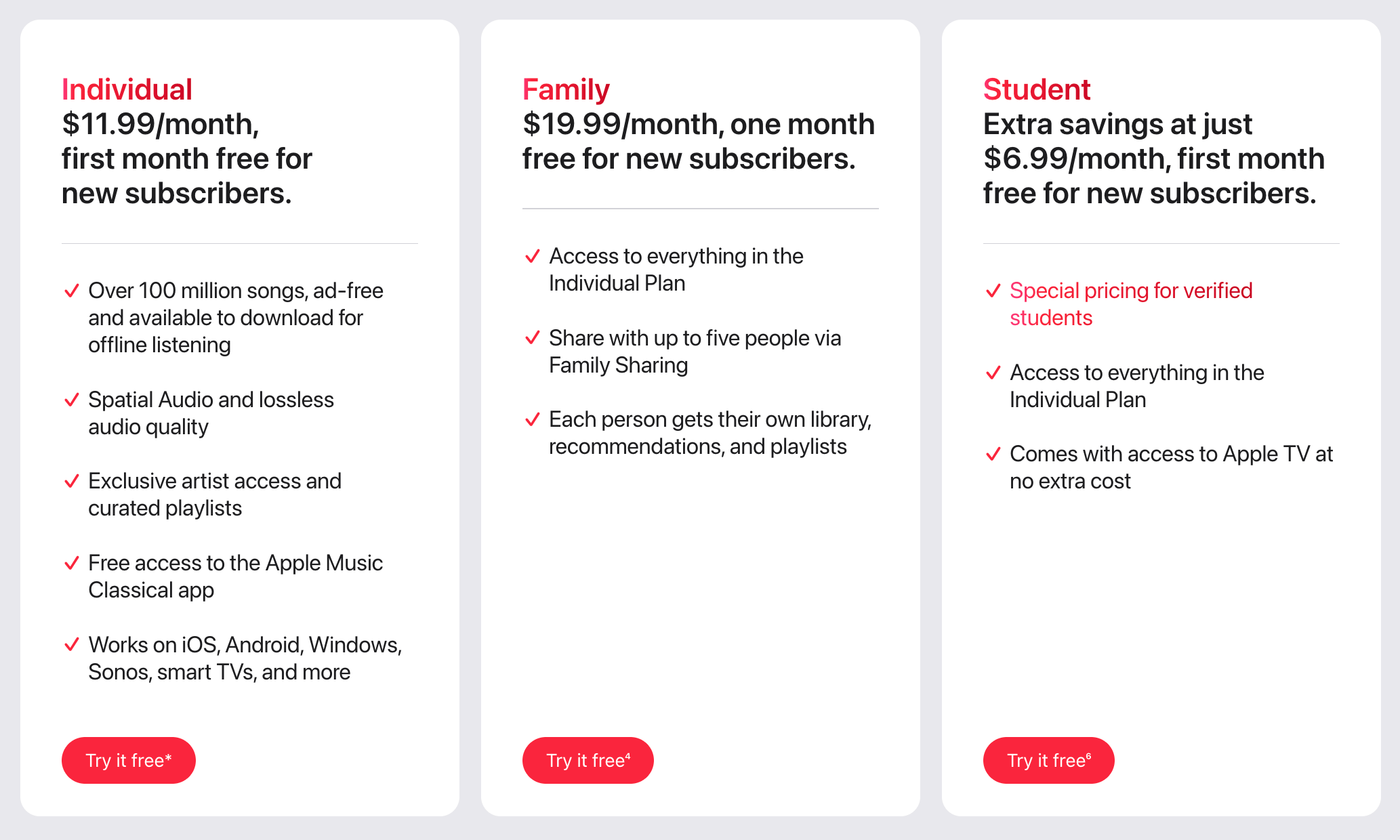
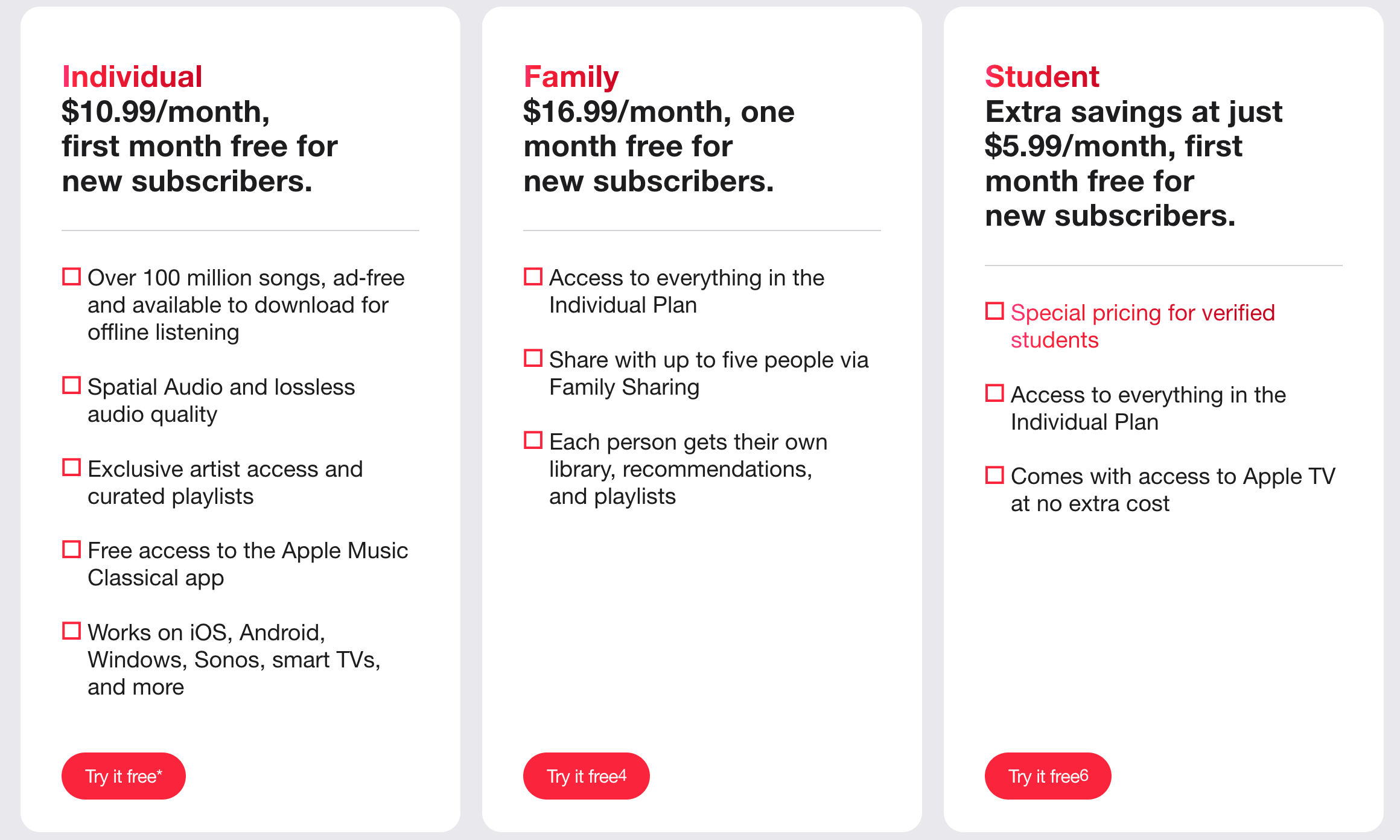
- Individual Plan: Previously $10.99 per month, now $11.99 per month. This represents a 9.1% increase.
- Family Plan: Previously $16.99 per month, now $19.99 per month. This represents a 17.7% increase.
- Student Plan: Previously $5.99 per month, now $6.99 per month. This represents a 16.7% increase.
These figures illustrate that while the individual plan sees a modest rise, the family and student tiers experience more substantial percentage increases, potentially impacting households and younger demographics more acutely. The family plan, designed for shared access among multiple users, now represents a more significant financial commitment for families.
Global Impact: UK and Europe
While the article specifically details U.S. pricing, it confirms that similar price adjustments have been implemented for users in the United Kingdom and across the wider European continent. Specific figures for these regions vary due to currency exchange rates and local market conditions, but the upward trend in subscription fees is a common thread. For instance, the UK has also seen an increase in its subscription tiers, reflecting a synchronized strategy by Apple Music to align its pricing globally with rising operational costs.
The Driving Force: Rising Licensing Costs
Apple provided a concise explanation for the price surge, attributing it directly to "rising licensing costs." This statement, shared with industry publication MusicBusinessWorldwide, points to the complex financial ecosystem of the music streaming industry. Record labels and music publishers license their vast catalogs to streaming services, and these licensing fees represent a significant portion of a platform’s operating expenses. Over time, these costs can fluctuate and generally trend upwards due to inflation, increased demand for content, and negotiations between rights holders and streaming providers.
The music industry operates on a model where a substantial percentage of revenue generated from streaming services is paid out to rights holders. As the volume of music streamed and the number of subscribers grow, the total payout in licensing fees also increases. When these costs outpace revenue growth or profit margins, companies often resort to price adjustments to maintain profitability and fund continued investment in their services.
Industry-Wide Trend: A Competitive Landscape
The price hikes from Apple Music are consistent with the financial realities faced by its competitors. Spotify and Amazon Music have both implemented similar price increases in recent years. This indicates that the challenges are not unique to Apple but are systemic within the music streaming sector.

- Spotify’s Adjustments: Spotify has been proactive in adjusting its pricing, recognizing the need to balance content acquisition costs with subscriber affordability. Their consistent price increases suggest a strategic approach to ensuring the long-term viability of their business model.
- Amazon Music’s Incremental Changes: Amazon Music’s pricing has also seen adjustments, with different rates for Prime members and non-Prime subscribers, reflecting Amazon’s broader ecosystem strategy.
The consistent action across these major players underscores the pressure on streaming services to generate sufficient revenue to cover the ever-increasing costs of acquiring and retaining the rights to a global music catalog.
Beyond Licensing: Emerging Challenges
While rising licensing costs are the primary stated reason for the price increases, the music streaming industry is also navigating other significant challenges that may indirectly influence pricing strategies.
- The Rise of AI Music: The burgeoning field of AI-generated music presents a new frontier and a potential disruption. While AI can offer new creative possibilities, it also raises complex questions about copyright, royalties, and the very definition of music creation. The potential for AI-generated music to flood platforms and impact the market for human artists is a concern that the industry is beginning to address.
- Artist Compensation Debates: The long-standing debate surrounding artist compensation from streaming platforms continues to be a critical issue. Artists and songwriters often advocate for a more equitable distribution of revenue, arguing that current royalty rates are insufficient. While this doesn’t directly lead to price hikes, it adds pressure on streaming services to find sustainable revenue models that can potentially support higher artist payouts in the future.
- Industry-Wide AI Labeling Efforts: In response to the growing presence of AI-generated music, there are ongoing efforts within the music industry to implement an industry-wide AI labeling system. This initiative aims to provide transparency for listeners, allowing them to make informed choices about whether to engage with AI-created content. Such measures, while beneficial for transparency, also highlight the evolving technological landscape that streaming services must adapt to.
Implications for Consumers and the Market

The continuous rise in subscription fees for music streaming services has several potential implications for consumers and the broader digital media market:
- Subscriber Fatigue: As prices increase across multiple platforms, consumers may begin to experience "subscription fatigue," leading them to re-evaluate their spending on entertainment services. This could result in a consolidation of subscriptions, where users prioritize services they use most frequently or opt for bundled packages.
- Increased Competition and Differentiation: In response to potential subscriber churn, streaming services may intensify their efforts to differentiate themselves through exclusive content, enhanced features, or unique user experiences. Apple Music, for example, continues to invest in spatial audio and curated playlists as key selling points.
- Value Proposition Reassessment: Consumers will likely reassess the value proposition of each streaming service. The decision to subscribe or maintain a subscription may increasingly depend not only on the music library but also on the overall user experience, exclusive content, and integration with other devices and services.
- Potential for Tiered Offerings: While not explicitly stated in this announcement, the industry may see a greater proliferation of tiered subscription models. This could involve offering a basic, lower-cost tier with fewer features or a premium tier with exclusive content or higher audio quality at a higher price point.
In conclusion, Apple Music’s recent price increases signal a strategic adaptation to the financial pressures within the digital music streaming industry. Driven primarily by escalating licensing costs, these adjustments are part of a larger industry trend. As consumers face higher subscription fees, the competitive landscape will likely see continued innovation and a heightened focus on delivering perceived value to retain subscribers in an increasingly dynamic market. The ongoing evolution of technology, including AI, and the persistent discussions around artist compensation will undoubtedly continue to shape the future of music streaming business models.