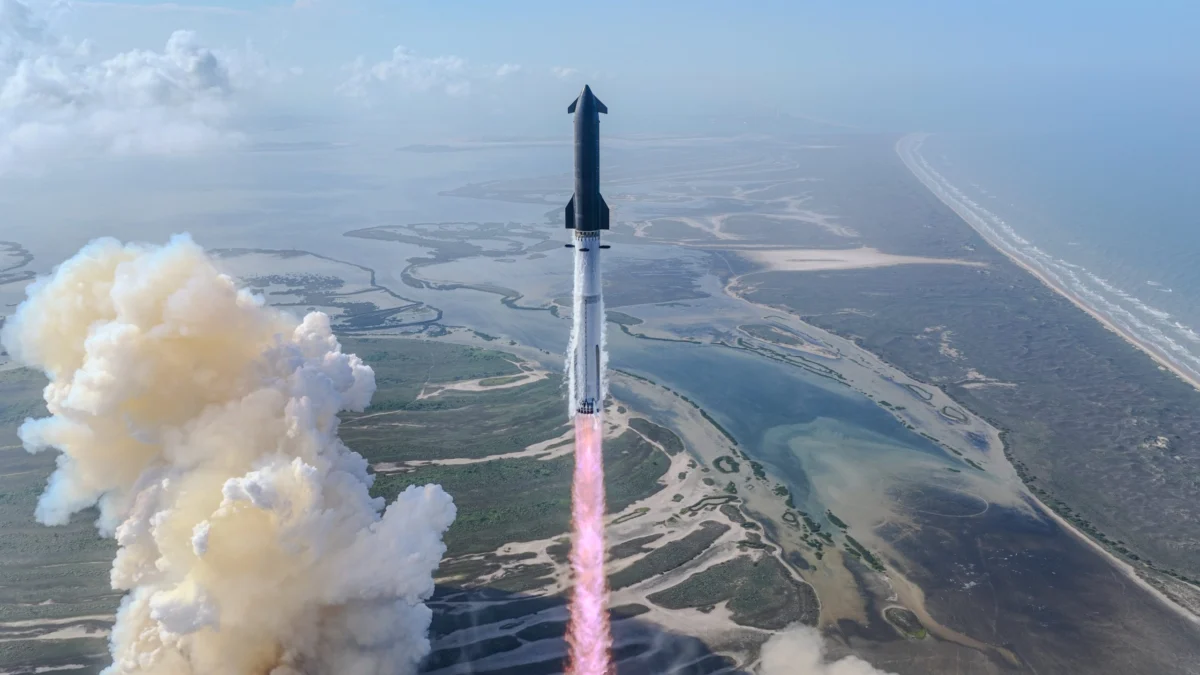
SpaceX has announced a revised target date for the thirteenth test flight of its Starship integrated launch system, aiming for Monday, July 20, 2026. The launch window is scheduled to open at 6:45 p.m. Eastern Time (ET) and 5:45 p.m. Central Time (CT). This rescheduling follows an abrupt abort of the previous launch attempt on Thursday, July 16, 2026, due to an issue with the Super Heavy booster’s Raptor engines.
Engine Malfunction Leads to Launch Abort
The highly anticipated Starship Flight 13 was scrubbed just moments before liftoff on Thursday evening. The automated system triggered a launch abort at T-zero, the precise moment of engine ignition, after four of the Super Heavy booster’s 33 Raptor 3 engines failed to ignite. The 90-minute launch window had opened at 6:45 p.m. EDT from SpaceX’s Starbase facility in Boca Chica, Texas. The countdown had proceeded without incident throughout the day, and the massive rocket had been fully fueled with over 11.5 million pounds of liquid methane and liquid oxygen.

Following the abort, SpaceX’s launch directors officially announced, "Standing down from today’s flight test attempt," and ceased the live broadcast.
Elon Musk Explains Engine Issue and Sets New Timeline
Within hours of the abort, SpaceX CEO Elon Musk provided insight into the cause of the delay via his social media platform, X (formerly Twitter). He confirmed that the failure of several Raptor engines to ignite during the startup sequence automatically triggered the abort sequence.
"Some of the engines didn’t start, triggering an automatic launch abort," Musk stated on X. He further elaborated on the necessary repairs, indicating that two of the Raptor engines would be removed and replaced to ensure a successful flight. Musk projected the most probable new launch timing to be "early next week," a statement that aligns with the newly announced July 20th target.

SpaceX engineers immediately began the process of draining the propellant tanks, and Booster 20, the specific booster intended for this flight, was rolled back to its hangar for inspection and the necessary engine replacements.
Starship Flight 13: A Mission with Ambitious Objectives
Starship Flight 13 is designed to be one of the most consequential test flights in the program’s history, carrying a significant payload and several critical demonstration objectives. For this mission, SpaceX plans to deploy 20 operational Starlink V3 satellites into orbit, marking the first time Starship will be used for the deployment of actual commercial satellites. This represents a major step forward in leveraging Starship’s substantial payload capacity for constellation deployment.
In addition to the satellite deployment, the mission includes several advanced technological demonstrations. For the Starship Upper Stage, SpaceX aims to assess adjustments made to ensure engine reusability during the ascent phase. A particularly critical objective is the planned in-space relight of a single Raptor engine. This maneuver is a crucial precursor for future missions, enabling orbital deorbit maneuvers, in-space refueling operations, and deep space exploration.
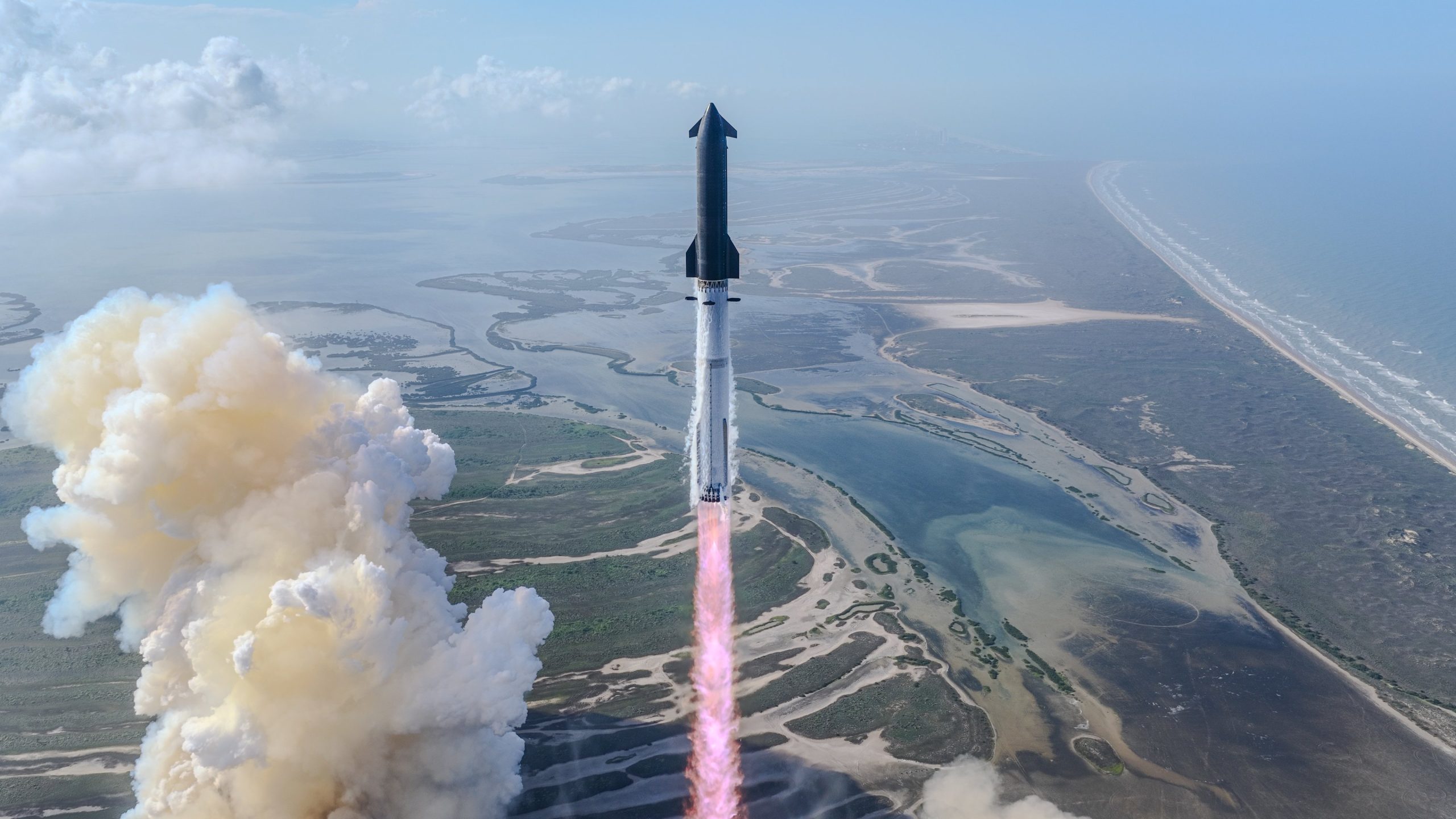
While previous test flights have included attempts to catch the Super Heavy booster with the launch tower’s mechanical arms, SpaceX has indicated that this specific objective will not be pursued during Flight 13. This suggests a continued focus on validating core flight capabilities and payload deployment before refining booster recovery techniques.
The mission is expected to conclude with a splashdown in the Indian Ocean, a standard procedure for Starship test flights that allows for data collection and analysis of the vehicle’s performance during re-entry.
Broader Context: Public Offering and Programmatic Evolution
The timing of Starship Flight 13 carries added significance due to SpaceX’s recent landmark Initial Public Offering (IPO) in June 2026. The company, now trading under the ticker SPCX at $135 per share, has entered the public markets, making its launch successes and failures subject to increased scrutiny from investors and the wider financial community. A successful launch and payload deployment would provide a positive narrative for investors, while another abort or in-flight anomaly could lead to increased market volatility.

This flight also builds upon lessons learned from previous missions. Flight 12, which took place in May 2026, encountered an issue with one of its Raptor engines during ascent, forcing a deviation from planned objectives. Furthermore, the booster’s boostback burn experienced anomalies when five engines failed to reignite, causing the booster to deviate from its intended trajectory. The data gathered from these past flights, including the engine performance issues, has directly informed the modifications and improvements implemented for Flight 13.
Chronology of Starship Flight 13 Preparations
- July 15, 2026: SpaceX makes initial preparations for Starship Flight 13, with the launch window announced for Thursday evening.
- July 16, 2026 (Evening): The Starship Flight 13 launch attempt is aborted at T-zero due to four Raptor engines failing to ignite. Elon Musk later confirms the issue and indicates engine replacement will be necessary.
- July 17, 2026 (Morning): SpaceX officially announces the new target launch date and window for Starship Flight 13: Monday, July 20, at 6:45 p.m. ET.
- July 20, 2026 (Target Date): SpaceX aims to launch Starship Flight 13, carrying 20 Starlink V3 satellites and featuring critical engine re-ignition demonstrations.
Elon Musk’s Vision: A Product Gallery at his Texas Ranch
In related news, Elon Musk has announced plans to create a product gallery at his ranch in Texas, showcasing his lifelong body of work. This announcement came in response to a resurfaced quote from JPMorgan CEO Jamie Dimon, who likened Musk to Albert Einstein. The gallery is intended to be a retrospective of Musk’s innovative endeavors, spanning from his early coding projects to his most recent ventures.
Land acquisition records indicate a significant expansion of Musk’s property in Bastrop County, east of Austin, with entities tied to him accumulating approximately 2,000 acres. The gallery’s collection is expected to include iconic products and artifacts from his companies, such as Zip2, PayPal, Tesla, SpaceX, Neuralink, The Boring Company, and xAI. This includes items like The Boring Company’s "Not-a-Flamethrower," Tesla’s Short Shorts, and Burnt Hair perfume, alongside more technologically significant inventions. The timeline of his creations will likely span from his childhood game "Blastar" in 1984 to the Cybercab in 2026 and the recent SpaceXAI merger. The gallery’s potential public accessibility and completion date remain unannounced.
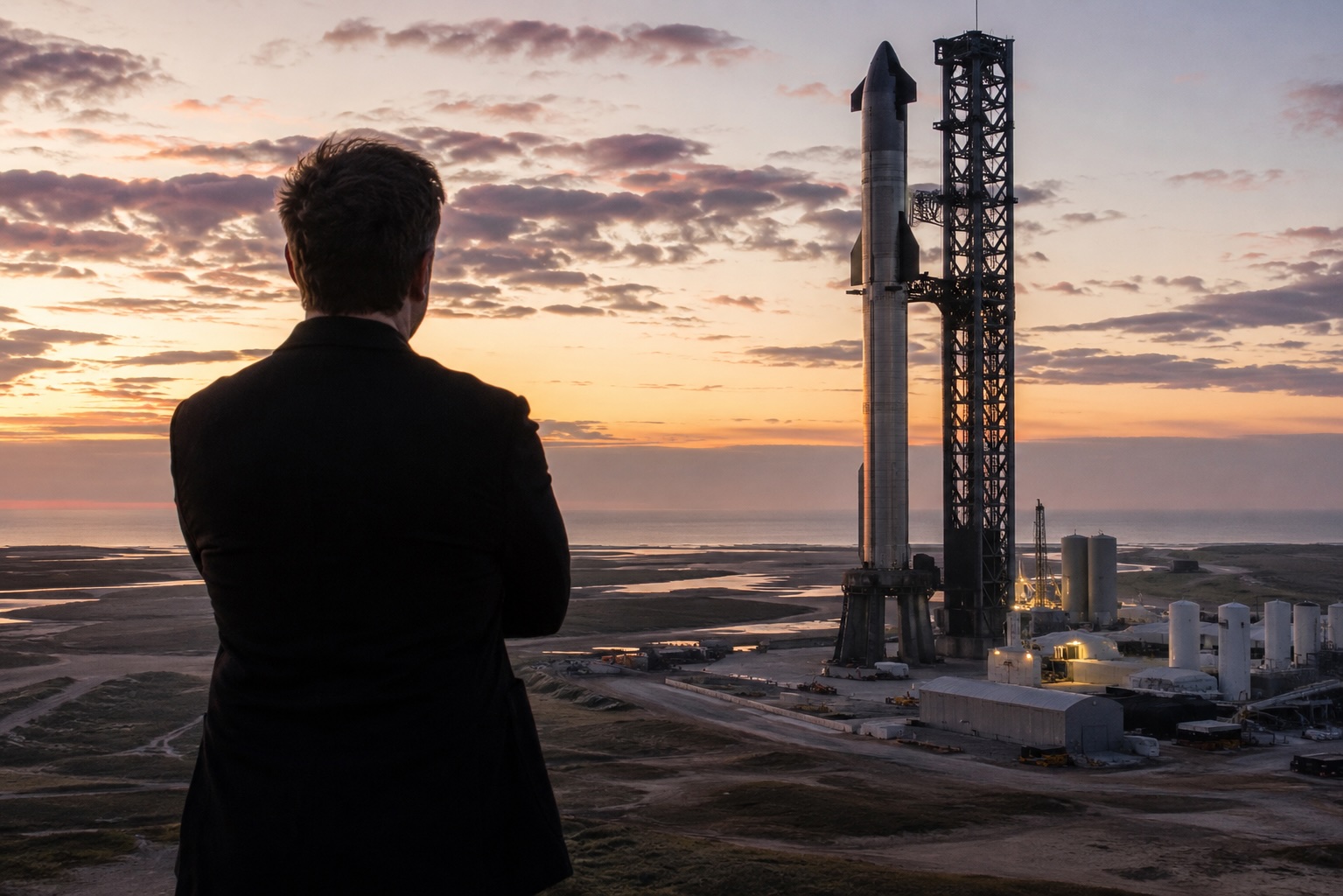
The continuous testing and development of Starship are crucial for SpaceX’s long-term goals, which include achieving full reusability, facilitating large-scale satellite deployments, and supporting future human space exploration endeavors, most notably NASA’s Artemis program. Each test flight, even those encountering setbacks, provides invaluable data that propels the program closer to its ambitious objectives.