





The smart home landscape underwent a significant expansion this month as global lighting manufacturer LEDVANCE officially joined the Works with Home Assistant partner program. The strategic partnership introduces an initial lineup of 116 certified devices to the open-source automation ecosystem, marking a major milestone for local-control advocates and lighting consumers alike. By integrating the open-source Matter standard across a vast catalogue of Wi-Fi-enabled lighting hardware, LEDVANCE and Home Assistant are aiming to bridge the gap between legacy industrial illumination expertise and modern, privacy-focused smart home configurations.
A Century of Lighting Heritage Meets Modern Automation
To understand the scale of this integration, it is necessary to examine the historical trajectory of LEDVANCE. The company was established in 2016 following the structural carve-out and spin-off of the general lighting division from OSRAM, one of the oldest and most prominent lighting manufacturers in the global market. The corporate name itself—a portmanteau of "LED" and "advance"—was chosen to signal a definitive corporate pivot toward advanced solid-state semiconductor lighting technologies and digital infrastructure.
Despite operating as an independent entity for nearly a decade, LEDVANCE inherited more than a century of optical engineering and manufacturing experience through its OSRAM lineage. Today, the Munich-headquartered firm maintains a robust international presence, operating commercial offices in more than 50 countries and distributing products to customers across over 140 nations. Through specific licensing agreements, the company continues to market a substantial portion of its consumer hardware under the globally recognized OSRAM brand, including its specialized SMART+ smart home electronics portfolio.
The integration into the Works with Home Assistant program represents the latest evolution in LEDVANCE’s digital strategy. Rather than restricting consumers to proprietary, cloud-dependent mobile applications, the company’s recent hardware iterations embrace open protocols to ensure maximum consumer choice and platform interoperability.
Technical Architecture: Matter and Local Control
At the core of the LEDVANCE certification is the implementation of the Matter connectivity standard. Developed by the Connectivity Standards Alliance (CSA)—a consortium comprising hundreds of global technology leaders including Apple, Google, Amazon, and the Open Home Foundation—Matter is designed to eliminate the siloes that have historically plagued the smart home industry.
All 116 newly certified LEDVANCE devices operate via standard Wi-Fi infrastructure and utilize the Matter protocol. This architectural choice offers several distinct technical advantages for end-users:
- Elimination of Proprietary Hubs: Because these devices communicate natively over existing Wi-Fi networks using Matter, consumers are not required to purchase brand-specific hardware bridges or gateways to establish communication with their central automation server.
- Local Execution: Matter enables direct, local internet protocol (IP) communication between devices and the Home Assistant controller. Commands are executed locally within the home network without routing through external cloud servers, drastically reducing latency and enhancing network reliability.
- Data Privacy and Security: Local-only operation ensures that telemetry, usage patterns, and personal automation routines remain within the physical boundaries of the user’s property, mitigating potential privacy vulnerabilities associated with cloud-brokered smart home ecosystems.
- Multi-Admin Capabilities: Matter’s multi-admin functionality allows a single LEDVANCE light to be controlled simultaneously by Home Assistant, Apple Home, Google Home, or Amazon Alexa without requiring factory resets or complex reconfiguration.
Industry Perspectives and Strategic Alignment
The partnership highlights a growing industry consensus that openness and interoperability are prerequisites for sustained smart home adoption. Industry analysts note that traditional hardware manufacturers face increasing pressure from consumers to abandon closed ecosystems in favor of universal standards.
Pulkit Dhanuka, Product Manager at LEDVANCE, articulated the company’s strategic rationale for embracing the open-source community: "We believe that openness and interoperability are essential for the future of smart homes. By joining the Home Assistant community, we want to make SMART+ products more accessible to users who value flexibility and local control, while learning from the community and collaborating to create better smart home experiences."
From the perspective of the Open Home Foundation—the non-profit organization that oversees the Works with Home Assistant program and advocates for sustainable consumer technology—partnering with established industrial giants like LEDVANCE validates the viability of open standards at scale. The foundation’s governance model emphasizes device longevity and environmental sustainability, explicitly discouraging planned obsolescence tied to corporate cloud infrastructure shutdowns. By ensuring that devices remain functional even if a manufacturer alters its cloud strategy or goes out of business, the collaboration directly addresses growing regulatory and consumer concerns regarding electronic waste.
Comprehensive Hardware Portfolio and Product Scope
The newly certified catalogue encompasses a diverse array of form factors designed to address both residential and commercial lighting requirements. Rather than focusing solely on standard retrofit bulbs, the lineup covers nearly every conceivable lighting category:
- Architectural and Task Lighting: Filament-style decorative smart bulbs, directional spotlights, recessed downlights, and track lighting fixtures suitable for modern interior design schemes.
- Ambient and Decorative Illumination: Flexible LED strips engineered for under-cabinet kitchen placement, architectural accent lighting, and behind-television bias lighting.
- Living Space Fixtures: Integrated ceiling fixtures, wall-mounted sconces, and architectural floor lamps.
- Outdoor and Specialized Environments: Weatherproof, IP-rated floodlights, garden spike spots, and specialized bathroom fixtures capable of withstanding high humidity and moisture ingress.
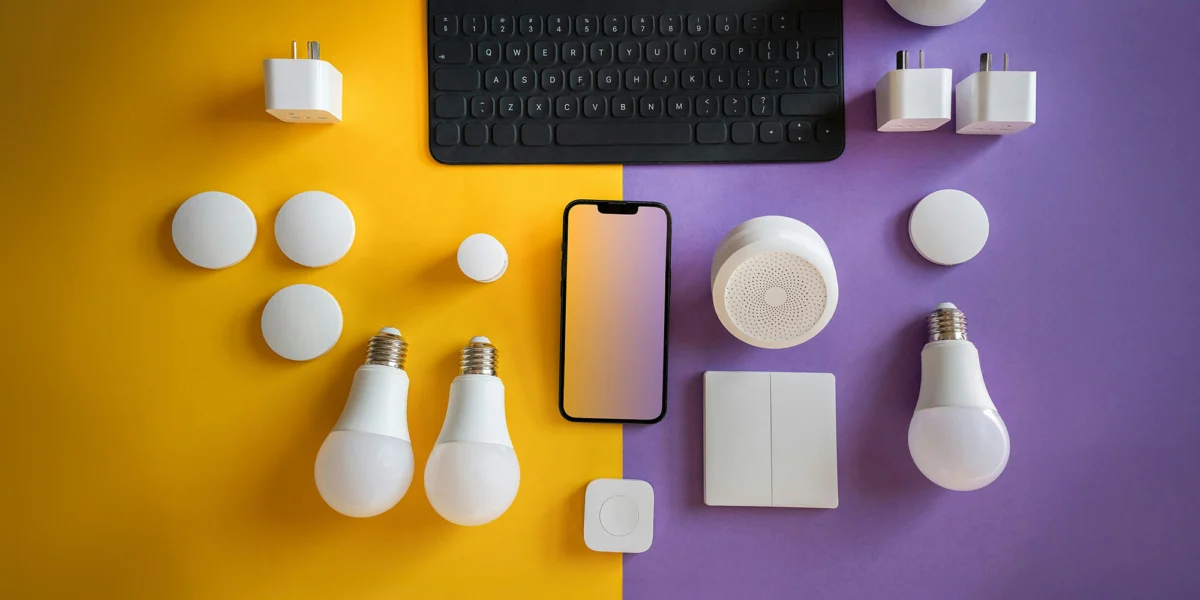
- Retrofit Infrastructure: SMART+ smart plugs designed to convert standard lamps or non-smart appliances into controllable automation nodes, alongside smart wall switches that enable remote and automated control of existing hardwired ceiling fixtures while retaining traditional wall-plate aesthetics.
Most color-variable devices in the collection support tunable white spectra—allowing color temperatures to shift dynamically from warm, relaxing evening hues to cool, productive daylight white—as well as full RGB color customization.
Rigorous Testing and Certification Criteria
To earn the "Works with Home Assistant" designation, hardware must undergo a stringent evaluation protocol conducted by the platform’s in-house engineering team. Unlike self-certified device directories maintained by commercial platform operators, the Home Assistant certification requires explicit verification of specific operational parameters:
- Functional Parity: Devices must expose their complete feature set—such as dimming levels, color coordinates, color temperature ranges, and power states—directly to the Home Assistant API without requiring custom community workarounds or unstable integrations.
- Cloud Independence: Products must demonstrate complete operational capability in an entirely offline environment, ensuring that local automations continue to function during internet service provider outages.
- Long-Term Support Commitment: Manufacturers must enter into a formal agreement guaranteeing ongoing firmware maintenance, security patching, and standards compliance to protect consumer investments over time.
Implications for the Smart Home Market
The entry of a legacy lighting manufacturer with the scale of LEDVANCE into the Home Assistant ecosystem signifies a maturation of the open-source smart home market. Historically, open-source automation platforms relied heavily on community-reverse-engineered integrations or niche hardware vendors. The formal adoption of Matter by global manufacturing leaders demonstrates that open standards are becoming the preferred commercial pathway for established brands seeking to reach advanced technology consumers.
Furthermore, this development provides consumers with a clear pathway to transition away from closed, proprietary ecosystems without sacrificing hardware quality or design aesthetics. As more major manufacturers align their product roadmaps with local-control principles, the friction traditionally associated with deploying mixed-brand smart home installations continues to diminish.
Frequently Asked Questions
What does it mean if a specific LEDVANCE device is not listed under the Works with Home Assistant certified registry?
The absence of a device from the certified list does not necessarily indicate incompatibility. It typically signifies that the specific hardware model has not yet completed the formal in-house testing schedule or operates on a connectivity protocol not currently evaluated within the program. Many uncertified devices may still function correctly via standard integrations.
What are the primary operational requirements enforced by the Works with Home Assistant program?
Certified devices must provide expected native functionality within the Home Assistant environment, operate entirely locally without reliance on external cloud services, and possess a vendor commitment to long-term firmware and protocol support.
How were the LEDVANCE devices tested during the certification process?
Testing was conducted utilizing Home Assistant communicating natively over standard Wi-Fi infrastructure via the platform’s certified Matter integration, representing the most reliable and efficient deployment method for end-users within the ecosystem.
Will additional LEDVANCE products be added to the certification registry in the future?
Both organizations have indicated an ongoing collaborative relationship aimed at expanding the catalogue of certified hardware to encompass future product releases and additional legacy devices as development cycles permit.