







The Engineering Anatomy of the Apple Watch Ultra 4
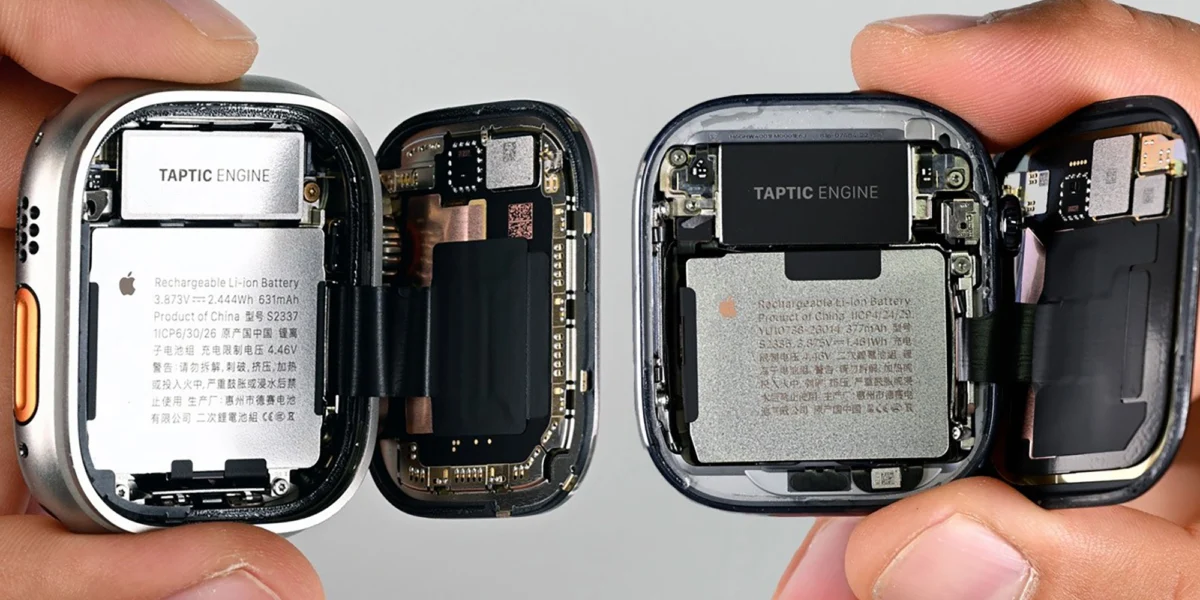
The Apple Watch Ultra 4, positioned as the flagship for outdoor enthusiasts and professional athletes, presents a familiar internal landscape to those who have studied its predecessors. During the teardown, iFixit technician Shahram Mokhtari utilized a specialized metal pick to breach the device’s display, a process that requires precise heat application to soften the industrial-grade adhesive securing the screen to the chassis.
Once the display is lifted, the internal architecture reveals a 2.444 Wh battery, a modest capacity increase compared to the 2.313 Wh cell found in the Ultra 3. Despite the slight uptick in power storage, the fundamental repairability challenge remains unchanged: the display must be removed to access the power source. Furthermore, while the four external screws on the underside of the casing might suggest modular access, iFixit confirmed that these fasteners are primarily intended for reaching the sensor array and the S11 system-in-package (SiP) chip, rather than providing entry to the primary internal components.
The necessity of removing the display—a fragile and costly component—creates a significant barrier for independent repair shops and consumers alike. The risk of damaging the delicate flex cables connecting the display to the logic board remains high during the opening process. Consequently, the Ultra 4 has received a 4/10 repairability score, mirroring the rating assigned to the previous generation. This consistency suggests that Apple’s design philosophy for its flagship watch has reached a plateau, prioritizing environmental sealing and durability over the modularity required for third-party repairs.
Incremental Improvements in the Apple Watch Series 12
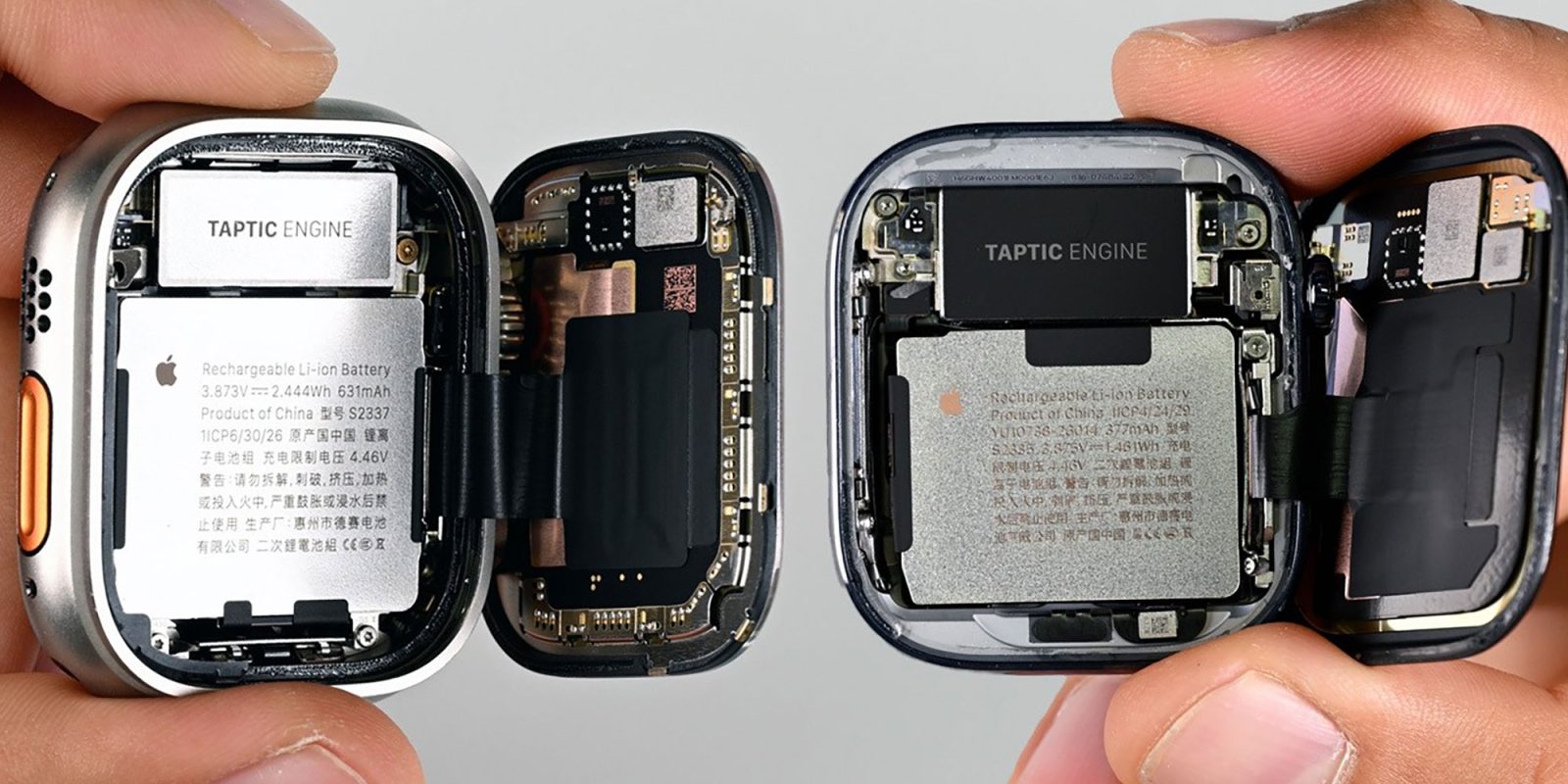
In contrast to the static nature of the Ultra 4, the standard Apple Watch Series 12 demonstrates a minor shift in internal assembly strategy. The teardown uncovered the inclusion of stretch-release adhesive and a dedicated pull tab for the battery, a welcome modification for anyone tasked with replacing the 1.461 Wh power cell—which is, again, slightly larger than the 1.403 Wh battery found in the 46mm Series 11.
However, this improvement is tempered by the fact that the Series 12 maintains the same top-down entry requirement as the rest of the lineup. The internal tolerances in this year’s base model are notably tighter than those observed in the Ultra 4. Mokhtari noted that the mechanical resistance encountered when attempting to separate the display from the casing was high enough to warrant caution, as the force required to pry the screen open creates a genuine risk of physical damage to the display panel.
Another notable shift in the Series 12 is the replacement of the ZIF (Zero Insertion Force) connector and associated adhesive tape used in previous iterations. Apple has transitioned to a more robust press connector for the display. While this likely improves manufacturing efficiency and signal reliability, it introduces a new dependency: replacing the display now necessitates the removal and replacement of the battery as a prerequisite. While this may streamline the factory assembly line, it adds a layer of complexity for technicians, effectively ensuring that a simple screen replacement becomes a multi-step, battery-involved repair.
Comparative Analysis and Industry Benchmarks
The 4/10 score awarded to both the Series 12 and the Ultra 4 highlights a widening gap between Apple’s wearable design language and the broader consumer electronics market. When viewed against competitors, such as the Google Pixel Watch 5, the disparity becomes pronounced. The Pixel Watch 5 recently earned a 9/10 repairability score from iFixit, a feat accomplished by utilizing a design that allows the display to be removed via two standard Torx screws and a simple gasket. Furthermore, the Pixel Watch’s battery can be accessed and replaced without navigating through complex adhesive layers.

This divergence in design strategy raises questions about the industry’s trajectory regarding the "Right to Repair." While Apple has made significant strides in providing official repair manuals and genuine parts for its iPhone and Mac product lines, the Apple Watch remains one of the most challenging devices to service in the company’s ecosystem. The primary obstacle is not a lack of availability of components, but the physical design constraints that make non-destructive entry nearly impossible for the average user or small-scale repair shop.
The Broader Implications of Repairability
The implications of these findings extend beyond the simple scorecards issued by repair advocates. For consumers, the low repairability score of the Apple Watch series means that the device remains essentially a "disposable" product once the battery degrades or the screen cracks. Given that the battery is a consumable component with a finite number of charge cycles, its integration into the heart of the device’s sealed architecture effectively dictates the lifespan of the watch.
From an environmental perspective, the inability to easily replace individual components contributes to electronic waste, as many users may opt to purchase a new device rather than pay for a service fee that often approaches the cost of a replacement unit. Apple has long argued that its proprietary, highly integrated designs are necessary to achieve the waterproofing, durability, and compact size that users expect from a wearable device. Critics, however, argue that the technology exists to marry high-end performance with modularity, pointing to the shift in smartphone design—where manufacturers are increasingly returning to easier-to-remove batteries due to legislative pressure in regions like the European Union.
Chronology of Apple Watch Evolution
The evolution of the Apple Watch has been marked by a constant trade-off between performance and miniaturization. Since the introduction of the original Apple Watch in 2015, the series has moved from a rudimentary health tracker to a standalone communications and medical diagnostic tool. Each iteration has brought more sophisticated sensors, faster processors, and larger batteries, all packed into a chassis that has barely grown in external dimensions.

- 2015–2018: The early years focused on stabilizing the form factor and establishing the S-series chip architecture. Repairability was virtually non-existent, as the devices were sealed units.
- 2019–2021: With the introduction of the Always-On display and the Series 5, 6, and 7, internal complexity increased exponentially. The addition of blood oxygen and ECG sensors necessitated even tighter integration, further limiting space for modular components.
- 2022–2024: The launch of the original Apple Watch Ultra signaled a pivot toward extreme durability. While the Ultra line offered better water resistance and a larger battery, the "glued-shut" design philosophy remained the standard.
- 2025–2026: The arrival of the Series 12 and Ultra 4 confirms that while Apple is willing to introduce minor tweaks—such as the pull-tab adhesive—the company remains committed to its current assembly methodology, prioritizing hardware protection over internal serviceability.
Official Responses and Future Outlook
Apple has not provided a specific comment regarding the iFixit teardown, maintaining its long-standing policy of not discussing internal design choices. However, in previous communications, the company has emphasized that its "Self Service Repair" program is a commitment to providing customers with access to genuine parts, tools, and manuals. While this program has expanded significantly, it has yet to meaningfully alter the fundamental hardware architecture of the Apple Watch.
Looking ahead, market analysts suggest that the pressure on Apple to improve repairability will likely increase. Legislative bodies in the United States and the European Union are increasingly scrutinizing the "sealed-in" nature of modern electronics. If regulatory requirements for battery removability and modularity become more stringent, future generations of the Apple Watch may be forced to abandon the current adhesive-heavy design.
For now, the Apple Watch Series 12 and Ultra 4 represent the pinnacle of current wearable technology, offering users unparalleled connectivity and health insights. However, the iFixit teardown serves as a stark reminder that this functionality comes at a price. The devices are triumphs of engineering miniaturization, but they are also testaments to a design philosophy that, for the moment, keeps the inner workings of the world’s most popular watch firmly out of reach for the consumer. As the industry continues to evolve, the tug-of-war between sleek, integrated hardware and sustainable, repairable design will likely remain a central narrative in the lifecycle of every new Apple release.