



The modern automotive landscape has long been tethered to the smartphone. For over a decade, drivers wishing to access their personal media libraries, podcasts, and curated playlists have relied on mirroring technologies like Apple CarPlay and Android Auto. While these systems revolutionized in-car entertainment by projecting mobile interfaces onto dashboard displays, they inherently introduced friction: tangled cables, drained phone batteries, audio compression artifacts, and the constant dependency on a mobile device being physically present and paired.
Addressing these limitations head-on, streaming giant Spotify has officially launched its first-ever fully native in-car application. Designed to operate independently of a smartphone, the new application runs directly on the vehicle’s internal operating system. However, in a strategic rollout that underscores the complex partnerships defining modern automotive software, the feature debuts exclusively for owners of select Audi models equipped with Android Automotive OS.

This development marks a pivotal shift in how media companies approach the connected vehicle ecosystem. By cutting the cord between the dashboard and the pocket, Spotify and Audi are pointing toward a future where the automobile functions less like an accessory to a smartphone and more like an independent, standalone smart device.
Understanding the Tech: Native Apps Versus Smartphone Projections
To appreciate the significance of Spotify’s native application, one must understand the technical distinction between smartphone projection systems and native in-car operating systems.
For years, Android Auto and Apple CarPlay have served as the intermediaries between a driver’s phone and the car. When a user connects their device via USB or Bluetooth, the phone does the heavy lifting—running the applications, processing data, and rendering the user interface—before projecting a simplified, driver-safe version onto the dashboard screen. While convenient, this architecture limits deep hardware integration and often results in clunky performance if the phone experiences connectivity drops, receives a phone call, or runs out of battery.

By contrast, Android Automotive OS (AAOS)—not to be confused with Android Auto—is a complete, standalone operating system built directly into the vehicle’s hardware. Developed by Google in collaboration with various automakers, AAOS powers the car’s entire infotainment infrastructure natively. Applications built for AAOS, such as Spotify’s new software, are downloaded directly onto the vehicle’s internal storage and executed by the car’s central processing unit.
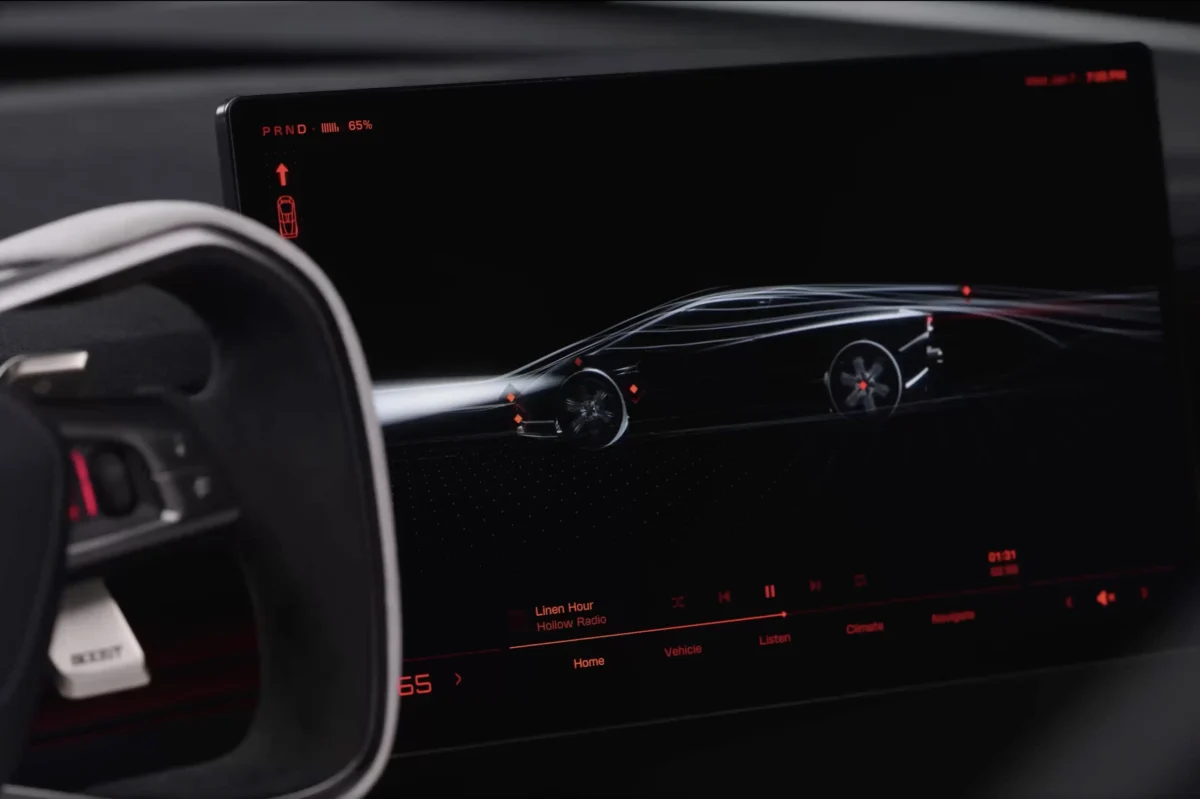
Co-developed closely with Audi and its automotive software subsidiary, Cariad, Spotify’s native application leverages this deep system integration. Because it is not bound by the rigid formatting rules and bandwidth constraints of smartphone projection protocols, Spotify was able to design a completely customized user interface tailored specifically to the dimensions, touch-response times, and aesthetic guidelines of Audi’s dashboard architecture.
The Rollout and Vehicle Compatibility
The rollout of the native Spotify application began in October, marking a major milestone for in-car digital services. The app is available as a complimentary download through the native Audi Application Store across 47 global markets.

Compatibility at launch is tailored toward Audi’s newest lineup. Drivers of 2026 and newer models—including the all-electric Q6 e-tron and A6 e-tron, as well as internal combustion and hybrid models like the Q5, A5, and A6—are the first to receive access. Audi has confirmed that the rollout will soon expand to include higher-tier models such as the Q7 and Q9. Furthermore, industry analysts anticipate that other automotive brands utilizing Android Automotive OS will gain access to the native Spotify app in the subsequent product cycles slated for next year.
The application accommodates all tiers of the Spotify ecosystem. Whether a user maintains a free, ad-supported account or subscribes to Spotify Premium, the core catalog of music, audiobooks, and podcasts is accessible. Initial setup is streamlined for safety and convenience: drivers need only sign in once by scanning a dynamic QR code displayed on the screen using their smartphone camera, or by entering a secure pairing code. Once authenticated, the vehicle remembers the account credentials indefinitely.
Features and Functionality: Driving vs. Parked Experience
Spotify reports that its global user base consumes more than 3 billion hours of audio content inside vehicles every month. Recognizing this massive captive audience, the streaming service has packed the native app with features designed to optimize both safety and entertainment.

A standout benefit of the native architecture is persistence of state. Unlike smartphone projection, where unplugging the device or shutting down the car frequently resets media queues or forces a reload, Spotify on Android Automotive OS remembers the exact playback position down to the second. When the driver re-enters the vehicle and starts the ignition, audio resumes seamlessly from where it left off.
To comply with stringent international safety regulations regarding driver distraction, the application dynamically alters its interface depending on the vehicle’s motion status:
- While Driving: The central dashboard display restricts access to moving visuals to prevent cognitive and visual distraction. Video podcasts and music videos are hidden from the primary screen. However, core audio functions remain fully operational. Drivers can utilize native voice commands via the "Hey Audi" assistant to search for tracks, adjust volume, or change playlists without taking their hands off the steering wheel. Additionally, Spotify’s AI DJ—the personalized algorithmic guide that mixes music with commentary tailored to user listening habits—remains fully functional.
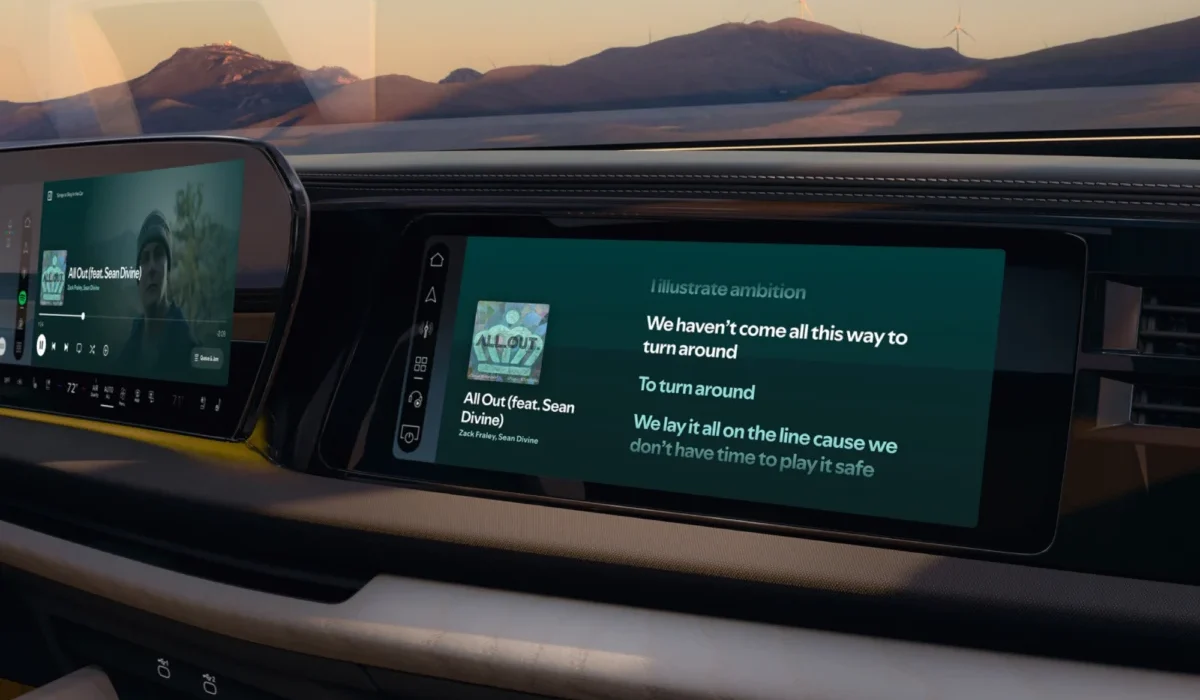
- While Parked or Charging: When the vehicle is stationary—a particularly common scenario for owners of electric vehicles like the Q6 e-tron while plugged into public charging stations—the restrictions lift. The main display unlocks full video playback capabilities, allowing occupants to watch video podcasts and music videos accompanied by real-time synchronized lyrics.
Additionally, Audi’s modern interior design often incorporates dedicated front-passenger displays. Where fitted, these passenger screens can continue to display video content and lyrics even while the car is in motion, ensuring that front-seat passengers remain entertained without compromising the driver’s focus. Passengers can also instantly join a "Spotify Jam" session—a collaborative listening queue—by simply scanning a QR code displayed on the vehicle’s screen. According to internal Spotify statistics, approximately half of all collaborative Jams already originate within automotive environments, making this feature a natural addition.

Industry Implications and the Shift Toward Software-Defined Vehicles
Spotify’s exclusive launch with Audi is much more than a simple software update; it represents a crucial milestone in the evolution of the software-defined vehicle (SDV). For decades, automotive interiors were defined by hardware—analog dials, physical buttons, and closed, proprietary entertainment systems that aged poorly over time.
Today, consumers expect their cars to update and evolve just like their smartphones. Automakers are increasingly transitioning to flexible, Android-based operating systems to retain control over the user experience while allowing third-party tech giants to deploy sophisticated services.
By bypassing the smartphone entirely, Spotify and Audi are solving several long-standing pain points for consumers. The elimination of physical cables reduces clutter and wear-and-tear on vehicle USB ports. Furthermore, streaming data directly through the vehicle’s embedded telematics module—often supported by high-speed 5G data connections built into modern luxury cars—ensures higher audio fidelity and more reliable streaming stability than tethered mobile connections, which are susceptible to cellular handover issues in rural or congested urban areas.

However, the exclusive nature of the launch also highlights emerging competitive fault lines in the automotive tech sector. As automakers increasingly partner with specific tech ecosystems (such as Google’s Android Automotive OS versus Apple’s deeply integrated next-generation CarPlay), hardware choices are beginning to dictate software availability. Audi’s early adoption positions the brand at the cutting edge of in-car digital luxury, placing pressure on rival German and global automakers to accelerate their own native app store integrations.
As the automotive industry looks toward the remainder of the decade, the boundary between consumer electronics and transportation continues to dissolve. With Spotify proving that high-end streaming apps can run natively, securely, and seamlessly on vehicle hardware without the crutch of a smartphone, the modern dashboard is well on its way to becoming the ultimate connected screen.