





The backcountry water purification landscape has long been defined by a constant compromise between filtration capability, ease of use, and equipment weight. For decades, outdoor enthusiasts traversing remote trails, high-altitude alpine passes, and international trekking routes have relied on hollow-fiber membrane filters, chemical tablets, or UV sterilizers to render questionable water potable. Each traditional method carries distinct operational vulnerabilities: hollow-fiber filters can rupture if subjected to sub-freezing temperatures, chemical treatments demand lengthy waiting periods and often leave behind an unpalatable chemical taste, and UV purifiers depend entirely on battery life and clear water turbidity.
Enter the Grayl GeoPress Water Filter and Purifier Bottle, a heavy-duty contender engineered to bridge the performance gap between standard backpacking filters and institutional-grade purification systems. Designed for extreme environments where water sources may be compromised by viral pathogens, heavy metals, industrial runoff, and microplastics, the GeoPress has established itself as an indispensable piece of kit for modern adventurers. As backcountry exploration surges and public water sources face escalating environmental pressures, the demand for robust, foolproof filtration devices has never been more critical.
Unpacking the Technology: How the GeoPress Operates
At the core of the Grayl GeoPress is an advanced electrophilic filtration mechanism that operates entirely differently from the microscopic sieves found in traditional squeeze filters. While standard filters physically block particles larger than their pore size—typically failing to capture microscopic viral pathogens—the GeoPress utilizes an ion-exchange matrix combined with powdered activated carbon.
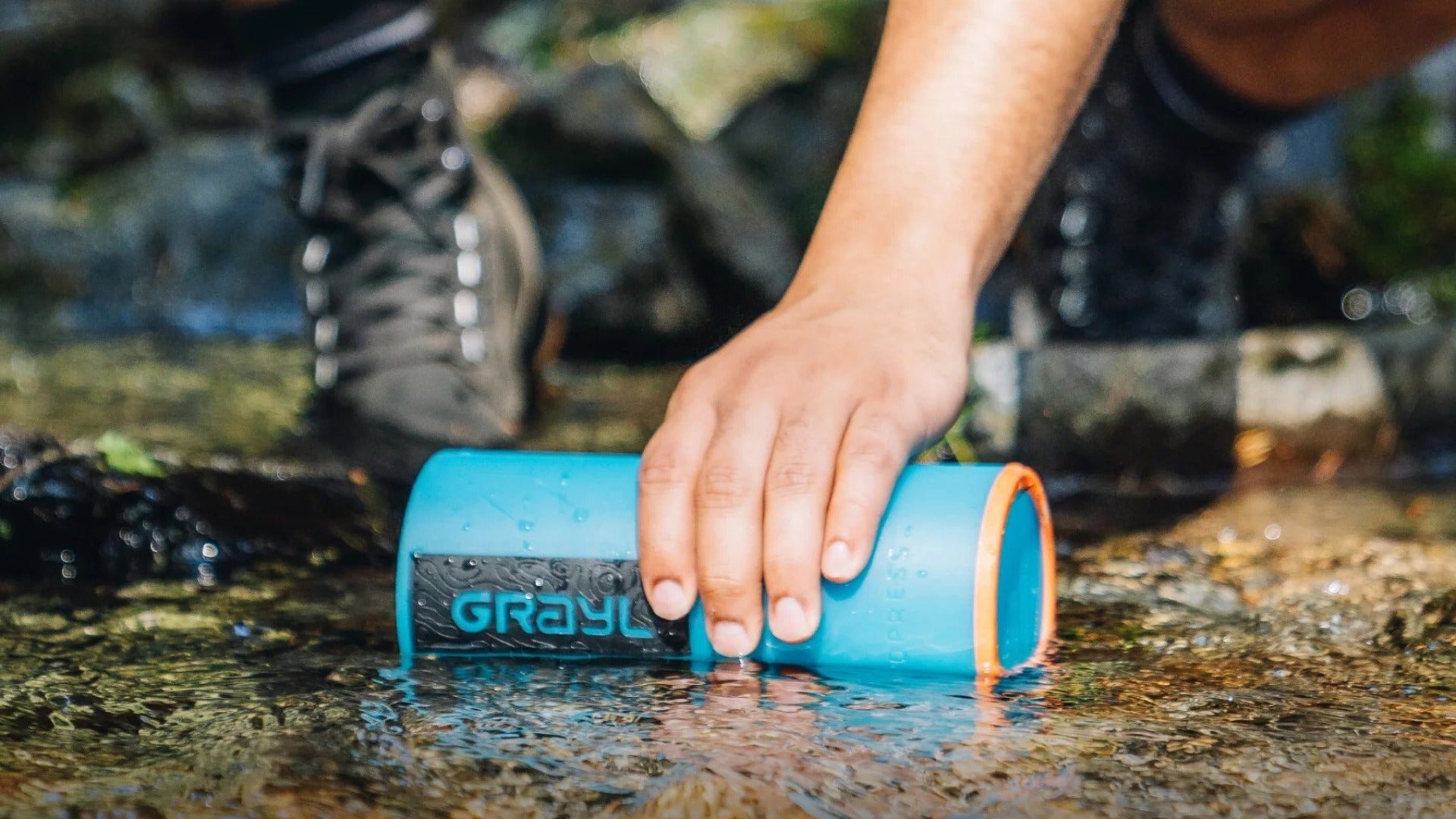
When a user fills the rugged 24-ounce outer container with untreated water, places the inner press module into the top, and applies downward body weight, the water is forced rapidly through the proprietary filter media. This mechanical pressing action takes roughly eight seconds, utilizing the user’s body weight to generate the necessary pressure.
The resulting output is not merely filtered water, but purified water that meets or exceeds the United States Environmental Protection Agency’s (EPA) Guide Standard for Testing Microbiological Purifiers. The device effectively removes 99.9999% of bacteria, such as E. coli and salmonella; 99.999% of protozoan cysts, including Giardia and Cryptosporidium; and 99.99% of waterborne viruses, such as rotavirus, hepatitis A, and norovirus. Additionally, the activated carbon core adsorbs volatile organic compounds (VOCs), hazardous chemicals like benzene, heavy metals including lead and arsenic, and particulate microplastics that increasingly plague remote waterways worldwide.
Evolution of the Design: Addressing User Feedback
The development of the GeoPress represents years of iterative engineering by Grayl, responding directly to field reports and consumer critiques of earlier models, such as the company’s original Ultralight purifier. Early iterations of press-style purifiers gained a loyal following for their rapid output and viral protection capabilities, but testers frequently reported hand fatigue, soreness, and physical discomfort when forcing the press module down through cold, dense, or heavily silted water.
To resolve these ergonomic shortcomings, Grayl redesigned the top handle and incorporated a wide, soft-touch ergonomic comfort pad on the inner press plate. This structural modification distributes downward pressure more evenly across the palms, significantly reducing hand strain and making repetitive water purification manageable even for hikers experiencing fatigue after long-mileage days. Furthermore, the outer cup was reinforced with a rugged, slip-resistant TPE (Thermoplastic Elastomer) grip, ensuring a secure hold when handling the bottle with wet or gloved hands near fast-moving rivers or freezing lakes.
Cold-Weather Resilience and Durability Testing
One of the most significant engineering triumphs of the Grayl GeoPress—and a primary selling point for mountaineers and winter campers—is its exceptional freeze tolerance. Traditional hollow-fiber membrane filters, such as the ubiquitous Sawyer Squeeze or Katadyn BeFree, feature microscopic straw-like tubes that trap water. If the residual water inside these fibers freezes, the expanding ice crystals rupture the delicate membrane walls, rendering the filter dangerously compromised and visually deceptive to the user. Consequently, winter backpackers have historically been forced to sleep with their water filters inside their sleeping bags to prevent catastrophic freezing.
The Grayl GeoPress shatters this operational limitation. Because its filtration medium is a solid, compressed ion-exchange block rather than a fragile hollow-fiber bundle, the GeoPress can survive being frozen solid up to two times without losing its structural integrity or pathogen-removal efficacy. Field testing in sub-zero alpine environments confirms that even if a frozen GeoPress is inadvertently left in an unheated tent overnight, it remains functional once thawed, drastically simplifying winter logistics and providing an essential safety margin for cold-weather expeditions.
Weight Penalties and Trade-Offs in the Backpacker Market
Despite its impressive array of technical capabilities, the Grayl GeoPress is not without notable drawbacks, chief among them being its physical weight and packed size. Tipping the scale at approximately 15.5 ounces (nearly a full pound) when empty and dry, the GeoPress is substantially heavier than lightweight ultralight alternatives. For comparison, a standard hollow-fiber squeeze filter weighs roughly two to three ounces, making the Grayl nearly five to six times heavier than competing systems.
For ultra-lightweight backpackers and thru-hikers operating on a strict base-weight budget, this heavy footprint can be a difficult pill to swallow. Furthermore, the GeoPress occupies considerable volume inside a backpack’s side pockets. However, industry analysts note that the target demographic for the GeoPress extends far beyond conventional ultralight backpackers. International travelers navigating regions with compromised municipal water infrastructure, overlanders exploring remote desert tracks, and wilderness paddlers encountering heavy agricultural runoff find the peace of mind offered by viral and chemical purification well worth the marginal weight penalty.
Broader Implications for Backpacker Health and Safety
The necessity for robust backcountry water filtration has taken on renewed urgency in recent years, driven in large part by shifting environmental conditions and documented disease outbreaks along major trails. A prominent example includes recurring norovirus outbreaks along high-traffic routes like the Appalachian Trail and the Pacific Crest Trail, where highly contagious pathogens spread rapidly among communal shelters, water sources, and basecamps.
Standard backcountry filters that trap bacteria and protozoa are fundamentally incapable of filtering out viruses, leaving hikers vulnerable to waterborne viral transmission if sources are contaminated by human or animal fecal matter. The inclusion of certified viral purification in a consumer-friendly, hand-press bottle format represents a significant advancement in preventative backcountry health. By placing hospital-grade purification capabilities into a portable, rugged vessel, devices like the GeoPress help mitigate public health crises in remote areas where medical evacuation can take days.
Economic and Environmental Sustainability Factors
Beyond performance metrics, the operational lifecycle of the GeoPress introduces important economic and environmental considerations. Each replacement filter cartridge is rated for approximately 350 cycles, translating to 65 gallons (250 liters) of water purification. While replacement cartridges represent an ongoing maintenance cost for consumers, the cumulative reduction in single-use plastic bottle waste is profound.
A single GeoPress cartridge displaces roughly 300 standard 16.9-ounce single-use plastic water bottles. For international travelers and expedition groups, this significantly curtails the logistical burden of purchasing bottled water or managing plastic waste disposal in remote or developing regions lacking robust recycling infrastructure.
Conclusion: Weighing Utility Against Specific Adventure Demands
The Grayl GeoPress Water Filter and Purifier Bottle occupies a specialized, highly respected niche in the outdoor gear market. It is neither the lightest nor the cheapest option available to hikers, yet it delivers an unmatched combination of comprehensive pathogen defense—shielding users from bacteria, protozoa, and lethal viruses alike—alongside heavy metal removal, chemical adsorption, and cold-weather resilience.
For weekend warriors sticking to well-managed domestic trails with low viral risks, a lighter hollow-fiber filter may remain the optimal choice. However, for those venturing into unfamiliar international destinations, winter wilderness environments, or regions impacted by severe environmental degradation, the GeoPress stands as a resilient, uncompromising tool designed to turn the most challenging water sources into safe, potable hydration.