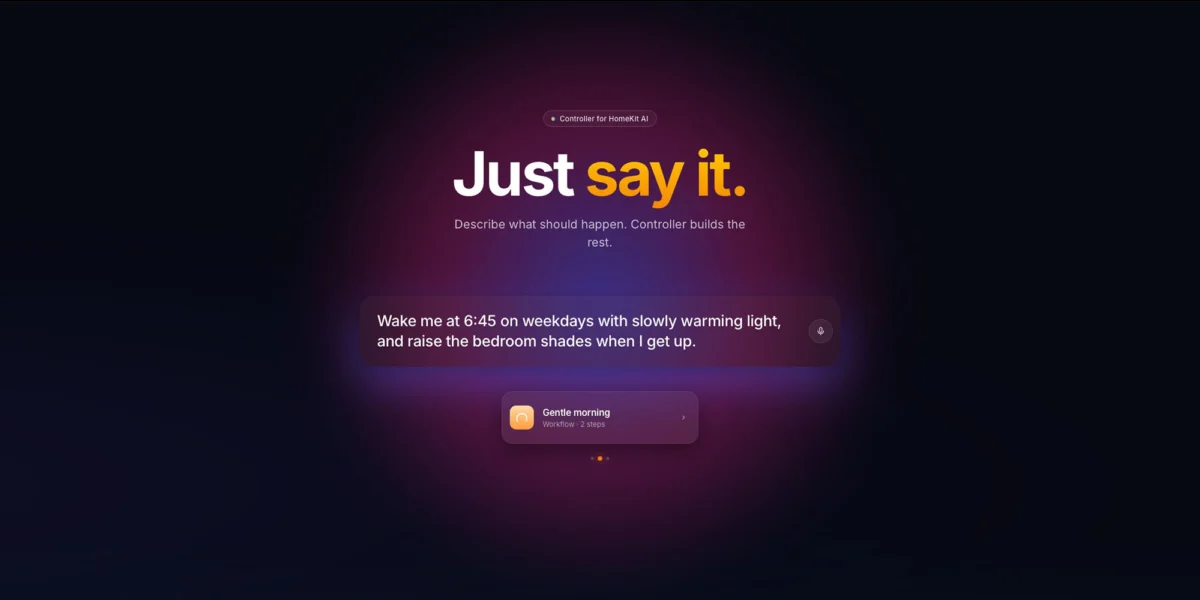
The Controller for HomeKit application, a prominent third-party utility designed to bridge the gap between complex Apple HomeKit configurations and user accessibility, has officially integrated a new artificial intelligence-powered automation engine. The feature, marketed under the tagline "Just say it," represents a significant shift in how users manage smart home ecosystems, moving away from manual logic-building toward natural language processing. By allowing users to describe desired outcomes in plain English, the app seeks to democratize home automation, which has historically been restricted by the technical hurdles of the Apple Home app’s native interface.
The Evolution of Smart Home Automation
Apple’s HomeKit framework has long been praised for its security and privacy-centric approach to the Internet of Things (IoT). However, users have frequently criticized the native Home app for its limitations regarding complex, multi-layered automation sequences. Before the advent of AI-assisted tools, users were required to manually toggle specific triggers, conditions, and actions within a rigid interface. This often resulted in "automation fatigue," where the complexity of managing dozens of smart devices discouraged users from setting up sophisticated routines.
Controller for HomeKit has established itself as the premier "power user" alternative to the native Apple Home app. While the native app focuses on simplicity, Controller has historically provided deeper access to HomeKit’s underlying APIs, allowing for advanced workflows and device diagnostics. The integration of AI is the latest iteration of this mission, aimed at simplifying the logic-building process that often baffles casual users.
How the AI Engine Functions
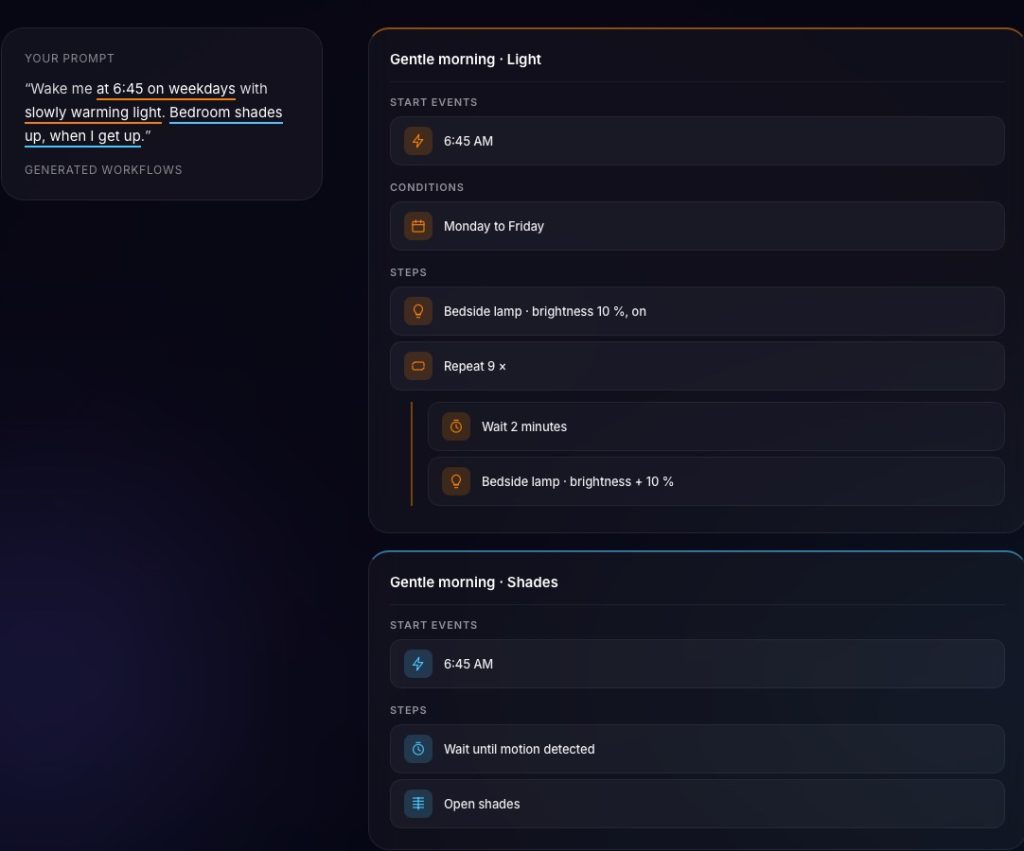
The core technology behind this update utilizes large language models to interpret user intent and map that intent to specific HomeKit actions, scenes, and conditional workflows. When a user inputs a command—such as "Wake me at 6:45 on weekdays with slowly warming light"—the AI analyzes the components of the request: the time trigger (6:45 AM), the frequency (weekdays), the device (smart lights), and the state change (slowly warming brightness).
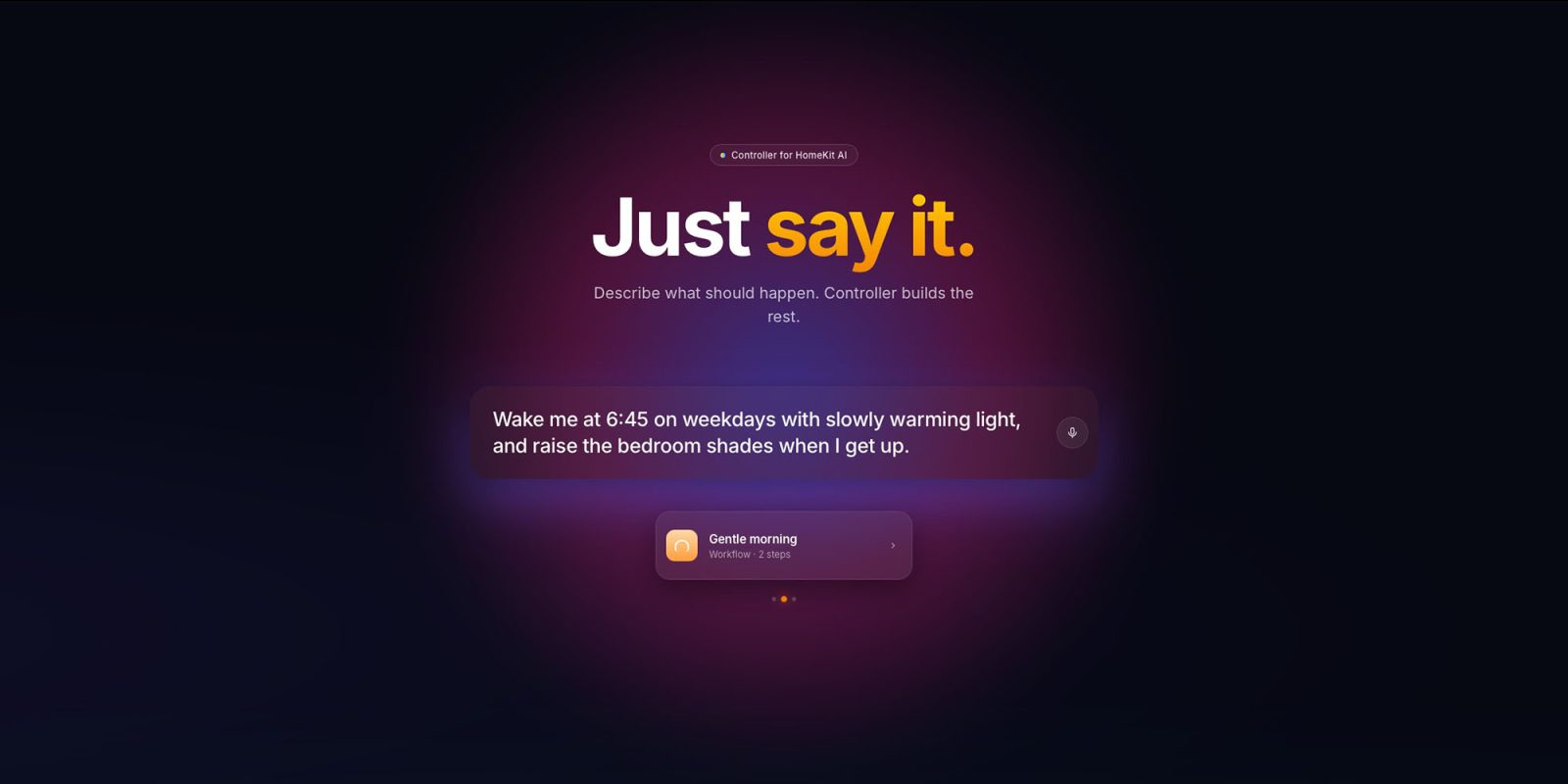
The engine then translates this into a series of HomeKit-compatible instructions. In a traditional setup, this would require the user to create a dedicated scene, set up an automation trigger for the time, select the accessory, and manually adjust the brightness settings—a process that could take several minutes. With the AI feature, the app performs the heavy lifting, generating the necessary architecture in seconds.
The system is versatile, handling a variety of conditional logic, such as:
- Sequential Automation: "If I switch off the living room lights, turn on the bedroom fan."
- Conditional Logic: "If someone comes home after midnight, turn only the hallway light to 15%."
- Scene Orchestration: "Movie night: dim the living room lights to 20% and close the curtains."
Chronology of Smart Home Accessibility
The development of AI in the smart home sector has followed a steady, yet rapid, trajectory:
- 2014: Apple announces HomeKit, providing a standardized protocol for home automation.
- 2018: Controller for HomeKit launches, offering advanced tools for users frustrated by the lack of detail in Apple’s native interface.
- 2023: The rise of generative AI models sparks a wave of integration across productivity software, leading developers to look for ways to apply LLMs to local device control.
- June 2026: Controller for HomeKit introduces its AI-driven natural language automation builder, marking one of the first major implementations of LLM-based logic creation for consumer smart home platforms.
Data-Driven Implications for Home Automation
The adoption of AI in home management is expected to have a tangible impact on device utilization rates. Industry data suggests that a significant percentage of smart devices purchased by consumers remain underutilized because users find the configuration process daunting. By removing the technical barrier to entry, developers hope to increase the "activation rate" of smart devices—the percentage of purchased products that are actually integrated into daily automated routines.
Financial barriers, however, remain a factor. Controller for HomeKit operates on a tiered subscription model, with the "Essentials" tier priced at $40 annually and the "Plus" tier at $80 annually. While a seven-day free trial is available to allow users to test the AI capabilities, the cost of the subscription adds a recurring expense to an already expensive smart home ecosystem. For many, the value proposition rests on whether the time saved by the AI automation builder outweighs the yearly subscription cost.
Privacy and Local Processing Concerns
A critical aspect of any AI integration within the smart home is data privacy. Because HomeKit is built on a foundation of local control—meaning devices communicate within the home rather than via the cloud—any AI implementation must be carefully scrutinized.
While the developer has not released full technical documentation on the data flow, the industry standard for such tools involves sending the user’s natural language prompt to a cloud-based LLM, which then returns the structured HomeKit command code. The actual execution of the scene remains local to the user’s Home Hub (such as an Apple TV or HomePod). This hybrid approach balances the processing power of modern AI with the security constraints of the HomeKit ecosystem. Nevertheless, privacy advocates continue to emphasize the importance of ensuring that home usage patterns are not being stored or utilized for training third-party models without explicit user consent.
Broader Industry Impact
The integration of AI into Controller for HomeKit is reflective of a wider trend in software development: the "Natural Language Interface" (NLI). As users become accustomed to speaking to AI assistants, the expectation for their physical environments to react to natural language is increasing.
Competitors in the smart home space, including Samsung’s SmartThings and Google Home, have also begun experimenting with generative AI. Google, in particular, has leaned heavily into using its Gemini models to help users troubleshoot and create automations via its "Help Me Script" feature. The move by the developers of Controller for HomeKit places them at the forefront of the Apple-centric smart home market, potentially forcing Apple to consider integrating similar features directly into the iOS Home app in future software iterations.
Future Outlook and User Feedback
Early adopters and beta testers have noted that while the AI is highly effective for standard home configurations, it occasionally requires clarification when dealing with complex, overlapping automations. For example, if a user has multiple devices with similar names, the AI may require a follow-up prompt to clarify which specific accessory is being targeted.

The developer has stated that they intend to refine the model based on user feedback, aiming to reduce the frequency of errors as more people utilize the feature. Future updates are expected to include better integration with external sensors—such as air quality monitors and water leak detectors—allowing users to create even more complex safety and environmental routines using simple voice or text prompts.
As the smart home industry shifts toward more intelligent, intuitive interfaces, tools like Controller for HomeKit serve as a bridge between the current era of rigid automation and a future where the home functions as a responsive, unified entity. While the subscription model may limit its reach to dedicated enthusiasts, the utility provided by the "Just say it" feature represents a significant milestone in the evolution of residential technology. For the average user, the ability to simply describe a desired environment and have it manifest in seconds is the ultimate goal of the connected home—a goal that is finally becoming a reality.