The military helmet bag has quietly evolved over the decades into one of the most enduring and influential silhouettes in modern menswear and everyday carry culture. Characterized by its distinctive twin front pockets, a spacious boxy central compartment, and dual top grab handles, the design originally served a strictly utilitarian function on military airfields. However, the transition of the helmet bag from standard-issue aviation gear to a coveted streetwear staple highlights a broader phenomenon: the successful crossover of military-spec functionality into civilian fashion. This transformation was accelerated by popular culture milestones, notably the 1986 cinematic release of Top Gun, and refined by master luggage makers such as Porter-Yoshida & Co., ultimately cementing its status as one of the most versatile tote styles in the modern carry universe.
Chronology of a Military Icon
The genesis of the helmet bag dates back to the mid-20th century, coinciding with the rapid evolution of jet-age aviation and the U.S. Air Force. As fighter jets became more advanced, flight gear—particularly the protective helmets worn by pilots—required specialized transport and storage solutions to protect critical electronics, visors, and communication equipment from damage.
In the late 1940s and early 1950s, the U.S. military introduced specialized soft-sided bags designed specifically to cradle aviation helmets. Early iterations were crafted from heavy-duty canvas, but as synthetic materials advanced, the military transitioned to high-tenacity nylon. By the introduction of the iconic MA-1 flight jacket era, the classic nylon helmet bag was firmly established. These bags featured a padded interior to cushion fragile visors, a durable top zipper, and two large, snap-and-Velcro-secured exterior pockets originally meant for oxygen masks, spare goggles, and navigation logs.
For decades, these bags remained strictly within the domain of military supply chains. They were issued to pilots, aircrew, and ground personnel, valued exclusively for their rugged durability and sheer capacity. That dynamic shifted dramatically in the mid-1980s. The release of the blockbuster film Top Gun in 1986 ignited a global fascination with military aviation aesthetics. Civilians began scouring military surplus stores for authentic flight jackets, trousers, and gear bags, recognizing the inherent aesthetic appeal of utilitarian military hardware.
Recognizing the shift in consumer demand, Japanese luggage titan Porter-Yoshida & Co. reinterpreted the silhouette for the urban environment. Drawing direct inspiration from the utilitarian DNA of the MA-1 flight jacket—utilizing its signature 100% nylon twill in sage green and black, complemented by a high-visibility rescue orange interior lining—Porter launched the famed Tanker series. This reimagining adapted the military aesthetic for daily civilian life, adding structural refinement, robust hardware, and a comfortable crossbody strap that transformed a specialized aviation sack into an ergonomic daily carry solution. In subsequent decades, brands ranging from high-end luxury fashion houses to accessible global retailers like Uniqlo have embraced the blueprint, proving the enduring relevance of the design.
Design Anatomy and Functional Utility
The enduring popularity of the helmet bag stems from its uncompromising design efficiency. Unlike traditional briefcases or standard unstructured totes, the helmet bag offers a unique intersection of structure, volume, and accessibility.
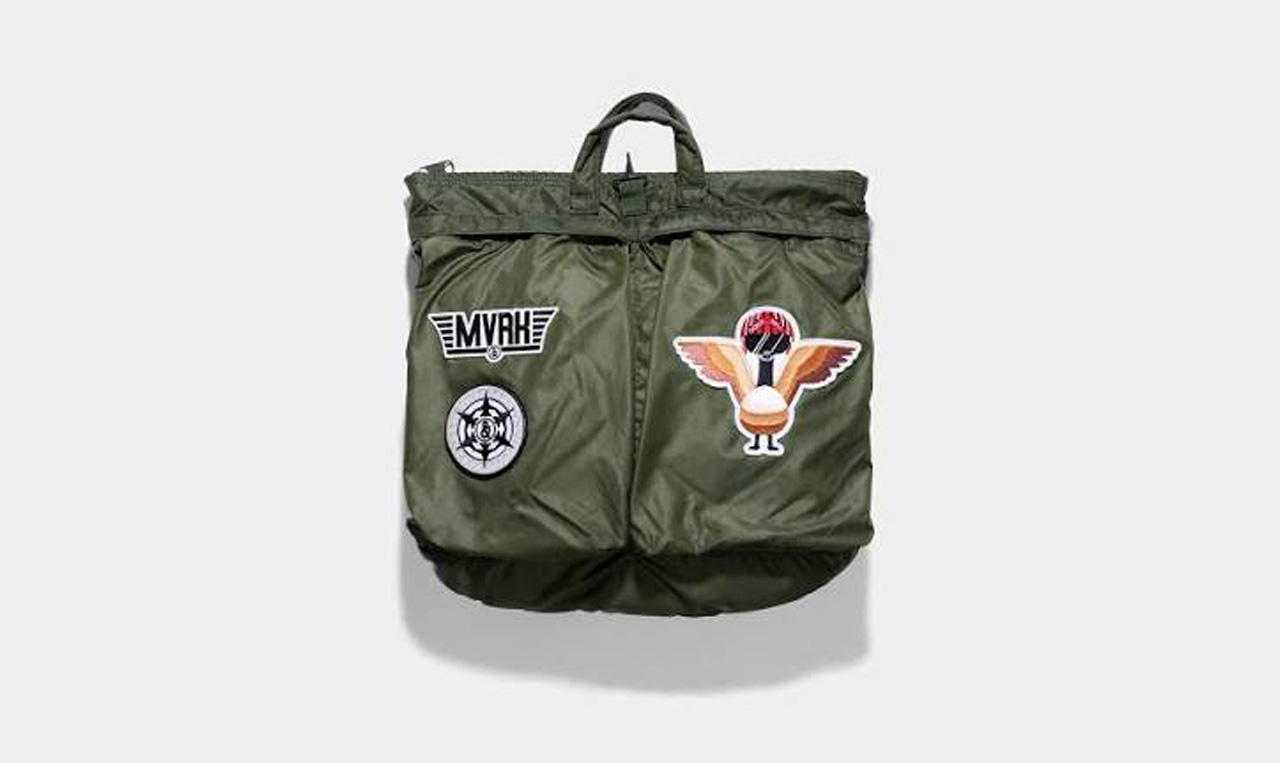
The standard military-spec layout typically measures approximately 19 by 19 inches, creating a square profile that naturally accommodates flat items such as documents and laptops, as well as bulkier gear. The two large, accordion-style exterior pockets provide intuitive organization for quick-access items, while the main compartment utilizes a heavy-duty zipper closure that opens wide for effortless packing and unpacking.
From an ergonomic perspective, the inclusion of dual grab handles allows the bag to be carried briefcase-style or clutched at the side, while the addition of D-rings on modern civilian iterations enables the attachment of a shoulder strap. This versatility makes the helmet bag uniquely suited for modern urban commuters, digital nomads, and creative professionals who require a bag that bridges the gap between formal and casual environments.
Industry Analysis and Market Implications
The sustained commercial viability of the helmet bag reflects a broader consumer preference for utilitarian, heritage-inspired design. In an era dominated by fast fashion and transient trends, items rooted in authentic military history offer consumers a narrative of durability, reliability, and timeless style.
Market analysts note that the crossover of military gear into mainstream fashion represents a resilient sector within the accessories industry. Brands that successfully marry historical authenticity with modern ergonomic improvements—such as integrated laptop compartments, weather-resistant coatings, and refined hardware—consistently capture market share among consumers who value both form and function. Furthermore, the minimalist architecture of the helmet bag provides a blank canvas for designers, allowing for continuous reinvention through collaborative limited-edition releases, sustainable fabric sourcing, and novel colorways.
Broader Cultural Impact
Beyond its commercial success, the helmet bag has played a significant role in shaping contemporary streetwear culture. Originating as a piece of life-saving aviation equipment, its journey to the runways of Paris, Tokyo, and New York underscores the fluid boundary between utility and style.
As urban environments evolve and the demands placed on everyday carry items continue to grow, the legacy of the military helmet bag remains secure. By maintaining the core principles of its military heritage—durability, accessibility, and unpretentious utility—the silhouette continues to resonate with new generations of users, ensuring that its place on the tarmac translates seamlessly to the pavement of the modern metropolis.