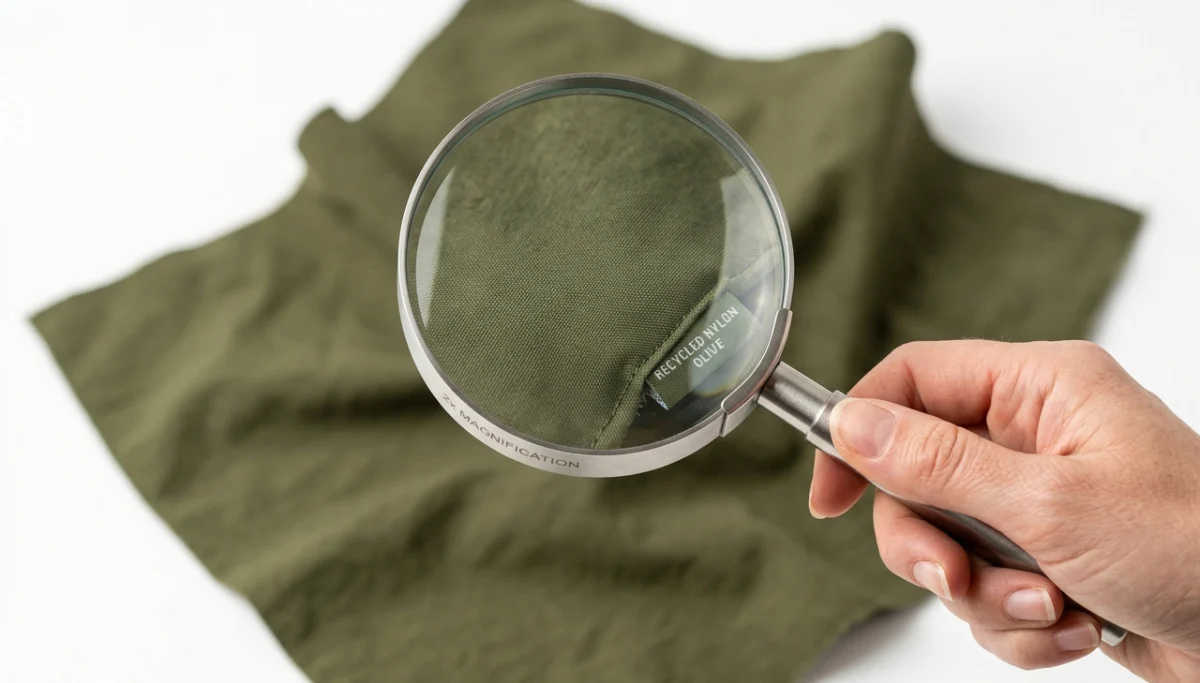
When consumers browse the specifications of a new backpack, travel duffel, or tactical gear pouch, few metrics command as much immediate attention—or are as frequently misunderstood—as denier. Often treated as a definitive grading scale for overall quality, a high denier rating is frequently assumed to guarantee superior durability, tear resistance, and longevity. However, material scientists, industrial designers, and textile engineers consistently emphasize that denier is merely a measure of linear mass density, not an absolute indicator of a fabric’s overall performance or resilience. In the complex landscape of modern gear engineering, a lower denier fabric, when engineered with the appropriate fiber chemistry and weave structure, can frequently outperform a heavier, high-denier alternative depending on the intended application.
To address widespread confusion across the consumer base, industry educational platforms have increasingly focused on demystifying textile specifications. Educational initiatives, such as recent instructional video releases detailing how to read and interpret technical fabrics, aim to bridge the knowledge gap between raw manufacturing specifications and consumer expectations. By breaking down the terminology that truly dictates material performance—ranging from tensile strength and weave density to chemical treatments and fiber composition—manufacturers and gear reviewers are shifting the narrative away from simple numbers toward holistic material evaluation.
Deconstructing Denier: The Mechanics of Yarn Weight
To understand why the common perception of denier is fundamentally flawed, one must examine the precise definition of the term. Originating from an old French coin used to measure silk fineness, denier (abbreviated as D) is technically defined as the mass in grams of 9,000 meters of a specific yarn or fiber. For instance, if 9,000 meters of a nylon filament weighs 500 grams, that yarn is rated at 500D.
Crucially, this measurement relates strictly to the thickness and weight of the individual strands used to weave the textile, rather than the intrinsic strength of the material itself. A 1000D nylon fabric utilizes substantially thicker individual yarns than a 500D fabric. Consequently, a 1000D weave is typically heavier, thicker, and more rigid, which lends it a robust tactile feel that consumers often equate with toughness.
Yet, thickness does not automatically translate to abrasion resistance or tear strength. The ultimate performance of a textile is dictated by a complex interplay of multiple variables, including the quality of the raw polymer, the denier of the yarn, the tightness of the weave (often measured in threads per inch), the twist of the fibers, and the application of surface coatings such as polyurethane (PU) or silicone.
The Evolution of Technical Fabrics in Gear Design
The history of luggage and tactical gear manufacturing reflects a continuous evolution in material science. For decades, heavy-duty military and outdoor equipment relied almost exclusively on high-denier natural fibers or early synthetic variants like heavy cotton canvas and thick nylon. As synthetic polymer technology advanced through the mid-to-late 20th century, materials like ballistic nylon and Cordura emerged as industry standards, fundamentally transforming the durability thresholds of consumer carry goods.
During the 1970s and 1980s, the adoption of high-tenacity nylon yarns allowed gear manufacturers to construct products capable of withstanding extreme physical abuse in industrial and military environments. In these eras, high denier ratings served as a reliable shorthand for heavy-duty construction because the underlying chemical engineering was relatively standardized.
However, the late 1990s and early 2000s introduced high-performance ultra-high-molecular-weight polyethylene (UHMWPE) fibers, such as Dyneema, alongside advanced aramid fibers like Kevlar. These materials completely disrupted traditional metrics. A fabric utilizing low-denier UHMWPE grid lines can exhibit a tensile strength that vastly exceeds traditional high-denier nylons while operating at a fraction of the weight. This paradigm shift exposed the limitations of relying on denier as a primary quality indicator.
Comparative Analysis: High Denier Versus Low Denier in Real-World Applications
When evaluating bag design, selecting the appropriate denier involves balancing competing priorities: weight, volume, abrasion resistance, and flexibility.
High-Denier Fabrics (500D to 1680D and above)
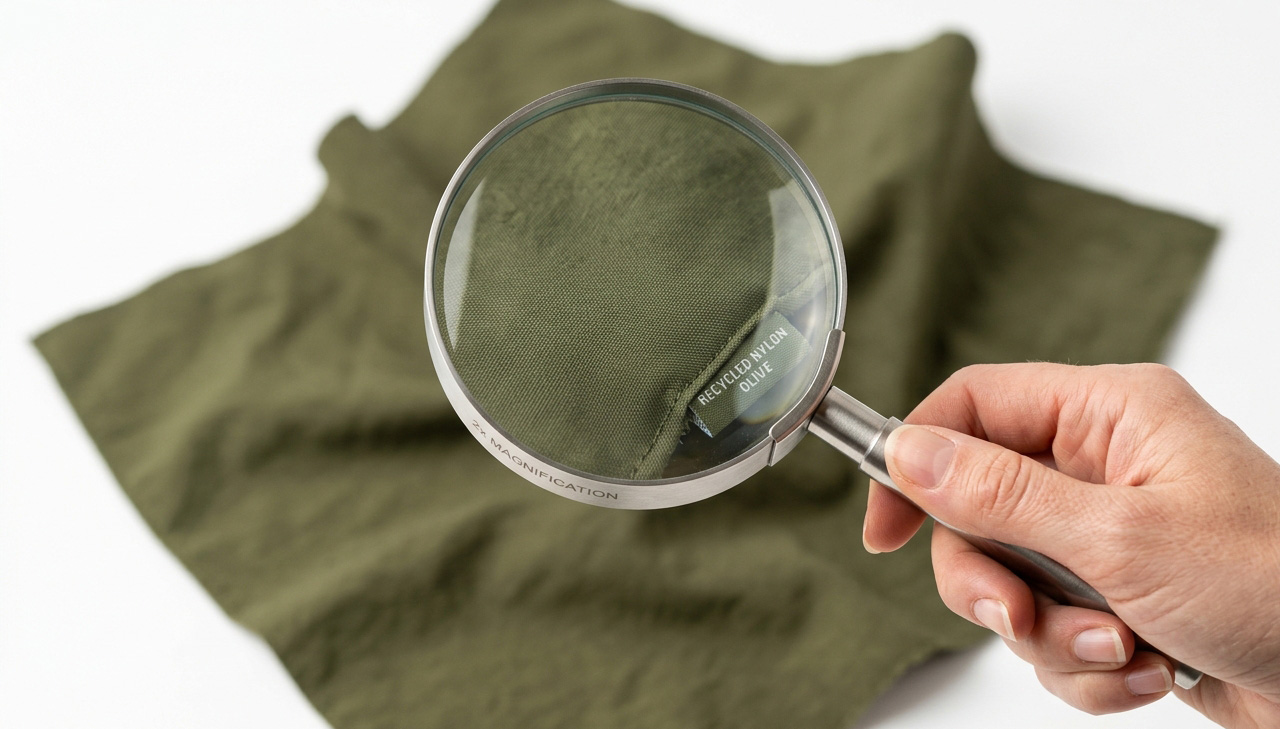
- Advantages: Exceptional resistance to localized abrasion and puncture; provides a rigid, structured aesthetic that helps bags maintain their shape when empty; highly durable against rough, abrasive surfaces like rock faces or concrete.
- Disadvantages: Significant weight penalty, which adds unnecessary mass to travel and everyday carry bags; absorbs more moisture unless heavily treated; can be overly stiff, making the bag difficult to compress or pack into tight spaces.
Low-Denier Fabrics (70D to 420D)
- Advantages: Substantial weight reduction, allowing for lighter overall pack designs; greater flexibility and pliability, enabling sleek, collapsible silhouettes; excellent strength-to-weight ratios when utilizing high-tenacity yarns or advanced weaves like ripstop.
- Disadvantages: May show surface wear or scuffing more readily under heavy industrial friction; generally offers less structural rigidity on its own, requiring internal framing or padding to maintain shape.
Industry Experts and Designer Perspectives
Leading figures in the technical carry industry have long advocated for a more nuanced approach to material specification. Industrial designers frequently point out that consumer preference for high numbers—driven by decades of marketing that equated "bigger" and "heavier" with "better"—forces brands to make compromises.
According to material engineering consultations within the technical apparel and bag manufacturing sectors, many brands utilize higher denier fabrics not necessarily because they are required for performance, but because they satisfy consumer bias. A customer purchasing a rugged outdoor backpack often expects a heavy, thick fabric; outfitting that same bag with a lighter, technologically superior 210D high-tenacity nylon might result in superior tear resistance and a lighter load, but the consumer may incorrectly perceive the product as flimsy.
Conversely, ultra-lightweight backpacking and urban minimalist brands have successfully educated their customer bases on the merits of advanced low-denier textiles. By utilizing high-tenacity nylon filaments woven in a ripstop pattern—where thicker reinforcement threads are interwoven at regular intervals in a grid pattern—these designers prevent small punctures from propagating into catastrophic tears, achieving exceptional durability without the traditional weight penalty.
The Importance of Weave and Fiber Chemistry
Beyond denier, understanding a technical fabric requires examining the chemical family of the fiber and the geometry of the weave. Nylon 6,6, for example, offers superior melting points, tensile strength, and abrasion resistance compared to standard nylon 6, though both may share the exact same denier rating.
Furthermore, the denier rating only describes the yarn before it is woven. The tightness of the weave—often quantified by warp and fill counts—determines how closely packed those yarns are. A loosely woven 1000D fabric can easily perform worse than a tightly woven 500D fabric, as loose yarns are more susceptible to shifting, snagging, and environmental degradation.
Coating technologies also play a critical role. Polyurethane (PU) coatings, durable water repellent (DWR) finishes, and silicone elastomer impregnations protect the underlying fibers from ultraviolet (UV) degradation, moisture absorption, and chemical breakdown. A high-denier fabric left untreated and exposed to intense sunlight will degrade far more rapidly than a properly treated, lower-denier counterpart engineered for UV resistance.
Broader Implications for Consumers and the Gear Market
As the technical carry market continues to expand, educational efforts regarding material science are becoming increasingly vital for discerning consumers. The shift away from oversimplified metrics like denier represents a maturing industry that values transparency, functional efficiency, and sustainability.
Manufacturing heavier fabrics requires more raw petroleum resources, consumes more energy during processing, and results in heavier end products that require more energy to transport. By utilizing advanced low-denier technical textiles where appropriate, manufacturers can reduce material consumption and improve user ergonomics without sacrificing durability.
Ultimately, evaluating a bag based on its fabric requires looking past a single specification. Consumers and designers alike must weigh the specific use case—whether it is urban commuting, technical mountaineering, or international travel—against the holistic profile of the material, encompassing fiber type, weave density, coating technology, and structural engineering. Through continued education and transparent technical communication, the industry is moving toward a standard of design where performance is measured by capability rather than raw weight.