The open-source home automation platform Home Assistant has officially launched its September 2026 update, version 2026.9, introducing a comprehensive suite of hardware integrations, accessibility upgrades, and deep protocol enhancements. Spearheaded by the Open Home Foundation and core developer Paul "Frenck" Van Der Linden, this release prioritizes bridging the gap between complex industrial protocols and user-friendly smart home configuration, while simultaneously expanding native dashboard capabilities and data visibility for residential networks.
Chief among the release highlights is the modernization of Modbus connectivity. Historically, integrating Modbus-reliant hardware—such as solar photovoltaic inverters, residential heat pumps, and high-precision energy meters—required users to manually draft intricate register maps in YAML configuration files. This technical barrier isolated a vast category of devices from non-expert operators. Version 2026.9 introduces native UI-driven configuration for Modbus integrations, allowing supported devices to share a single connection bus without resource conflicts. Notable hardware manufacturers like Fronius, Sofar, and Flexit now feature streamlined onboarding, with Fronius adding comprehensive per-string solar data tracking via Modbus TCP (SunSpec) protocols.
Chronology and Background of the Open Home Initiative
Home Assistant’s architectural evolution throughout 2026 has focused heavily on standardizing device categories, improving accessibility, and strengthening residential network security. Following the mid-summer updates—which overhauled sun-based automation triggers and introduced refined port management controls—the September release consolidates several long-term roadmap objectives outlined by the Open Home Foundation.
The platform’s hardware expansion runs concurrently with the Open Home Foundation’s physical presence at IFA Berlin 2026. Running from September 4 to 8, 2026, the international consumer electronics trade show serves as a primary venue for the foundation to showcase localized, privacy-focused smart home ecosystems to a broader commercial and consumer audience in Hall 1.2.
Enhanced Cloud Voice Processing and Security Features
For subscribers of Home Assistant Cloud, managed in partnership with Nabu Casa, version 2026.9 introduces a trial-phase speech-to-text engine powered by Soniox. Designed to mitigate common voice processing failures caused by regional accents, ambient background noise, and non-English primary languages, the upgraded engine provides a significant functional step forward for private voice assistant deployments. Adhering to the platform’s core privacy guarantees, audio data remains unlogged, unstored, and completely isolated from third-party model training.
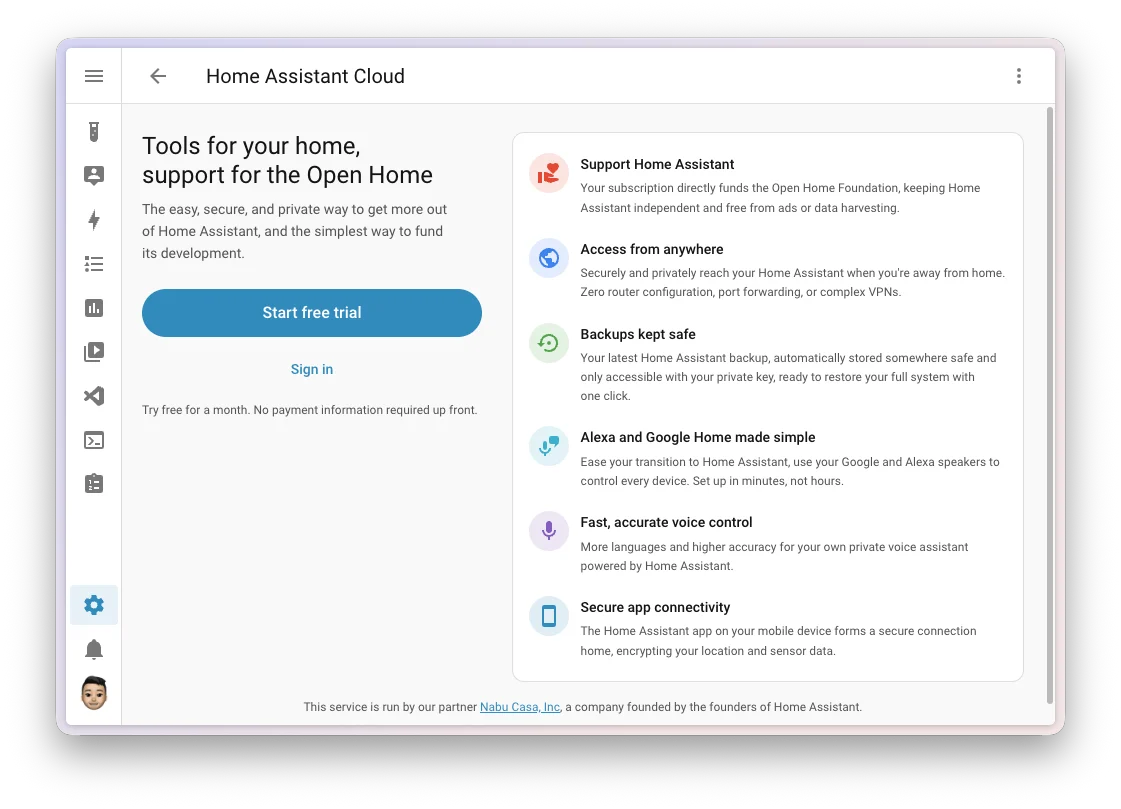
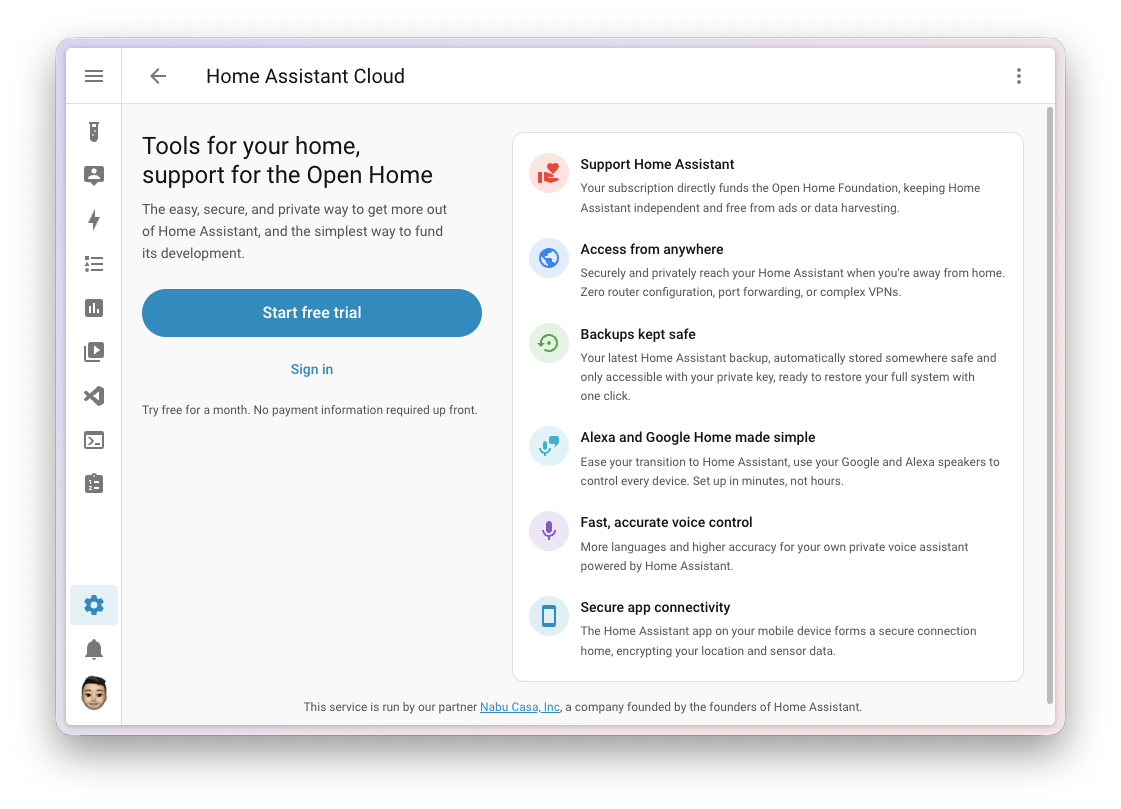
Furthermore, cloud connectivity updates now pass through proper external IP addresses for login attempts rather than standardizing local host identifiers. This technical modification allows administrators to implement IP banning protocols natively via the user interface—bolstering defenses against unauthorized intrusion attempts when paired with multi-factor authentication (2FA). The sign-up workflow for cloud subscriptions has also been redesigned to explicitly detail feature sets prior to engagement, while immediate post-confirmation login streamlines remote access configuration.
Dashboard Functionality and Telemetry Improvements
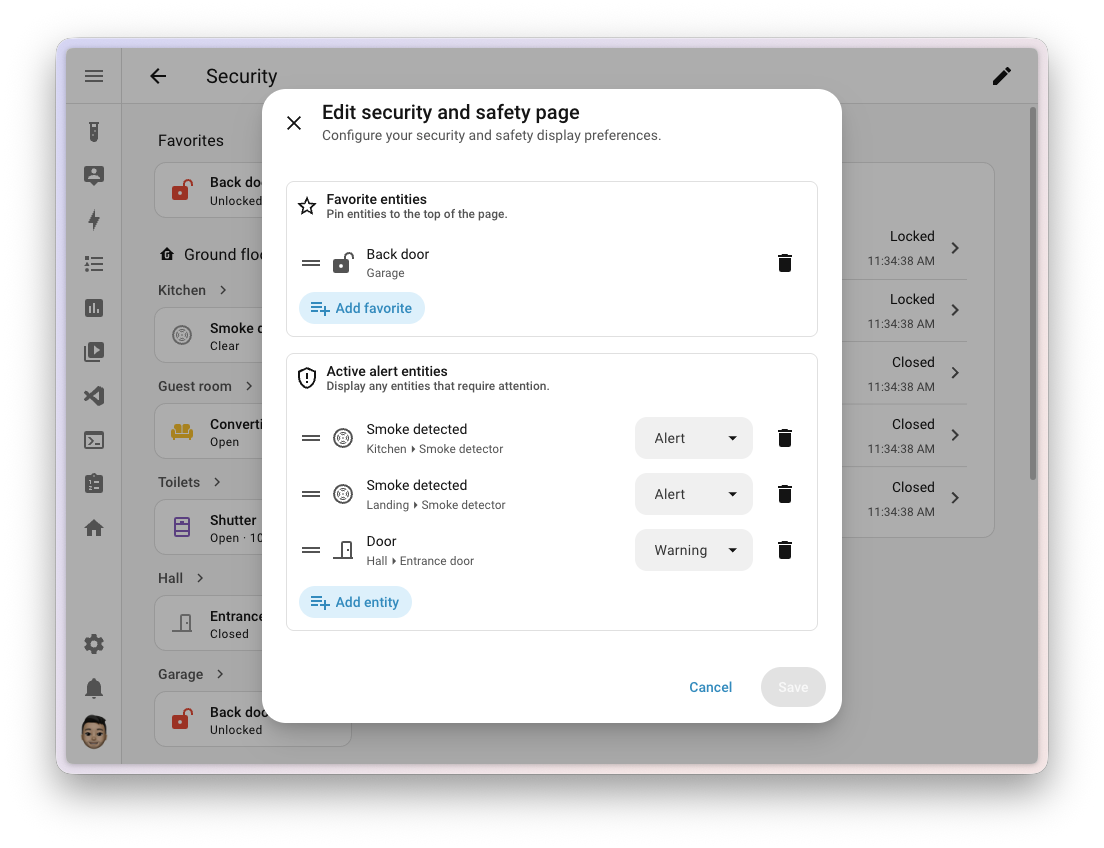
Security dashboards have received significant structural updates inspired by community-driven design principles. The newly implemented Active alerts section dynamically displays critical safety warnings—such as open perimeter entries or active smoke alarms—classified by severity levels ranging from warnings to urgent alerts. Accompanying this is a dedicated Favorites section, allowing users to pin essential access points, door locks, and environmental sensors to the top of the interface.
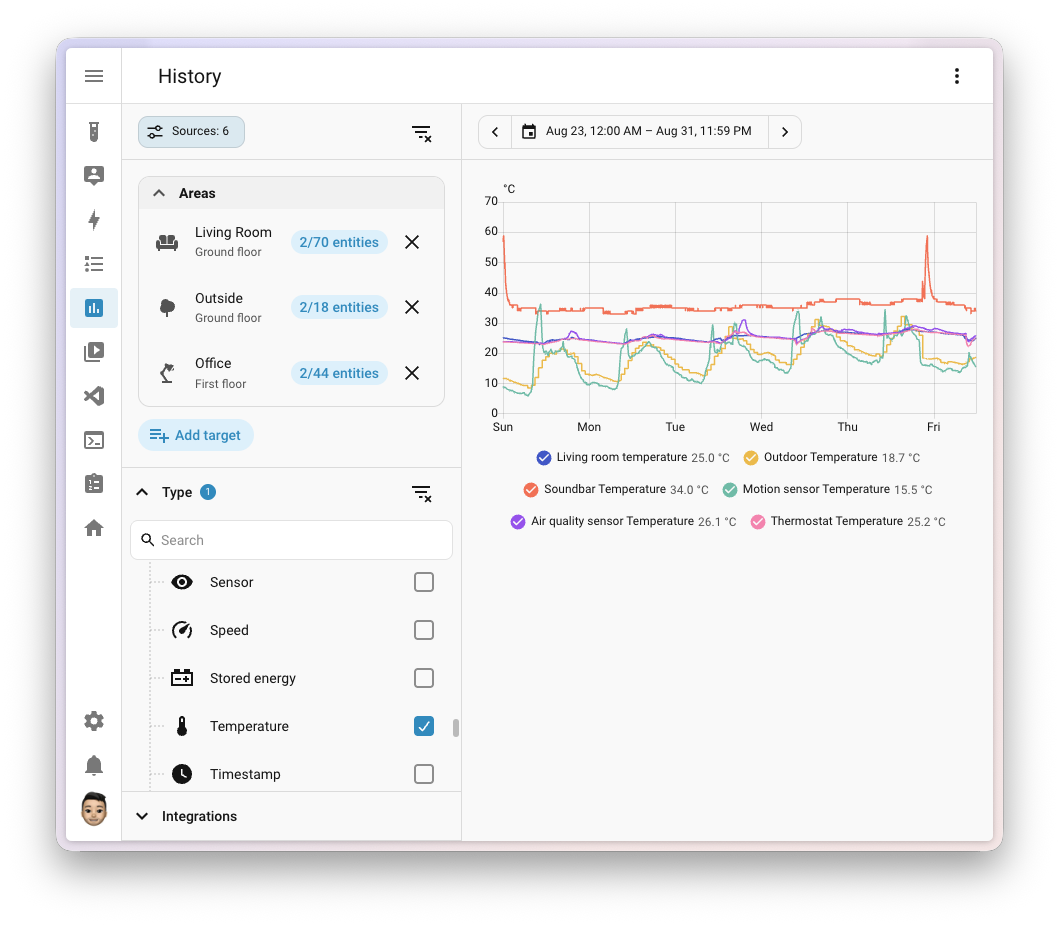
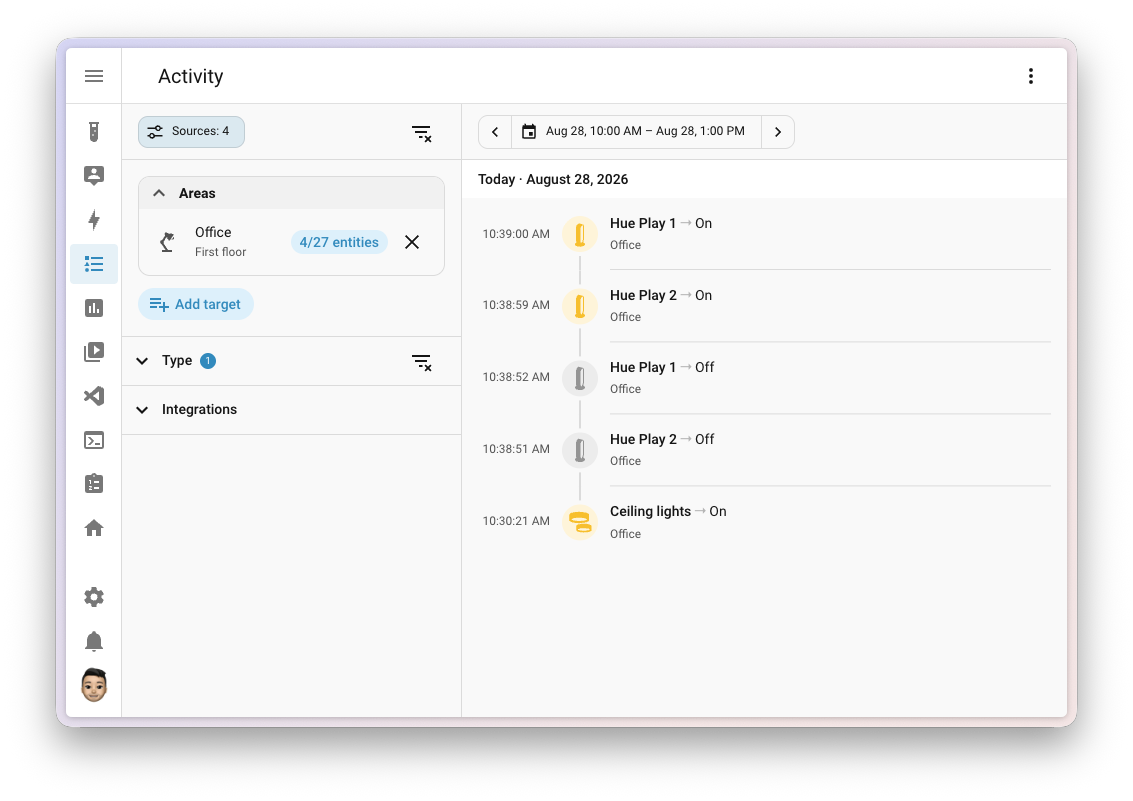
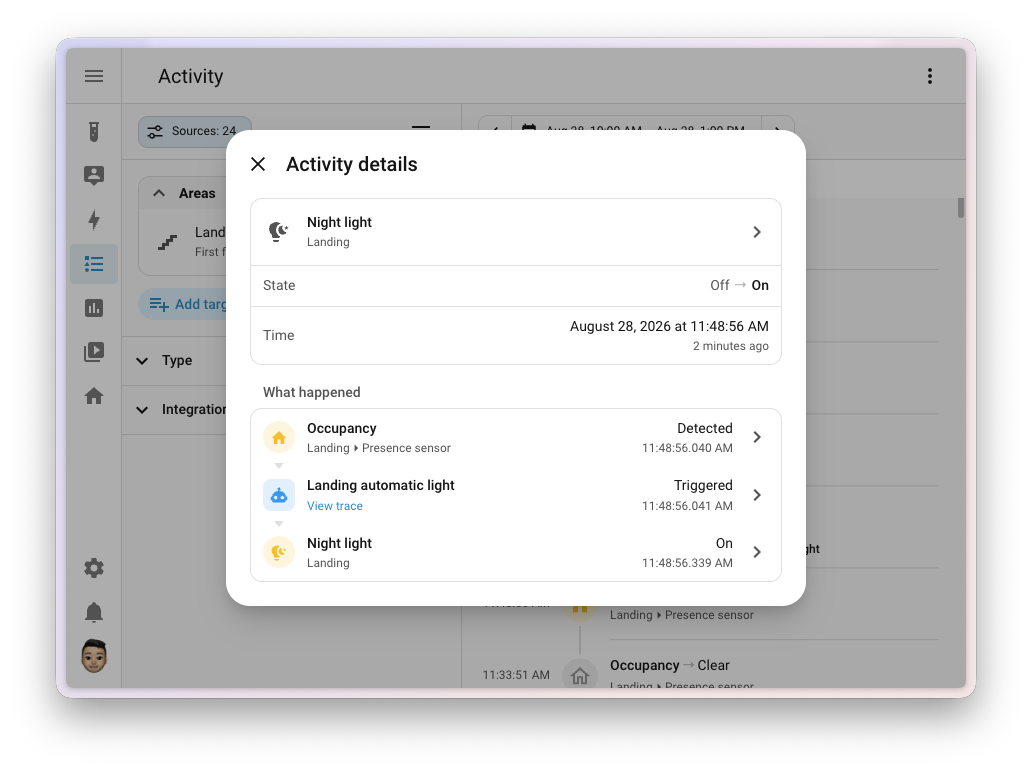
Data tracking and historical auditing have similarly been unified through a standardized Sources pane across both the History and Activity logs. Users can now filter historical timelines by floors, areas, devices, entities, device classes, and domains. Expanding upon this, the Activity log now features a comprehensive diagnostics dialog. Selecting any historical event opens a hierarchical breakdown detailing the precise origin of a state change—tracing the sequence from initial triggers (such as schedules, human presence, or API calls) through intermediate automations and scripts to the final entity state, complete with millisecond-level timestamps.
Protocol Expansion: Matter, Serial, and MQTT
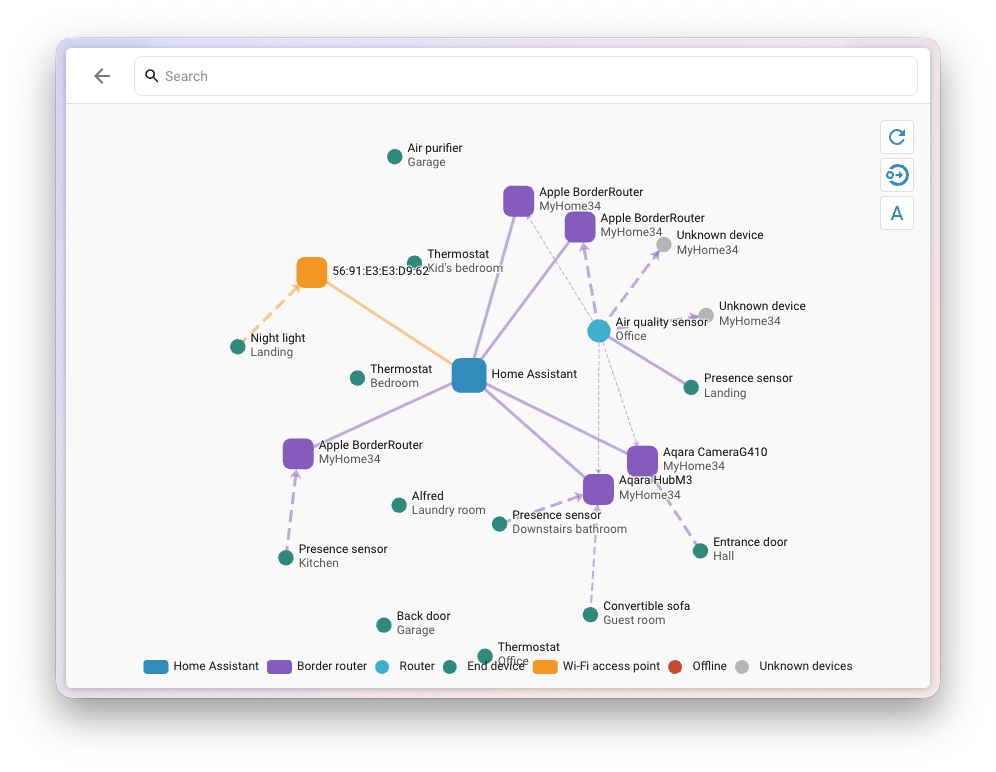
Protocol visibility has expanded to include a native network map for the Matter standard. Accessible directly through the Matter panel, the new graphical interface maps the physical topology of Thread mesh networks and Wi-Fi connections, distinguishing between border routers, power-routing nodes, and battery-powered end devices.
In parallel, serial connectivity has been elevated to a first-class citizen within the settings architecture under a dedicated Connectivity panel. The new Serial page categorizes USB dongles, radio sticks, and application interfaces into active, connected-idle, and missing hardware states, providing immediate diagnostics for disconnected smart home coordinators. MQTT configuration has received a parallel migration, centralizing broker status monitoring, packet publishing tools, and formatted payload inspection into a dedicated settings tab.
Accessibility, Storage Monitoring, and Breaking Changes
Demonstrating a continued commitment to inclusive software design, version 2026.9 introduces advanced accessibility features for charts and data visualizations. Line and bar graphs now support full keyboard navigation, allowing users to traverse individual data points chronologically using arrow keys. Concurrently, a synthesized audio tone dynamically shifts in pitch to reflect data trends, enabling users to perceive numerical fluctuations aurally alongside screen reader announcements.
Storage management has also been refined to include real-time capacity monitoring for network-attached storage (NAS) mounts. Storage usage bars dynamically update upon query response, featuring automated visual indicators that transition to amber past 85% capacity and red past 95% utilization to prevent unexpected backup failures.
As with any major platform iteration, several backward-incompatible changes accompany the release. Developers and advanced administrators should note that administrative privileges are now explicitly required to execute configuration-level actions within the Update and Z-Wave JS integrations. Additionally, LLM tool names have been standardized with domain prefixes (e.g., integrating domain identifiers directly into function calls), requiring updates to customized prompt configurations.
Full installation packages, comprehensive documentation, and incremental patch release schedules are available through the official Home Assistant communication channels and the centralized core changelog.