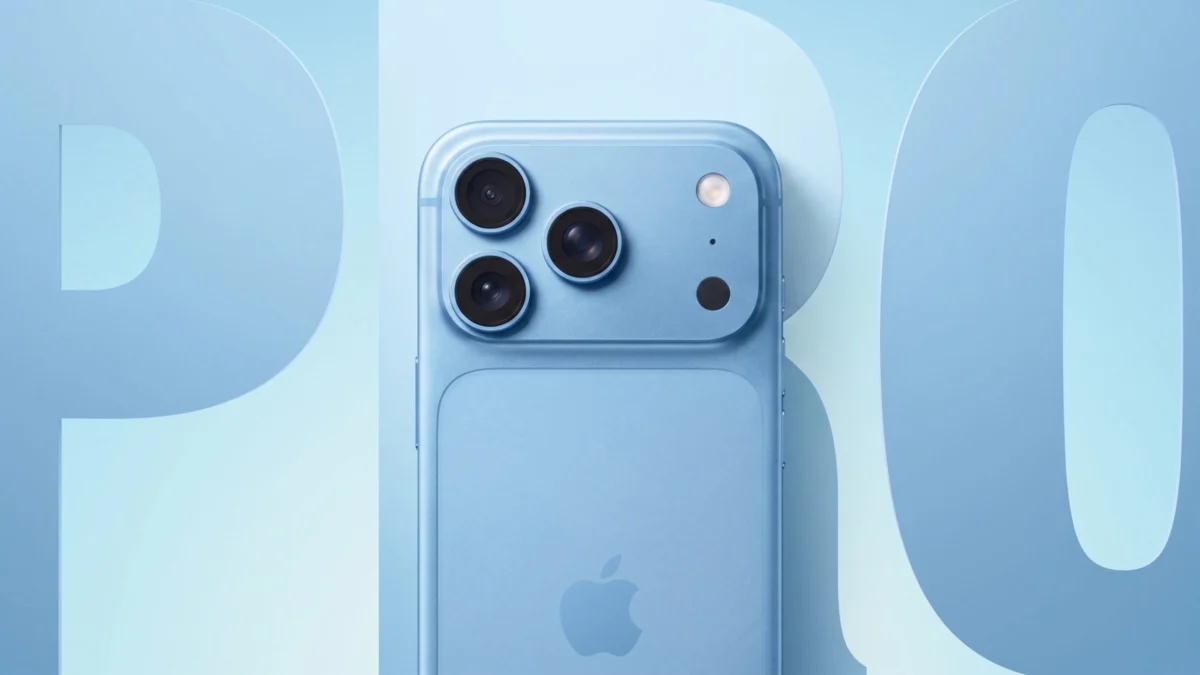
In an era where generative artificial intelligence can synthesize hyper-realistic imagery with unsettling ease, the line between authentic documentation and digital fabrication has become increasingly porous. To address the erosion of visual trust, Apple has introduced a significant technological pivot with the launch of the iPhone 18 Pro and iPhone 18 Pro Max: the Apple Reference Image. This feature represents a fundamental shift in how smartphone hardware validates the provenance of a photograph, aiming to provide users with a "digital receipt" for their captured content.
The Mechanism of Authenticated Capture
At the core of the Apple Reference Image is a hardware-level security protocol designed to mitigate the threat of "hallucinated" content. When a user enables the opt-in Reference mode, the iPhone 18 Pro’s Main camera sensor performs a cryptographic handshake at the precise moment of capture. Unlike existing industry standards—such as the C2PA (Coalition for Content Provenance and Authenticity) framework, which often relies on metadata appended after the image is processed—Apple’s approach focuses on signing the pixel data at the sensor level before it reaches the phone’s operating system.
This process ensures that the raw data captured by the camera is immediately locked behind a cryptographic signature. This signature is anchored by Apple’s secure timestamp service, which operates independently of the device’s local system clock. By leveraging a hardened time-window, the system prevents users or malicious software from retroactively modifying the capture metadata. The resulting file is a secure Digital Negative (DNG), which serves as a protected record of the original light information that hit the sensor.
Procedural Workflow: From Capture to Verification
The workflow for the end-user is designed to mirror the familiarity of analog photography. Once the user activates Reference mode, the camera captures two distinct files: the standard, editable photo optimized for social sharing and personal aesthetics, and the secure DNG file.
To transform this raw data into a verifiable asset, the user utilizes the "develop" feature within the Photos app. This action triggers a secure request to Apple’s Private Cloud Compute (PCC) infrastructure. The PCC validates the cryptographic signature of the DNG against the hardware’s secure enclave. Upon verification, the system generates a signed reference JPEG. This JPEG serves as a side-by-side comparison point for the edited photograph, effectively acting as an immutable reference point that proves the edited image originated from a legitimate physical capture.
Crucially, the privacy-preserving nature of PCC is designed so that the cloud service does not "see" the visual content of the image. The verification is purely mathematical, confirming the integrity of the sensor data without analyzing the subject matter. After a successful development process, the original DNG file is marked for deletion and purged after 30 days, unless the user chooses to recover it, balancing data security with storage management.
Historical Context and the Rise of Synthetic Media
The introduction of this technology arrives at a critical juncture in the history of digital media. Over the past several years, the proliferation of large-scale generative models has transformed the internet into an environment where "looking real" is no longer a metric for truth.
The timeline of this transition is stark. As early as 2023, synthetic media began to challenge the credibility of photojournalism and social media feeds. By 2025, sophisticated AI tools allowed for the creation of photorealistic images that could bypass simple detection algorithms. Throughout 2026, the rise of "deepfake" photography led to widespread misinformation campaigns, necessitating a response from technology leaders. Apple’s decision to integrate this at the silicon level is the company’s definitive response to the "Post-Truth" era of photography, prioritizing the hardware-software stack as the ultimate arbiter of reality.
Limitations and Scope
Despite its technical sophistication, Apple has been transparent about the limitations of the Reference Image. The feature is currently restricted to the Main camera of the iPhone 18 Pro and Pro Max. It does not extend to the ultra-wide, telephoto, or video recording modes, likely due to the extreme computational demands required to sign high-bandwidth data streams in real-time.
Furthermore, Apple emphasizes that Reference Image is not a forensic tool for verifying the factual veracity of a scene. A user could, in theory, photograph a screen displaying an AI-generated image; the iPhone would verify that the camera captured light from that screen, but it cannot verify the origin of the light itself. As Apple’s September 15, 2026, Security Blog post noted, the feature is intended to act as a "receipt of capture" rather than a "guarantee of reality." It proves that a specific sensor recorded the image, not that the image accurately represents an objective truth in the world.
Regulatory Challenges and Global Availability
The rollout of Apple Reference Image has faced immediate regional hurdles. Due to complex regulatory environments regarding encryption and data sovereignty, the feature is unavailable in China at launch. In the European Union, while users of iOS 27, iPadOS 27, and macOS 27 can view and develop reference images, the initial "capture" functionality on the iPhone 18 Pro models is limited. These discrepancies highlight the tension between global technology standards and local legislative requirements, particularly concerning the use of cryptographic signing services.
Implications for Media and Journalism
The broader implications for professional and amateur photography are significant. In journalism, the ability to provide a signed "digital negative" could become a standard requirement for verifying breaking news photos. If a photo is contested, a reporter or citizen journalist can point to the signed reference file as proof that the image was not synthesized by a generative model.
However, security researchers warn that this could lead to a false sense of security. If the public begins to view "unsigned" images as inherently fake, it may marginalize legitimate, authentic photography that happens to be captured on older devices or different hardware. Analysts at several tech-policy think tanks have suggested that while the Apple Reference Image is a "necessary step toward digital hygiene," it is only one piece of a much larger puzzle. They argue that media literacy and the development of broader, cross-platform standards like C2PA will remain essential to complement Apple’s walled-garden approach.
Future Trajectory
As the industry moves forward, the competition to define the standard of "digital truth" will likely intensify. While Apple has opted for a hardware-anchored, proprietary verification path, other manufacturers are expected to pursue software-based, open-source verification protocols.
The success of the iPhone 18 Pro’s initiative will be measured by its adoption rate among content creators and its integration into social media platforms. If platforms like X, Instagram, and Threads begin to natively support the display of these "Reference Image" badges, it could establish a new visual vocabulary for internet users—one where a small, verified icon denotes that a photograph has survived the transition from the physical world to the digital screen with its integrity intact.
For now, the Apple Reference Image stands as a technical bulwark against the tide of synthetic misinformation. It does not solve the problem of AI deception, but it provides a clear, verifiable mechanism for users to reclaim the integrity of their own personal photographic records. Whether this becomes the industry standard or remains a niche feature for power users remains to be seen, but the intent is clear: in an age of infinite digital possibilities, Apple is betting that users will increasingly value the ability to prove what is real.