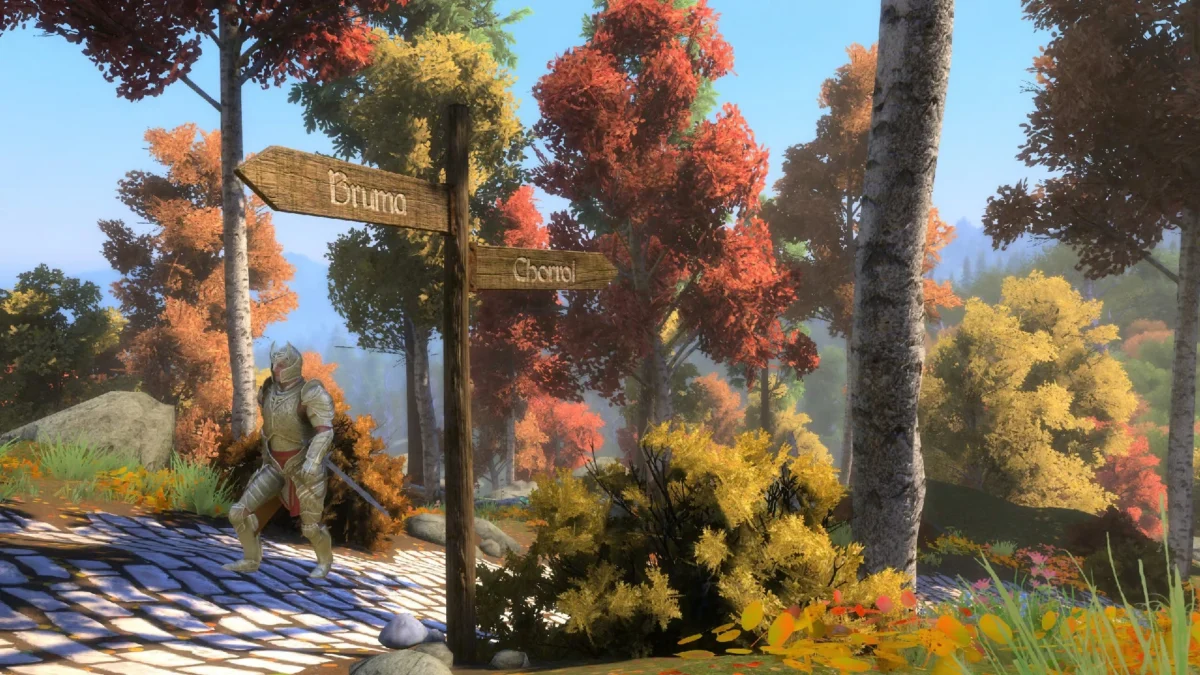
The ambitious fan-made project, which seeks to rebuild The Elder Scrolls IV: Oblivion within the significantly more modern and stable engine of The Elder Scrolls V: Skyrim, has moved into its final stages of production. After more than a decade of development, the modding collective known as TESRenewal has officially signaled that the finish line is in sight. In a recent update, the team announced that they are expanding their communications department to assist with the final marketing and content outreach required for a successful global launch.
A Decade of Technical Ambition
The Skyblivion project is one of the most significant undertakings in the history of video game modding. Initiated shortly after the release of Skyrim in 2011, the project’s goal is not merely a high-definition texture pack or a minor graphical overhaul. Instead, the team is manually porting the entirety of Cyrodiil—the province featured in the 2006 title Oblivion—into the Skyrim engine. This includes the recreation of thousands of assets, voice-acted quest lines, sprawling landscapes, and complex scripted events.
The technical challenges involved in this endeavor are substantial. Skyrim’s Creation Engine, while more advanced than the engine used for Oblivion, requires a total reconstruction of the original game’s geometry, lighting systems, and artificial intelligence behaviors. For years, the team has worked to ensure that the iconic charm of the original title—such as the eccentric NPC dialogue and the unique architecture of the Imperial City—is preserved while benefiting from modern engine optimizations.
Chronology of Development and Delays
The trajectory of Skyblivion has been defined by long-term commitment and unavoidable schedule adjustments. Initially, the project lacked a concrete release window, as the team preferred to work without the pressure of strict industry deadlines. However, as the project matured, the community’s anticipation grew, leading the developers to provide tentative estimates.
- 2012–2015: Early development phase, focusing on asset creation and engine compatibility.
- 2016–2019: Expansion of the team, with major progress made in world-space implementation.
- 2020–2022: The team hits significant milestones, demonstrating fully functional gameplay loops and quest integration.
- 2023: The team officially announced a 2025 release target, which generated immense excitement within the RPG community.
- 2024: Faced with the realities of volunteer-based development, the team pushed the target to 2026 to ensure the project meets their quality standards.
- Late 2024–Present: The team enters the final "polish" phase, focusing on bug fixing, optimization, and community-facing promotional efforts.
The 2026 timeline is viewed by industry analysts as a realistic goal. Unlike professional studios, the Skyblivion team operates as a distributed group of volunteers, meaning that the pace of work is dictated by individual contributions rather than corporate mandates.
Call for Volunteers and Communications Strategy
The recent call for volunteers signifies a shift in the project’s lifecycle. Communications Lead Evan Flatt has specifically requested assistance from individuals with professional-grade experience in video production, trailer editing, and gameplay capture. The objective is to provide the public with high-quality documentation of the project’s current state, ensuring that the final marketing push effectively showcases the years of labor invested by the team.
This request for specialized talent highlights the professionalization of the modding scene. Today’s major mod projects often require the same level of project management, quality assurance, and promotional coordination found in small-to-medium independent game studios. The team’s focus on "game capture artists"—volunteers capable of creating smooth, cinematic footage—suggests that they are preparing to move away from internal development updates and toward public-facing promotional campaigns.
The Landscape of Elder Scrolls Remakes
The anticipation for Skyblivion exists within a broader context of interest in the Elder Scrolls franchise. The original Oblivion remains a cult classic, celebrated for its expansive quest design, specifically the Dark Brotherhood and Thieves Guild storylines. However, its age is evident in its dated combat mechanics and character models.
When rumors of an official Bethesda-led remaster of Oblivion circulated in 2023, the community’s attention was briefly split. However, the Skyblivion team maintained their resolve. By confirming that they will not "shadow-drop" the release—a strategy used by some developers to minimize leaks—they have set expectations for a traditional, transparent launch process. This choice is significant, as it provides the community with a sense of stability, allowing potential players to prepare for the transition from the base game to the modded experience.
Technical Challenges and Industry Implications
The modding community has learned valuable lessons from recent high-profile releases, most notably the launch of Fallout: London. While the project was a technical marvel, its release was marred by significant stability issues and crashes, which were largely attributed to the complex nature of modifying Bethesda’s engines.
The Skyblivion team is acutely aware of these risks. The decision to delay the project from 2025 to 2026 was likely driven by a desire to avoid the "early-release pitfalls" that have plagued other large-scale community projects. In the industry, "day-one stability" is a high bar, even for commercial studios with hundreds of employees. For a volunteer team, achieving this requires a rigorous testing phase, which explains the current focus on final polish and bug tracking.
Market Context and Competitive Environment
The release window for 2026 is noteworthy due to the competitive landscape of the gaming industry. With high-profile titles such as Rockstar Games’ Grand Theft Auto VI dominating the cultural conversation and the release cycle, niche projects often risk being overshadowed. However, Skyblivion occupies a unique position. Because it is a PC-exclusive project for an existing game, it caters to a specific, highly dedicated demographic that is less affected by the fluctuations of console-based retail cycles.
Furthermore, the longevity of Skyrim as a platform remains unmatched. Over a decade after its release, it remains one of the most played games on Steam, partly due to the endless supply of high-quality mods. Skyblivion is positioned as the pinnacle of this ecosystem. Its release will likely trigger a resurgence in interest for the entire Elder Scrolls franchise, potentially serving as a bridge for players waiting for the long-promised The Elder Scrolls VI.
Analysis of the Final Stretch
The project’s transition into its final phase is a testament to the sustainability of long-term community projects. By maintaining a steady flow of development updates and being transparent about their internal requirements, the Skyblivion team has successfully avoided the burnout that typically claims projects of this scale.
The inclusion of new volunteers to handle the "final push" is a strategic move. It allows the core developers—those responsible for the heavy lifting of code and asset creation—to focus entirely on technical stability, while the new arrivals handle the logistics of external communication. This division of labor is essential for ensuring that the final product reaches the public in a playable state.
As the industry looks toward 2026, the success of Skyblivion will likely serve as a benchmark for what can be achieved by community-led development. If the team manages to deliver a stable, feature-complete version of Cyrodiil within the Skyrim engine, it will set a new standard for total-conversion mods. For now, the gaming community remains in a state of prepared anticipation, watching the project’s official channels for the announcement of a formal launch date. The era of uncertainty is ending, and the era of final preparation has begun.