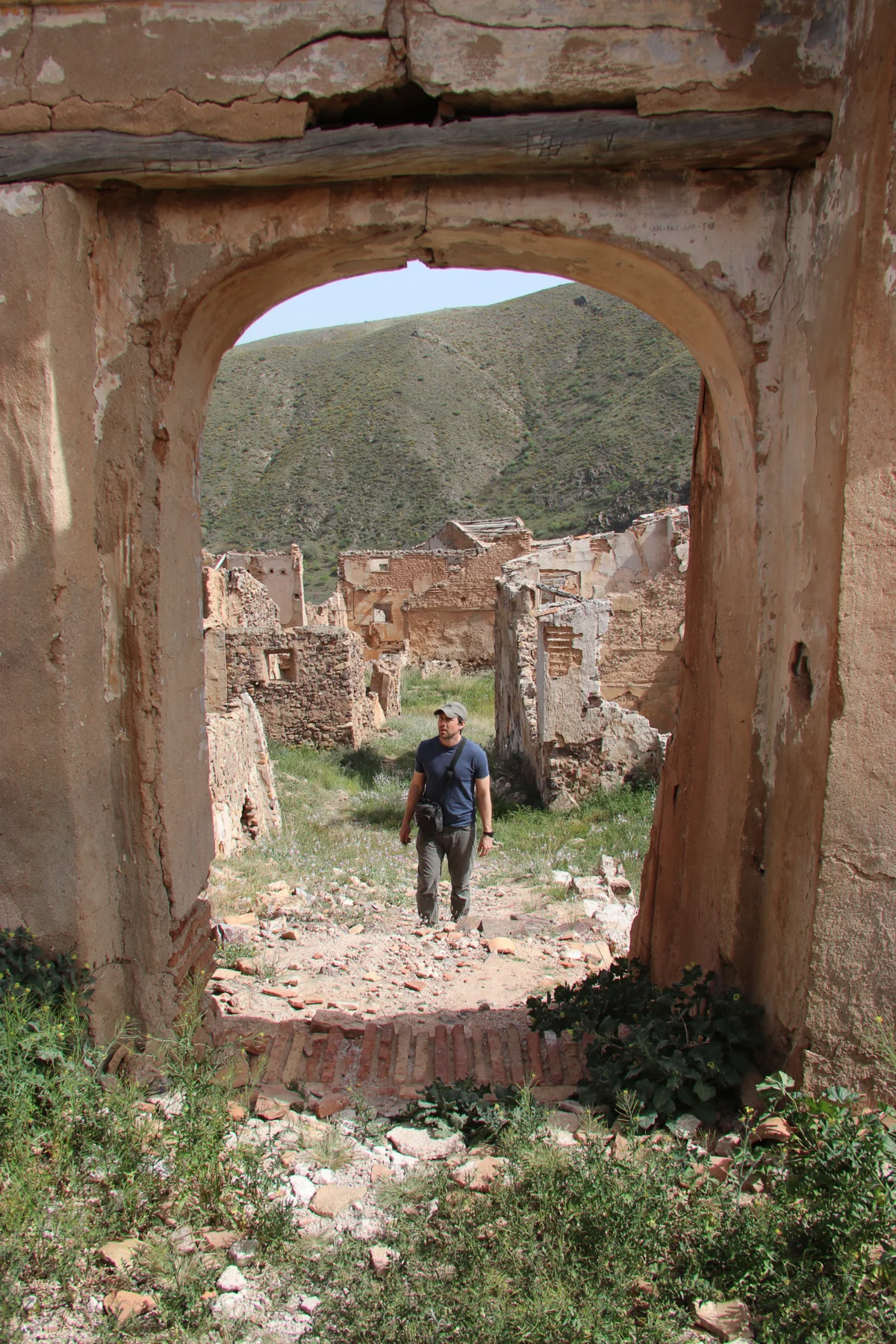
The first thing you notice in an abandoned Spanish village is the swallows. Outside, they swoop zestfully up and down in wavy crests and troughs, cutting through the air, darting through broken windows and front doors at reckless speed, slipping through holes in the masonry with astonishing precision, and alighting, casually, in their chosen nests. It is as if they know every corner of the building, and indeed, they do. In these hollowed-out settlements, humanity has retreated, leaving avian species, apex predators, and dense brush to reclaim territory lost to agriculture and industry centuries ago.
Spain is currently experiencing a profound demographic shift. While its major metropolitan hubs such as Madrid, Barcelona, and Valencia continue to expand, vast stretches of the interior—collectively known as la España vaciada (emptied Spain)—are experiencing terminal depopulation. According to recent demographic data from Spain’s National Statistics Institute (INE), thousands of rural settlements have been entirely abandoned or are teetering on the edge of extinction, leaving behind crumbling stone walls, overgrown plazas, and a rapidly shifting ecological landscape.
The Scale of Rural Abandonment in Spain
Estimates suggest that Spain possesses more than 3,000 entirely abandoned villages, with thousands more classified as demographically moribund, holding populations of fewer than ten elderly residents. One such village is Las Casillas de Bezas, situated in the rugged eastern province of Teruel. Here, high-stepping over brambles and ducking as swallows dart through the skeletal remains of domestic dwellings, visitors bear witness to a dual reality: a monument to a vanished agrarian past and a living laboratory for the deep future of European rewilding.
The phenomenon is not isolated to the province of Teruel or even to Spain as a whole. Across Southern and Eastern Europe, rural depopulation has accelerated over the past seven decades. The underlying drivers are systemic and structural, rooted in the mid-20th-century economic modernization of Europe.
Chronology of the Exodus: From Agrarian Life to Urban Migration
To understand the current ecological transformation of rural Spain, it is necessary to examine the historical timeline that emptied the countryside:
- The Post-Civil War Hardship (1939–1959): In the decades following the Spanish Civil War, rural life was characterized by subsistence farming, intense physical labor, and severe economic isolation under the Franco regime. Agricultural methods were largely pre-industrial, requiring large family sizes to work the land.
- The Great Migration (1960–1980): The definitive turning point arrived with Spain’s Plan de Estabilización (Stabilization Plan) of 1959. This policy opened the country to foreign investment and rapid industrialization. Millions of rural Spaniards abandoned traditional farming communities en masse, migrating toward industrial centers like Catalonia, the Basque Country, and Madrid, as well as to Northern Europe, in search of wage labor and a higher standard of living.
- The Mechanical Transition (1980s–1990s): As those who remained aged, agriculture underwent rapid mechanization. Large-scale, intensive farming replaced small family plots, requiring fewer human hands. Villages that had sustained hundreds of residents for centuries could no longer support even a dozen.
- The Contemporary Era (2000–Present): Despite government initiatives and incentives for young families to relocate to rural areas, the demographic deficit has proved insurmountable in many regions. Services such as schools, medical clinics, and public transport have been systematically withdrawn, cementing the death of countless hamlets.
Ecological Implications: The Unintended Rewilding
As human pressures recede, nature is staging a dramatic comeback. Biologists and conservationists refer to this process as passive rewilding. Without human intervention, natural ecological succession takes over.
Within years of abandonment, annual weeds give way to perennial grasses and shrubs, followed rapidly by pioneer tree species such as pine, holm oak, and juniper. In northern and mountainous regions of Spain, deciduous forests are reclaiming ancestral pasturelands.
This vegetative explosion has triggered a cascading effect through the local fauna:
- Avian and Insect Recovery: As observed in Las Casillas de Bezas, cavity-nesting birds, raptors, and insect populations thrive in the absence of chemical pesticides and industrial noise.
- Return of Apex Predators: Large mammals that were once hunted to the brink of extinction or driven out by human activity are returning to their historical ranges. The Iberian wolf (Canis lupus signatus), brown bears in the Cantabrian Mountains, and Eurasian lynx populations are expanding their territories southward and eastward into abandoned agricultural zones.
- Wild Ungulates: Populations of wild boar, red deer, and roe deer have surged across rural Spain, benefiting from the abundance of unmanaged forest cover and undergrowth.
Socio-Economic and Political Responses
The depopulation crisis and the subsequent environmental transformation have ignited intense debate among policymakers, sociologists, and environmental scientists.
Regional governments and grassroots movements have launched various initiatives to counter rural abandonment. Programs such as Holapueblo and efforts by organizations like El Hueco actively match urban families with empty homes and remote-work opportunities in rural villages. Proponents argue that repopulation is essential not only for preserving cultural heritage and vernacular architecture but also for preventing catastrophic wildfires. Unmanaged, overgrown forests—created by the absence of traditional grazing and wood-gathering—act as tinderboxes during Spain’s increasingly severe summer heatwaves.
Conversely, conservation biologists point out that depopulation presents an unprecedented opportunity for large-scale ecological restoration. Groups like Rewilding Europe advocate for a pragmatic acceptance of the trend in specific, marginal zones, arguing that letting nature take its course can heal fragmented ecosystems, boost biodiversity, and create carbon sinks crucial for mitigating climate change.
Conclusion: A Glimpse into the Deep Future
Standing in an abandoned Spanish hamlet like Las Casillas de Bezas forces a fundamental re-evaluation of humanity’s relationship with the landscape. The crumbling masonry, roofless kitchens, and ivy-choked doorways are stark reminders of demographic fragility. Yet, the vibrant flash of swallows cutting through empty air and the silent encroachment of the forest signal something equally powerful: resilience.
As Europe navigates the complexities of climate change, demographic shifts, and biodiversity loss, the empty countryside of Spain serves as both a monument to a fading way of life and an inadvertent blueprint for the planet’s ecological future. Whether this land will eventually be re-inhabited by humans or left entirely to the wild remains one of the defining questions of 21st-century Europe.