The official release candidate of watchOS 27 has arrived, bringing with it a notable addition to the Apple Watch software ecosystem: a brand-new watch face designated as Siri Modular. Available across compatible Apple Watch Series and Apple Watch Ultra hardware, this latest interface option aims to merge high-density information architecture with the proactive intelligence of Siri. While the core layout remains consistent across all supported models, Apple has reserved a tiered level of advanced customization features exclusively for the rugged, larger-display Apple Watch Ultra lineup. As users begin exploring the release candidate software ahead of the public rollout, the intricacies of Siri Modular highlight Apple’s ongoing commitment to hardware-specific software optimizations.
Layout Architecture and Core Design Principles
At its structural foundation, Siri Modular utilizes a deliberate grid system designed to maximize glanceability. Both the standard Apple Watch Series models and the Apple Watch Ultra share the same baseline configuration components. At the top center, users will find a dedicated text line complication capable of displaying brief updates, calendar appointments, or environmental data. Positioned immediately below this is the time display, anchored centrally on the screen.

The lower portion of the interface is dominated by a wide horizontal complication, perfect for data-rich modules such as weather graphs, activity rings, or upcoming reminders. Flanking or supporting this layout is a distinct row of three circular complications, allowing users to pack up to five individual data points onto a single screen alongside the primary clock face. However, a minor design limitation accompanies this layout: none of the available modes support displaying the current seconds as part of the digital clock display, prioritizing overarching data density and battery conservation over real-time second tracking.
Tailored Customization: Series Versus Ultra Capabilities
While the baseline layout is uniform, the extent to which users can manipulate the aesthetic and structural presentation varies significantly depending on the device worn on the wrist. Apple Watch Ultra owners receive a suite of exclusive hardware-dependent controls that take advantage of the device’s larger physical canvas and distinctive case design.
Style Configurations and Clock Height
The Siri Modular watch face introduces three distinct style options that fundamentally alter the vertical distribution of elements by adjusting the height of the clock:
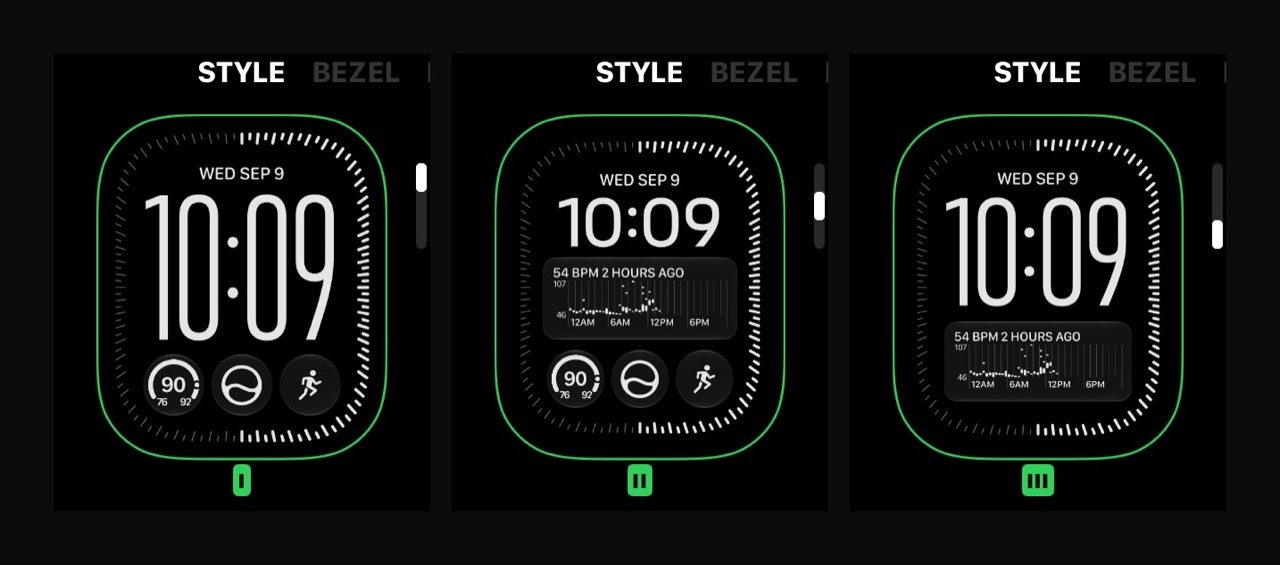
- Style One: Features the tallest clock configuration paired with a row of three circular complications, omitting the wide horizontal complication to prioritize a prominent time readout.
- Style Two: Employs a compact clock design combined with both the wide complication and the three circular complications, offering the maximum possible information density.
- Style Three: Utilizes a medium-sized clock alongside the wide complication, striking a balance between legibility and data presentation.
All three styles retain full support for the top-line text complication.
Typography and Font Choices
Typographical customization is another area where hardware differentiation is apparent. Both Apple Watch Series and Ultra models gain access to font options specifically tailored for the Siri Modular interface. However, the exclusive "Ultra" font style is restricted strictly to Apple Watch Ultra hardware. Standard Apple Watch Series models are limited to three classic choices: Modern, Classic, and Rounded. This distinction mirrors previous watchOS cycles where Apple leveraged software typography to visually differentiate its premium sports and adventure timepiece from mainstream aluminum and stainless steel variants.
Exclusive Bezel Integration for Apple Watch Ultra
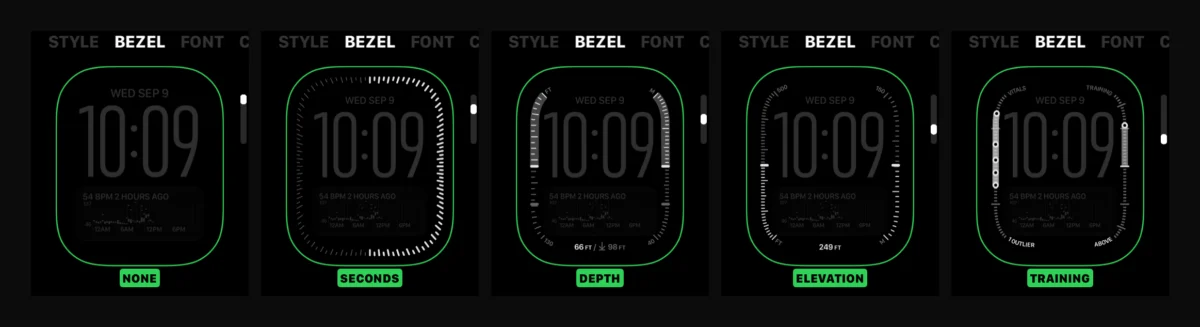
Perhaps the most notable hardware-exclusive feature is the inclusion of bezel configuration options for the Apple Watch Ultra. Much like other Ultra-exclusive watch faces introduced in past iterations of watchOS, the Siri Modular face allows users to utilize the outer perimeter of the display for additional data visualization or aesthetic framing. This capability is entirely absent on standard Apple Watch Series models due to the physical differences in screen casing and curved edge geometry.

Expanded Color Palettes
Complementing the layout and typography are new color customization options. watchOS 27 introduces several fresh hues to the Apple Watch palette, including sophisticated additions such as Dark Bronze and Radiant Gold. These metallic and muted tones are designed to pair seamlessly with contemporary watch bands, offering a more refined aesthetic compared to the hyper-saturated primary colors of earlier watchOS generations.
Background Context and the Evolution of Modular Faces
The introduction of Siri Modular in watchOS 27 represents the latest chapter in Apple’s ongoing refinement of data-first watch faces. Historically, the Modular and Modular Compact faces have served as the de facto standard for power users who prefer utility over minimalist analog designs.
When Apple originally introduced the Siri watch face years ago, it relied on a dynamic, machine-learning-driven feed that automatically surfaced relevant information—such as boarding passes, upcoming calendar events, and traffic conditions—based on time of day and user location. Over time, that standalone concept was gradually integrated into hybrid designs. Siri Modular appears to be the spiritual successor to those earlier iterations, fusing the predictive intelligence framework of Siri with the structural reliability of the classic Modular grid.

The decision to gate certain layout and bezel features behind the Apple Watch Ultra hardware is part of a broader product segmentation strategy. Since the debut of the original Ultra, Apple has increasingly used watchOS updates to grant specialized software perks to its rugged smartwatch line, reinforcing its value proposition for endurance athletes, outdoor adventurers, and tech enthusiasts willing to invest in premium hardware.
Development Timeline and Release Schedule
The unveiling of Siri Modular coincides with the distribution of the watchOS 27 release candidate (RC) software to developers and public beta testers. The timeline for this software cycle follows Apple’s established annual cadence:
- June: Initial announcement and developer beta rollout at Apple’s Worldwide Developers Conference (WWDC).
- July – August: Iterative beta testing phases focusing on bug fixes, performance stabilization, and minor UI tweaks.
- September: Deployment of the release candidate, signaling the near-final stability of the operating system.
- Late September / Early October: Official public release of watchOS 27 alongside new Apple Watch hardware generations.
As the software moves from the release candidate stage to general availability, millions of compatible Apple Watch users will gain access to Siri Modular, though the full feature set will remain exclusive to those operating on the Ultra tier.

Implications and Industry Analysis
From an industry perspective, the nuanced deployment of watchOS 27’s flagship watch face underscores the growing importance of software as a differentiator in the smartwatch market. While competitors in the fitness tracking and smartwatch space frequently rely on hardware redesigns to stimulate upgrades, Apple continues to leverage its tightly integrated software ecosystem to breathe new life into existing devices while adding compelling incentives for top-tier hardware adoption.
The choice to emphasize information density through Siri Modular aligns with consumer data trends. Modern smartwatch owners increasingly utilize their wrists as notification hubs and biometric dashboards rather than mere timekeeping devices. By providing granular control over complication placement, clock sizing, and typography—while reserving bezel enhancements for the Ultra—Apple strikes a calculated balance between accessibility for mainstream users and advanced customization for power users.
As watchOS 27 prepares for its wide-scale public deployment, the reception of Siri Modular will likely serve as a litmus test for how effectively Apple can blend proactive AI-driven intelligence with static, user-curated complication layouts. For now, developers and early adopters testing the release candidate have a powerful new tool for personalizing their wrist-based computing experience.