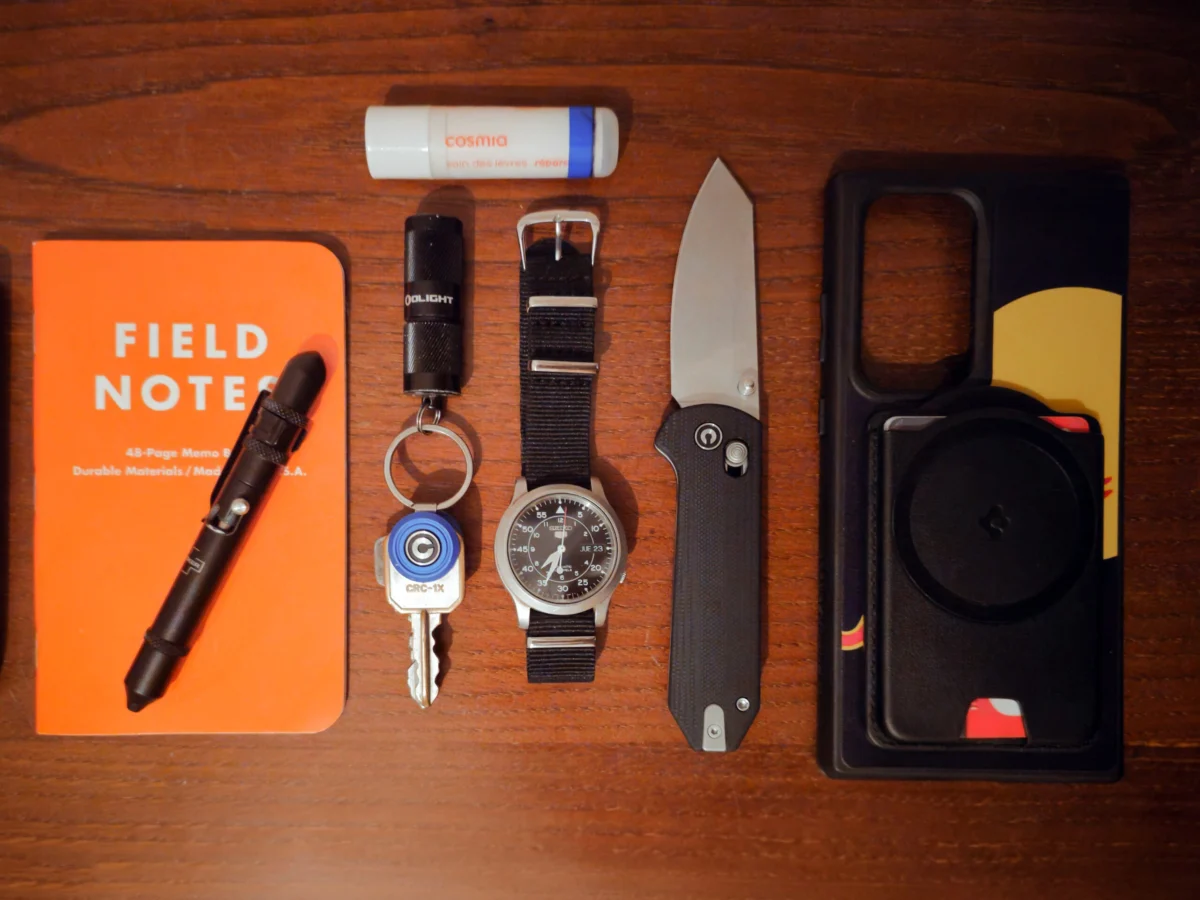
The modern professional landscape increasingly demands a synthesis of high-performance utility and streamlined portability. For individuals operating in technical environments—such as aeronautical automation—the tools carried on a daily basis are not merely accessories but essential components of operational efficiency. Ruben Caeiro, an aeronautical automation operator based in Portugal, offers a compelling case study in the minimalist "Everyday Carry" (EDC) philosophy, prioritizing gear that balances durability, ergonomic design, and cost-effective performance. His current kit, centered around the award-winning CIVIVI Yonder, underscores a growing trend among professionals to curate personal toolsets that transition seamlessly between demanding industrial environments and casual daily life.
The Anatomy of the Modern Professional Carry
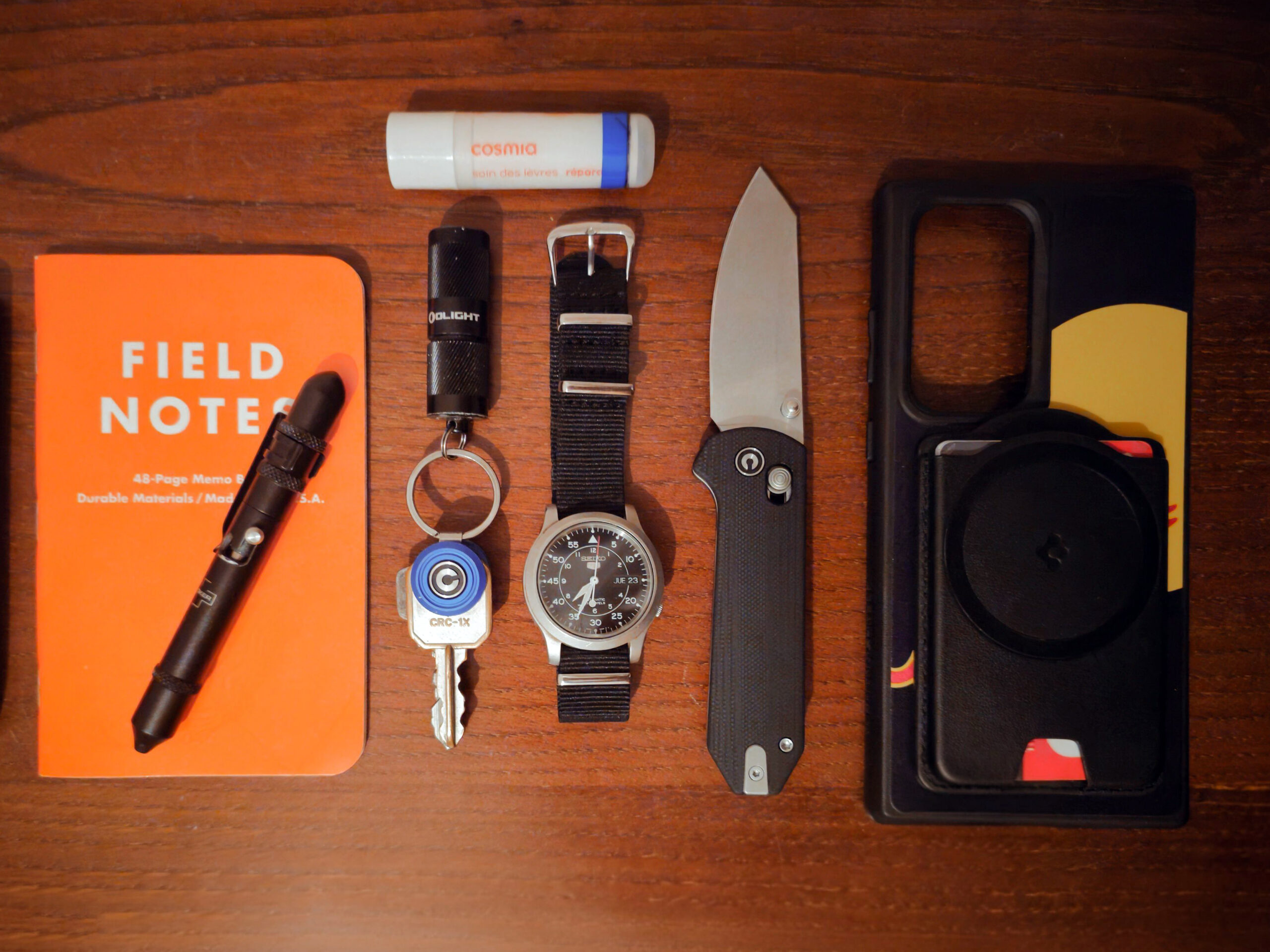
At its core, the EDC movement represents the intersection of preparedness and minimalism. For professionals working in specialized fields like aeronautical systems, where equipment failure is not an option, the reliability of personal tools is paramount. Caeiro’s approach focuses on consolidation: leveraging magnetic wallet technology attached to mobile devices, utilizing compact key organizers to reduce bulk, and incorporating precision writing instruments such as mini bolt-action pens.
This reductionist strategy serves a dual purpose. First, it ensures that essential items—keys, identification, communication devices, and tactical tools—are readily accessible without impeding mobility. Second, it reflects a shift in consumer behavior toward high-value, high-utility items that do not require excessive maintenance. The inclusion of a Field Notes notebook and a compact flashlight indicates a professional requirement for on-the-spot documentation and technical inspection, regardless of the lighting conditions or the availability of digital infrastructure.
The Rise of the CIVIVI Yonder: A Benchmark in Blade Design
The inclusion of the CIVIVI Yonder in Caeiro’s kit is noteworthy, as it reflects a broader industry recognition of value-oriented engineering. Designed by Zac Whitmore, the Yonder secured the "Best Buy of the Year" award at the 2024 Blade Show. This accolade is significant within the knife industry, as it highlights a shift away from high-cost, status-symbol tools toward designs that emphasize structural integrity and mechanical innovation at an accessible price point.
The Yonder features a crossbar-locking mechanism, a design choice favored for its ambidextrous functionality and superior lock-up stability compared to traditional liner-lock systems. For an automation operator, the ability to deploy and retract a blade with one hand, safely and consistently, is a fundamental requirement. The Yonder’s reception by the enthusiast community underscores the success of manufacturers who integrate premium materials—such as high-grade steel and lightweight handle composites—into a package that remains affordable for the average consumer.
Chronology of Tool Integration
The evolution of Caeiro’s kit is indicative of a cyclical upgrade process common among EDC enthusiasts.
- Early 2024: Development of the "base kit," focusing on digital integration via magnetic phone wallets and compact key management.
- Mid-2024: Introduction of technical writing instruments (mini bolt-action pens) to support field reporting.
- September 2024 (Blade Show): The CIVIVI Yonder is recognized for its design excellence, prompting increased adoption among professional users.
- September 2025: Caeiro incorporates the Yonder into his daily rotation, noting a shift toward optimizing his carry for both work-related tasks and lifestyle versatility.
This timeline reflects a deliberate approach to tool acquisition. Rather than mass-buying gear, Caeiro demonstrates a methodical testing phase, evaluating the suitability of a tool before integrating it into a permanent rotation. His stated intention to alternate between the Yonder and the Kizer Feist, alongside his choice of timepieces, suggests a nuanced understanding of "contextual carry"—the idea that one’s gear should adapt to the formality of the environment.
Comparative Analysis: Functionality and Aesthetic
The transition between the Kizer Feist and the CIVIVI Yonder offers an interesting study in ergonomics and aesthetics. The Kizer Feist is often lauded for its sleek, front-flipper profile, which provides a more refined, "dress-watch" aesthetic suitable for professional settings that might view a more aggressive blade design with skepticism. In contrast, the Yonder is built for robust utility.
The accompanying watch choice—the Casio Edifice with a "Tiffany" dial—further illustrates this balance. While a luxury mechanical watch may be a staple for some, the Casio Edifice offers high-level water resistance, sapphire crystal durability, and a clean, modern aesthetic that aligns with the minimalist ethos. The combination of these tools suggests that modern professionals are moving away from the "tactical" look of the early 2010s in favor of a cleaner, more understated professional appearance that does not sacrifice technical capability.
Economic Implications of the EDC Market
The rise of brands like CIVIVI and Kizer is not accidental. It is the result of globalized manufacturing improvements and a more informed consumer base. Market data suggests that the EDC sector has seen a 15–20% growth rate in annual revenue over the past five years, driven primarily by younger demographics (ages 25–40) who view their tools as long-term investments rather than disposable commodities.
This economic shift has forced established manufacturers to compete more aggressively on price and quality. The "Best Buy of the Year" designation is now a critical marketing tool, as it validates the product for a consumer base that is increasingly skeptical of inflated price points. For companies, the goal is to capture the "middle market"—users who want professional-grade tools but are unwilling to pay the premium associated with boutique or custom-made items.
Expert Perspectives and Operational Utility
From the perspective of industrial safety and ergonomics, the tools featured in Caeiro’s kit are well-aligned with the needs of an automation operator. In environments where electrical and mechanical systems are in close proximity, having a compact, reliable toolset is not just a preference; it is an extension of the workplace safety protocol.
"The move toward consolidated, minimalist kits is a response to the increased complexity of modern work environments," notes an industry consultant specializing in technical field gear. "When an operator has to navigate tight spaces or handle sensitive equipment, the last thing they need is an oversized or poorly balanced tool. The current trend—prioritizing ambidexterity, slim profiles, and multi-functional capability—is a direct result of professionals optimizing their physical workspace."
Future Trends and Sustainability
As the EDC community continues to mature, the focus is expected to shift toward sustainability and repairability. The "right to repair" movement is already influencing how gear is manufactured, with more companies offering modular components and spare parts to extend the lifespan of their products. Caeiro’s decision to keep a small, rotating collection of tools rather than a revolving door of purchases is a microcosm of this trend.
Moreover, the digital integration of physical tools—such as smart-tracking for keys or NFC-enabled wallets—is the next frontier. We are likely to see more "hybrid" gear that bridges the gap between physical utility and digital connectivity. However, as the case of Ruben Caeiro demonstrates, the fundamental pillars of the EDC community remain unchanged: reliability, portability, and the persistent desire to be prepared for whatever the daily routine may bring.
Conclusion: The Value of Intentionality
Ultimately, the everyday carry of an aeronautical automation operator is more than a collection of pocket items; it is a declaration of operational intent. By curating a set of tools that emphasizes high-value performance, structural integrity, and minimalist design, individuals like Caeiro ensure that they are equipped for the challenges of their specific professional roles. As the market for such gear continues to evolve, the emphasis will undoubtedly remain on those products that can prove their worth in the field—where the real test of any tool is not its price or its prestige, but its performance under the pressure of the daily grind.