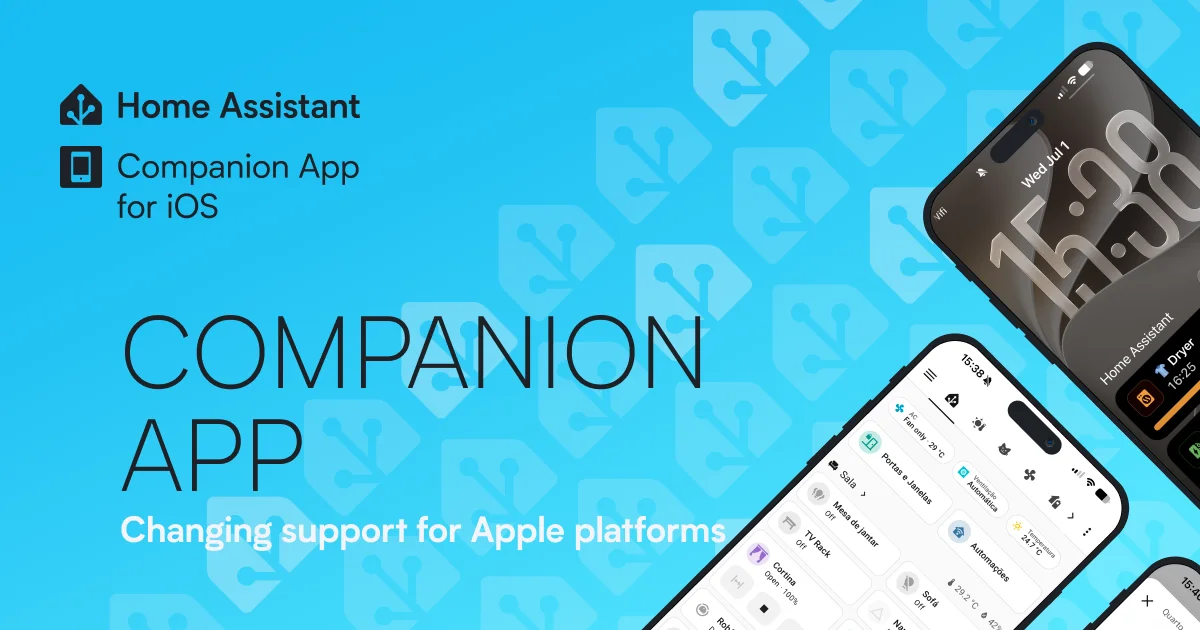
The Home Assistant development team has officially announced a significant shift in its platform support strategy for the Apple ecosystem, marking a definitive transition toward modernizing its software architecture. Starting with the release of version 2026.8.0 of the Home Assistant Companion app, the organization will formally discontinue support for several legacy operating systems, including iOS 15, watchOS 8, and macOS 11. This decision reflects a broader industry trend of balancing the desire for long-term hardware utility with the technical necessity of adopting contemporary development frameworks. For users currently operating on these older versions, the final compatible release will be version 2026.7.1, after which no further updates, security patches, or new features will be delivered to those specific environments.
The Technical Necessity of Evolution
The primary catalyst for this change is the evolving landscape of Apple’s developer ecosystem. Home Assistant, which relies heavily on Apple’s native software development kits (SDKs) and the Xcode integrated development environment, must align its codebase with the requirements set by Apple. Beginning in September 2024 and extending into the 2025-2026 development cycles, Apple’s developer tools are scheduled to phase out support for compiling applications targeting watchOS 8 and macOS 11.
By maintaining compatibility with these older systems, developers often find themselves in a state of "technical debt." This occurs when programmers must write redundant code or implement "shims" to ensure that new features do not crash on older hardware. Over time, this makes the primary codebase bloated and difficult to maintain. The transition to version 2026.8.0 allows the Home Assistant team to strip away these legacy constraints, enabling a more streamlined, performant, and stable application for the vast majority of its user base.
Statistical Justification and User Impact
In its official transparency report, the Home Assistant team revealed that the decision was heavily influenced by user data. According to internal telemetry, less than 1% of the total active Home Assistant Companion app user base is currently running iOS 15, watchOS 8, or macOS 11. This statistic is particularly telling in the context of the smart home community, which typically trends toward more modern hardware to accommodate the high processing demands of local automation and sensor integration.
The move toward modernization is designed to benefit the 99% of users who have transitioned to newer operating systems. By dropping support for legacy platforms, developers can fully leverage the capabilities of SwiftUI and other modern Apple frameworks. This is expected to lead to significant improvements in user experience (UX), particularly regarding the speed of the interface and the reliability of background processes. Furthermore, the removal of legacy code allows for the implementation of more advanced Apple Watch complications and sophisticated home screen widgets that were previously impossible to develop under the limitations of older OS versions.
Chronology of the Transition
To ensure that the community is not caught off guard, the Home Assistant team has provided a clear timeline for the phased retirement of these platforms:
- July 2026: Release of version 2026.7.1. This will serve as the "Long Term Support" equivalent for legacy devices, representing the final stable build for iOS 15, watchOS 8, and macOS 11.
- August 2026: Launch of version 2026.8.0. This version will implement a "hard floor" on operating system requirements. Devices running older software will no longer see this update in the App Store.
- Late 2026 and Beyond: Subsequent updates will focus exclusively on iOS 16+, watchOS 9+, and macOS 12+.
This timeline gives users approximately two years from the initial announcement to plan hardware upgrades or transition to alternative methods of home control.
Affected Hardware: A Closer Look
The discontinuation of support for iOS 15, watchOS 8, and macOS 11 specifically impacts several generations of Apple hardware that have reached the end of their official software update cycles from Apple.
For iOS 15, the affected devices include the iPhone 6s and 6s Plus, the iPhone 7 and 7 Plus, and the first-generation iPhone SE. These devices were released between 2015 and 2017 and are widely regarded as some of the most durable smartphones in Apple’s history. However, their hardware limitations, particularly regarding RAM and processor efficiency, make them increasingly difficult to support in a modern smart home context where real-time data streaming is required.
In the wearable category, watchOS 8 was the final major update for the Apple Watch Series 3. The Series 3 remained in Apple’s retail lineup for an unusually long time, but its limited storage and aging S3 chip have made it a bottleneck for developers. By moving to watchOS 9 as the new baseline, Home Assistant can offer richer data visualizations on the wrist.
For macOS 11 (Big Sur), the impact is felt primarily by Mac users with machines from the 2013-2015 era. While these computers remain functional for basic tasks, the lack of modern API support in Big Sur prevents the Home Assistant Mac app from integrating deeply with system-level features like Control Center or advanced Shortcuts.
Continuity and Legacy Support Options
Recognizing the core philosophy of Home Assistant—which emphasizes local control and the longevity of hardware—the developers have clarified that older devices will not become obsolete. There are two primary avenues for users who cannot or will not upgrade their hardware:
1. Web Browser Access
The Home Assistant "frontend," or the web-based user interface, remains independent of the Companion app’s OS requirements. Users with an iPhone 6s or an older Mac can still access their dashboard by navigating to their Home Assistant URL via Safari or Chrome. The web interface receives monthly updates and is designed to be highly compatible with older standards, ensuring that a wall-mounted legacy tablet can still function as a control hub.
2. The Persistence of Version 2026.7.1
The final compatible version of the app will remain available on the App Store for users who have previously downloaded it. Additionally, because Home Assistant is an open-source project, the source code for the legacy versions will remain hosted on GitHub. This allows technically proficient users to compile and side-load the application themselves, or even fork the project to provide community-driven patches for older devices.
Broader Implications for the Smart Home Industry
This move by Home Assistant is a microcosm of a larger challenge facing the Internet of Things (IoT) industry: the "Software-Hardware Gap." As smart home platforms become more complex, incorporating artificial intelligence, high-definition video streaming from doorbells, and intricate automation logic, the software requirements naturally outpace the hardware capabilities of decade-old devices.
Industry analysts suggest that Home Assistant’s proactive communication regarding these changes is a model for other developers. By being upfront about the "cost" of supporting old systems—specifically how it hinders the development of new features like improved Apple Watch complications—the organization maintains trust with its user base while moving the platform forward.
Furthermore, this update aligns Home Assistant with the "Matter" era of smart homes. As the Matter protocol becomes the standard for device interoperability, it requires more robust security certificates and communication stacks that are often natively handled by newer operating systems. Ensuring the Companion app is running on modern software is a prerequisite for a seamless Matter experience within the Apple ecosystem.
Future Outlook: Performance and Innovation
The Home Assistant team has expressed optimism about the future of the Companion app once the legacy constraints are removed. Freed from the limitations of iOS 15 and its contemporaries, the developers plan to overhaul several core components of the app.
Key areas of focus for the 2026.8.0 release and beyond include:
- Enhanced Complications: More dynamic and data-rich elements for the Apple Watch, allowing users to see more than just a single sensor value at a glance.
- Advanced Widgets: Utilization of the latest WidgetKit features to provide interactive controls directly from the iPhone and Mac home screens without needing to open the full app.
- Improved Stability: A reduction in "edge-case" bugs that often occur only on older OS versions, leading to a more reliable experience for all users.
- Energy Efficiency: Leveraging newer background task APIs to reduce the app’s impact on battery life, particularly for location-based automations.
In conclusion, while the discontinuation of support for older Apple platforms marks the end of an era for some hardware, it signals the beginning of a more robust and innovative chapter for the Home Assistant Companion app. By prioritizing the long-term maintainability of its codebase and focusing on the needs of the vast majority of its community, Home Assistant is ensuring that its platform remains the premier choice for privacy-conscious smart home enthusiasts for years to come. The transition is a calculated step toward a more powerful, stable, and feature-rich future, reinforcing the project’s commitment to excellence in the rapidly evolving world of home automation.